
Commercial carpets take a beating. Hundreds of employees, clients, and visitors track in dirt, debris, moisture, and bacteria every single day. When carpets go too long without a proper deep clean, the consequences go beyond appearance. Poor indoor air quality, unpleasant odors, and accelerated carpet wear can affect employee health, client impressions, and your bottom line. Spot cleaning and routine vacuuming help, but they simply cannot remove what has worked its way deep into the carpet fibers. This guide gives property managers and business owners in the Northwest Suburbs of Chicago a clear, step-by-step system to get commercial carpets genuinely clean.
Table of Contents
- What you need: Tools and materials for deep cleaning
- Preparation: Getting your space ready to clean
- Step-by-step deep cleaning process
- Troubleshooting and avoiding common mistakes
- Post-cleaning: Checking your results and maintenance tips
- What most guides miss about deep cleaning commercial carpets
- Need help deep cleaning your commercial carpets?
- Frequently asked questions
Key Takeaways
| Point | Details |
|---|---|
| Preparation matters | Setting up your space and gathering proper equipment offers the best foundation for a deep clean. |
| Follow proven steps | A systematic approach, from pre-vacuum to careful drying, ensures thorough results. |
| Avoid common errors | Steer clear of overwetting or skipping stains to prevent issues like odors and residue. |
| Schedule routine maintenance | Regular inspections and consistent cleaning keep commercial carpets healthier and lasting longer. |
| Know when to call pros | Professional help can solve stubborn problems and maximize carpet longevity for busy businesses. |
What you need: Tools and materials for deep cleaning
Now that you understand why deep cleaning matters, start by gathering the right tools for the job. Walking into a deep cleaning session without the right equipment is one of the most common reasons businesses end up with mediocre results. Professional equipment and specially formulated cleaning solutions yield superior results when deep cleaning commercial carpets, and cutting corners here often means redoing the work sooner than expected.
Here is what you will need before you start:
- Hot water extractor or steam cleaner: The workhorse of any deep clean. Commercial-grade extractors generate the heat and suction needed to pull embedded soil out of dense carpet fibers.
- Commercial upright or backpack vacuum: For pre-cleaning and post-cleaning passes. A vacuum with a HEPA filter is ideal for capturing fine particles and allergens.
- Pre-treatment spray or spotter solution: Designed to break down grease, protein-based stains, and ground-in soil before extraction.
- Carpet agitation brush or grooming tool: Helps work the cleaning solution into the carpet pile and restore fiber direction after cleaning.
- Personal protective equipment (PPE): Rubber gloves, non-slip footwear, and eye protection when handling concentrated cleaning chemicals.
- Wet floor signs and safety cones: Essential for marking damp areas and preventing slip-and-fall incidents.
- Microfiber towels and absorbent pads: Useful for blotting stains and drying high-traffic spots faster.
| Item | Purpose | Notes |
|---|---|---|
| Hot water extractor | Deep extraction of soil and solution | Rent for one-time use; buy if cleaning monthly |
| HEPA vacuum | Pre-vacuum and post-vacuum | Required for allergen control |
| Pre-treatment solution | Breaks down stains before extraction | Always test on a hidden area first |
| Agitation brush | Works solution into carpet fibers | Use circular or back-and-forth motion |
| PPE (gloves, goggles) | Protects against chemical exposure | Required when using concentrated products |
| Wet floor signs | Safety and liability protection | Place before and during cleaning |
Pro Tip: If you only deep clean once or twice a year, renting a commercial extractor from a local equipment supplier is almost always more cost-effective than purchasing one. However, if you manage multiple properties or clean quarterly, owning the equipment pays for itself quickly. Check whether the rental includes a pre-treatment solution, as many do not.
Understanding the reasons to hire a commercial carpet cleaner can also help you decide when a DIY approach makes sense and when it is worth bringing in a certified professional.
Preparation: Getting your space ready to clean
Once you have all your materials, preparing your space sets the stage for a successful deep clean. Skipping preparation is the fastest way to create new problems while trying to solve old ones. Preparation steps like moving furniture and vacuuming improve the outcome of deep carpet cleaning significantly, and this phase often determines whether your results last weeks or months.
Follow these preparation steps before you run a single machine:
- Clear the area: Move chairs, trash cans, small tables, and any portable equipment off the carpet. For heavy furniture that cannot be moved, place plastic furniture tabs or aluminum foil squares under the legs to prevent rust or wood stain transfer onto wet carpet.
- Protect electronics and sensitive equipment: Unplug and cover any electronics near the cleaning area. Moisture and cleaning solution mist can damage equipment left exposed.
- Pre-vacuum thoroughly: Run a commercial vacuum over the entire area at least twice, once in each direction. This removes dry soil, hair, and debris that would otherwise turn into muddy residue when wet.
- Spot-test your cleaning solution: Apply a small amount of your pre-treatment or cleaning solution to a hidden corner of the carpet. Wait five minutes and blot dry. Check for color change, fiber damage, or residue before applying it broadly.
- Ventilate the space: Open windows or run HVAC fans to promote airflow. Good ventilation speeds drying and reduces the risk of mildew forming in damp carpet padding.
- Mark trip hazards: Secure loose cords, remove floor mats, and clearly mark any uneven surfaces.
“A thorough pre-vacuum removes up to 80% of dry soil from carpet fibers before any wet cleaning begins, dramatically improving the effectiveness of the extraction process.”
Pro Tip: Use brightly colored sticky notes or small traffic cones to mark wet zones as you work through the space. This is especially important in open-plan offices where colleagues may walk through without realizing the carpet is being cleaned. A quick note on a door or near a stairwell can prevent accidents and protect your liability.
Step-by-step deep cleaning process
With the room prepped, follow these professional steps for deep cleaning. The order matters here. Rushing through or skipping steps often leads to uneven results, residue buildup, or carpets that look clean but still harbor bacteria and allergens deep in the pile.
- Pre-vacuum the entire area using overlapping passes. Work in a grid pattern, going north to south and then east to west. This lifts the carpet pile and ensures maximum soil removal before any moisture is introduced.
- Pre-treat visible stains and high-traffic zones. Apply your pre-treatment solution directly to stained areas and let it dwell for five to ten minutes. Do not scrub. Blotting or light agitation is enough to work the solution in without spreading the stain.
- Apply your cleaning solution to the carpet using the extractor’s spray function or a separate pump sprayer. Work in manageable sections, roughly 100 to 150 square feet at a time, to prevent the solution from drying before you extract it.
- Agitate the carpet using a grooming brush or rotary machine. This step works the solution into the base of the carpet fibers where the heaviest soil accumulates. Spend extra time on entryways and corridors.
- Extract and rinse. Run the hot water extractor over each section using slow, deliberate passes. Overlap each pass by about two inches. A second rinse-only pass with clean water helps remove any remaining cleaning solution residue, which can attract dirt if left behind.
- Dry the carpet. Open windows, run fans, and turn up the HVAC. Avoid placing furniture back until the carpet is completely dry, which typically takes one to four hours with proper airflow.
Here is a quick comparison of the three most common professional carpet cleaning techniques used in commercial settings:
| Method | How it works | Best for | Dry time |
|---|---|---|---|
| Hot water extraction | Injects hot water and solution, then extracts | Heavy soil, allergen removal | 1 to 4 hours |
| Encapsulation | Crystalizes soil into powder for vacuuming | Maintenance cleaning, low moisture | 30 to 60 minutes |
| Bonnet cleaning | Rotary pad absorbs surface soil | Light soil, quick turnaround | 30 to 45 minutes |
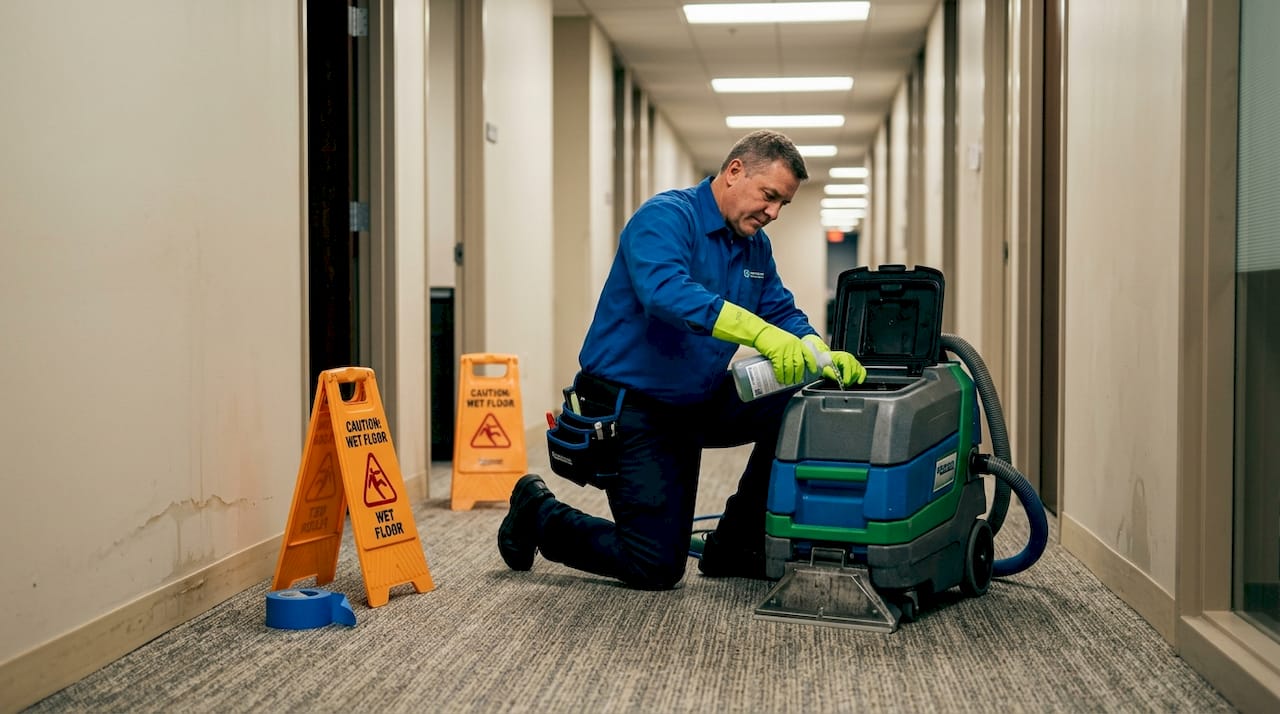
Advanced techniques such as hot water extraction and encapsulation are common in professional commercial carpet cleaning, and understanding which method fits your situation helps you get better results with less effort.
Pro Tip: Overwetting is one of the most damaging mistakes you can make. Saturated carpet padding takes days to dry, creating the perfect environment for mold and mildew growth. Use the minimum amount of solution needed to achieve good results. If you are unsure, less is always safer than more.
Troubleshooting and avoiding common mistakes
After your initial cleaning passes, be alert for issues that can arise and can often be fixed with a few additional steps. Even experienced facility managers run into problems, and knowing how to recognize and address them quickly prevents minor issues from becoming expensive repairs.
Wicking: This is when a stain that appeared clean reappears as the carpet dries. It happens because moisture pulls dissolved soil from the carpet backing up through the fibers. To fix it, blot the area immediately with a clean microfiber towel and apply light pressure. Placing a thick absorbent pad weighted down with a heavy object over the spot overnight often pulls the remaining moisture and soil out before it can wick back.
Sticky residue: If the carpet feels tacky after drying, too much cleaning solution was left behind. Run an additional extraction pass using plain warm water to rinse the area thoroughly.
Lingering odors: Odors that persist after cleaning usually indicate bacterial activity in the carpet padding. A professional-grade enzyme-based deodorizer applied after extraction and before drying can neutralize the source rather than just masking it.
Professional cleaners often address recurring stains, lingering odors, and uneven results by following a thorough troubleshooting process that goes beyond surface-level cleaning.
Common mistakes to avoid:
- Skipping the pre-vacuum: Wet soil is much harder to extract than dry soil. Always vacuum first.
- Using the wrong chemical concentration: More is not better. Overly concentrated solutions leave residue and can damage carpet fibers.
- Working too fast: Slow extractor passes remove significantly more moisture and soil than fast ones.
- Ignoring dwell time: Pre-treatment solutions need time to break down soil chemistry. Rushing this step reduces their effectiveness.
“Using the wrong cleaning chemical on commercial carpet can void the manufacturer’s warranty and cause irreversible fiber damage.”
Pro Tip: Keep a written log of which cleaning products you used, at what concentration, and on which carpet areas. If a problem develops later, this record helps you identify the cause quickly. It also helps if you ever need to reference carpet cleaning FAQs or consult a professional about a specific issue.
When stains persist after two cleaning attempts, or when odors return within days, it is time to call in a certified professional. Some problems are simply beyond what rental equipment and commercial cleaning products can address.
Post-cleaning: Checking your results and maintenance tips
With cleaning complete, do not miss the final inspection and set a plan for easier upkeep going forward. The post-cleaning phase is where most property managers lose the gains they just made by rushing furniture back into place or neglecting a simple maintenance routine.
Walk the entire cleaned area under good lighting and look for:
- Missed spots or sections with uneven color
- Areas that feel damp or spongy underfoot, which may indicate over-wetting
- Wick-back stains appearing as the carpet dries, especially in high-traffic zones
- Carpet fibers that are matted or lying flat, which benefit from a final grooming pass
Once the carpet is fully dry, establish a maintenance routine that protects your investment:
- Vacuum high-traffic areas daily and the full carpet at least twice per week
- Address spills immediately using a clean cloth and a pH-neutral spot cleaner
- Place quality entrance mats at all exterior doors to capture soil before it reaches the carpet
- Rotate furniture periodically to distribute wear patterns more evenly across the carpet
- Schedule professional deep cleans based on foot traffic, not just appearance
Regular inspection and maintenance extend the life of commercial carpets and maintain their appearance between professional services, which directly reduces your long-term replacement costs.
Pro Tip: Set a recurring calendar reminder for your next scheduled deep clean the same day you finish this one. High-traffic commercial spaces in areas like Elgin, Arlington Heights, and Palatine often benefit from deep cleaning every six months. Waiting until carpets look visibly dirty means you are already behind on the maintenance cycle.
What most guides miss about deep cleaning commercial carpets
Most step-by-step guides end at maintenance and call it done. But there is a harder truth that every facility manager in a busy commercial building eventually learns: following a perfect process does not guarantee perfect results when real-world conditions get in the way.
Staff turnover is a genuine problem. The employee who learned your cleaning protocol last year may no longer be with the company. New hires often receive minimal training on carpet care, and small shortcuts accumulate into significant damage over time. The institutional knowledge that keeps a cleaning program consistent is fragile in most organizations.
Time pressure compounds this. Deep cleaning a 5,000 square foot office properly takes a full workday, sometimes more. Most facility managers are juggling a dozen other responsibilities, and carpet cleaning gets squeezed into whatever time is left. The result is rushed work, skipped steps, and carpets that look acceptable but are not truly clean.
There is also the equipment reality. Rental extractors are not always well-maintained. A machine with worn seals or reduced suction leaves more moisture in the carpet than it should, dramatically increasing dry time and mold risk. You rarely know the condition of rental equipment until you are already mid-job.
This is why we have seen so many businesses in communities like Barrington, Streamwood, and Hanover Park shift to scheduled professional services rather than relying entirely on in-house cleaning. It is not that the steps in this guide do not work. They absolutely do. But the consistency, expertise, and professional carpet cleaner expertise that comes with a certified team removes the variables that cause DIY programs to break down over time. Think of this guide as your foundation and professional service as your safety net.
Need help deep cleaning your commercial carpets?
Deep cleaning commercial carpets is absolutely manageable with the right tools, preparation, and process. But if the scope feels too large, the timeline too tight, or the results too inconsistent, professional help delivers fast and reliable outcomes without the guesswork.

At Carpet & Tile Plus, we have spent over 20 years serving property managers and business owners throughout the Northwest Suburbs of Chicago, including Elgin, Bartlett, Streamwood, Arlington Heights, Palatine, Barrington, and Hanover Park. Our IICRC-certified team uses organic, eco-friendly cleaning products and professional-grade equipment to deliver a one-hour dry time that keeps your business running with minimal disruption. Explore our commercial carpet cleaning services to see how we approach every job, or visit our carpet cleaning FAQs to get answers before you book. Reach out today and let us show you what genuinely clean commercial carpets look like.
Frequently asked questions
How long does it take to deep clean commercial carpets?
Most deep cleaning jobs take several hours, and large spaces often require overnight drying before furniture can return. The total time depends on carpet size, soil level, and the cleaning method used.
How often should you deep clean commercial carpets?
High-traffic commercial carpets should be deep cleaned every 6 to 12 months for best results, though heavily used areas like lobbies and corridors may need attention more frequently.
Is hot water extraction the best method for commercial carpets?
Hot water extraction is widely regarded as the most effective deep cleaning method for commercial carpets because it removes embedded soil and allergens that surface methods cannot reach.
What should I do if stains reappear after deep cleaning?
Reappearing stains are usually caused by wicking from the carpet backing. Treat the area immediately with spot cleaning and ensure complete moisture extraction to stop the cycle from repeating.