
Walk through any home or commercial property in the Northwest Suburbs of Chicago and you’ll find tile just about everywhere: bathroom floors, kitchen backsplashes, lobby entryways, restaurant walls, and retail walkways. The challenge isn’t finding tile. It’s knowing exactly what you have and what it actually needs to stay clean, protected, and looking great for years. Professional tile cleaning is not a single process applied to every surface equally. It’s a precise, surface-specific discipline, and this guide will show you exactly why that distinction matters for your property.
Table of Contents
- Key types of tile surfaces professional cleaners service
- How professional cleaning approaches differ by tile type
- The role of grout and protection needs for each tile surface
- Comparing tile surfaces: Choosing what works for your space
- What most guides miss about professional tile cleaning
- Trusted tile cleaning for every surface in your space
- Frequently asked questions
Key Takeaways
| Point | Details |
|---|---|
| Know your tile type | Each tile surface—ceramic, porcelain, stone, or glass—requires a unique cleaning strategy. |
| Mind your grout | Grout type influences stain risk and protection needs; cement-based grout needs sealing, epoxy typically doesn’t. |
| Use the right products | Acidic cleaners can damage natural stone; always choose pH-neutral options for delicate materials. |
| Professional cleaning protects value | Expert services extend tile life, maintain aesthetics, and prevent costly repairs. |
| Consult for best results | Partnering with knowledgeable professionals ensures that every tile and grout type gets the specialized care it needs. |
Key types of tile surfaces professional cleaners service
Understanding what type of tile you have is the first step toward protecting it. Not all tiles behave the same under cleaning products, moisture, or foot traffic, and professionals begin every job by identifying the surface before selecting any method or solution.
Here are the main tile categories that experienced cleaners work with:
-
Ceramic tile: One of the most common surfaces found in residential properties. Ceramic is fired clay with a glazed finish, making it affordable and available in a huge range of colors and designs. It’s a popular choice for bathroom walls and lighter-traffic floor areas. Ceramic holds up reasonably well to standard cleaning but can chip and its glaze can dull over time without proper care.
-
Porcelain tile: A denser, harder variation of ceramic, fired at higher temperatures to produce a surface that’s significantly more water-resistant and durable. Porcelain is the go-to choice for kitchens, bathrooms, and high-traffic commercial spaces in places like Elgin and Arlington Heights. Because it’s so dense, it resists stains better than ceramic, but the grout around it is still vulnerable.
-
Natural stone: This category covers marble, granite, travertine, slate, and limestone. Each of these materials has its own porosity level and chemical sensitivity. Marble looks stunning in bathrooms and entryways but scratches and etches easily. Travertine is found in high-end homes throughout Barrington and Palatine, bringing a warm, earthy aesthetic. Slate is popular for rustic kitchens and mudrooms. All natural stone tiles share one critical trait: they need careful, material-specific maintenance.
-
Decorative glass tile: Often used for backsplashes, pool surrounds, and accent walls. Glass tile adds unique visual depth and style but can streak easily and reacts poorly to abrasive or harsh chemical cleaners. Pros handle glass tile with soft tools and non-abrasive solutions to maintain its clarity and finish.
As tile and grout experts note, professional cleaners service tile by surface type, including ceramic, porcelain, natural stone such as marble, granite, travertine, and slate, plus decorative glass tile, and each is paired with different grout and protection needs.
When choosing tile surfaces, homeowners and business owners often focus on aesthetics alone. But understanding your tile type from the start helps you make smarter cleaning and maintenance decisions down the road.
Pro Tip: Some tiles look nearly identical but behave very differently. Porcelain and ceramic can be hard to tell apart visually. If you’re unsure what you have, a professional can identify it before any cleaning begins, saving you from costly mistakes.
Our team handles residential tile and grout cleaning across surfaces just like these every day, bringing the right approach to each one.
How professional cleaning approaches differ by tile type
With the tile types laid out, it’s important to understand that professional cleaning isn’t the same across all surfaces. The cleaning chemistry, tools, and techniques shift significantly depending on what’s underfoot or on the wall.
Here’s how the approach changes for each major surface type:
-
Ceramic and porcelain tile: These surfaces are the most forgiving. They can generally handle moderately alkaline cleaning solutions and steam cleaning. High-pressure hot water extraction works well for floor tiles in this category, lifting embedded grime from grout lines without risking surface damage. Ceramic’s glaze offers some protection, but porcelain’s density is its real strength. That said, even these tiles benefit from tailored care, since excessive moisture left on ceramic can eventually work its way through grout into the subfloor.
-
Natural stone tile: This is where professional expertise truly earns its value. Natural stone is sensitive to pH extremes on both ends of the scale. Acidic cleaners, even mild ones like vinegar or lemon-based products, can cause a chemical reaction with calcium carbonate present in stones like marble and travertine. This reaction is called etching, and it leaves dull, permanent marks on the surface. Professionals use pH-neutral, stone-specific formulations and follow up with appropriate sealers to restore and maintain the stone’s natural luster. Sealing schedules vary by stone type and traffic level, but most natural stone floors in a busy household need resealing at least once a year.
-
Decorative glass tile: The goal with glass tile is a clean, streak-free finish that preserves the tile’s visual pop. Abrasive pads or powders will scratch the glass surface permanently. Professionals rely on soft microfiber tools, gentle non-abrasive solutions, and precise rinsing techniques to leave glass tile spotless without streaking or clouding.
“Vinegar is a no-go on marble and other natural stone. The etching it causes is permanent, and no amount of polishing can fully reverse it. We’ve seen beautiful marble floors ruined by well-meaning homeowners who thought they were cleaning safely.”
As confirmed by research on tile floor care, professional cleaning approaches distinguish between ceramic and porcelain versus natural stone due to chemistry sensitivity. Natural stone generally needs pH-neutral, stone-specific cleaners and sealing, while acidic options can cause irreversible damage.
Reviewing tile grout cleaning methods for your specific surface is a smart starting point before any cleaning project.
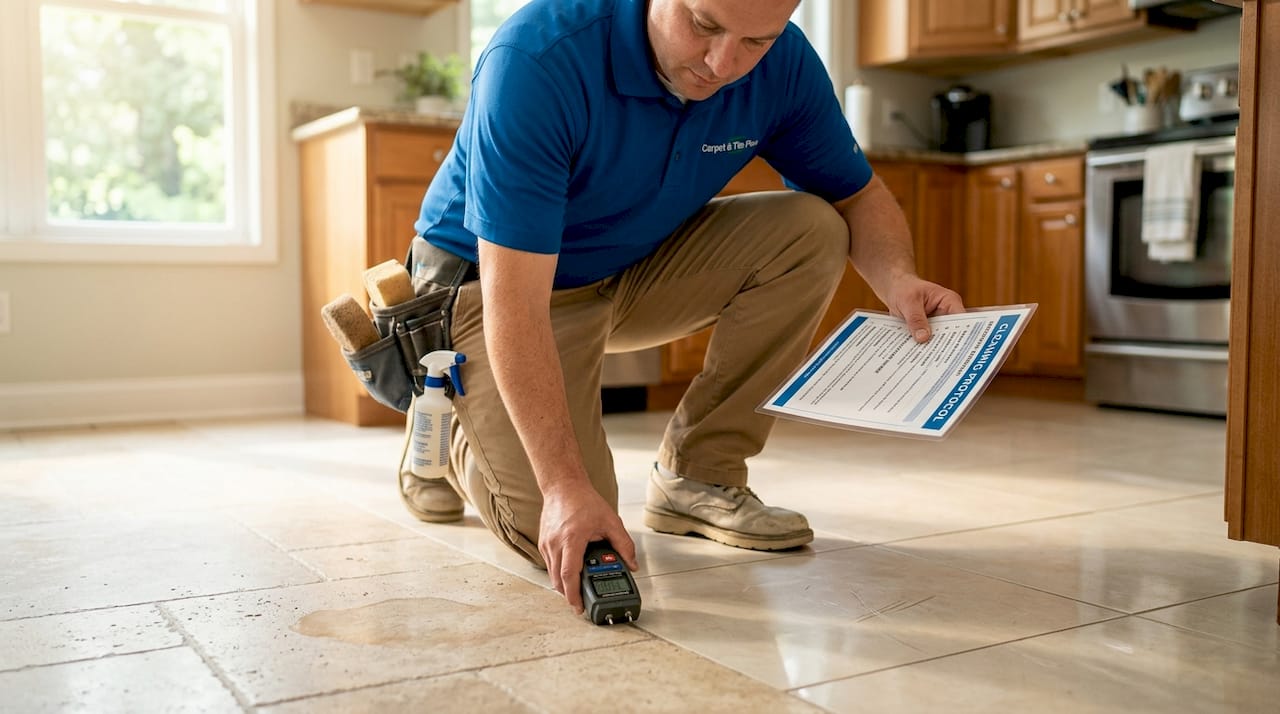
Understanding tile floor care tips tailored to your climate and traffic level adds another layer of protection for any tile investment.
The role of grout and protection needs for each tile surface
Now that we’ve detailed cleaning methods, let’s focus on a critical but overlooked factor: grout and surface protection. Most people think about the tile itself, but grout is often where the real problems begin.
Grout fills the joints between tiles. It binds the installation together and plays a huge role in how easy or difficult a surface is to keep clean. There are two primary grout types:
-
Cement-based grout: This is the most widely used type in residential properties. It’s porous by nature, which means it absorbs spills, bacteria, mold spores, and cleaning residue over time. Unsealed cement grout in a kitchen or bathroom can become discolored within months of installation. Professionals clean it with targeted solutions that lift staining agents from deep within the pores, then apply a quality sealer to slow future absorption.
-
Epoxy grout: A synthetic material that’s non-porous and inherently stain-resistant. Epoxy grout is more expensive and harder to install, so it’s more common in commercial settings and high-end remodels. It doesn’t need sealing and resists bacteria better than cement-based options. However, it’s harder to repair if it cracks or chips.
| Grout type | Porosity | Stain resistance | Needs sealing | Common use |
|---|---|---|---|---|
| Cement-based | High | Low | Yes | Residential floors, walls |
| Epoxy | None | High | No | Commercial, wet areas |
The type of grout in your space directly impacts how a professional approaches the job. Heavily stained cement grout in a Streamwood kitchen may require multiple cleaning passes and a fresh sealant application. Epoxy grout in a Hanover Park retail space may just need a surface clean and rinse.
As tile and grout maintenance guides confirm, each tile type is paired with different grout and protection needs, and getting those right together is what separates a truly professional result from a surface-level clean.
Knowing when and how to clean grout properly is closely related to the benefits of professional area rug cleaning, where fiber type, much like tile type, determines the correct approach.
Pro Tip: Before hiring any tile cleaning service, ask what type of grout you have and whether the service includes sealing. A clean surface without proper sealing is a missed opportunity, and it means you’ll be dealing with the same staining problems again in a fraction of the time.
Our detailed guide on cleaning tile grout explains exactly what to expect from a professional grout service in the Chicago area.
Understanding the importance of flooring professionals for surface-specific work applies directly to why getting grout care right is non-negotiable.
Comparing tile surfaces: Choosing what works for your space
Armed with all these details, here’s how the options stack up and what really matters when picking or requesting professional service.
| Tile type | Durability | Maintenance level | Best location | Sensitivity |
|---|---|---|---|---|
| Ceramic | Moderate | Low to moderate | Walls, light-traffic floors | Low |
| Porcelain | High | Low | Kitchens, baths, commercial floors | Low |
| Marble | Moderate | High | Entryways, bathrooms | Very high |
| Travertine | Moderate | High | Living areas, patios | High |
| Granite | High | Moderate | Counters, floors | Moderate |
| Slate | High | Moderate | Kitchens, mudrooms | Moderate |
| Glass | Moderate | Moderate | Backsplashes, accents | High to abrasives |
When deciding what service your property needs, consider these steps:
-
Identify your tile type first. Don’t guess. If you’re unsure, a professional can assess it on-site. Using the wrong product on marble because you assumed it was porcelain is an expensive mistake.
-
Evaluate foot traffic and use. A porcelain floor in a Bartlett restaurant requires more frequent cleaning cycles than the same tile in a guest bathroom. Frequency recommendations should match actual use.
-
Check your grout condition. Discolored, crumbling, or moldy grout is a red flag regardless of tile type. It may need deep cleaning, resealing, or even partial regrouting before it causes bigger structural issues.
-
Ask about protection after cleaning. Sealing, impregnating sealers for stone, and surface-appropriate topcoats all extend the time between professional services and protect your investment.
As outlined by tile surface professionals, each tile type in a home or business setting comes with unique care pairings, and matching the right service to the right surface is what delivers lasting results.
For a closer look at what’s available locally, check out top tile and grout cleaning services in the area.
What most guides miss about professional tile cleaning
Here’s the uncomfortable truth most tile cleaning content glosses over: the single biggest risk to your tile isn’t foot traffic or age. It’s incorrect cleaning, and it often comes from well-intentioned people using the wrong products with confidence.
We’ve walked into kitchens with etched marble that homeowners thought was simply worn. We’ve seen travertine floors treated with all-purpose alkaline degreasers that slowly broke down the stone’s surface over years of regular use. The damage looked like “aging.” It was actually cumulative chemical damage.
The assumption that stronger equals cleaner is exactly backwards for high-value tile. Natural stone, in particular, responds best to gentler, more precise methods. Our approach with marble and travertine almost always involves lower-concentration, carefully balanced solutions applied with controlled dwell time rather than aggressive chemical blasting. The result is a cleaner surface with zero collateral damage.
There’s also a practical gap between what most homeowners know about their tile and what they should know. Many people in Arlington Heights or Palatine have lived with their tile for years and still couldn’t tell you whether it’s sealed, what the grout type is, or when it was last professionally treated. That information isn’t trivial. It directly determines how a professional should approach the job and what results you should realistically expect.
Reviewing tile cleaning best practices before scheduling a service helps set the right expectations and ensures you’re asking the right questions.
The bottom line: knowing your surface isn’t a bonus detail. It’s the foundation of every good cleaning decision, and it’s the difference between a tile floor that looks great in ten years and one that needs expensive replacement.
Trusted tile cleaning for every surface in your space
Whether you manage a commercial property in Elgin or own a home in Barrington with marble entryway floors, the right tile cleaning service should match the specific surface you have, not apply a generic process and hope for the best.

At Carpet and Tile Plus, we’ve spent over 20 years learning exactly what every tile surface needs. Our IICRC-certified cleaners identify your tile and grout type before selecting any product or method, and we use organic cleaning solutions that are safe for your family, pets, and the environment. Our services cover everything from commercial tile cleaning in high-traffic business spaces to residential tile cleaning in every room of your home. With a one-hour dry time and hundreds of five-star reviews across the Northwest Suburbs of Chicago, we make professional tile care easy, effective, and completely tailored to your surfaces.
Frequently asked questions
Which types of tile surfaces benefit most from professional cleaning?
Natural stone, high-traffic porcelain, and decorative glass tile see the greatest benefits from specialized professional cleaning and protection, as confirmed by surface-specific care guides that pair each tile type with distinct treatment needs.
What mistakes do people make when cleaning tile surfaces themselves?
Using acidic cleaners like vinegar on natural stone causes permanent etching and surface damage, especially on marble and limestone, as research on tile cleaners clearly confirms.
Do all types of grout need sealing and special care?
Cement-based grout is porous and needs regular sealing to resist staining, while epoxy grout is non-porous and stain-resistant by nature, so it does not require sealing, according to tile grout maintenance resources.
How often should professional tile cleaning be scheduled?
High-traffic areas benefit from annual professional cleaning at minimum, but natural stone floors and grout-heavy surfaces may need attention every six months to prevent buildup, etching, and staining from becoming permanent problems.
Can professional cleaners remove stains from any tile surface?
Most stains respond well to professional cleaning, but results depend heavily on the tile type, the age of the stain, and how porous the surface is. Stains left on unsealed natural stone for extended periods may be permanent, which is why prompt professional attention matters most for stone surfaces.