The strongest alternatives to haywardrug.com fall into three practical categories: in-plant immersion specialists who wash rugs off-site in a controlled facility, local rug cleaners offering insured pickup and drop-off, and qualified on-site technicians for situations where transport isn’t possible. For readers in the Northwest Chicago suburbs, Carpet & Tile Plus is a recommended local alternative, combining IICRC-certified technicians, organic cleaning products, and itemized estimates.
Three signals to check immediately with any provider:
- IICRC certification (specifically the Rug Cleaning Technician credential)
- An off-site immersion facility or controlled washing environment
- A written, line-item estimate after a pre-inspection, not a sight-unseen quote
“A qualified rug cleaner asks about fiber type, dye stability, and prior repairs before quoting — and provides an itemized estimate rather than a ballpark figure.” — Rug Owners Association
Table of Contents
- How do haywardrug.com alternatives actually compare?
- What criteria actually separate good rug-cleaning providers?
- How do you verify a provider’s claims before committing?
- What questions reveal a provider’s real rug expertise?
- Key Takeaways
- Why the method gap between rug specialists and carpet cleaners is wider than most people expect
- Carpetandtileplus is a qualified local alternative worth calling first
- Authoritative sources and further reading
How do haywardrug.com alternatives actually compare?
| Provider | Best For | Cleaning Method | Pickup/Delivery | Certifications | Eco-Friendly | Google Reviews |
|---|---|---|---|---|---|---|
| Carpet & Tile Plus | NW Chicago suburbs; residential & commercial | On-site hot-water extraction with organic products | Available locally | IICRC-certified | Organic products | Many positive reviews |
| haywardrug.com | Plant-wash pickup/drop-off model | Immersion/plant wash | Yes (pickup/drop-off) | Verify directly | Not publicly listed | Verify directly |
Carpet & Tile Plus brings IICRC-certified staff, organic cleaning chemistry, insured handling, and fast dry times to every job. Its written estimates and transparent scope of work align with what the Rug Owners Association identifies as hallmarks of a reputable rug care business: dusting, washing, rinsing, drying, and grooming, each line-itemed before work begins.
haywardrug.com is known for a plant-wash, pickup/drop-off model. Verify current service details, pricing, and certifications directly with the provider before booking.
What criteria actually separate good rug-cleaning providers?
Specialization matters more than price. A company that cleans installed broadloom carpet all week and handles area rugs as a side job is a different animal from a dedicated rug specialist. The IICRC’s Rug Cleaning Technician (RCT) credential is the clearest public signal of focused training.
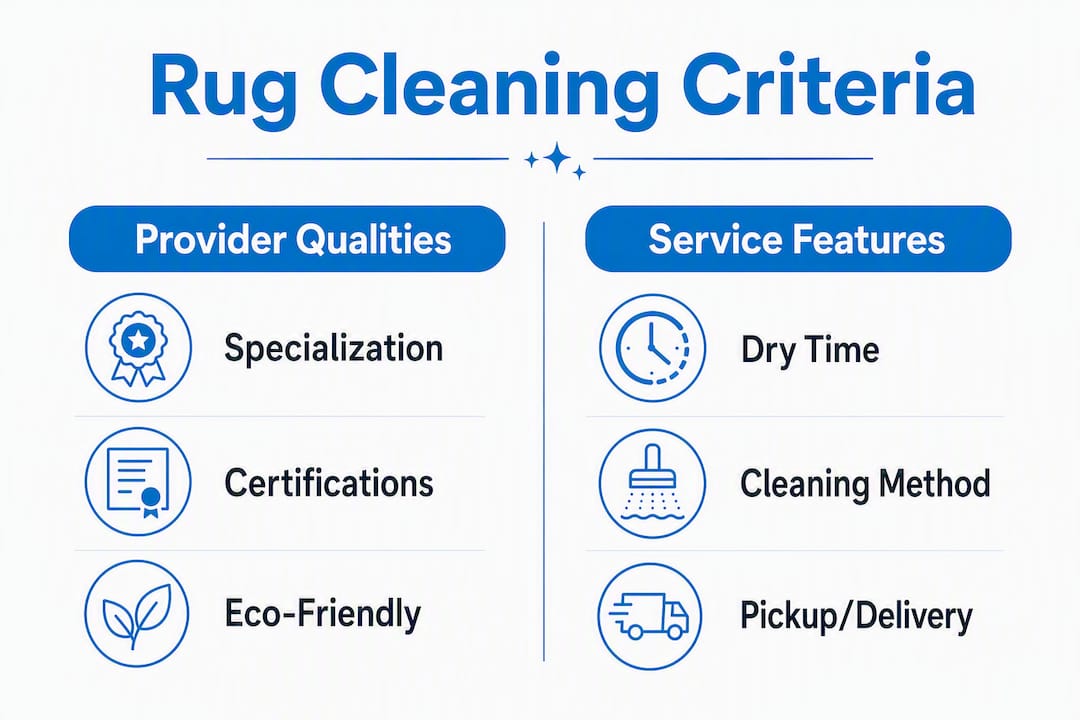
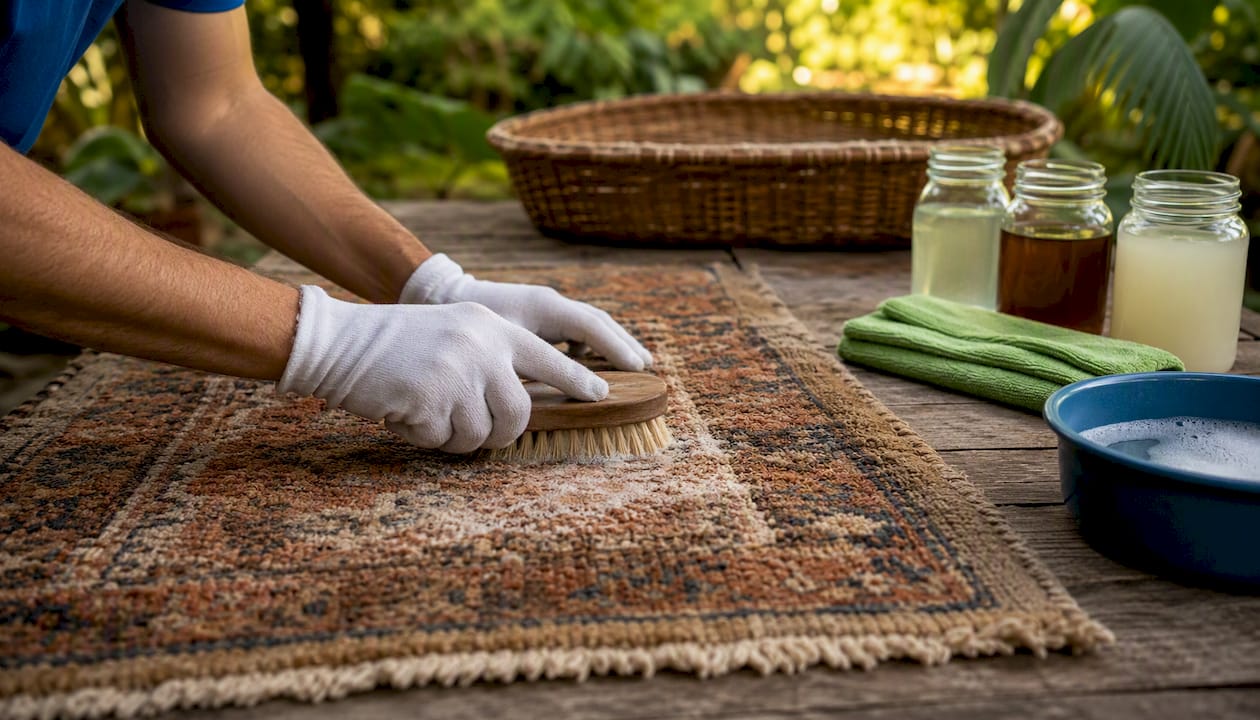
Eco-friendly chemistry is worth asking about specifically. Wool, silk, and antique rugs react poorly to harsh alkaline detergents. Providers using pH-balanced or organic formulations protect fiber integrity and are safer for households with children or pets. Carpetandtileplus uses organic products on every job.
Turnaround and dry time tell you a lot. Proper deep-immersion washing requires multi-day drying for safe results. Any provider promising same-day completion on a hand-knotted or wool rug is almost certainly delivering a surface treatment, not a thorough clean.
How do you verify a provider’s claims before committing?
Ask for before-and-after photos of rugs similar to yours in fiber and construction. A confident specialist will have them. Request a reference from a customer whose rug matched your type — wool, silk, antique, or synthetic — and follow up.
Pro Tip: Ask to see the facility’s drying area. Good providers describe humidity controls and airflow systems rather than vague “fast-dry” promises. If they can’t explain their drying process, that’s your answer.
Red flags include instant-turnaround claims, no dye testing, sight-unseen quotes, and no mention of insurance or repair capability.
What questions reveal a provider’s real rug expertise?
Ask these before you hand over any rug:
- What fiber is this rug, and how does that change your cleaning chemistry?
- Do you test dyes before washing? What happens if a dye bleeds?
- Where does the rug dry, and how do you control humidity?
- Are you insured for damage during transport and cleaning?
- Can you handle fringe repair or re-weaving if needed?
A provider who hesitates on dye testing or can’t describe their drying environment is not a rug specialist, regardless of what their website says. The IICRC tip sheet on on-site area rugs explicitly lists shrinkage, edge curl, and browning as risks of improper handling — all preventable when a technician knows the fiber and controls the environment.
Key Takeaways
The single most important step when choosing among haywardrug.com alternatives is confirming that the provider tests dyes, holds IICRC credentials, and delivers a written estimate before touching your rug.
| Point | Details |
|---|---|
| Cleaning method first | Immersion or controlled washing protects natural fibers; surface extraction is a fallback, not a standard. |
| Dye testing is non-negotiable | Any provider skipping a dye test before washing risks permanent color damage to wool or antique rugs. |
| Written estimate required | A line-item quote covering dusting, washing, rinsing, drying, and grooming is the baseline for a reputable provider. |
| Turnaround signals quality | Multi-day drying is normal for deep-immersion cleaning; same-day claims indicate surface-only treatment. |
| Carpetandtileplus for NW Chicago | IICRC-certified, organic products, insured handling, and itemized estimates for residential and commercial rug care. |
Why the method gap between rug specialists and carpet cleaners is wider than most people expect
Most homeowners assume carpet cleaning and rug cleaning are the same service delivered in different rooms. They aren’t. Installed carpet is cleaned in place because it can’t be moved. Area rugs can be transported, and that changes everything about what’s possible.
Off-site immersion washing allows full submersion, controlled rinsing, and regulated drying that surface hot-water extraction simply cannot replicate. Hot-water extraction wands work well on synthetic broadloom. On a hand-knotted wool rug, the same wand can cause color bleeding, shrinkage, and texture distortion — damage that is often irreversible.
The red flags are consistent across industry sources: instant-turnaround promises, no pre-inspection, vague pricing, no dye test, and no insurance. A provider who checks any of those boxes is selling carpet cleaning, not rug care.
Jim’s take: The rug-cleaning industry has a real credibility problem because the barrier to calling yourself a “rug specialist” is essentially zero. IICRC certification, a visible facility, and a willingness to explain the drying process in specific terms are the three filters that cut through the noise. Any provider who gets defensive when you ask about humidity controls during drying is telling you something important.
Carpetandtileplus is a qualified local alternative worth calling first
If you’re in the Northwest Suburbs of Chicago — Elgin, Bartlett, Streamwood, Arlington Heights, Palatine, Barrington, or Hanover Park — Carpetandtileplus checks the specialist checklist: IICRC-certified technicians, organic cleaning products, insured handling, itemized estimates, and a dry time that minimizes disruption. For residential rug work, visit the residential carpet cleaning page to request a pre-inspection and written estimate. Property managers can find commercial options at the commercial carpet cleaning page. If your rug has pet odors or staining alongside soil, the odor removal service covers that in the same appointment. Call to schedule a pre-inspection and get a line-item quote before any work begins.
Authoritative sources and further reading
- IICRC Tip Sheet: Onsite Area Rugs — Primary source on risks of on-site rug cleaning and when plant cleaning is recommended.
- Rug Owners Association: How to Know If a Rug Cleaning Company Is Really Qualified — Checklist covering pre-inspection, dye testing, and written estimates.
- Carpetandtileplus: Benefits of Professional Area Rug Cleaning — Local perspective on why specialist techniques extend rug life.
- Carpetandtileplus: Why Area Rugs Need Different Cleaning Methods — Technical comparison of rug-specific care versus general carpet cleaning.