Luxury vinyl plank is one of those flooring materials that gets sold as low maintenance, and for the most part, that’s true. It doesn’t scratch as easily as hardwood, it handles moisture better than laminate, and it holds up to kids, pets, and daily foot traffic without much fuss. But “low maintenance” doesn’t mean “no maintenance,” and a lot of homeowners and business owners don’t realize their LVP floors need a different kind of care than what they’re used to giving carpet or tile.
If you’ve had vinyl plank flooring for a year or two, you’ve probably already noticed it. The high-traffic areas look a little duller than the rest of the room. There’s a faint haze near the entryway no matter how many times you mop it. The seams between planks seem to hold onto grime that never quite comes out. None of that means your floor is wearing out. It usually just means it’s time for a deeper clean than a mop and bucket can give it.
What Actually Happens to LVP Over Time
Vinyl plank flooring has a wear layer on top designed to resist scratches and stains, but that layer is still a surface, and surfaces collect residue. Every time you mop with tap water and a store-bought cleaner, you’re usually leaving behind a thin film, even if you can’t see it right away. Over months and years, that film builds up. It attracts more dirt, dulls the finish, and makes the floor look tired even right after you’ve cleaned it.
The seams between planks are their own problem. Dirt, dust, and grease work their way into those small gaps, and a regular mop just glides right over them. That’s why grout-line-style buildup shows up on vinyl plank floors even though there’s no actual grout involved. It’s the same idea: dirt finds the low points and stays there unless something is designed to get it out.
Why a Regular Mop Doesn’t Cut It
Mopping isn’t a bad habit. It’s good for day-to-day upkeep and keeping loose dirt from tracking through the house. The problem is that a mop moves water and dirt around the surface rather than lifting it out. It also tends to leave excess moisture sitting on top of the floor, which isn’t great for vinyl plank over the long run, especially around the seams where water can work its way underneath if it sits too long.
Professional LVP cleaning solves both of those problems at once. It uses a low-moisture process that pulls dirt and grime out of the surface and the seams, instead of just spreading it around, and it does it without soaking the floor. That’s the difference between a floor that looks clean for a day and one that actually is clean.
The Case for Organic Cleaning Products
A lot of commercial floor cleaners are built for speed, not for what they leave behind. Harsh chemicals can strip the finish on vinyl plank over time, and they’re not something you want your kids or pets walking across barefoot or lying down on. That’s a big part of why we’ve always used organic, low-moisture cleaning solutions across every service we offer, including LVP floor cleaning.
Organic doesn’t mean weaker. It means the products are built to do the job without leaving behind residue or fumes that linger in the house. Your floor gets just as clean, and there’s nothing left over for kids and pets to pick up once it’s dry.
Residential Floors: More Than Just Looks
For most homeowners, the reason to get LVP professionally cleaned is simple: it looks better. But there’s more to it than appearance. Buildup in the seams and on the surface can shorten the life of the wear layer over time, especially in high-traffic spots like kitchens, entryways, and hallways. A periodic deep clean protects the investment you made in the flooring in the first place, not just the way it looks on a given day.
Most residential LVP cleaning takes a couple of hours from start to finish, and because the process uses minimal moisture, the floor is usually dry and ready to walk on again in about an hour. There’s no need to block off a room for the rest of the day or plan your schedule around waiting for the floor to dry.
Commercial Floors: Handling the Traffic
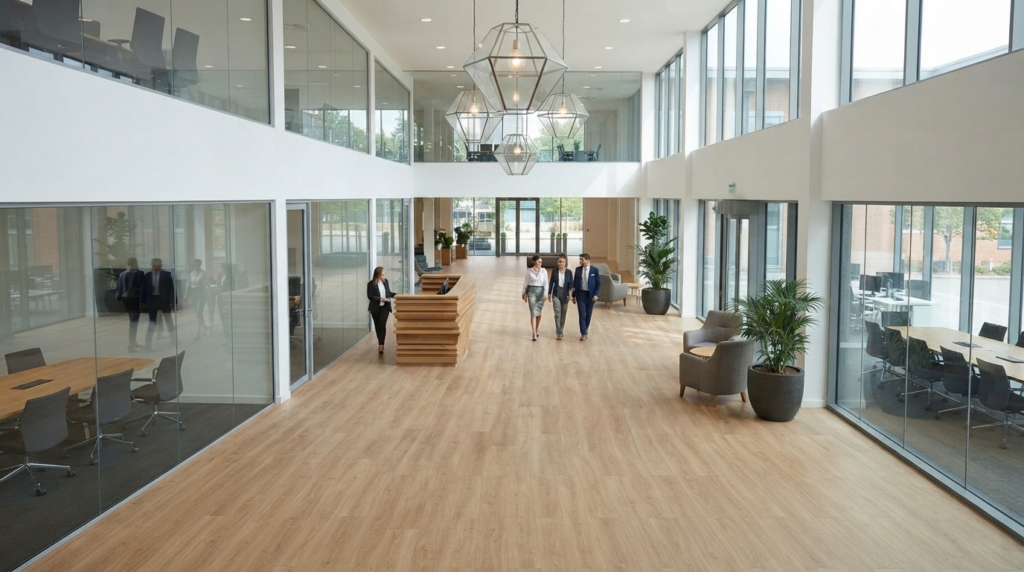
Offices, retail stores, medical offices, and restaurants have all leaned into LVP flooring over the last several years, and it’s easy to see why. It looks more polished than basic tile, it’s more forgiving than hardwood, and it’s a lot easier to maintain day to day. The tradeoff is that commercial spaces see far more foot traffic than a home does, which means dirt and grime build up faster, especially near entrances and in high-traffic hallways.
For business owners, professional LVP cleaning is usually about protecting the image of the space as much as anything else. A dull, grimy floor sends a message to customers and clients whether you mean it to or not. We work around business hours, whether that means early mornings, evenings, or weekends, so the cleaning doesn’t get in the way of the workday. Some clients bring us in for a one-time deep clean before an event or inspection, and others put us on a recurring schedule so the floors never get to the point where they need a major intervention.
How Often Should LVP Be Professionally Cleaned
For most homes, once or twice a year is enough to keep vinyl plank floors looking the way they did when they were installed. Homes with pets or a lot of foot traffic might benefit from a slightly more frequent schedule. Commercial spaces vary more depending on how much traffic they see. A quiet office might only need cleaning a couple of times a year, while a busy restaurant or retail storefront might do better on a quarterly or even monthly schedule. If you’re not sure where your space falls, that’s a conversation worth having before you commit to a schedule either way.
A Floor That Actually Stays Clean
Luxury vinyl plank was never meant to be high maintenance, and it doesn’t have to become that way. The key is matching the cleaning method to the material. A low-moisture, organic approach gets into the seams and lifts out what a mop leaves behind, without soaking the floor or introducing chemicals you’d rather not have in your home or business.
If your LVP floors are starting to look a little duller than they used to, or if it’s just been a while since they’ve had more than a surface-level clean, it might be time to bring in a professional to take a closer look.
Call (847) 962-5252 for a Free Quote
Carpet & Tile Plus