A professional tile and grout cleaning job typically runs within an industry-typical project price range, with most homeowners expecting a moderate project cost. That figure covers a standard bathroom or kitchen floor with average soil buildup. Price per square foot usually falls within a moderate range depending on grout condition and cleaning methods used.
Most companies also enforce a minimum service fee, so small jobs typically have a baseline charge regardless of room size.
- Light cleaning for routine maintenance is usually priced at lower rates per square foot.
- Moderate cleaning involving visible grime or some staining generally costs more per square foot.
- Heavy or restoration-level cleaning for neglected grout commands the highest square-foot prices.
- Minimum service calls are common to cover setup and travel costs.
Quick budget math: A 100-square-foot kitchen floor with moderate buildup lands near $150 to $250 before add-ons. Sealing, grout repair, or mold treatment can push that total higher, so build in some cushion when you’re comparing tile cleaning prices from local pros.
Key Takeaways
Professional tile and grout cleaning costs scale with soil condition and tile type, and the biggest budgeting mistake homeowners make is ignoring add-ons like sealing until the invoice arrives.
| Point | Details |
|---|---|
| Know your baseline | Budget $150 to $250 for a typical project, or $0.50 to $3.50 per square foot depending on soil level. |
| Expect a minimum fee | Small rooms often still cost $100 to $250 due to standard service minimums. |
| Grout condition drives price | Neglected, heavily stained grout can double or triple cleaning time compared to routine maintenance. |
| Budget for sealing | Add $0.40 to $1.00 per square foot for sealing, ideally scheduled the same visit as cleaning. |
| Compare quotes on specifics | Ask about method, chemistry, and inclusions rather than just the bottom-line number. |
| Certification reduces risk | Carpetandtileplus’s IICRC-certified crews and organic products across the Northwest Chicago Suburbs help avoid hidden damage costs and rework. |
Table of Contents
- How Much Does Grout Cleaning Cost by Billing Method?
- What Are Typical Tile Cleaning Prices per Square Foot?
- Why Do Tile and Grout Cleaning Quotes Vary So Much?
- What Do Common Tile Cleaning Projects Actually Cost?
- What Add-Ons Increase the Final Bill?
- What Should You Ask For in a Tile Cleaning Quote?
- Is DIY Tile Cleaning Cheaper Than Hiring a Pro?
- Why Certification and Experience Affect Your Final Price
- What Homeowners Get Wrong About Tile Cleaning Costs
- Get an Accurate Tile and Grout Quote for Your Chicago-Area Home
- Frequently Asked Questions
- Sources
How Much Does Grout Cleaning Cost by Billing Method?
Pros don’t all charge the same way, and understanding the three common billing structures helps you spot a fair quote from an inflated one.
Per-square-foot pricing is the most common approach for straightforward jobs. You measure the room, multiply by the rate, and you have a ballpark number before anyone shows up. This works well for open floors like kitchens and hallways where access is easy and the crew can move efficiently.
Hourly billing tends to show up on complicated jobs, heavily furnished rooms, or restoration work where nobody knows exactly how long the grout will fight back. Rates typically run $30 to $50 per hour per technician.
Flat minimum fees cover the reality that a 40-square-foot powder room still requires a truck, setup, chemicals, and drying time, regardless of size. That’s why service minimums of $100 to $250 are standard across the industry.
- Per-square-foot pricing is typical for large, open floors with easy access.
- Hourly pricing is common for cluttered or difficult-to-access rooms with uncertain soil levels.
- Flat minimums usually apply to smaller jobs.
A crew moving furniture out of a dining room before they can even start cleaning eats into the job’s profitability, and that setup time gets baked into the quote whether it’s itemized or not.
What Are Typical Tile Cleaning Prices per Square Foot?
Breaking costs down by square footage makes it easier to estimate your own project instead of guessing from a vague “it depends” answer.
- Light soil conditions typical of recent maintenance incur lower per-square-foot costs.
- Moderate soiling requiring occasional cleaning corresponds to moderate per-square-foot rates.
- Heavy soil or restoration cleaning, including neglected grout, commands higher per-square-foot pricing.
These ranges track closely with industry-reported averages of roughly $0.50 to $3.00 per square foot for basic through heavy cleaning.
Tile size and grout width matter more than most people expect. A room with 12 inch by 12 inch tiles and narrow grout lines cleans faster than the same square footage in small mosaic tile with wide, deep grout joints.
Natural stone such as travertine, marble, and slate require specialized, stone-safe cleaning methods that typically increase labor time and costs.
Why Do Tile and Grout Cleaning Quotes Vary So Much?
Two homes with identical square footage can get wildly different quotes, and it’s rarely random. A handful of specific factors drive most of that gap.
Tile size and grout width. Small tiles mean more grout lines per square foot, and every linear foot of grout has to be agitated and extracted individually. A floor with 2 inch mosaic tile can take twice as long to clean as the same area in 18 inch porcelain.
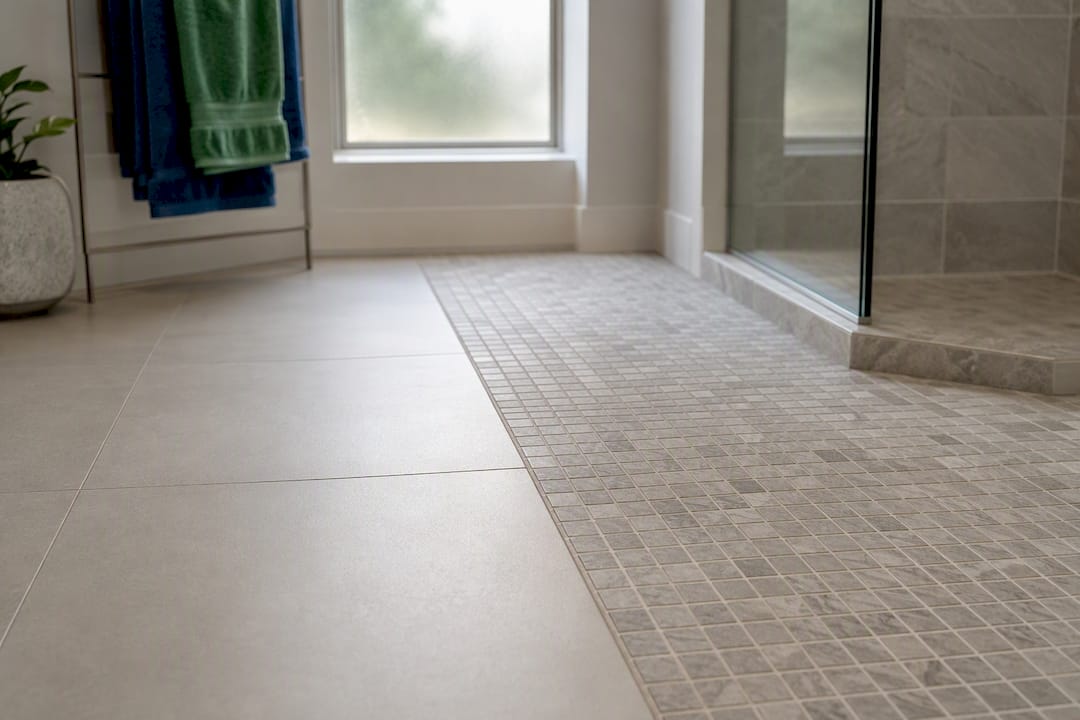
Grout condition. Neglected grout that’s absorbed years of dirt, grease, and mildew often needs multiple cleaning passes, poultice treatments, or restoration steps. That extra labor can double or triple the time required compared to routine maintenance, which is why a “cheap” quote on a badly stained floor should raise questions.
Location in the home. Shower walls and enclosures typically cost more per square foot than open floors because of vertical surfaces, tighter corners, and mold or soap scum buildup that floors don’t usually have.
Cleaning method. Truck-mounted extraction systems use hot water and strong vacuum recovery, pulling more contamination out of grout pores than portable or steam units can manage. That equipment difference affects both price and results, which we cover more in the steam and pressure cleaning guide.
Where you live. Labor costs vary by metro area, and BLS wage data shows meaningful regional differences in service-industry pay that filter directly into local quotes.
Pro Tip: If a quote seems unusually low for a heavily soiled floor, ask exactly what method they’re using. A rock-bottom price paired with a portable extractor usually means a rock-bottom result.
What Do Common Tile Cleaning Projects Actually Cost?
Converting per-square-foot ranges into real room totals makes budgeting far less abstract. The estimates below assume moderate soil conditions and standard ceramic or porcelain tile, using the $0.50 to $3.50 per-sq-ft range and the $100 to $250 minimum service fee where a room falls below it.
Larger jobs generally get a better effective rate per square foot, since fixed setup costs get spread across more area. That’s part of why bundling multiple rooms into one visit tends to lower your overall per-square-foot price compared to booking rooms separately.
What Add-Ons Increase the Final Bill?
The base cleaning price rarely tells the whole story. These extras show up often enough that you should ask about them before signing off on a quote.
- Grout sealing: $0.40–$1.00 per sq ft, recommended every 1 to 2 years to keep grout from reabsorbing stains
- Grout recoloring or color sealing: $1.00–$2.50 per sq ft, a good option for grout that’s stained beyond what cleaning alone can fix
- Full regrouting: priced separately and significantly higher than recoloring, reserved for cracked or missing grout
- Grout and tile repair: varies by scope, but small fixes like replacing cracked silicone caulk around tubs or showers are often a modest flat add-on
- Mold remediation: for surface mildew, this is usually part of a standard clean; extensive mold behind walls or under tile becomes a separate contractor job outside the scope of routine cleaning
Scheduling sealing during the same visit as your cleaning is usually smarter than booking it separately, since it locks in the clean result immediately and often costs less than a return trip. Our grout sealing guide breaks down when it’s worth it.
What Should You Ask For in a Tile Cleaning Quote?
A written quote is only useful if it actually lets you compare offers apples to apples. Before you accept anything, make sure it covers these points.
- Measured square footage, not a guess, ideally confirmed with a walkthrough or photos
- The per-square-foot rate or hourly rate being applied, and which billing model is in use
- A soil-condition classification (light, moderate, heavy) that explains the specific price you’re getting
- What’s included, such as furniture moving, a neutralizing rinse after cleaning, and hand-detailing in corners
- Estimated drying time, since this affects how soon you can use the room again
- The cleaning method, whether that’s truck-mounted extraction, portable equipment, or steam, along with confirmation of stone-safe chemistry if you have natural stone
- A clear add-ons section listing sealing, repair, or mold treatment as optional line items with their own prices
- Payment terms and any satisfaction guarantee
Pro Tip: Ask every company you’re comparing the same eight questions in the same order. Vague answers on method or inclusions are the biggest red flag in this entire process.
Is DIY Tile Cleaning Cheaper Than Hiring a Pro?
Renting equipment and buying supplies yourself looks cheap on paper, but the math gets less flattering once you factor in your own time and the results you’ll actually get.
- DIY supply costs: roughly $25–$200 for brushes, chemicals, and grout cleaner
- Rental extractor costs: typically $40–$75 per day, on top of your own labor
- Results gap: truck-mounted extraction systems use sustained heat and stronger vacuum recovery than rental units can match, so professional results usually last longer between cleanings
- Chemistry risk: using the wrong cleaner on marble or travertine can etch the stone permanently, turning a cheap DIY job into an expensive repair
- When DIY makes sense: light maintenance cleaning on durable ceramic or porcelain between professional visits
- When to call a pro: heavily soiled grout, natural stone, or any job where a bad outcome would cost more to fix than to prevent
Why Certification and Experience Affect Your Final Price
Carpetandtileplus has spent over 20 years cleaning tile and grout across the Northwest Suburbs of Chicago, and that track record shows up in how predictable a quote actually is.
- IICRC-certified cleaners follow standardized methods, which reduces the odds of using the wrong chemistry on a stone floor or under-cleaning grout that needs a second pass
- Organic cleaning products avoid harsh acidic formulas that can damage sensitive tile or grout surfaces
- A one-hour dry time limits disruption compared to slower-drying methods that can leave floors unusable for hours
- Hundreds of five-star reviews reflect consistent results across residential and commercial jobs alike
When you’re comparing quotes, ask each company directly about certification and equipment. It’s the fastest way to tell a properly quoted job from a lowball estimate that’s missing something.
What Homeowners Get Wrong About Tile Cleaning Costs
Most advice on this topic treats price like it’s purely a function of square footage, and that’s the first thing worth pushing back on. Two identical-sized bathrooms can generate quotes $150 apart because one has narrow grout lines in porcelain and the other has wide, neglected grout in small mosaic tile. Square footage is a starting point, not the whole answer.
The bigger blind spot is timing. Homeowners tend to call a cleaner only after grout has gone gray, and by then they’re paying restoration rates instead of maintenance rates. Getting ahead of that cycle, cleaning before staining sets in deep, and sealing right after, is the single biggest lever for keeping long-term costs down.
I’d also push back on chasing the cheapest quote reflexively. A quote that skips sealing, uses generic equipment, or can’t tell you its chemistry on stone isn’t actually cheaper. It just defers the cost to a future restoration job. Ask for specifics, not just a number, and you’ll spend less over the life of your floors.
Get an Accurate Tile and Grout Quote for Your Chicago-Area Home
Reading through per-square-foot ranges is useful, but the only number that actually matters is the one for your floors, your grout condition, and your square footage. That’s where a straight answer beats a rough estimate every time.

Carpetandtileplus has spent over 20 years cleaning tile and grout across the Northwest Suburbs of Chicago, including Elgin, Bartlett, Streamwood, Arlington Heights, Palatine, Barrington, and Hanover Park. Every job uses IICRC-certified technicians and organic cleaning products, so you’re not gambling on the wrong chemistry damaging natural stone or sensitive grout. The one-hour dry time also means you’re not stuck avoiding a room for half a day waiting on results.
If you want a real number instead of a national average, request a quote through our residential tile and grout cleaning page, and we’ll walk your space, classify the soil level honestly, and give you a written price with sealing and repair options laid out clearly, no surprises on the invoice.
Frequently Asked Questions
How much does grout cleaning cost for a small bathroom?
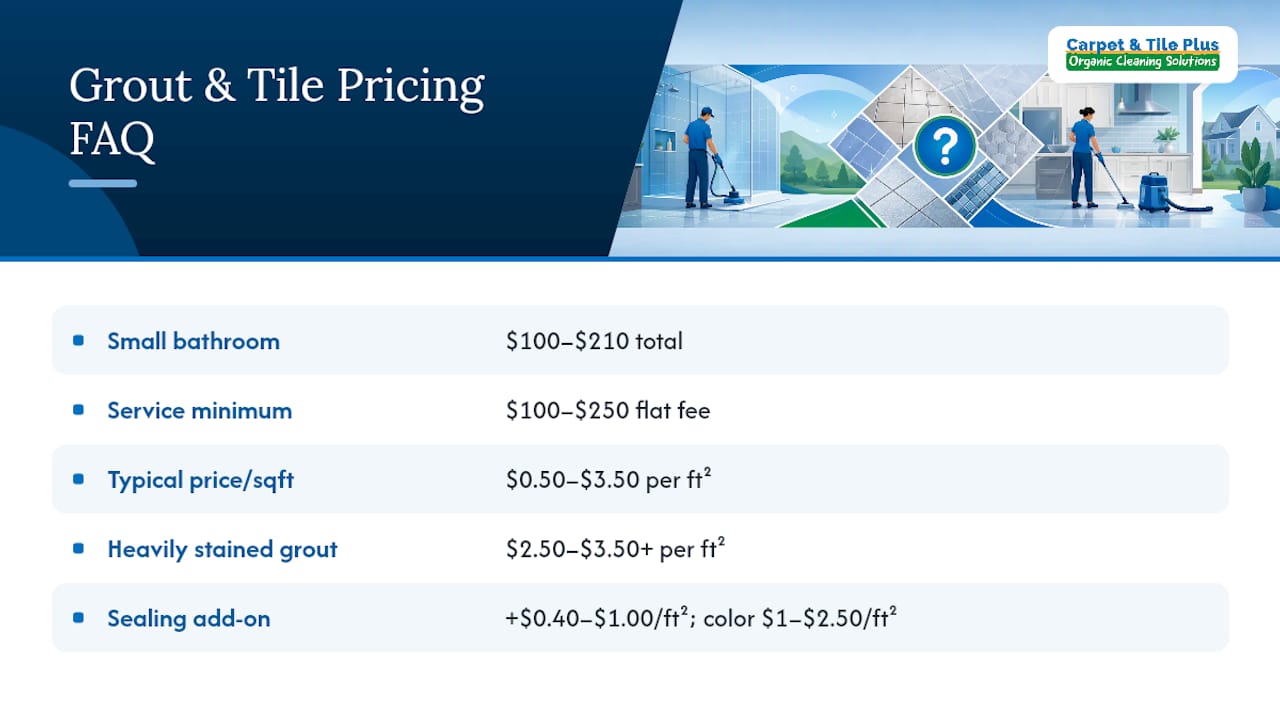
Most small bathrooms fall into the $100 to $210 range, though the service minimum of $100 to $250 often applies regardless of exact square footage.
Is tile and grout cleaning cost based on square footage or by room?
Most professionals price by square footage, typically $0.50 to $3.50 per square foot, but apply a flat minimum fee when a room’s total falls below that threshold.
How much is grout cleaning if the grout is badly stained?
Heavily neglected grout falls into the $2.50 to $3.50-plus per square foot range, since restoration work often requires multiple passes or poultice treatments that add significant labor time.
Does grout sealing cost extra on top of cleaning?
Yes. Sealing typically adds $0.40 to $1.00 per square foot, while color sealing or recoloring runs higher at roughly $1.00 to $2.50 per square foot. For more detail on when sealing makes sense, this homeowner-focused grout FAQ covers common questions well.
Is professional tile cleaning worth it compared to DIY?
For light maintenance, DIY can work fine. For heavily soiled grout or natural stone, professional truck-mounted extraction and correct chemistry usually deliver longer-lasting results and avoid the risk of permanent stone damage.
Sources
- How Much Does It Cost to Clean Tile and Grout? 2026 Data | Angi
- Professional Tile and Grout Cleaning: Costs & What to Expect | DG Floors
- Tile and grout cleaning cost | Fixr
- Occupational Employment and Wage Statistics (BLS)