Every time your HVAC system kicks on, it pushes air through a network of ducts that most homeowners never see and rarely think about. If those ducts are loaded with dust, mold spores, or allergens, air duct cleaning can genuinely improve home air quality by pulling those contaminants out before they recirculate through every room. The industry term for this process is HVAC duct cleaning, and it covers far more than vacuuming visible vents. This guide walks you through when it works, how it’s done right, and what you need to do afterward to keep the air in your home cleaner for the long haul.
Table of Contents
- Key Takeaways
- When air duct cleaning actually improves home air quality
- What to check before hiring a duct cleaning company
- The professional cleaning process vs. DIY options
- How to verify results and maintain clean air afterward
- My honest take on what duct cleaning actually delivers
- Breathe easier with Carpetandtileplus
- FAQ
Key Takeaways
| Point | Details |
|---|---|
| Cleaning isn’t always routine | The EPA recommends duct cleaning only when visible mold, pests, or excessive debris are present. |
| Professional scope matters | Effective cleaning covers all HVAC components, not just the visible duct openings. |
| HEPA vacuuming is non-negotiable | Improper equipment can release more contaminants than leaving ducts alone. |
| Post-cleaning steps sustain results | Upgrading to MERV 11-13 filters and controlling moisture prevents rapid recontamination. |
| High-risk households benefit most | Homes with pets, allergy sufferers, or recent renovations see the greatest air quality gains. |
When air duct cleaning actually improves home air quality
Not every home needs a duct cleaning, and knowing the difference saves you money and prevents unnecessary disruption. The EPA does not recommend routine duct cleaning on a fixed schedule. Instead, specific conditions trigger when the service is warranted.
Those triggers include:
- Visible mold growth inside ducts or on other HVAC components like coils and drain pans
- Rodent or insect infestation in the ductwork, leaving behind droppings and debris
- Excessive dust and debris that are visibly released from supply registers into living spaces
- Recent home renovation where drywall dust, insulation particles, or construction debris entered the system
When these conditions exist, your ducts are acting as a reservoir. Every time the fan runs, it picks up what’s sitting in there and delivers it straight into your breathing space. Airborne particulates can drop by 30% to 50% after a thorough professional cleaning, particularly particles in the 1 to 10 micron range that travel deepest into the lungs.
Homes with pets, allergy sufferers, or located in high-pollen areas accumulate contaminants faster. For these households, duct cleaning frequency may need to be reconsidered more seriously than for the average home. If your family is sneezing constantly, waking up congested, or noticing more dust on surfaces than usual, check the 5 signs your ducts need attention before assuming the problem lies elsewhere.
Duct cleaning is most effective as a condition-based solution. When you treat it as a response to a real problem rather than something you schedule annually out of habit, you get results that are measurable and meaningful.
What to check before hiring a duct cleaning company
Hiring the wrong company is worse than not cleaning at all. A poorly executed job can release more contaminants than were in the ducts to begin with. Here is what you need to verify before anyone touches your system.
Confirm the service scope covers the entire HVAC system. A reputable company cleans not just the supply and return ducts but also the air handler, evaporator coils, drain pans, and blower motor. Cleaning only the accessible duct sections leaves contamination behind that will spread right back through the system within days.
Ask about their vacuum equipment. The company must use a negative-pressure vacuum system with HEPA filtration or exhaust it directly outside the home. Anything less risks pushing dust and debris into rooms that were clean before the technician arrived. This is one of those details that separates professionals from operations that cause more harm than good.
Request visual documentation. Before-and-after photos taken with a duct camera give you proof the job was done. A company unwilling to provide this should be a red flag. Ask for a post-cleaning checklist aligned with EPA guidelines that you can verify room by room.
- Ask whether they are NADCA-certified, which indicates training in proper HVAC cleaning standards
- Confirm they will seal any access holes they create in ductwork during the process
- Ask specifically how they handle mold: treatment requires more than vacuuming and should be disclosed upfront
- Get a written estimate that itemizes what components are being cleaned
Professional duct cleaning typically runs between $450 and $1,000 depending on home size and contamination level. That range reflects legitimate, full-system work. Quotes that are dramatically lower almost always mean partial cleaning that won’t deliver the air quality improvement you’re expecting.
Pro Tip: Before the technician starts, walk through the home together and identify every vent register, the air handler location, and any known problem areas like musty smells near certain vents. This reduces the chance of any zone being skipped.
The professional cleaning process vs. DIY options
Understanding how a proper cleaning works helps you verify that it’s being done correctly when a technician is in your home.
How professional HVAC duct cleaning works
- System inspection. The technician inserts a camera into the ductwork to document contamination levels and identify any structural issues before cleaning begins.
- Negative-pressure setup. A powerful truck-mounted or portable HEPA vacuum is connected to the main trunk line, creating negative pressure that pulls debris toward the collection unit rather than into the home.
- Mechanical agitation. Technicians use rotating brushes and compressed air whips to dislodge debris from duct walls. This is what distinguishes professional work from a shop-vac job.
- Component cleaning. The evaporator coil, blower, drain pan, and air handler housing are cleaned separately. Skipping these means contaminants will re-enter the duct system immediately.
- Final inspection and sealing. The technician re-photographs cleaned areas, seals all access points, and provides the post-cleaning report.
Professional cleaning also delivers meaningful benefits beyond air quality. Removing debris improves airflow and heat exchange efficacy, which means your HVAC system runs more efficiently and experiences less wear over time. That combination of air quality improvement and energy savings makes the service worth considering when conditions warrant it.
DIY duct cleaning: where it works and where it doesn’t
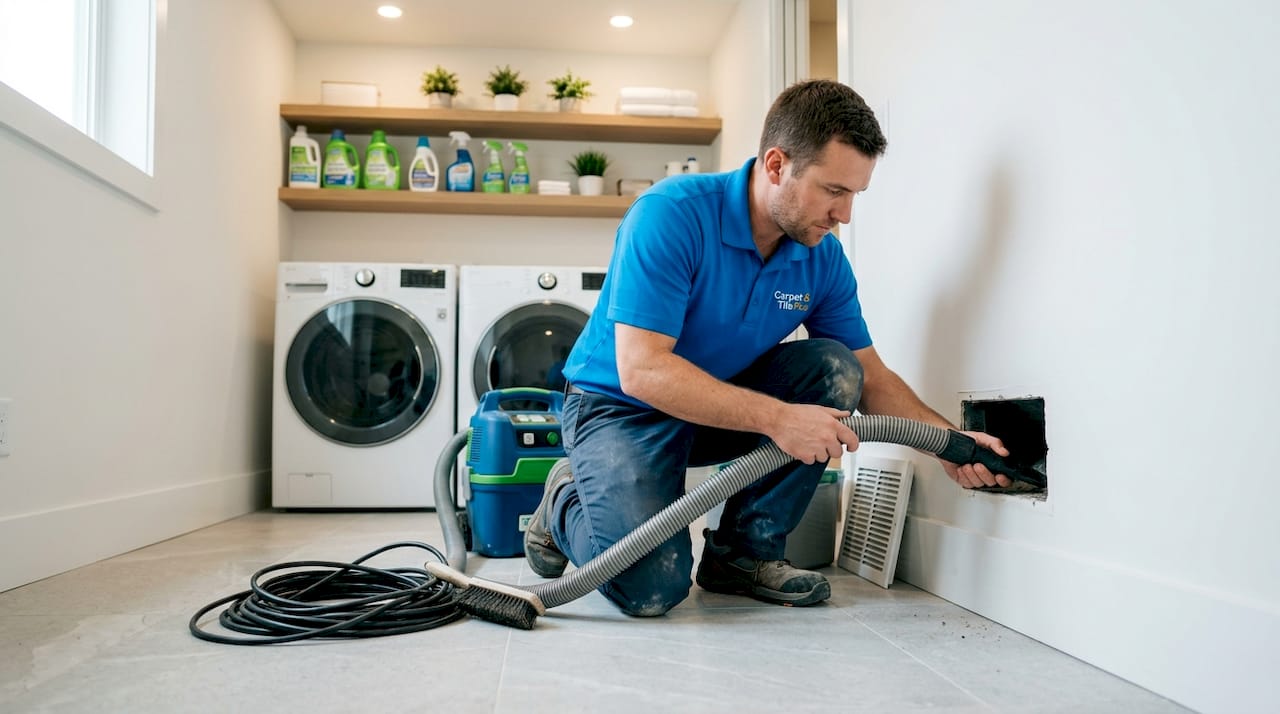
| Factor | DIY Cleaning | Professional Cleaning |
|---|---|---|
| Equipment reach | Limited to visible duct sections | Full system access with specialized tools |
| Suction power | Standard vacuums lack force for deep debris | Truck-mounted units create true negative pressure |
| Component cleaning | Not feasible for coils or blower | All HVAC components addressed |
| Cost | Low upfront, limited results | $450 to $1,000 for thorough work |
| Best for | Light dust on registers and visible surfaces | Mold, infestation, or heavy contamination |
DIY cleaning has a narrow but real use case: removing surface dust from register covers and the first few inches of duct runs. Residential vacuums lack the suction and reach to clean deep sections, and improper brushing can dislodge debris that then settles further into the system. For anything beyond light maintenance, professional help is the responsible choice.
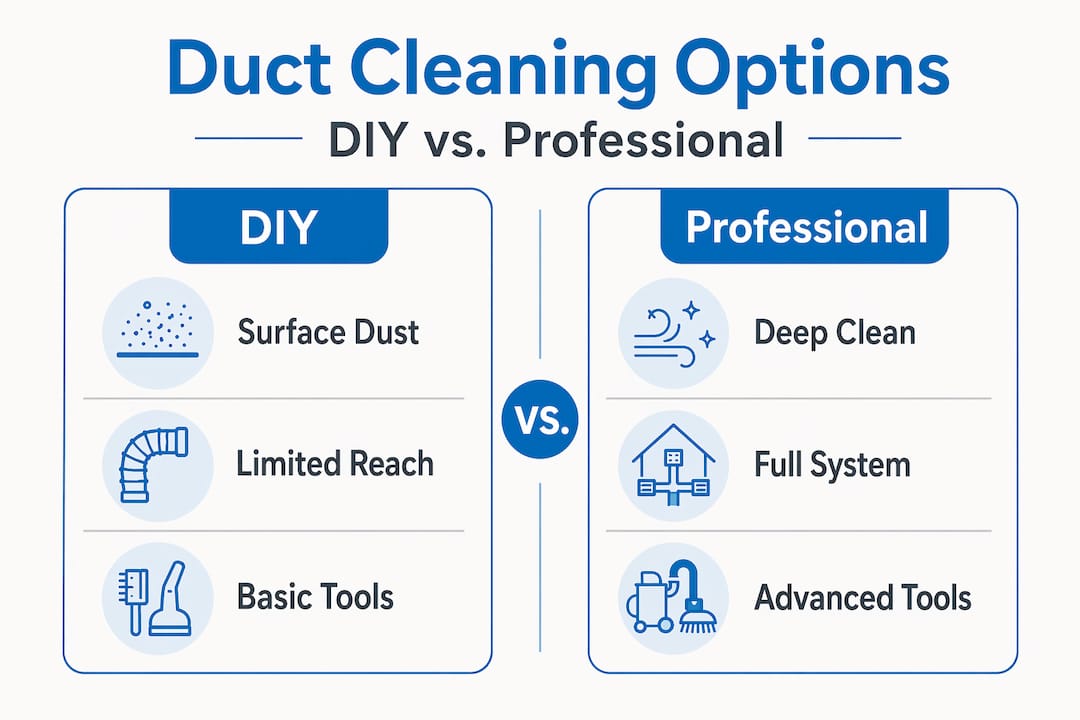
Pro Tip: If you are doing basic DIY maintenance between professional cleanings, use a soft brush on register covers and a vacuum with a HEPA filter. Never use compressed air without a vacuum running simultaneously, or you will push dust deeper into the system.
How to verify results and maintain clean air afterward
The cleaning is only half the job. What you do in the days and weeks after determines how long the improvement lasts.
Start with a visual inspection. Look inside accessible registers with a flashlight. Duct walls should look visibly cleaner. If you see debris clinging to walls near the registers, something was missed. Use the EPA-aligned post-cleaning checklist to walk through every zone and verify completion.
Upgrade your filter immediately. This is the most overlooked step. Switching to a MERV 11 to 13 filter after a professional cleaning captures the fine particles that your ducts no longer trap. Upgraded HVAC filters combined with moisture control give you a layered defense that keeps air quality high between service visits.
Control humidity year-round. Mold doesn’t need much to restart. Keep indoor humidity between 30% and 50% using a dehumidifier in humid months. This is especially relevant if mold was the reason you scheduled the cleaning in the first place.
Here are practical habits that slow down recontamination:
- Remove shoes at the door to keep tracked-in particles from becoming airborne
- Vacuum carpets with a HEPA-filter vacuum at least once a week, since carpet traps the same allergens that end up in ducts (you can also explore how carpet cleaning supports overall air quality)
- Change HVAC filters on the schedule recommended for your MERV rating, typically every 60 to 90 days
- Run exhaust fans in bathrooms and kitchens to prevent moisture from entering the HVAC system
Pro Tip: Set a calendar reminder to check your air filter monthly for the first three months after a professional cleaning. You will likely see it load up faster as the system normalizes, which is normal and shows the filter is doing its job.
My honest take on what duct cleaning actually delivers
I’ve seen homeowners fall into two camps. The first group expects duct cleaning to cure every air quality problem in the home. The second dismisses it entirely because they read that there’s no strong proof it helps healthy systems. In my experience, the truth sits squarely in the middle.
What I’ve learned after years in this industry is that duct cleaning works best as a targeted fix, not a wellness subscription. When a family with a dog, two kids with asthma, and carpet throughout the house finally gets their ducts cleaned after five years, the difference is real and fast. Many of those families report noticeably easier breathing within days of the cleaning. That kind of relief isn’t coincidental.
Where I see duct cleaning fail to deliver is when companies clean only the visible ductwork and skip the air handler and coils. I’ve reviewed enough post-cleaning complaints to know that incomplete scope is the single biggest reason homeowners feel like they wasted their money. The whole HVAC system is connected. Cleaning part of it and ignoring the rest is like washing half a glass.
My recommendation: treat duct cleaning as one piece of a broader indoor air quality strategy. Combine it with a filter upgrade, humidity control, and regular carpet and surface cleaning. That combination does what no single service can do alone.
— Jim
Breathe easier with Carpetandtileplus
If you recognize any of the warning signs in this article, from musty smells to visible dust buildup around your vents, Carpetandtileplus is ready to help. Serving homeowners throughout the Northwest Suburbs of Chicago including Elgin, Bartlett, Streamwood, Arlington Heights, and Palatine, our IICRC-certified technicians follow EPA-aligned best practices for every job.
Our residential duct cleaning services cover the full HVAC system, not just the duct openings, with before-and-after documentation so you can see exactly what was removed. We also offer air duct sanitization for homes dealing with mold or bacterial growth, and our carpet cleaning services complement duct cleaning by removing allergens trapped in fibers that would otherwise cycle back through your vents. With over 20 years of experience and hundreds of five-star reviews, we make it straightforward to get your home’s air working for your family instead of against it. Call us or schedule online today.
FAQ
When does air duct cleaning actually improve air quality?
Air duct cleaning improves indoor air quality most significantly when ducts contain visible mold, pest debris, or heavy contamination releasing particles into the home. The EPA does not recommend cleaning as routine maintenance without one of these specific conditions present.
How much does professional duct cleaning cost?
Professional HVAC duct cleaning typically costs between $450 and $1,000 depending on home size and contamination level. Quotes significantly below this range often indicate partial cleaning that won’t deliver full air quality improvement.
Can I clean my air ducts myself?
DIY cleaning is limited to surface dust on registers and the first few inches of duct runs. Professionals use negative-pressure HEPA vacuuming and mechanical agitation that residential equipment cannot replicate, making professional service necessary for any serious contamination.
How long does improved air quality last after duct cleaning?
Results last longest when you pair the cleaning with a MERV 11 to 13 filter upgrade, humidity control between 30% and 50%, and regular vacuuming with a HEPA filter. Without these follow-up steps, recontamination can occur within a few months.
Do pets and allergies mean I need more frequent duct cleaning?
Homes with pets, allergy sufferers, or high pollen exposure accumulate contaminants faster than average. These households should inspect ducts more frequently and may need professional cleaning more often than the typical recommendation for low-risk homes.