
Sweep or vacuum away loose grit first, then work a neutral-pH, residue-free cleaner into the grooves with a soft nylon brush, rinse with clean water from a separate bucket, and dry the surface. Skip acids, bleach, ammonia, and anything marketed as a gloss booster since these can etch the glaze or leave a slippery film behind. If grout still looks dark after that routine, or soil sits deep in the texture, the job has moved past what a mop and brush can fix.
TL;DR:
- Regular sweeping or vacuuming removes loose grit, preventing soil from embedding deeper into textured tiles and grout lines.
- Use a neutral-pH, residue-free cleaner with a stiff-bristled brush for deep cleaning textured tiles, avoiding acids or harsh chemicals that can damage surfaces.
- Deep cleaning every three to six months involves thorough rinsing with separate rinse water to prevent reintroducing grime into the grooves.
- Natural stone textures require stone-specific cleaners, and applying acidic or unapproved products can etch or damage the surface.
- Persistent grout stain or soil embedded deep in the texture indicates a need for professional cleaning rather than intensive DIY efforts.
Table of Contents
- What Textured Tile Is and Why It Traps Soil
- Are Textured Tiles Harder to Clean? Setting Realistic Expectations
- Tools and Cleaners That Actually Work on Textured Tile
- The Routine Cleaning and Deep-Clean Sequence, Step by Step
- Deep Stains and Grout Problems: Where Acids Fit In
- Showers, Vinyl, and Other Textured Surfaces
- Common Mistakes That Undo Good Cleaning
- When to Call a Professional and What to Ask Them
- Keeping Textured Tile Clean Between Deep Cleans
- What Years of Tile Jobs Actually Teach You
- A Professional Option for Textured Tile That Won’t Come Clean
- Sources
- FAQ
What Textured Tile Is and Why It Traps Soil
Textured tile isn’t one material. It might be glazed porcelain with a raised pattern pressed into the surface, unglazed porcelain with texture built into the body itself, ceramic with a slip-resistant coating, or natural stone like slate or travertine with a naturally uneven face. Each reacts differently to cleaners, which is why guessing at chemistry is risky.
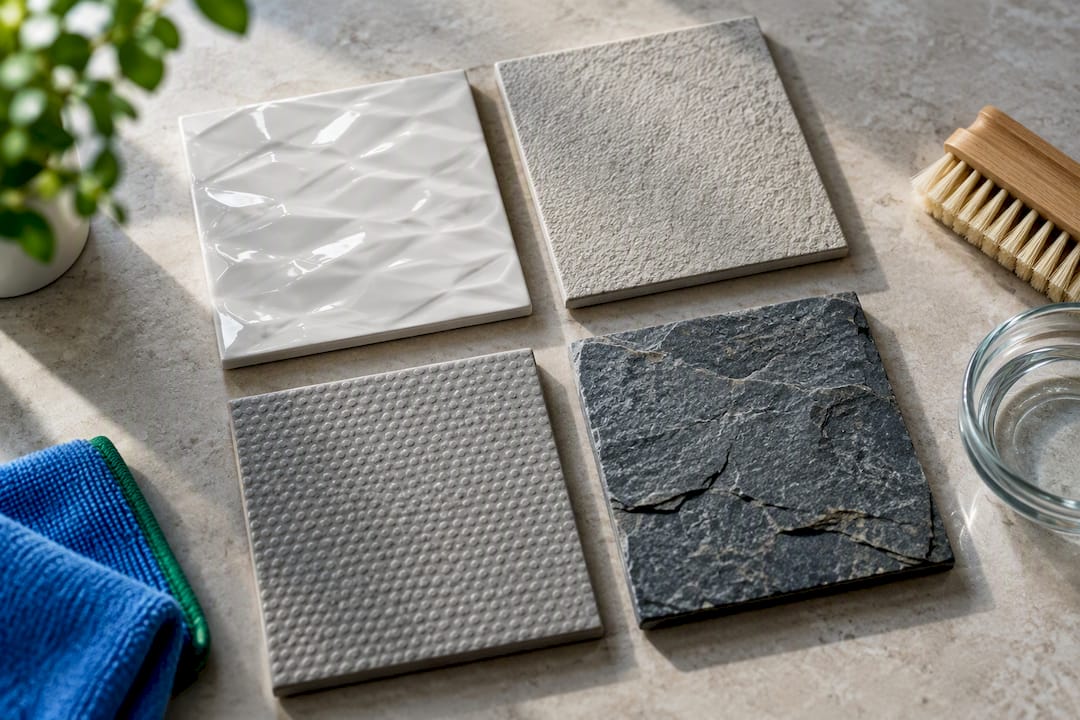
The texture itself is the real challenge, not the material underneath it. Every groove and dimple is a place for grit, grease, and skin oils to settle out of reach of a flat mop pad. That’s why mechanical agitation, not stronger chemicals, does most of the real work on these floors.
A quick way to identify what you’re dealing with:
- Glazed tile has a shiny or matte coating you can see catch the light; unglazed porcelain looks the same color all the way through a chipped edge.
- Natural stone shows visible mineral veining or color variation from tile to tile, since no two pieces are identical.
- Vinyl flexes slightly underfoot and feels warmer to the touch than ceramic or stone.
Check any installation paperwork or the manufacturer’s website before choosing a cleaner. Marazzi’s own tile care and maintenance guidance recommends neutral-pH products and non-metallic brushes as the safe default across most glazed and textured lines.
Are Textured Tiles Harder to Clean? Setting Realistic Expectations
Textured tile takes more elbow grease, not more chemistry. The texture demands agitation and a clean rinse; it doesn’t make the floor impossible to keep looking good. Where people get frustrated is usually a mismatch between the problem and the fix.
Three distinct issues get lumped together under “my tile looks dirty”:
- Grout staining from years of dirty mop water being pushed into porous grout lines.
- Residual film from cleaners that were never fully rinsed, which dulls the surface and can attract more dirt.
- Embedded grit sitting in deep texture that a flat mop simply glides over instead of lifting out.
None of these mean the tile is damaged, and none of them require harsh chemicals. For upkeep, sweep or vacuum every few days, damp mop weekly, and plan a proper deep clean every three to six months depending on foot traffic.
Tools and Cleaners That Actually Work on Textured Tile
The right combination is boring on purpose: a neutral cleaner, a brush with some bristle stiffness, and two buckets. Here’s what belongs in the toolkit.
- Neutral-pH, residue-free cleaner for glazed porcelain and ceramic. This is the safe default for most floors and won’t leave the hazy film that all-purpose degreasers can.
- Stone-specific neutral cleaner for natural stone textures like slate or travertine, never a generic tile product, since stone chemistry is unforgiving.
- Manufacturer-approved cleaner for textured vinyl. Vinyl is resilient flooring, not tile, and needs its own product line entirely.
- Vacuum with a hard-floor setting to lift loose grit before any liquid touches the floor.
- Soft nylon brush or a dedicated grout brush for working cleaner into recesses. A purpose-built cleaning brush reaches channels a mop pad never will.
- Deck brush for heavily abrasive commercial-grade tile only, and only when the manufacturer’s instructions allow it.
- Microfiber flat mop for routine damp mopping between deep cleans.
Steam mops deserve a caveat. They can work well on compatible glazed tile, but check with the manufacturer before using one on textured vinyl or moisture-sensitive stone, since heat and trapped steam can cause damage that isn’t obvious until later.
Pro Tip: Never mix cleaning chemicals, even two products that seem similar. Wear gloves with anything stronger than a basic neutral cleaner, and always test a hidden section of floor before treating the whole room.
The Routine Cleaning and Deep-Clean Sequence, Step by Step
Most textured tile problems come down to skipping steps, not skipping products. Here’s the order that actually works.
Routine maintenance (weekly):
- Sweep or vacuum the entire floor to remove loose grit before any liquid touches it.
- Damp-mop with a diluted neutral cleaner, working in small sections rather than the whole room at once.
- Go over the same area with a clean-water rinse mop, changing the water when it looks cloudy.
- Let the floor air dry or wipe it down with a dry microfiber cloth to avoid streaking.
Deep clean (every three to six months, or when grout looks dull):
- Clear the room of furniture and rugs, then vacuum thoroughly.
- Set up two buckets: one with diluted neutral cleaner, one with clean rinse water. Marazzi’s own guidance calls for exactly this separate wash-and-rinse setup to avoid pushing dirty water back into the texture.
- Work in manageable small sections. Apply the cleaning solution and let it dwell for the time listed on the product label.
- Scrub grout lines and textured recesses with a soft nylon brush, using enough pressure to break up embedded soil without scratching the glaze.
- Mop up the dirty solution before it dries on the surface.
- Rinse the same section with clean water from the second bucket.
- Change both buckets as soon as the water looks dirty. This single habit prevents the most common cleaning failure: redistributing grime right back into the grooves you just cleaned.
- Move to the next section and repeat, then let the whole floor dry completely before replacing furniture.
Test any new cleaner on a small, hidden section first, and never let a cleaning solution sit and dry on the tile if the product label warns against it.
Deep Stains and Grout Problems: Where Acids Fit In
Acid-based cleaners exist for a reason, but they’re a last resort, not a starting point. Acids can etch glazed tile and damage calcareous natural stone like marble or limestone, and even where they’re safe, they demand careful handling.
Before reaching for anything stronger, run two quick tests:
- Wipe test: rub the stained area with a clean, damp microfiber cloth. If color transfers to the cloth, you’re looking at surface residue, not a true stain.
- Water rinse test: flood the spot with clean water and let it sit for a minute. If the discoloration lightens noticeably, it’s likely trapped soil rather than permanent staining.
If both tests fail, move up in stages: try a higher-strength neutral commercial tile and grout cleaner before anything acidic, and increase brush agitation before you increase chemical strength. Product technical data sheets, like the one for TileLab’s concentrated grout and tile cleaner, spell out dilution ratios, dwell times, and PPE requirements for exactly this kind of escalation. Acid-based grout haze removers are a narrow, specialist tool that call for small controlled areas, immediate flushing, and protective gear, and they’re often unsuitable for glazed tile altogether. If grout is stained beyond what any of this fixes, re-grouting is usually cheaper and more reliable than trying to remove the stain continuously.
Showers, Vinyl, and Other Textured Surfaces
Textured shower floors, textured vinyl, and natural stone each come with their own rules, and treating them all the same is how damage happens.
- Textured shower floors need a tile-and-grout-compatible neutral cleaner and a non-metallic brush. Rinse thoroughly and run the bathroom fan afterward, since trapped moisture in deep texture is what breeds mildew.
- Textured vinyl is resilient flooring, not tile, so tile acids and grout cleaners have no place here. Manufacturer guidance from Armstrong Flooring makes clear that vinyl needs its own approved, residue-free, pH-neutral products.
- Natural stone with texture, like slate or travertine, needs a neutral stone-specific cleaner and a test patch every time, since calcareous stones are sensitive to even mild acids that would never bother porcelain.
Common Mistakes That Undo Good Cleaning
A few habits quietly sabotage otherwise careful cleaning routines.
- Reaching for acids, ammonia, or bleach on tile or grout that isn’t rated for them, which can discolor grout or etch glazed surfaces.
- Choosing a gloss-building cleaner for looks. Trade guidance from TileLetter points out that residue from these products can actually reduce slip resistance on floors that need it most.
- Mopping with the same dirty water for the whole house, which just moves soil from one room to the next instead of removing it.
- Letting cleaner sit and dry on the tile when the label specifically warns against it, which often leaves a stubborn film that’s harder to remove than the original dirt.
Pro Tip: If a cleaner leaves the floor looking hazy once it dries, that’s residue, not a sign you need a stronger product. Go back over it with plain water and a clean mop pad.
When to Call a Professional and What to Ask Them
Some situations are worth handing off. Grout that stays dark after a correctly done deep clean, soil embedded deep in heavy texture, or a floor too large to rinse in small controlled sections before the cleaner dries are all signs it’s time to call someone. Marazzi’s own cleaning tips note that badly discolored grout sometimes needs specialized chemistry or re-grouting, and a professional should identify your tile and grout type before choosing either one.
Before booking anyone, ask:
- How will they identify the specific tile and grout before choosing a cleaning method?
- What chemistry are they proposing, and will they test it on a hidden area first?
- How do they recover and dispose of dirty rinse water so it doesn’t recontaminate the floor?
- Do they recommend sealing afterward, and why?
Professional tile and grout cleaning services often use certified technicians and organic cleaning products, aiming for a short dry time to limit how long a room is out of commission. That combination of certification, low-moisture methods, and over 20 years in the business is a reasonable benchmark for what any homeowner should expect from a professional residential tile and grout cleaning appointment.
Keeping Textured Tile Clean Between Deep Cleans
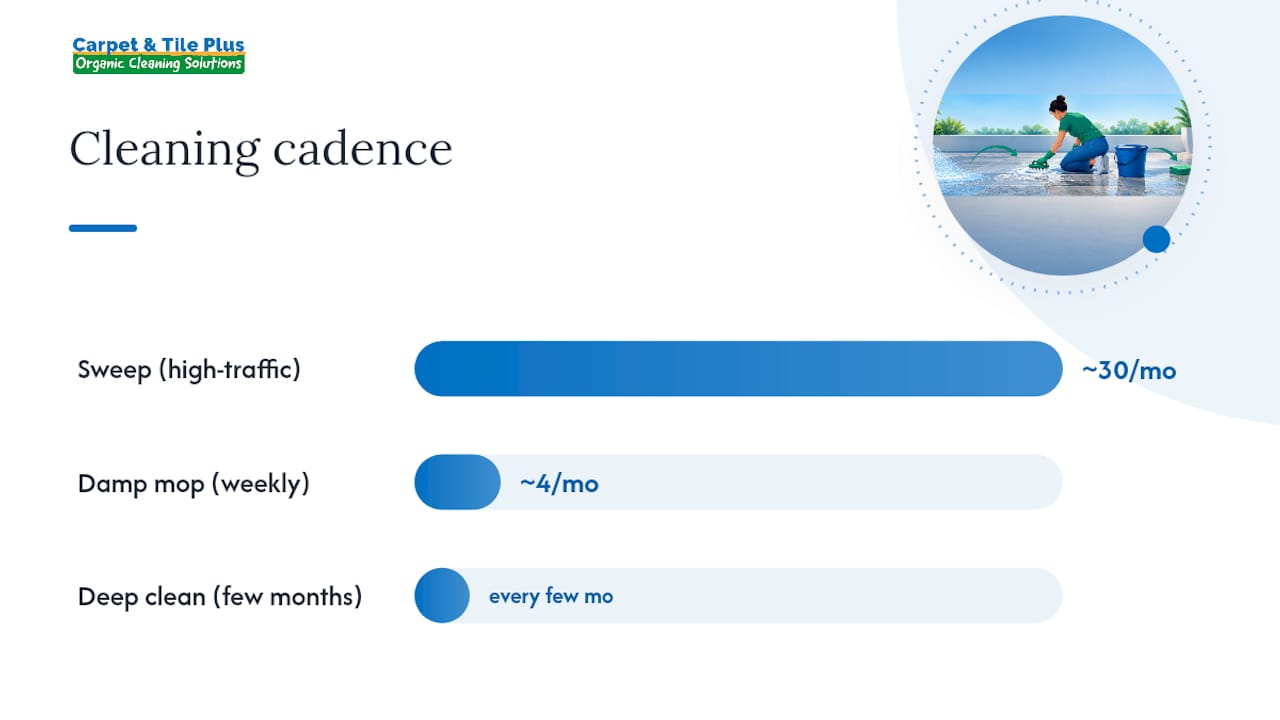
The floors that stay looking good longest aren’t cleaned harder, they’re cleaned on a schedule. Sweep daily in high-traffic areas, damp mop weekly, and deep-clean every few months based on how much foot traffic the room sees.
Sealing grout helps prevent staining, but it’s not a substitute for cleaning. Sealer fills the porous surface of grout so liquids bead up instead of soaking in, but it does nothing once soil is already ground into a groove, and compatibility testing matters since not every sealer works with every grout type.
A few habits do more than any product:
- Place mats at exterior doors to cut down on the grit that gets tracked in.
- Wipe up spills immediately instead of letting them sit and dry into the texture.
- Skip waxes or gloss additives entirely. They build up over time and eventually need to be stripped off, undoing whatever time they saved.
What Years of Tile Jobs Actually Teach You
Change your rinse water more often than feels necessary. That one habit prevents more streaking and grout staining than any premium cleaner on the shelf. Test on a hidden patch before treating the whole floor, and trust agitation over stronger chemistry almost every time. Textured tile rewards patience and a decent brush far more than it rewards anything expensive.
— Jim
A Professional Option for Textured Tile That Won’t Come Clean
If the deep-clean routine above still leaves grout looking tired or you’d simply rather not spend a Saturday on hands and knees, Professional services can handle textured floors that challenge DIY efforts, offering residential tile and grout cleaning, grout sealing, slip-resistance treatments for showers and entryways, and LVP floor cleaning for homes that mix vinyl with tile.

Such jobs typically start with testing on a hidden section before any cleaner touches the visible floor, use organic cleaning products, and aim for a dry time that minimizes room downtime. This approach aims for a faster turnaround than many low-moisture alternatives, minimizing the time spent stepping around wet tile. If your grout has gone gray no matter how many times you’ve scrubbed it, get a quote through the residential tile and grout cleaning page and let someone else handle the section-by-section rinse work.
Sources
For readers who want to go straight to the manufacturer and trade guidance behind this article: Marazzi’s tile care and maintenance page and tile and grout cleaning tips cover day-to-day care, TileLetter offers trade-level perspective on cleaner chemistry and slip resistance, and the TileLab technical data sheet spells out exact dilution and dwell-time specifications for deep-clean products.
- Tile Care and Maintenance | Marazzi USA
- Suitable cleaners for tile and grout – TileLetter
- TileLab® Grout & Tile Concentrated Cleaner / TDS-254
- Armstrong Flooring – care guidance
FAQ
Are Textured Tiles Difficult to Clean?
They take more scrubbing than smooth tile, but they aren’t difficult once you know the routine. Sweep or vacuum first, use a neutral-pH cleaner with a soft brush to work cleaner into the grooves, then rinse with clean water so you’re not redepositing soil back into the texture.
What Is the Best Cleaner for a Textured Shower Floor?
A neutral-pH, tile-and-grout-compatible cleaner paired with a non-metallic brush works best on textured shower floors. Rinse thoroughly and ventilate the bathroom afterward, since trapped moisture in deep texture encourages mildew growth.
What Type of Mop Is Best for Cleaning Textured Tile Floors?
A microfiber flat mop handles routine cleaning well, but it can’t reach into deep grooves on its own. For anything beyond light dust, pair it with a soft nylon or dedicated grout brush to agitate the recesses before rinsing.
What Is the Best Floor Cleaner for Textured Vinyl Floors?
Use only the cleaner your vinyl flooring manufacturer approves, since tile chemistry isn’t automatically safe for vinyl. Tile-specific products, especially anything acid-based, can damage the vinyl’s finish even when they’re perfectly safe on porcelain.
How Do I Know If My Textured Tile Needs Professional Cleaning?
If grout still looks dark after a correct deep clean, or soil sits embedded deep in the texture despite proper agitation, it’s time to call a professional. Carpet and Tile Plus uses IICRC-certified technicians and organic cleaners with a one-hour dry time for exactly these situations.