
Blot with a white cloth and cool water immediately, and skip the scrubbing; for additional tips, see how to clean blinds naturally for spotless results. Fresh coffee spills, treated within the first two hours, usually lift out completely with basic supplies already in your kitchen. Once a stain has dried, been scrubbed with the wrong product, or sat under heat, your odds drop fast, and that’s when testing an oxidizer in a hidden spot first, or calling in an IICRC-certified cleaner, makes more sense than fighting it alone.
TL;DR:
- Fast action is crucial for coffee spills, with immediate blotting and rinsing greatly increasing the chances of complete stain removal.
- Older or dried stains may require oxygen-based or peroxide oxidizer treatments, but testing for colorfastness is essential to prevent damage.
- Natural fibers like wool and silk are delicate and often need professional cleaning, especially if the stain is old or has been scrubbed with harsh chemicals.
- Portable extractors significantly improve stain removal by removing moisture from deeper carpet layers, reducing the risk of re-soiling.
- Proper drying techniques and routine maintenance, including vacuuming and fiber protector reapplication, are essential for preventing stain reappearance and extending carpet lifespan.
Table of Contents
- How Do You Get a Fresh Coffee Stain Out of Carpet?
- What’s the Best Way to Remove a Dried Coffee Stain?
- DIY Remedies vs. Store-Bought Spotters vs. Portable Extractors
- Does Your Carpet’s Fiber Type Change the Approach?
- When Should You Call a Professional Instead?
- How Do You Stop a Coffee Stain From Coming Back?
- Keeping Carpet Looking Good Long After the Stain Is Gone
- A Carpet Cleaner’s Honest Take on Coffee Stains
- Ready for Professional Carpet Stain Removal?
- Sources
How Do You Get a Fresh Coffee Stain Out of Carpet?
Speed matters more than product choice here. Coffee carries tannins, chromogens, and oils, and each one behaves differently on carpet fiber, which is why a single wipe with a paper towel rarely finishes the job.
Gather your supplies before you start: a few clean white towels or microfiber cloths, a spray bottle of cool water, mild dish soap, baking soda, and an oxy-based carpet spray if you have one on hand. A portable spot extractor speeds things up considerably if you own one.
- Blot from the outer edge of the stain toward the center with a dry white towel. Never rub. Rubbing pushes coffee deeper into the fibers and spreads it wider.
- Dampen the area with cool water from your spray bottle and blot again. Hot water sets the tannin stain and makes it harder to remove later.
- If color remains, mix a few drops of mild dish soap into one cup of cool water and spray lightly.
- Blot with a clean towel, then rinse the spot with plain water to remove soap residue.
- If the stain persists, apply a small amount of oxy stain spray or run a portable extractor over the area following the product label.
- Finish by drying the spot with a fan or open window airflow rather than a heater.
Test any product on a hidden corner of carpet first. Dish soap works, but leftover residue attracts dirt and can make the spot re-soil faster than the rest of your carpet, according to BISSELL’s cleaning guidance. Rinse thoroughly, every time, even if the stain looks gone.
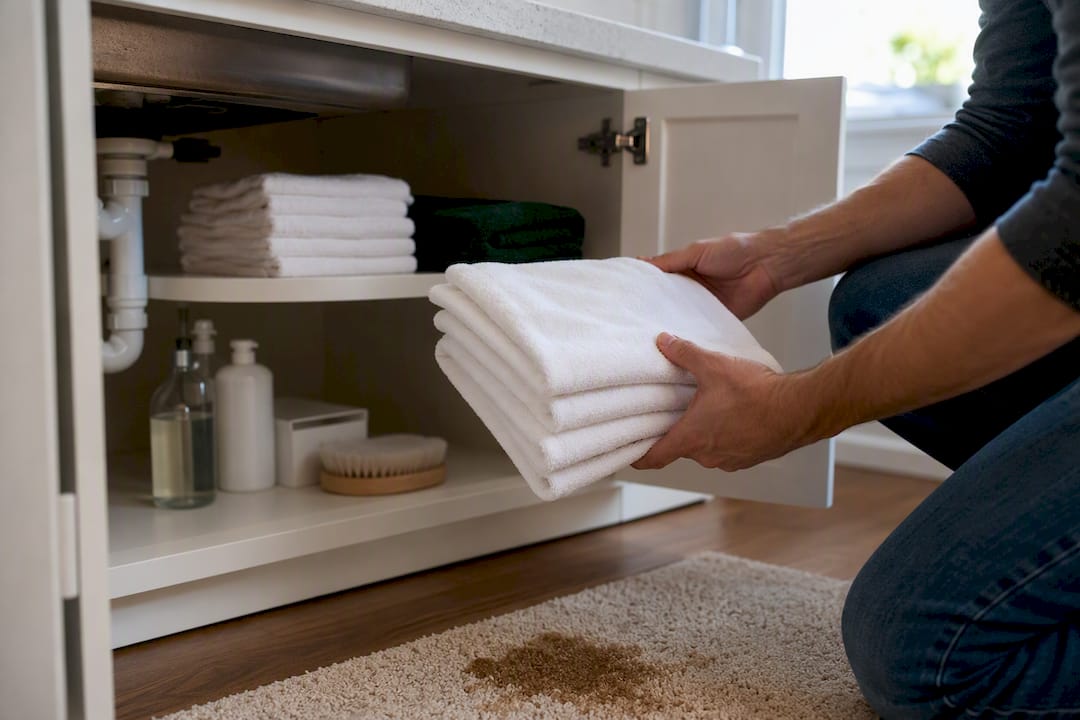
Pro Tip: Keep a stack of plain white towels under your sink specifically for spills. Colored or printed towels can transfer dye onto damp carpet fibers, turning a coffee stain into a two-color problem.
What’s the Best Way to Remove a Dried Coffee Stain?
A set-in stain looks different from a fresh one. The edges are usually darker than the center, the fiber may feel stiff, and if someone already scrubbed it with the wrong cleaner, you might see a slight sheen or texture change where the pile got roughed up.
Start conservatively and escalate only as needed:
- Vacuum or gently scrape off any dried solids first so you’re not grinding debris into the pile.
- Test for colorfastness: apply a small amount of your chosen cleaner to a hidden spot, press a white cloth on it for 10 seconds, and check for any color transfer, a method IICRC recommends before treating any visible area.
- If the stain has an oily or yellowish cast, a mild pre-spray formulated for oils can loosen it before you tackle the tannin itself.
- Apply an oxy-based stain remover per the label instructions.
- If the stain remains, 3% hydrogen peroxide works as a last-resort oxidizer. Apply it, cover the spot with a damp white cloth to keep it moist, and let it sit for a professional recommended duration appropriate for older tannin stains, per Apartment Therapy’s reporting on professional methods.
- Rinse thoroughly with cool water and blot dry to neutralize any remaining chemical.
Stop immediately if the test cloth picks up color, the fiber starts shedding, or you notice a shift in the carpet’s shade. Those are signs the dye is unstable and further treatment risks permanent damage, not stain removal. Avoid hot water and hard scrubbing throughout this whole process. Both set tannin stains rather than lift them, and both increase the odds you’ll wick the stain back to the surface after drying.
DIY Remedies vs. Store-Bought Spotters vs. Portable Extractors
Homeowners usually reach for whatever’s under the sink first, and that’s fine for a fresh spill. It gets riskier the older or larger the stain gets.
- Baking soda paste absorbs moisture and lifts light residue, but it does little against set tannins and leaves powder that needs thorough vacuuming afterward.
- Vinegar mixed with dish soap can cut through oils on fresh stains, though the acidic smell lingers and dish soap residue attracts new dirt if you don’t rinse completely.
- Oxy sprays and enzyme spotters target the tannin and chromogen compounds directly, usually with a 10 to 15 minute dwell time, and they tend to outperform soap-based mixes on stains that have already dried.
- Portable extractors pull moisture and dissolved coffee out of the pad and backing instead of just the surface fibers, which is often the real difference between a stain that’s gone and one that fades back in a day.
Wool and other natural fibers react unpredictably to vinegar and peroxide, so stick with pH-neutral cleaners and always test first on anything that isn’t synthetic carpet.
Does Your Carpet’s Fiber Type Change the Approach?
Nylon and polyester carpets forgive a lot. They’re colorfast, resist staining chemically, and tolerate mild oxidizers reasonably well when you test first.
Wool and silk are a different story. Natural fibers can bleed dye, weaken under acidic or oxidizing chemicals, and yellow if hydrogen peroxide sits too long. If you own a wool rug or wall-to-wall wool carpet, treat the colorfastness test as mandatory, not optional, and lean toward calling a professional rather than experimenting.
- Stain-resistant treatments, like fluorochemical protectors applied at installation, slow how fast coffee soaks into the fiber, buying you extra minutes to blot before it sets.
- Older carpets, or ones where the protector has worn off after repeated cleanings, absorb stains faster and need quicker action.
- Not sure what you’re working with? A quick look at how different carpet fiber types respond to cleaning will tell you whether you’re dealing with a forgiving synthetic or a fiber that needs a gentler hand.
When Should You Call a Professional Instead?
Some stains simply aren’t a DIY job, and knowing the difference saves you from making a fixable spot permanent.
Call a pro if any of these apply:
- The carpet is wool, silk, or another natural fiber.
- The stain is old, large, or has already been scrubbed with bleach, ammonia, or an unknown cleaner.
- Your colorfastness test showed dye transfer on the white cloth.
- The stain keeps reappearing days after you thought it was gone, a sign of wicking pulling residue back up from the pad.
A professional visit usually follows a set sequence: inspection of the fiber and stain history, an alkaline pre-spray to break down oils and chromogens, agitation and hot water extraction, an oxidizer dwell period if tannins remain, then an acidic rinse to neutralize the carpet and stop rapid re-soiling. Skipping that neutralizing rinse is one reason DIY oxidizer jobs sometimes leave a spot that attracts dirt faster than the surrounding carpet.
Pro Tip: If a stain has already been “cleaned” once by someone using the wrong product, tell your technician. Prior chemical exposure changes what’s safe to apply next, and it can affect how long the whole visit takes.
Carpetandtileplus technicians are IICRC-certified, use organic cleaning products, and back most jobs with a one-hour dry time, so you’re not stuck avoiding a room for a full day. With over 20 years serving homeowners across the Northwest Suburbs of Chicago and hundreds of five-star reviews, it’s a straightforward call when a stain has moved past the kitchen-towel stage.
How Do You Stop a Coffee Stain From Coming Back?
A stain that “disappears” and then reappears a day later almost always comes down to wicking. Moisture and dissolved coffee sit in the carpet backing or pad, and as the area dries, that residue gets pulled back up to the fiber tips, right where you’ll see it.
Drying matters as much as the cleaning itself. Point a fan at the spot, open a window if weather allows, and skip the space heater. Fast, even airflow pulls moisture out from the bottom up rather than baking it into the surface.
- Use entry mats at doors where coffee cups travel most.
- Put lids on travel mugs before walking across carpeted rooms.
- Blot new spots within minutes, not hours.
- Ask about fiber protector treatments during your next professional cleaning.
- Schedule routine maintenance cleanings if your household goes through a lot of coffee near carpeted areas. Learn more about how wicking undermines even a good cleaning job to understand why drying technique matters as much as the cleaner you choose.
Keeping Carpet Looking Good Long After the Stain Is Gone
Getting the coffee out is only half the job. What you do in the weeks after determines whether that spot stays invisible or slowly turns into a faint shadow that’s more noticeable than the original stain.
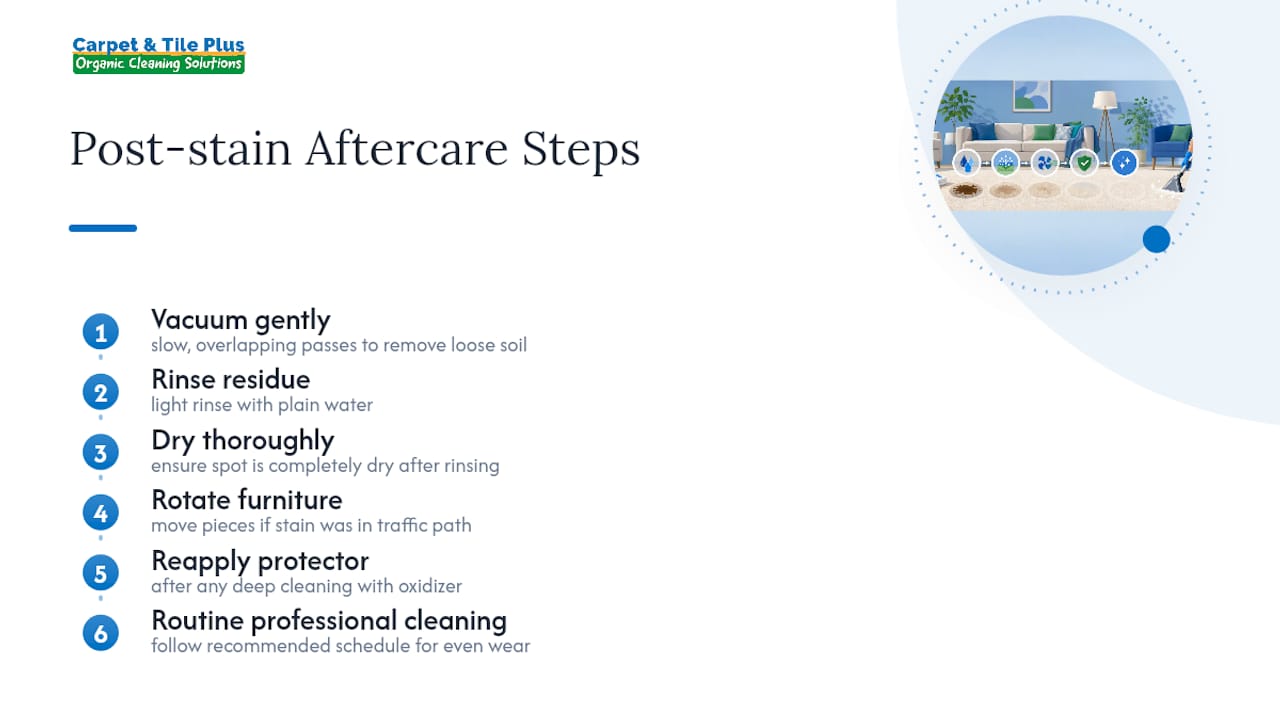
Vacuum treated areas regularly, using slow, overlapping passes rather than a quick once-over. Loose soil that settles into a recently cleaned spot grinds into fibers weakened by the treatment process, so keeping the area free of grit matters more there than elsewhere in the room.
Watch for a slight color difference where you cleaned. If the spot looks a shade lighter or the pile texture feels different from the surrounding carpet, that’s usually leftover cleaning residue rather than fiber damage. A light rinse with plain water and another round of thorough drying often evens it back out.
Rotate furniture occasionally if the stain was in a high-traffic path. Uneven wear next to a freshly cleaned spot makes any subtle texture difference more visible than it would be otherwise.
Reapply fiber protector after any deep cleaning that used an oxidizer, since the treatment strips some of the original protective coating along with the stain. And keep an eye on the general recommended schedule for professional carpet cleaning, since carpets that get cleaned on a routine basis handle spot treatments better and show wear more evenly over time than carpets that only get attention when something spills.
A Carpet Cleaner’s Honest Take on Coffee Stains
Most homeowners can handle a fresh coffee spill themselves, and I’d rather see someone try the blot-and-rinse method than reach for bleach out of panic. Where DIY runs out of road is dried, previously scrubbed, or wool-fiber stains. That’s not a sales pitch, it’s just where the chemistry and fiber risk stop favoring guesswork. If you’re unsure, send a photo and we’ll give you a straight answer, same day.
— Jim
Ready for Professional Carpet Stain Removal?
If you’ve worked through the steps above and the stain is still visible, or you’d rather skip the guesswork entirely, Carpetandtileplus’s residential carpet cleaning service handles it start to finish. Every visit includes targeted spot treatment for stains like coffee, full hot water extraction, and optional fiber protector application so the next spill has a fighting chance of never becoming a permanent mark.

Booking is simple: call or request a quote online, and a technician will inspect the stain and carpet type on arrival before starting treatment, so you know what to expect before any chemical touches your floor. Most visits wrap up with the one-hour dry time Carpetandtileplus is known for, meaning you’re not blocking off a room for the rest of the day. If dairy left behind a lingering odor along with the stain, ask about the odor removal service during the same appointment. Carpetandtileplus serves homeowners across the Northwest Suburbs of Chicago, including Elgin, Bartlett, Streamwood, Arlington Heights, Palatine, Barrington, and Hanover Park. Get a quote today and get your carpet back to looking the way it did before the spill.
Sources
For deeper technical detail, consult the IICRC’s care guidance and CRI’s maintenance standard. Always follow manufacturer instructions and test colorfastness before treating any stain.
- IICRC consumer floor and furnishings care information
- How to get coffee stains out of carpet — BISSELL
- How to get coffee stains out of carpet — Apartment Therapy