Reading carpet cleaning company reviews is the most reliable way to separate genuinely skilled providers from companies that look good on paper but disappoint in person. The best ways to read carpet cleaning company reviews go beyond counting stars. You need to check recency, spot fake feedback, and decode what specific customer comments actually tell you. Platforms like Google, Yelp, and Trustpilot each carry thousands of carpet cleaning service feedback entries, but not all of it is trustworthy. This guide gives you a practical framework for evaluating every review you find.
What are the best ways to read carpet cleaning company reviews?
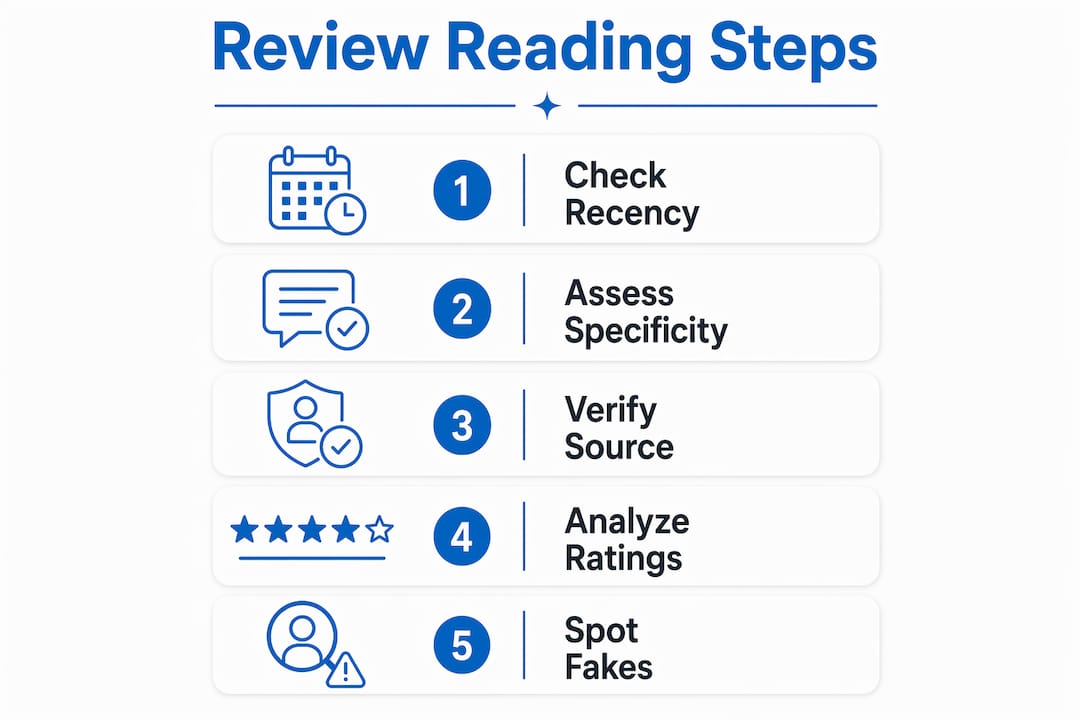
The most effective approach combines three filters: recency, specificity, and source credibility. A company with 200 reviews from three years ago tells you almost nothing about the crew showing up at your door today. Equipment changes, staff turnover, and new ownership all shift service quality fast.

Reading carpet cleaner testimonials starts with knowing where to look. Google Reviews, Yelp, Trustpilot, and the Better Business Bureau are the strongest platforms for unfiltered feedback. Reviews on a company’s own website are almost always curated. Selective filtering on company sites leads to a biased sample, while independent platforms reduce that risk significantly.
Why recency matters more than volume
Recent reviews reflect current equipment, management, and cleaning methods. A company that was excellent in 2022 may have changed ownership, switched chemicals, or lost its best technicians since then. Focus on reviews from the past 6–12 months when assessing current service quality.
Here is how to filter by date on major platforms:
- Google Reviews: Click “Sort by” and select “Newest” to see the most recent carpet cleaning service feedback first.
- Yelp: Use the “Sort by” dropdown and choose “Date” to surface the latest entries.
- Trustpilot: Reviews default to most recent, but confirm the sort order before reading.
- BBB: Scroll to the complaint section and check the dates on filed complaints directly.
Pro Tip: If a company has dozens of reviews but none in the last six months, ask them directly why activity has slowed. A healthy, active business generates steady feedback.
How do star rating distributions reveal review authenticity?
Star ratings are only useful when you read the full distribution, not just the average. A natural rating pattern shows 60–70% four- and five-star reviews alongside a realistic spread of lower ratings. That mix signals authenticity. A company with 100% five-star ratings across hundreds of reviews is statistically unusual and worth scrutinizing.
Here is a quick comparison of what healthy versus suspicious rating patterns look like:
| Rating pattern | What it likely means |
|---|---|
| 65% five-star, 15% four-star, 10% three-star, 10% one/two-star | Natural distribution, likely authentic |
| 98–100% five-star across 200+ reviews | Possible fake review inflation |
| Sudden spike of 30+ five-star reviews in one month | Possible incentivized or purchased reviews |
| Almost no three-star reviews at all | Mid-tier reviews may have been filtered or suppressed |
Three-star reviews are statistically more likely to come from honest customers trying to be fair, while five-star reviews are sometimes incentivized. That makes the middle of the distribution the most honest slice of the data.
A composite star rating gains reliability only after accumulating over 50 reviews spanning at least 18 months. A company with 12 five-star reviews from a single week is not a proven track record.
Pro Tip: Read the three-star reviews first. They tend to be the most balanced and specific, giving you a realistic picture of what the company does well and where it falls short.
How do you spot fake carpet cleaning reviews?
Fake reviews follow predictable patterns once you know what to look for. The language tends to be vague, enthusiastic, and oddly formal. Real customers write about their specific situation. Fake reviewers write about the company in general terms that could apply to any business in any industry.
Here are the clearest warning signs to check:
- No personal pronouns. Genuine reviews use “I” or “me”; fake or AI-generated reviews read like marketing copy with no personal voice.
- Zero specific details. A real customer mentions their carpet type, the stain they needed removed, or how long the job took. A fake review says “amazing service, highly recommend.”
- Reviewer has only one review. Check the reviewer’s profile. A single review with no photo and no history is a red flag.
- Identical phrasing across multiple reviews. If three reviews use the phrase “exceeded all expectations” in the same week, that is not a coincidence.
- Unusual timing clusters. A burst of five-star reviews following a slow period often signals a purchased review campaign.
Cross-platform verification is one of the strongest tools you have. Search the company name on Google, Yelp, and the BBB separately. Up to 8% of reviews on platforms like TripAdvisor are fake, and some service categories see fake review rates as high as 35%. Checking multiple platforms reduces the chance that one inflated source misleads your decision.
Verified purchase badges on platforms like Amazon are the fastest way to separate real feedback from planted reviews. For carpet cleaning, look for Google’s “Local Guide” badge or Yelp’s “Elite” reviewer status as rough equivalents of credibility signals.
What review content actually tells you about a carpet cleaner
The words inside a review matter far more than the star attached to it. Specific, outcome-based comments are the gold standard for understanding carpet cleaning service feedback. A review that says “they removed a red wine stain I thought was permanent and the carpet dried in under an hour” tells you something concrete. “Great company, very professional” tells you nothing.
Look for these content signals when reading carpet cleaner testimonials:
- Specific results mentioned: Pet odor removal, stain outcomes, drying time, and fiber condition after cleaning are all signs of a detailed, credible review.
- Before and after context: Reviewers who describe what the carpet looked like before and after the service give you the clearest picture of actual performance.
- Repeated patterns across reviews: If five separate customers mention fast drying times, that is a reliable indicator. If three mention a pushy upsell, that is also a pattern worth noting.
- How the company handles complaints: Even the best cleaning companies receive minor complaints. A company that responds to negative feedback with transparency and accountability shows professionalism. A company that ignores or argues with unhappy customers is showing you exactly how they will treat you if something goes wrong.
Detailed feedback mentioning outcomes like pet odor removal, drying times, and stain performance signals a reputable company. Generic praise is less reliable by comparison. When you find a review that reads like a before-and-after story, that is the kind of feedback worth trusting. You can also check whether a company discusses its carpet inspection process before cleaning, which often shows up in detailed customer accounts.
Key Takeaways
The most reliable way to evaluate a carpet cleaning company is to combine recent, specific, and cross-verified reviews rather than relying on a single star rating.
| Point | Details |
|---|---|
| Prioritize recent reviews | Focus on feedback from the past 6–12 months to reflect current staff and methods. |
| Read the full rating distribution | A natural mix of ratings signals authenticity; 100% five-star reviews warrant skepticism. |
| Spot fake reviews by language | Look for personal pronouns, specific details, and consistent reviewer history. |
| Value outcome-based content | Reviews mentioning drying time, stain removal, or odor results are the most credible. |
| Check company responses | How a company replies to complaints reveals more about its character than its best reviews do. |
Why I trust the middle of the review stack more than the top
Most people scroll to the five-star reviews first. I understand the instinct, but it is the wrong move. After years of working in the cleaning industry and talking with hundreds of homeowners in the Northwest Suburbs of Chicago, I have found that the three-star reviews are where the real story lives.
Five-star reviews are often written right after a job, when the customer is still in the glow of a clean home. One-star reviews sometimes come from customers who had a bad day and one frustrating experience. Three-star reviews come from people who thought carefully, weighed the good against the bad, and wrote something honest.
The other thing I tell people: do not stop at reading reviews. Use them as a starting point for a conversation. If you notice three reviewers mention a specific technician by name, ask for that person when you book. If two reviews mention an upsell attempt, ask the company directly about their pricing structure before they arrive. Reviews give you the questions. The company’s answers give you the confidence.
I also think too many homeowners skip the BBB entirely. It is not glamorous, but a formal complaint record tells you things that no star rating can. A company with 4.8 stars on Google and two unresolved BBB complaints is a different picture than the rating alone suggests. Use every source available, and weight them together rather than letting one platform make the decision for you.
— Jim
Ready to book a cleaner you can actually trust?
Once you know how to evaluate reviews properly, choosing a carpet cleaning service becomes a much clearer decision. Carpetandtileplus has built hundreds of verified five-star reviews across the Northwest Suburbs of Chicago, including Elgin, Bartlett, Streamwood, and Arlington Heights, through consistent results and transparent communication with every customer.
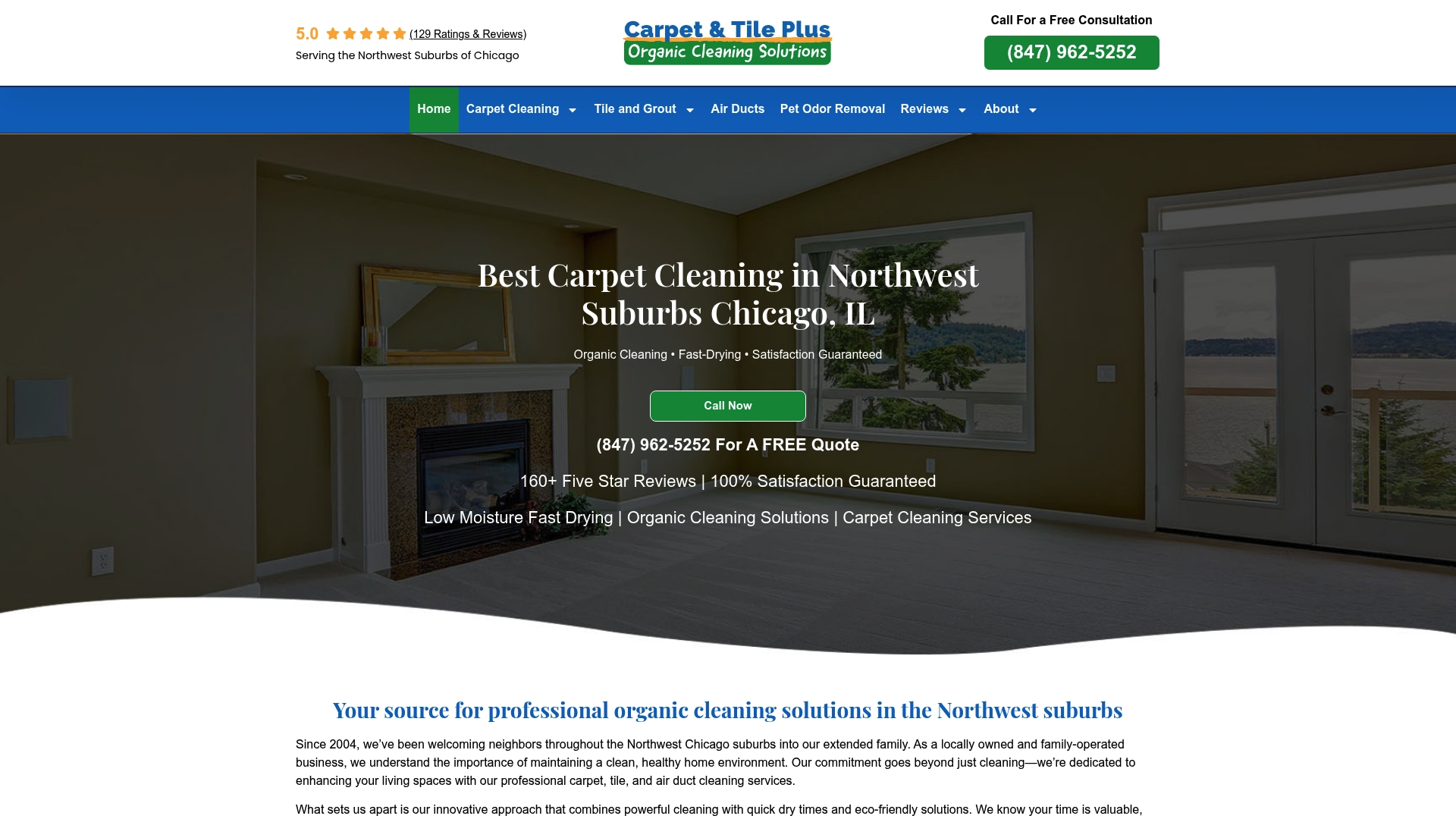
Carpetandtileplus is IICRC-certified, uses organic cleaning products, and delivers a one-hour dry time on residential carpet cleaning jobs. For offices and commercial spaces, the team brings the same standard to commercial carpet cleaning throughout the Chicago area. Read the reviews, ask the right questions, and then reach out to a provider whose track record speaks for itself.
FAQ
How do I find carpet cleaning reviews I can trust?
Use third-party platforms like Google, Yelp, Trustpilot, and the BBB rather than a company’s own website. Independent platforms are less likely to filter out negative feedback.
How many reviews should a carpet cleaner have before I trust their rating?
A composite star rating becomes reliable after 50 or more reviews spanning at least 18 months. Fewer reviews or a very short time window can reflect a short-term promotion rather than consistent service quality.
What are the signs of fake carpet cleaning reviews?
Fake reviews typically lack personal pronouns like “I” or “me,” contain vague praise with no specific details, and come from profiles with no review history. Clusters of five-star reviews posted within a short period are also a strong warning sign.
Should I read one-star reviews for carpet cleaners?
Yes, but read them critically. Look for patterns across multiple one-star reviews rather than reacting to a single complaint. Also check whether the company responded professionally, since transparent responses to complaints indicate accountability.
Where is the best place to read carpet cleaning reviews online?
Google Reviews and the BBB are the strongest starting points for understanding carpet cleaning service feedback. Cross-checking both platforms gives you a more complete and balanced picture than relying on any single source.