
Grout rarely gets any attention until it looks gray, cracked, or stained beyond recovery. Most homeowners assume a scrub brush and whatever cleaner is under the sink will keep it healthy. That assumption is exactly how professional cleaning extends grout life by years compared to the average DIY approach. The reality is that the wrong cleaner used consistently does more structural damage than simply leaving grout alone. This guide breaks down what grout actually needs to survive, what professional methods protect it, and why the homes with the longest-lasting tile in the Northwest Suburbs of Chicago are almost never the ones cleaned the hardest.
Table of Contents
- Why grout life depends on cleaning methods and maintenance
- How professional cleaning methods protect grout integrity
- The indoor air quality benefits of professional grout cleaning
- When and how often to schedule professional grout cleaning and sealing
- Why most grout care advice misses the mark and what really extends grout life
- Extend your grout’s life with professional cleaning and sealing services
- Frequently asked questions
Key Takeaways
| Point | Details |
|---|---|
| Professional cleaning protects grout | Specialized cleaning methods preserve grout structure and color far better than DIY approaches. |
| Proper sealing frequency matters | Sealing grout every 1-3 years, sooner in wet areas, prevents moisture damage and staining. |
| Avoid acidic or alkaline DIY cleaners | Vinegar and harsh chemicals accelerate grout deterioration and color fading. |
| Grout impacts indoor air quality | Removing mold and biofilms in grout improves the home’s air and supports respiratory health. |
| Regular professional maintenance saves costs | Consistent cleaning and sealing delay grout replacement and costly tile repairs. |
Why grout life depends on cleaning methods and maintenance
To understand grout lifespan, first grasp its material vulnerability and maintenance needs.
Most residential tile uses cementitious grout, which is essentially a cement-based filler. Unlike tile itself, grout is porous, meaning it absorbs moisture, cleaning chemicals, bacteria, and staining agents directly into its structure. That porosity is what makes the way you clean it so consequential. You are not just washing a surface. You are either protecting a material or slowly eroding it.
Here is what most people do not realize: acidic and alkaline cleaners both accelerate grout deterioration and cause significant color fading. Vinegar, bleach, and popular “grout cleaning” sprays found at hardware stores fall into one of these two categories. Used repeatedly, they widen the pores in the grout, making it absorb more moisture and staining agents with each application. It is a cycle that feels like maintenance but is actually accelerating decay.
Sealing is the other half of the equation. A properly applied sealant fills those surface pores, creating a moisture barrier that prevents contaminants from penetrating. Professional sealing is recommended every 1 to 3 years for residential floors, with bathroom and shower grout requiring annual attention due to constant humidity exposure.
Common mistakes that shorten grout life include:
- Using vinegar, lemon juice, or citrus-based sprays directly on cementitious grout
- Scrubbing with wire or steel brushes, which physically break down the grout surface
- Leaving wet mops sitting on tile floors, which introduces standing moisture into grout lines
- Skipping resealing after deep cleaning, which strips the existing sealant
- Ignoring discoloration as “just a stain” rather than a sign of porosity breakdown
These errors compound over time. Grout that looked fine two years ago can reach a point of irreversible staining or crumbling within a single year of aggressive DIY cleaning. Understanding tile grout cleaning methods that actually protect the material is the first step toward real grout longevity.
How professional cleaning methods protect grout integrity
Understanding grout’s vulnerabilities clarifies why specialized professional methods outperform common DIY approaches.
Professional cleaners do not just bring stronger chemicals. They bring chemistry that is matched to what grout can tolerate, which is a fundamentally different approach. Professionals use pH-neutral or buffered cleaners, correct dwell times, and controlled mechanical agitation to lift contamination without widening pores or stripping the sealant layer.
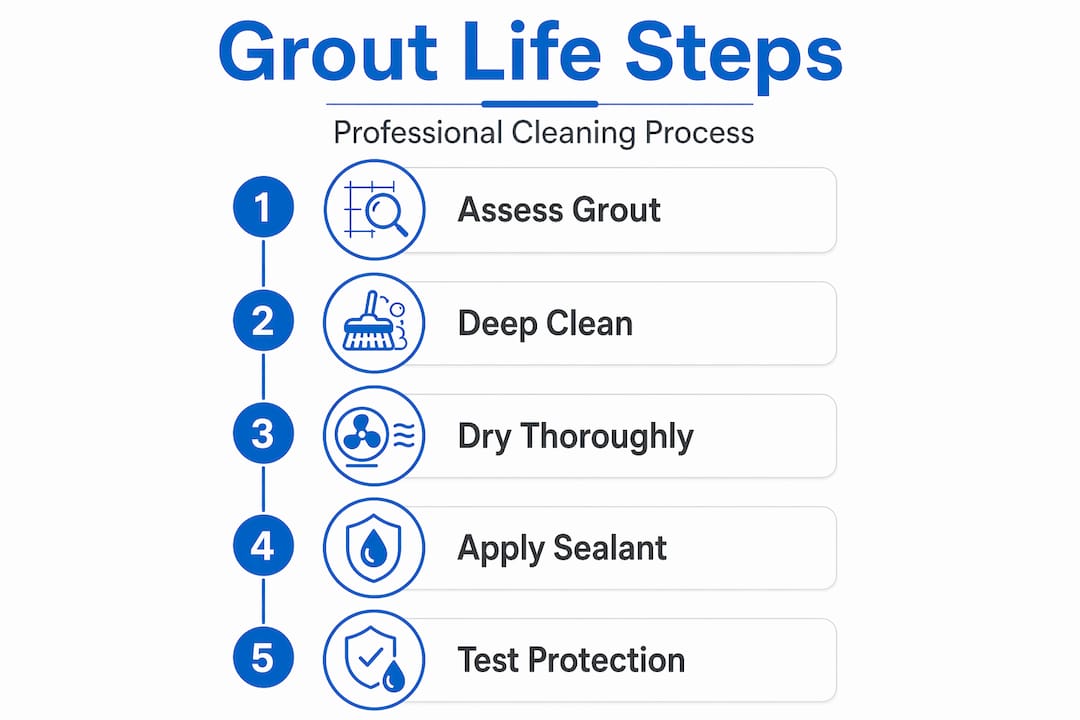
Here is how a professional grout cleaning session typically works:
- Surface inspection. The technician assesses grout type, current sealant condition, and contamination level. Epoxy grout, for instance, requires a different approach than standard cementitious grout.
- Pre-treatment application. A pH-balanced cleaner is applied and allowed to dwell for roughly 8 to 15 minutes. This contact time breaks down biofilm, soap scum, and embedded soils without chemically attacking the grout structure.
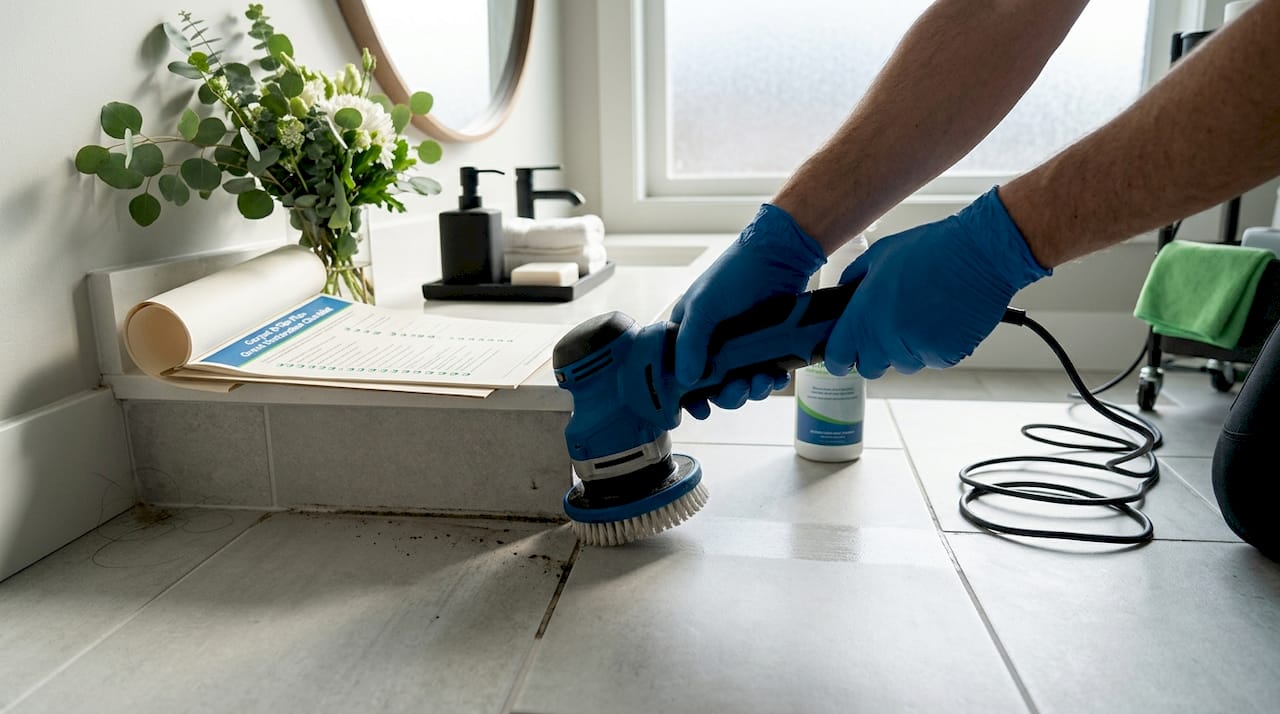
- Mechanical agitation. Stiff nylon brushes or oscillating tools work the cleaner into the grout lines with consistent pressure. This step lifts particles that dwell time alone cannot reach.
- Hot water extraction. High-pressure hot water flushes out the emulsified contaminants along with any cleaning solution residue. This step is what most DIY methods skip entirely.
- Sealant reapplication. Once dry, sealant is applied and allowed to cure. Excess is removed carefully to avoid the haze residue that leaves tile looking cloudy.
DIY grout sealing frequently fails because homeowners do not control dwell time and do not properly remove excess sealant, which risks tile surface damage and a permanent hazy film over the tile face.
Pro Tip: Before any sealing service, make sure the grout is fully dry, ideally 24 hours after cleaning. Sealing over moisture traps it inside the grout structure and accelerates the breakdown you are trying to prevent.
Our IICRC-certified team uses professional grout cleaning tools designed specifically for this work, along with organic, eco-safe products. The result is a clean that protects grout rather than wearing it down. Homeowners across Elgin, Arlington Heights, and Palatine who schedule our residential grout cleaning services regularly are keeping tile looking new years after their neighbors have started pricing replacements.
The indoor air quality benefits of professional grout cleaning
Beyond grout integrity, professional cleaning also supports a healthier home environment through better indoor air quality.
This benefit rarely shows up on a homeowner’s radar. Grout in bathrooms, kitchen backsplashes, and laundry rooms sits in consistently humid environments, and that porous structure makes it an effective reservoir for mold spores, allergens, and pathogens. You cannot see most of it, but it is there.
“Improper cleaning can actually worsen indoor air quality by disturbing surface mold without removing it, while professional extraction removes deep-seated mold spores harmful to health.”
The key difference is extraction. A standard mop or scrub brush moves contaminants around the surface. Professional hot water extraction physically pulls them out of the grout and into the recovery tank. What stays inside grout gets resuspended into the air every time that floor is disturbed.
The health implications are especially relevant for families with respiratory conditions, young children, or elderly residents. Mold spores and allergens in grout lines contribute to the same airborne contamination that triggers allergy flare-ups and asthma episodes. Improving indoor air quality in the home involves more than air filtration when the source contamination is sitting in your floor grout.
Key benefits of professional cleaning for indoor air quality include:
- Complete extraction of mold spores and bacteria rather than surface redistribution
- Removal of biofilm that serves as a nutrient source for recurring mold growth
- Reduced allergen load in rooms where contaminated grout is regularly disturbed
- Safer environment for households with respiratory sensitivities
The health benefits of professional cleaning go beyond what you can see on the tile surface. Grout is a reservoir, and professional cleaning empties it.
When and how often to schedule professional grout cleaning and sealing
Knowing when grout needs professional service ensures its protection and longevity over time.
Frequency depends on two factors: traffic and moisture. A kitchen floor used by a family of five and a guest bathroom used twice a week have very different maintenance needs. Here is a practical guide to scheduling, based on area type.
| Area | Cleaning frequency | Sealing frequency |
|---|---|---|
| High-traffic kitchen floor | Every 6 months | Every 1 to 2 years |
| Primary bathroom/shower | Every 6 months | Annually |
| Guest bathroom | Every 12 months | Every 2 to 3 years |
| Entryway/mudroom | Every 6 to 9 months | Every 1 to 2 years |
| Low-traffic living areas | Every 12 months | Every 2 to 3 years |
Bathroom and high-moisture grout needs annual sealing to maintain adequate protection. General residential floors fall into a 1 to 3 year sealing window depending on conditions.
The easiest way to check whether your sealant is still working is the water bead test. Drip a small amount of water onto a dry grout line. If it beads up and sits on the surface, the sealant is intact. If it absorbs into the grout within a minute or less, the sealant has failed and resealing is overdue.
Pro Tip: Do the water bead test in your shower after every cleaning. Shower grout takes more chemical exposure and humidity than anywhere else in the house, and it is always the first sealant to fail.
Delaying service past the recommended window is where costs compound. Grout that has been absorbing moisture and staining agents without sealant protection becomes progressively harder to restore. Past a certain threshold, cleaning cannot reverse the discoloration and structural softening. At that point, regrouting becomes the only option, which costs significantly more than a routine cleaning tile grout schedule would have.
Why most grout care advice misses the mark and what really extends grout life
Having learned the facts about maintenance, it is important to understand why professional expertise truly matters.
Here is something the average grout cleaning article will not tell you: most of the popular home improvement advice circulating online actively shortens grout life. Vinegar and baking soda tutorials get millions of views. They work visually, meaning the grout looks cleaner afterward. But vinegar leaches calcium from grout, eroding it up to 400% faster over a 12-month period compared to pH-neutral alternatives. You are watching your grout disappear while thinking you are maintaining it.
The same problem applies to bleach-based cleaners, steam mops used without professional guidance, and any approach that prioritizes surface brightness over material preservation. These methods treat symptoms while accelerating the root condition.
What professionals bring is not just equipment. It is molecular precision in cleaner chemistry and application timing. The difference between a cleaner that lifts contamination and one that erodes grout often comes down to pH level, contact time, and rinse technique. None of those variables are obvious to someone reading a label in a hardware store aisle.
In over 20 years of servicing tile and grout in the Northwest Suburbs of Chicago, we have seen the same pattern repeatedly. Homeowners who cleaned frequently with the wrong products end up with grout that needs replacement in 7 to 10 years. Homeowners who scheduled professional service every 6 to 12 months are still working with original grout in homes built in the early 2000s. The variable is not effort. It is method.
Grout is a structural and hygiene component of your home, not just an aesthetic detail. Treating it with the same care you would give any other surface that protects against moisture and contamination is exactly what professional grout cleaning methods are designed to support. Generic advice cannot account for your specific tile type, grout composition, local water chemistry, or use patterns. A professional assessment can.
Extend your grout’s life with professional cleaning and sealing services
Now that you understand the impact of professional care, here is how Carpet & Tile Plus helps you protect your investment.
If you are a homeowner or property manager in Elgin, Bartlett, Streamwood, Arlington Heights, Palatine, Barrington, or Hanover Park, your tile and grout are working hard every day. Protecting that investment with routine professional service is far less expensive than regrouting or retiling down the line.

At Carpet & Tile Plus, our IICRC-certified team brings over 20 years of experience and organic cleaning products to every job. Our residential tile and grout cleaning service uses hot water extraction and pH-balanced chemistry to clean deep without damaging your grout. For rental properties and commercial spaces, our commercial grout cleaning services keep high-traffic tile protected and looking professional. We also use industry-leading professional grout cleaning tools that go far beyond what DIY methods can reach. With one-hour dry times and hundreds of five-star reviews, we make the process easy. Contact us today to schedule your consultation.
Frequently asked questions
How often should grout be professionally cleaned to extend its life?
Professional grout cleaning is typically recommended every 6 to 12 months for high-traffic or wet areas, with sealing reapplied every 1 to 3 years depending on moisture exposure and foot traffic levels.
Why should I avoid using vinegar or acidic cleaners on grout?
Vinegar and acidic cleaners etch cementitious grout, widening its pores and making it absorb stains faster. Vinegar erodes grout up to 400% faster over 12 months compared to pH-neutral alternatives.
What is the water bead test and how does it help maintain grout?
The water bead test drops a small amount of water onto dry grout to check whether the sealant is still working. If water absorbs instead of beading, the sealant has failed and resealing is needed before contamination enters the grout structure.
Does professional grout cleaning improve indoor air quality?
Yes. Professional extraction removes mold spores and pathogens trapped deep in porous grout, rather than redistributing them. Deep mold removal via professional cleaning directly supports healthier indoor air quality, especially in bathrooms and kitchens.
What mistakes do DIY grout cleaners commonly make?
The most damaging mistakes are using acidic or high-alkaline cleaners, not allowing cleaners to dwell long enough to work, and failing to remove excess sealer properly. Improper dwell time and sealer removal can leave a permanent haze on tile and physically damage the grout surface.