
Most carpet cleaning products sitting under the average kitchen sink contain synthetic surfactants, artificial fragrances, and VOCs that linger in your home’s air long after the carpet looks clean. If you have kids crawling on the floor or pets napping on the rug, that matters. This eco friendly carpet cleaning solutions guide walks you through everything you actually need: the right natural ingredients, certified commercial products, step-by-step cleaning methods, drying strategies, and when to call in professionals who use organic cleaning systems. You will walk away knowing exactly how to clean your carpets effectively without trading your family’s health for a fresher-looking floor.
Table of Contents
- Key takeaways
- Eco friendly carpet cleaning solutions: what you need before you start
- How to clean carpets naturally: the step-by-step process
- Drying carpets the right way after green cleaning
- Troubleshooting common mistakes in natural carpet cleaning
- Comparing green carpet care methods by carpet type and household need
- My honest take after years of watching homeowners clean their carpets
- How Carpetandtileplus can take the guesswork out of green cleaning
- FAQ
Key takeaways
| Point | Details |
|---|---|
| Certification beats marketing claims | Look for CRI-certified products that specify exact dilution ratios to avoid residue and re-soiling. |
| Dwell time does the work | Letting solutions sit 15 minutes or longer breaks down stains better than scrubbing, protecting carpet fibers. |
| Drying speed prevents mold | Cross-ventilation and fans get hot-water-extracted carpets touch-dry within 4 to 12 hours, stopping mildew before it starts. |
| Patch test every new solution | Natural cleaners like hydrogen peroxide can fade or damage certain carpet fibers if not tested first. |
| DIY and professional methods both have a place | Regular DIY maintenance between annual professional deep cleans delivers the best long-term results. |
Eco friendly carpet cleaning solutions: what you need before you start
Green carpet care, what professionals in the cleaning industry often call “sustainable or organic carpet maintenance,” starts with having the right materials on hand before you touch a single stain. Running out to grab supplies mid-clean leads to improvising, which is where most DIY mistakes happen.
Natural ingredients worth keeping in your cleaning cabinet
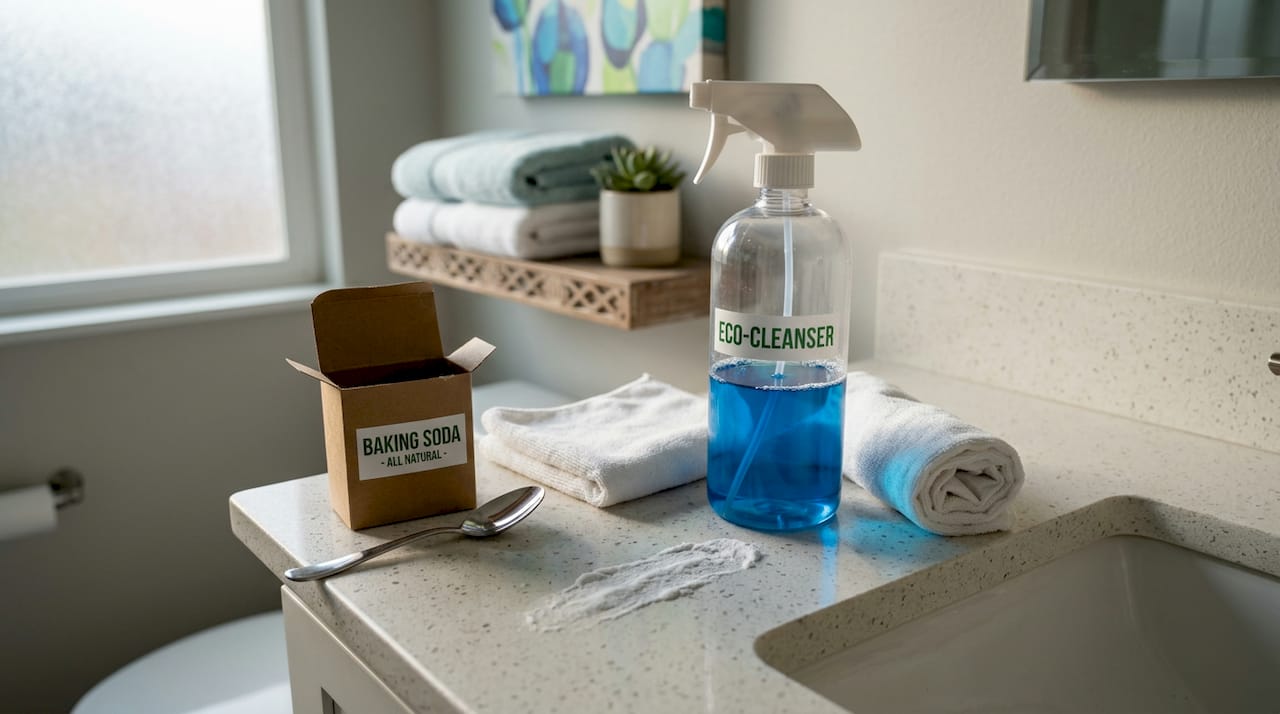
The short list of genuinely useful ingredients is surprisingly short. White distilled vinegar, baking soda, unscented castile soap, and plain warm water handle the majority of household carpet situations. A few drops of tea tree or lavender essential oil add natural antimicrobial properties and a light scent without synthetic fragrance.
For tools, you need a quality spray bottle, microfiber cloths (not paper towels, which leave fibers behind), and a vacuum with a HEPA filter. The HEPA filter matters more than most homeowners realize because it traps fine particulate and allergens rather than blowing them back into the room.
Homemade vs. certified commercial products
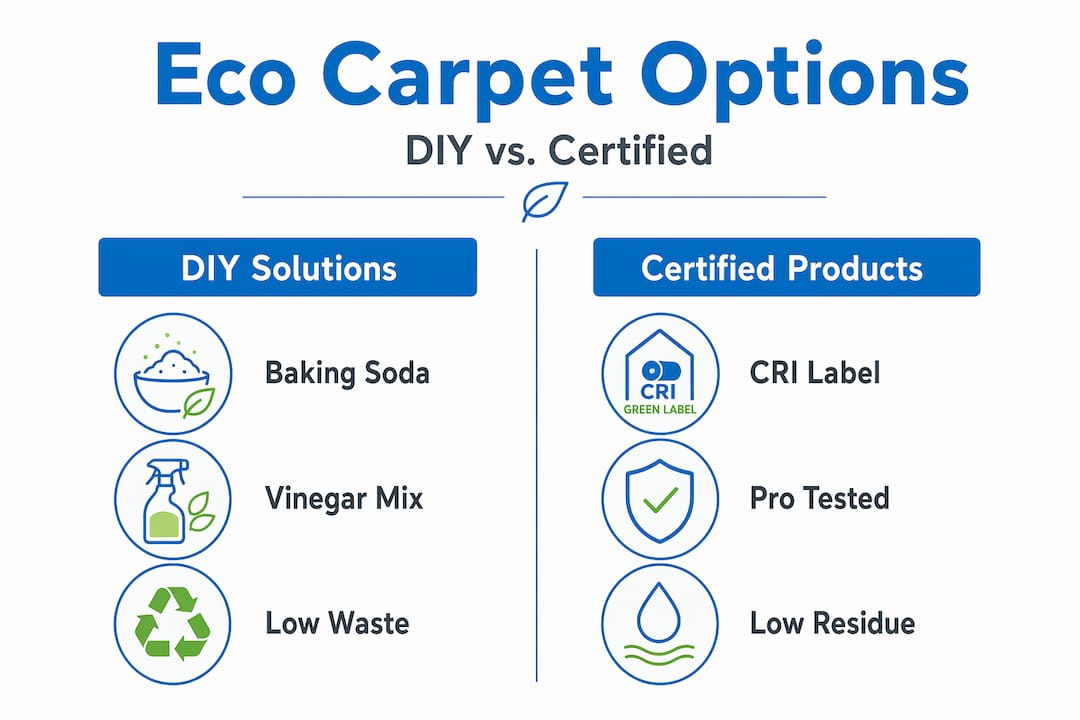
Not every “green” product on a store shelf earns that label honestly. The Carpet and Rug Institute (CRI) runs a rigorous testing program for cleaning solutions. CRI-certified products specify exact dilution ratios and dwell times, which is the clearest signal you can get that a product actually works as advertised without leaving residue.
| Option | Pros | Cons |
|---|---|---|
| DIY baking soda and vinegar | No packaging waste, very low cost, safe for most fibers | Weaker on deep stains, requires longer dwell times |
| Castile soap solution | Biodegradable, gentle, plant-based | Can leave a slight film if over-applied |
| CRI-certified commercial cleaner | Tested efficacy, clear dilution guidance, residue-controlled | Higher cost, some come in plastic packaging |
| Concentrated plant-based formula | Reduces packaging waste by over 75%, consistent performance | Requires measuring accurately to avoid over-dosing |
Pro Tip: Always patch test any solution, including natural ones, in a hidden corner of the carpet before applying it to a visible area. Some wool or blended fibers react unpredictably to even mild acids like vinegar.
How to clean carpets naturally: the step-by-step process
Following a consistent sequence matters as much as choosing the right product. Skipping steps or rushing shortchanges the result and can actually make stains harder to remove later.
-
Vacuum thoroughly first. Run your HEPA-filtered vacuum over the entire area in two directions before applying any liquid. Dry soil and debris left in the pile will turn into muddy residue the moment moisture hits them.
-
Treat spots before general cleaning. For fresh stains, blot the area with a clean cloth to pull up as much liquid as possible. Never rub. Apply a 1:1 vinegar and water spray and let it dwell for at least 15 minutes before blotting again.
-
Deodorize with baking soda. Sprinkle a generous layer of baking soda over the carpet, work it lightly into the pile with a soft brush, and let it sit for at least 15 minutes. Overnight contact on high-traffic or pet areas gives noticeably better results.
-
Vacuum again to remove baking soda. Go slowly to pull it all out of the pile.
-
Apply your main cleaning solution. Whether you use a castile soap mixture or a CRI-certified commercial product, follow the dilution instructions precisely. For extraction machines, eco-certified detergents typically call for half an ounce to one ounce per tank of hot water. More is not better. Overdosing leaves sticky residue that attracts new dirt faster than a clean carpet would.
-
Work in small sections using light, overlapping passes. With a machine, go over each section twice: once applying solution and once extracting.
-
Rinse with plain water. A final pass with clean hot water removes any remaining cleaning agent from the fibers.
Pro Tip: Avoid overwetting the carpet. If water seeps through to the padding, drying times multiply and mold risk increases significantly. Use the minimum amount of moisture needed to lift the soil.
For sustainable upholstery cleaning, the same principles apply. Use your spray bottle and microfiber cloth rather than a machine, and reduce the solution concentration by about half since upholstery fabrics tend to be more delicate than floor carpet.
Drying carpets the right way after green cleaning
Moisture trapped under carpet padding is one of the most common and least visible causes of persistent carpet odors. The mildew problem usually develops before you even notice a smell. Planning your drying approach before you start cleaning is not optional. It is the step that separates a successful clean from one that creates new problems.
Here are the most effective drying techniques after eco-friendly cleaning:
- Open windows and doors. Cross-ventilation is the fastest free option. Position fans to pull air through the room rather than just blowing it around.
- Use floor fans or box fans. Aim them across the carpet surface at a low angle to maximize airflow over the fibers.
- Add a dehumidifier if the space is enclosed. In rooms without windows, a dehumidifier dramatically cuts moisture dwell time.
- Raise the room temperature modestly. Moderate heat, around 68 to 72 degrees Fahrenheit, helps fibers release moisture without distorting them.
- Keep foot traffic off the carpet until it is fully dry. Street shoes and even bare feet deposit oils and soil onto damp fibers, which leads to re-soiling almost immediately.
Hot water extraction typically leaves carpets touch-dry within 4 to 12 hours depending on pile depth, room ventilation, and humidity. Encapsulating methods, where soil particles are trapped in dry crystals and vacuumed up, cut that window to 20 to 30 minutes, making them an excellent choice for households that cannot afford extended downtime.
Pro Tip: Leave a pair of clean indoor-only slippers by the room entrance and ask family members to wear them during the drying phase. It takes about 30 seconds of habit-building but saves you from re-cleaning.
Troubleshooting common mistakes in natural carpet cleaning
Even careful, environmentally conscious cleaners run into problems. Knowing what went wrong is half the fix.
Residue that makes the carpet feel stiff or sticky. This almost always comes from using too much product or not rinsing thoroughly. Following certified dilution guidelines and finishing with a clean water extraction pass resolves this. If the problem is already present, a diluted white vinegar rinse (1 part vinegar to 3 parts water) helps neutralize alkaline residue.
Stains that reappear after drying. This is called “wicking,” and it happens when a stain sits deep in the padding and migrates back up through the fibers as the carpet dries. Wicking is a sign the original stain was not fully removed, not that your cleaner failed. Treat the area again and use a weighted stack of white towels on the spot while it dries to absorb what comes back up.
- Before trying aggressive natural boosters like undiluted hydrogen peroxide, remember that hydrogen peroxide can fade light carpets. Always test in an inconspicuous spot first.
- Wool and natural-fiber rugs are sensitive to acidic solutions. Vinegar works well on synthetic nylon and polyester but use it cautiously on wool.
- Check for CRI certification when selecting any commercial eco cleaner. The label tells you the product has been independently tested, not just self-declared “green.”
When stains have penetrated deep into the padding, or when you are dealing with pet urine that has dried repeatedly in the same spot, professional eco-friendly odor removal services use enzyme-based, biodegradable treatments calibrated for fiber type. Professional hot water extraction with calibrated heat and vacuum removes around 80% of indoor allergens in a single session, which no DIY method reliably achieves.
Comparing green carpet care methods by carpet type and household need
Choosing the right method depends on your carpet fiber, your household’s specific needs, and how much time you have available.
| Method | Best for | Dry time | Environmental impact | Cost |
|---|---|---|---|---|
| DIY baking soda and vinegar | Light maintenance, odors, fresh spills | Minimal, 30 to 60 min | Very low, zero packaging | Near zero |
| Plant-based concentrated shampoo | General cleaning, households with kids or pets | 2 to 4 hours | Low, reduced packaging | Low to moderate |
| Encapsulating eco cleaner | Offices, frequent-use areas, low-moisture needs | 20 to 30 minutes | Low, less water usage | Moderate |
| Professional hot water extraction | Deep cleans, allergen removal, pet stains | 4 to 12 hours | Moderate (offset by long-lasting results) | Higher, done 1 to 2 times per year |
For households with allergy sufferers, professional deep cleaning once or twice a year combined with regular DIY maintenance between sessions is the most effective strategy. Natural fiber carpets like wool benefit from gentler, lower-moisture methods, making encapsulating cleaners or dry powder systems a smart fit. Households with pets should focus on organic carpet solutions that include enzyme formulas designed to break down protein-based stains at the molecular level.
Pro Tip: After a professional deep clean, start a simple monthly maintenance routine: vacuum twice a week, spot treat spills within 24 hours, and apply a baking soda deodorize every four to six weeks. This extends the results of a professional clean by months and keeps your home feeling fresh without chemicals.
Eco-friendly house cleaning practices applied consistently across the whole home also reduce the cross-contamination of soil and allergens onto carpets from hard floors, which reduces the overall cleaning burden significantly.
My honest take after years of watching homeowners clean their carpets
I have seen hundreds of carpets in homes across the Chicago suburbs, and one pattern stands out clearly. Homeowners who buy expensive “natural” or “green” products but skip the label instructions get worse results than homeowners using basic vinegar and baking soda correctly. The chemistry is not the hard part. The discipline of diluting properly and allowing dwell time to do its job is where most DIY attempts fall short.
I was skeptical of encapsulating methods for years, thinking hot water extraction was always superior. I changed my thinking when I saw how well those dry-crystal systems work for households with kids and pets who simply cannot stay off the carpet for six hours. The right method is the one that fits how your household actually lives.
The drying phase is the most underestimated part of the entire process. In my experience, more carpet problems trace back to insufficient drying than to any cleaning product choice. Open your windows. Run your fans. Do not walk on a damp carpet in street shoes.
Finally, the word “natural” on a label means almost nothing without independent certification behind it. When I recommend products or services, I look for CRI certification or equivalent third-party verification first. Marketing language is cheap. Test data is not. Blending your own informed DIY routine with a professional residential carpet cleaning service once or twice a year gives you the best of both approaches without over-relying on either.
— Jim
How Carpetandtileplus can take the guesswork out of green cleaning
If you have read this far, you already know more about eco-friendly carpet care than most homeowners do. But knowing the method and executing it perfectly on your own carpet are two different things.
Carpetandtileplus is a family-owned, IICRC-certified service operating across the Northwest Suburbs of Chicago, including Elgin, Bartlett, Streamwood, and Arlington Heights. Every cleaning uses certified organic, biodegradable products that are safe for kids and pets, with no synthetic fragrances or toxic residues left behind. The team’s signature one-hour dry time means you are not waiting half a day to use your home again. With hundreds of five-star reviews and over 20 years of experience, Carpetandtileplus brings the kind of professional carpet cleaning expertise that consistently outperforms any DIY approach for deep allergen removal and stubborn stain treatment. Reach out today to schedule a service and see what certified green cleaning actually looks like on your floors.
FAQ
What natural ingredients work best for carpet stain removal?
A 1:1 vinegar and water spray applied with a 15-minute dwell time handles most fresh stains effectively. Baking soda works best for odors and deodorizing rather than stain removal.
How do I know if a carpet cleaning product is truly eco-friendly?
Look for CRI certification or equivalent third-party testing, which verifies that a product meets performance and residue standards. Marketing terms like “natural” or “green” without certification are not reliable indicators.
How long does it take for carpets to dry after eco-friendly cleaning?
Hot water extraction typically results in touch-dry carpets within 4 to 12 hours, while encapsulating methods can reduce that to 20 to 30 minutes. Ventilation, fans, and moderate room heat all accelerate drying.
Can I use eco-friendly carpet cleaners on wool rugs?
Yes, but with caution. Wool is sensitive to acidic solutions like vinegar and to high moisture levels. Use a low-moisture method with a pH-neutral, plant-based cleaner and always patch test before full application.
When should I hire a professional instead of cleaning my carpets myself?
Professional cleaning makes sense for deep allergen removal, pet urine stains that have reached the padding, or annual deep cleans on high-traffic areas. Professional hot water extraction removes around 80% of indoor allergens in a single session, which DIY methods cannot match.