
Tile grout cleaning in high-traffic areas requires targeted methods that go beyond a standard mop and bucket. Grout is porous by nature, which means foot traffic, spills, and everyday grime work their way into the surface faster than most people expect. The right approach combines pH-neutral cleaners, steam cleaning, and a consistent maintenance schedule to keep grout lines clean and structurally sound. This guide covers the tools, techniques, and resealing strategies that protect grout longevity in hallways, entryways, kitchens, and commercial floors.
Why does grout get so dirty in high-traffic areas?
Grout deteriorates faster in busy areas for reasons that go beyond simple surface dirt. Understanding the mechanics helps you choose the right cleaning frequency and method.
Foot traffic acts like sandpaper on grout. Every step grinds fine grit and soil particles deeper into the porous surface, creating stains that a regular mop cannot lift. Over time, this abrasion also wears down the sealant layer that protects the grout from absorbing liquids and bacteria.
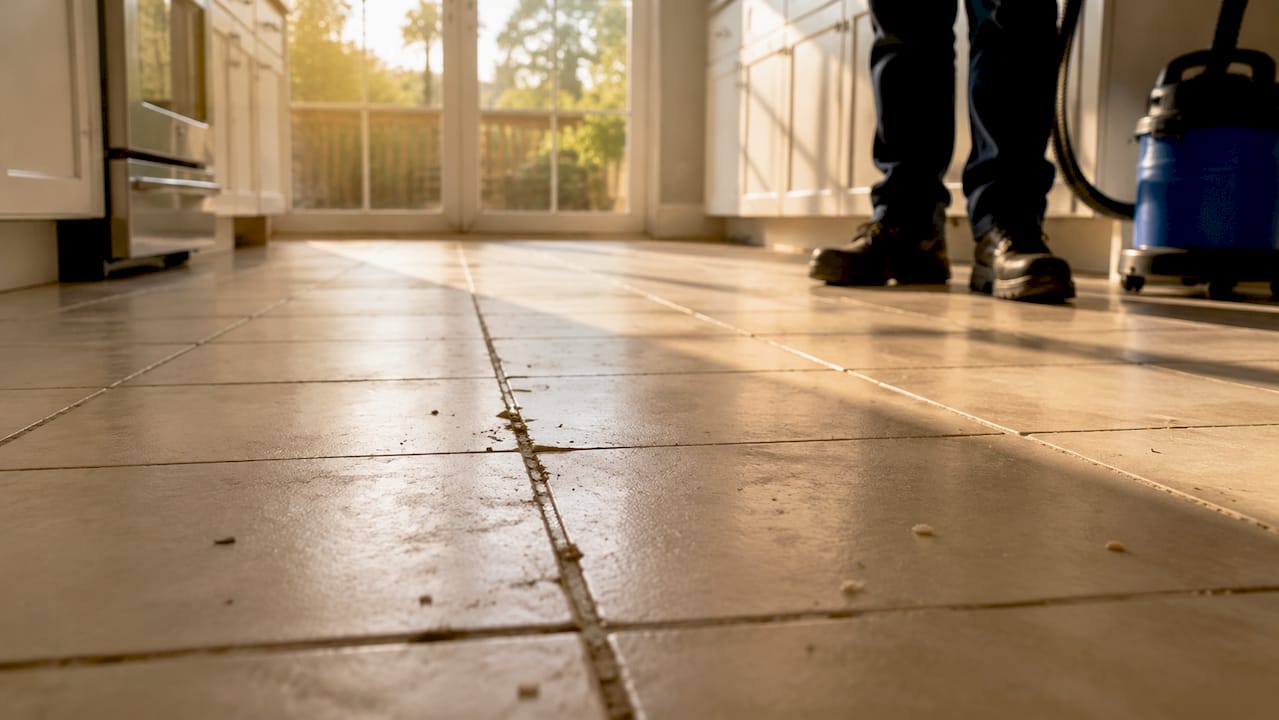
Wet mopping makes the problem worse when done incorrectly. Dirty mop water deposits a thin film of grime across the floor, and grout lines trap that residue. Unremoved dirt and grit turn into a muddy residue when wet, so skipping the dry sweep before mopping actively darkens grout over time.
Chemical exposure from cleaning products also degrades grout faster than most people realize. Acidic cleaners, including vinegar and many all-purpose sprays, break down sealants with repeated use. Once the sealant fails, grout absorbs moisture, oils, and microbial growth at an accelerated rate.
Here is what drives grout degradation in busy spaces:
- Abrasive foot traffic grinds soil into porous grout lines, creating embedded stains
- Wet mopping without pre-sweeping deposits grime rather than removing it
- Acidic cleaners strip sealant and expose raw grout to staining agents
- Spills and moisture penetrate unsealed grout and feed mold and mildew growth
- Grease and oils in kitchen or food service areas bond to grout and resist standard cleaning
Which tools and cleaners work best for grout in busy spaces?
Selecting the right tool and product combination is the single biggest factor in cleaning results. The wrong pairing wastes time and can cause permanent damage.
| Tool or Product | Best Use Case | Key Limitation |
|---|---|---|
| pH-neutral cleaner | Daily and weekly maintenance | Does not remove deep stains |
| Steam cleaner | Deep cleaning without chemicals | Requires drying time between passes |
| Baking soda and hydrogen peroxide paste | DIY stain removal and brightening | Not effective on mold or heavy grease |
| Diluted chlorine bleach | Mildew disinfection in bathrooms | Damages colored grout and sealants |
| Floor scrubber with grout brush | Commercial-scale deep cleaning | Requires equipment investment |
| Stiff nylon brush | Manual scrubbing in small areas | Labor-intensive for large floors |
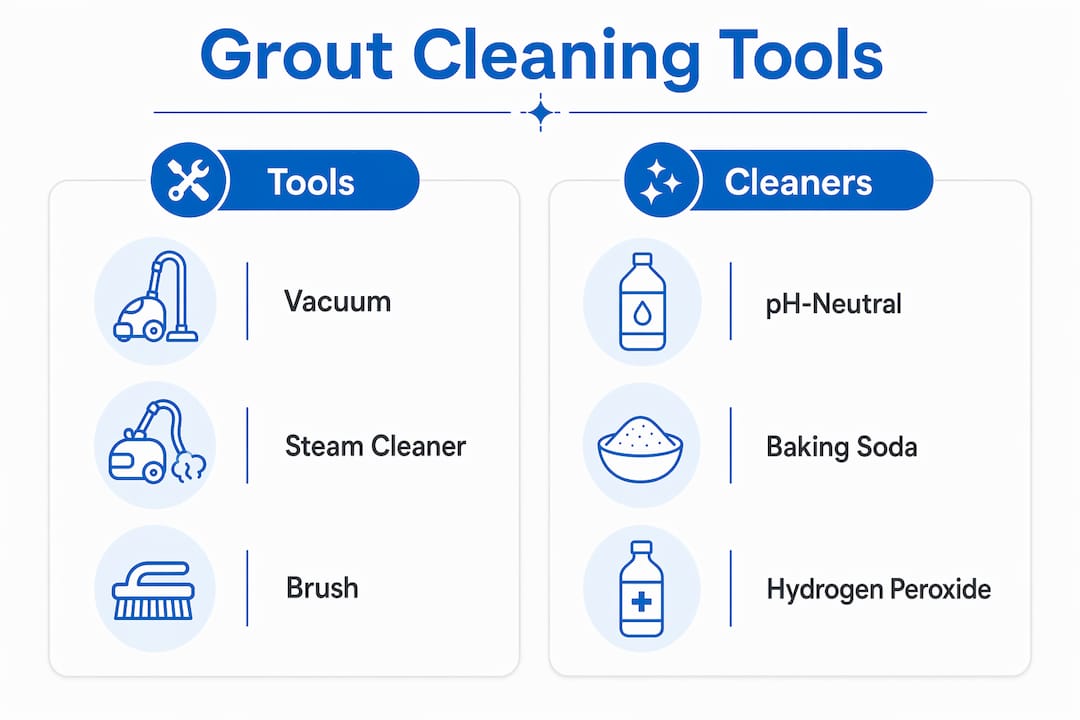
Start every cleaning session by vacuuming or dry-sweeping the floor. This step is non-negotiable. pH-neutral cleaners protect grout sealants better than acidic options, which degrade grout and shorten sealant life. For daily and weekly upkeep, a pH-neutral product applied with a microfiber mop is the safest and most effective routine.
Steam cleaning stands apart from every other method for deep cleaning. Steam penetrates porous grout and breaks down embedded dirt and bacteria without leaving chemical residues. This makes it the preferred method for households with children or pets, and for commercial spaces where chemical runoff is a concern.
For DIY grout brightening, a baking soda and hydrogen peroxide paste applied for 5 to 10 minutes before scrubbing removes organic stains and discoloration effectively. Apply it to dry grout, let it sit, scrub with a stiff nylon brush, then rinse thoroughly.
Pro Tip: Never mix hydrogen peroxide and chlorine bleach. Combining these two chemicals creates toxic chlorine gas. Use one or the other, never both in the same session.
Step-by-step deep cleaning for tile grout in high-traffic floors
A structured workflow produces better results than scrubbing harder. Follow these steps in order to avoid redepositing grime and to protect your grout surface.
- Vacuum or dry-sweep the entire floor. Remove all loose debris, grit, and dust before any liquid touches the surface. Skipping this step turns dry soil into muddy residue that fills grout lines.
- Apply your chosen cleaner in small sections. Work in 4 to 6 square foot sections rather than flooding the entire floor. This keeps the cleaner active and prevents it from drying before you scrub.
- Scrub grout lines with a stiff nylon brush or machine scrubber. Apply firm, consistent pressure along the grout line. For commercial floors, a rotary floor scrubber with a grout brush attachment covers large areas efficiently.
- Rinse with clean water and change rinse water frequently. Leftover cleaning solution and slurry cause rapid re-soiling in grout lines. The cleaning workflow that includes vacuuming, targeted scrubbing, and thorough rinsing prevents grime from being redeposited.
- For tough stains, apply diluted bleach to mildew spots. Mix chlorine bleach at 3/4 cup per gallon of water, apply with gloves, allow a short dwell time, then scrub and rinse. Use this method only on white or light-colored grout.
- Steam clean for embedded grime. For heavily soiled grout, multiple passes with controlled drying periods of 2 to 4 hours per pass are necessary to fully remove dirt without damaging the grout surface.
- Allow grout to dry completely before foot traffic resumes. Wet grout attracts and holds new dirt immediately. Full drying also prevents mildew growth in the grout lines.
Pro Tip: In grease-heavy zones like restaurant kitchens or food prep areas, increase the dwell time of your cleaning paste to improve degreasing action. Avoid mixing incompatible chemicals like bleach and peroxide in the same session.
Maintenance routines and resealing to protect grout long-term
Reactive cleaning costs more time and money than a consistent maintenance schedule. The goal is to keep grout clean enough that deep cleaning is a scheduled event, not an emergency.
Weekly or more frequent cleaning is the standard for preventing grout yellowing and avoiding harsher restorative treatments later. For commercial floors in Elgin, Bartlett, or Arlington Heights, daily spot cleaning of spills combined with a weekly sweep and mop is the baseline.
Commercial high-traffic areas require deep grout cleaning every 3 to 6 months due to accelerated dirt buildup and microbial risks. Residential hallways and kitchens with moderate traffic can extend that interval to every 6 months.
Resealing is the most overlooked step in grout maintenance. Resealing grout after deep cleanings protects against staining and water damage, and the recommended interval for high-traffic or wet areas is every 6 to 12 months. Always reseal after a professional deep clean, not before.
Here is a practical maintenance schedule for high-traffic tiled floors:
- Daily: Spot clean spills immediately; dry-sweep or vacuum high-use zones
- Weekly: Mop with a pH-neutral cleaner; inspect grout lines for early staining
- Every 3 to 6 months: Schedule a deep clean using steam or professional-grade scrubbing
- Every 6 to 12 months: Reseal grout after deep cleaning, especially in wet or heavily used areas
Before resealing, test whether your grout still has an active seal. Water behavior on grout tells you everything: if water beads on the surface, the seal is intact; if it soaks in within a few seconds, resealing is overdue. For sealant products, penetrating sealants outperform surface sealants in high-traffic areas because they bond within the grout rather than sitting on top where foot traffic wears them away.
When grout is permanently stained, cracked, or crumbling, no amount of cleaning will restore it. Re-grouting is the correct fix at that point, and attempting to clean damaged grout repeatedly only delays the inevitable while wasting product and effort.
Key takeaways
Consistent maintenance combined with the right tools is the most effective strategy for keeping tile grout clean in high-traffic areas.
| Point | Details |
|---|---|
| Vacuum before every wet clean | Dry debris turns to muddy residue when wet, darkening grout lines further. |
| Use pH-neutral cleaners for routine care | Acidic products degrade sealants and accelerate grout staining over time. |
| Steam clean for deep results | Steam penetrates porous grout and removes bacteria without chemical residue. |
| Reseal every 6 to 12 months | Resealing after deep cleaning blocks staining agents and extends grout life. |
| Schedule deep cleans every 3 to 6 months | Commercial and high-traffic floors require structured deep cleaning to prevent microbial buildup. |
What I’ve learned after years of cleaning grout in busy spaces
Most grout problems I see are the result of two habits: using the wrong cleaner for years, and waiting too long between deep cleans. Homeowners in Streamwood or Palatine will scrub with vinegar every week thinking they are doing the right thing, and then wonder why their grout looks worse every year. Acidic cleaners feel effective because they fizz and smell strong, but they are quietly destroying the sealant with every application.
The combination that actually works is straightforward. Use a pH-neutral cleaner for weekly maintenance, bring in a steam cleaner or professional grout tools for quarterly deep cleans, and reseal immediately after. That cycle keeps grout looking fresh and structurally sound for years without requiring aggressive chemical treatments.
The other thing I tell every customer: do not wait until grout looks bad to act. By the time grout lines are visibly dark and stained, the sealant is already gone and you are dealing with embedded contamination that requires real effort to reverse. The grout cleaning guide for retail spaces we put together for store owners makes this point clearly. Consistent, low-effort maintenance always beats intensive restoration. Build the schedule, stick to it, and your grout will outlast floors that get cleaned reactively every time.
— Jim
Professional tile and grout cleaning for high-traffic floors
If your grout lines have reached the point where DIY methods are not delivering results, professional cleaning is the most efficient path forward. Carpetandtileplus serves homeowners and business operators across the Northwest Suburbs of Chicago, including Elgin, Bartlett, Streamwood, and Arlington Heights, with IICRC-certified cleaners and organic cleaning products.

Professional-grade equipment reaches contamination that household tools cannot, and the process includes resealing so your floors are protected the moment the job is done. Carpetandtileplus offers both commercial tile and grout cleaning for restaurants, retail floors, and office spaces, as well as residential tile cleaning services for kitchens, bathrooms, and entryways. With a one-hour dry time, your space is back in use the same day.
FAQ
How often should grout be deep cleaned in high-traffic areas?
Commercial and high-traffic floors require deep grout cleaning every 3 to 6 months. Residential floors with moderate traffic can typically extend that interval to every 6 months.
What is the best grout cleaner for heavy use floors?
pH-neutral cleaners are the best choice for routine maintenance because they clean without degrading sealants. For deep cleaning, steam cleaning is the most effective method because it penetrates porous grout and removes bacteria without chemical residue.
Can I use vinegar to clean tile grout?
Vinegar is not recommended for sealed grout. Its acidity degrades sealants over time, which accelerates staining and shortens the life of the grout. Use a pH-neutral cleaner instead.
How do I know if my grout needs resealing?
Drop a small amount of water onto the grout line. If the water soaks in within a few seconds rather than beading on the surface, the sealant has worn away and resealing is needed.
When should grout be replaced instead of cleaned?
Grout that is permanently stained, cracked, or crumbling cannot be restored through cleaning. Re-grouting is the correct solution when the grout structure itself is compromised.