Truck-mounted carpet cleaning is a professional hot water extraction method where a self-contained cleaning system installed inside a vehicle heats water to 180–230°F, injects it into carpet fibers under pressure, and simultaneously vacuums out the dirty water. The industry term is “hot water extraction,” and truck-mounted systems represent its most powerful form. Unlike renting a portable machine from a grocery store, this method uses engine-driven components that generate heat and suction far beyond what any portable unit can produce. For homeowners in the Chicago suburbs and businesses managing high-traffic commercial spaces, understanding this distinction directly affects how clean your carpets get and how quickly you can walk on them again.
What is truck-mounted carpet cleaning and how does it differ?
Truck-mounted carpet cleaning is defined as a vehicle-installed extraction system that heats water to roughly 180–230°F, sprays it into carpet fibers under pressure, and vacuums the dirty water back into an onboard recovery tank. The entire power source rides in the vehicle, typically a van or large truck, so nothing is borrowed from your home’s electrical outlets. This matters because residential outlets cap at 120 or 240 volts, which severely limits what a portable machine can do.
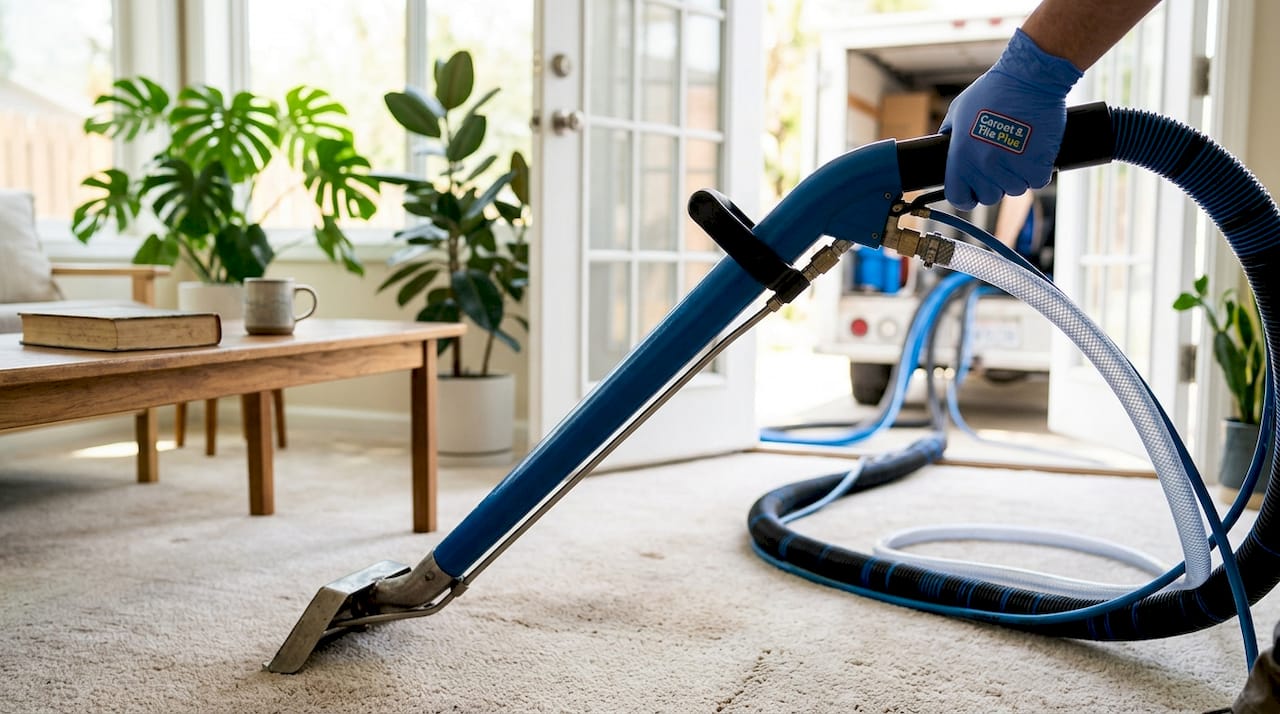
The system connects to your home through two hoses running from the truck to the cleaning wand. One hose delivers the heated cleaning solution; the other provides concurrent vacuum extraction back to the waste tank inside the vehicle. Brands like HydraMaster build systems specifically engineered for this dual-hose configuration, allowing the technician to clean and extract in a single pass. The result is a faster, more thorough clean than any single-function machine can achieve.
How does truck-mounted cleaning work, step by step?
The cleaning process follows a structured sequence that maximizes soil removal while protecting carpet fibers. Here is how a professional truck-mounted job runs from start to finish:
- Pre-vacuuming. The technician dry-vacuums the carpet to remove loose soil, pet hair, and debris before any moisture is introduced. Skipping this step forces the extraction system to work harder and reduces cleaning efficiency.
- Pre-spray application. A chemical pre-spray is applied to heavily soiled areas or high-traffic lanes. The solution dwells for several minutes to break down grease, oils, and embedded dirt.
- Water heating and pressurization. The truck’s engine powers the heater and pump, bringing water to operating temperature and pressure. The fresh water tank holds 50–120 gallons, giving technicians extended run time without returning to a water source.
- Hot water extraction. The technician passes the wand across the carpet in overlapping strokes. Heated solution injects into the fibers at high pressure while the vacuum simultaneously pulls dirty water back through the return hose.
- Wastewater disposal. All recovered water stays in the onboard waste tank and is disposed of properly off-site. Nothing drains into your yard or plumbing.
Pro Tip: Ask your technician whether they pre-spray before extracting. Providers who skip the pre-spray step on visibly soiled carpet are cutting corners that will show up in the final result.
Cleaning chemistry is dosed at roughly 2–4 ounces per gallon of water, adjusted based on carpet area and soil load. This precision matters because over-dosing leaves sticky residue that attracts dirt faster after cleaning.
Truck-mounted vs portable cleaning: which actually performs better?
The performance gap between truck-mounted and portable machines is measurable, not just marketing language. Truck-mounted systems operate at 250–1,200 PSI and 220–250°F, while most portable machines top out at 220–500 PSI and approximately 210°F. That temperature and pressure difference translates directly into how deeply the solution penetrates carpet fibers and how thoroughly it flushes out soil.
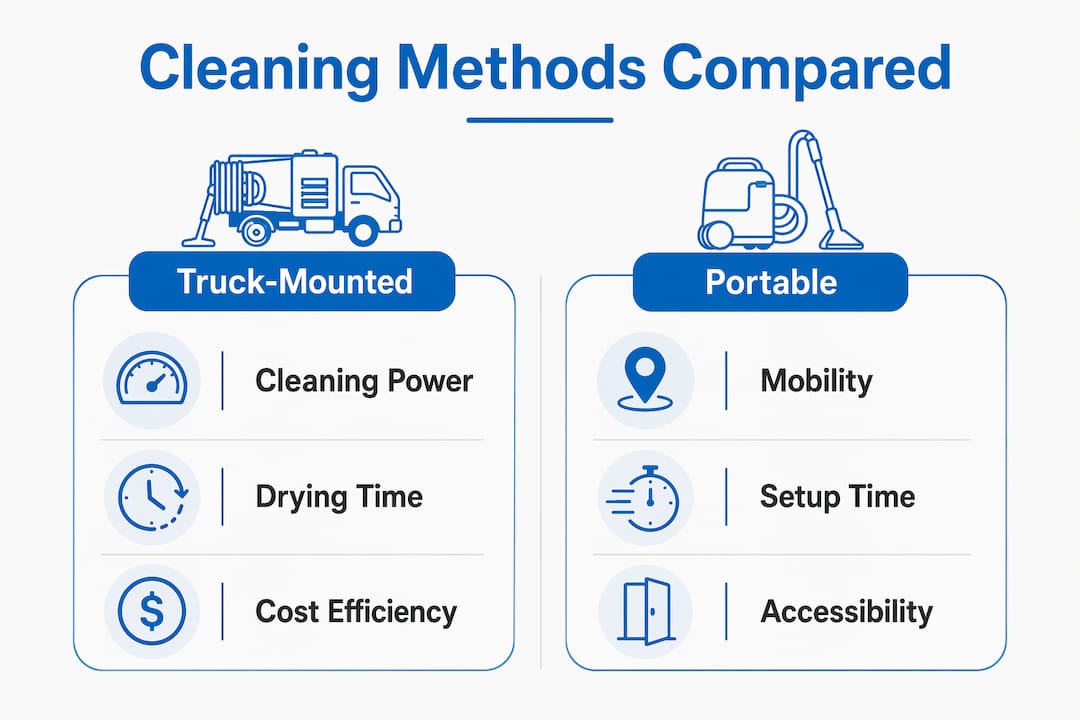
The most practical difference for homeowners is drying time. A truck-mounted system cleans a three-bedroom house and leaves carpets dry in 4–6 hours, compared to 8–14 hours for a portable machine doing the same job. Wet carpets for 12+ hours create conditions for mold and mildew growth, which is a real risk in humid Midwest summers. Faster drying is not just convenient. It is a health consideration.
| Feature | Truck-mounted system | Portable machine |
|---|---|---|
| Water temperature | 220–250°F | Up to ~210°F |
| Pressure range | 250–1,200 PSI | 220–500 PSI |
| Drying time (3-bed home) | 4–6 hours | 8–14 hours |
| Power source | Vehicle engine | Home electrical outlet |
| Waste water handling | Onboard tank, off-site disposal | Requires manual emptying on-site |
| Accessibility | Limited by hose length | Works in high-rise buildings |
Truck-mounted systems do have real limitations worth knowing:
- Hose length restricts how far the technician can reach from the parked vehicle. Upper floors in multi-story homes may require longer hose runs, which can affect heat delivery.
- Access restrictions make portables the only option for high-rise apartments or buildings where a truck cannot park close enough.
- Noise from the vehicle engine is noticeable during operation, which matters in noise-sensitive environments.
For most single-family homes and ground-floor commercial spaces, truck-mounted systems are the stronger choice by a wide margin.
What equipment makes up a truck-mounted carpet cleaning system?
A truck-mounted system is not a single machine. It is an integrated assembly of components that work together inside the vehicle. Understanding what each part does helps you ask better questions when hiring a service.
The core components include:
- Engine-powered heater. The vehicle’s engine drives the heat exchanger that brings water to operating temperature. Vehicle engine-powered components allow technicians to tune heat and suction dynamically, which is something no portable unit can replicate.
- High-pressure pump. This pressurizes the heated solution before it reaches the wand. Pump quality directly determines whether the system hits the upper end of its PSI range consistently.
- Vacuum blower. A large blower creates the suction that pulls dirty water back through the return hose. Blower size determines extraction strength and, by extension, drying time.
- Fresh water tank. Holds 50–120 gallons of clean water mixed with cleaning solution. Larger tanks mean fewer interruptions on big jobs.
- Waste recovery tank. Collects all extracted dirty water. Properly sized waste tanks prevent mid-job stops to empty.
- Dual hose assembly and cleaning wand. The hoses connect the truck to the wand the technician holds. The wand typically has a spray jet and vacuum slot built into a single head for simultaneous injection and extraction.
HydraMaster is one of the most recognized names in truck-mounted equipment, known for systems that maintain consistent heat output across long hose runs. The quality of this equipment directly affects the cleaning result you receive as a customer.
How to choose a professional truck-mounted carpet cleaning service
Choosing the right provider is as important as choosing the right method. A truck-mounted system in the hands of an undertrained technician can damage carpet fibers or leave residue that attracts dirt within days.
Start with a pre-cleaning carpet inspection. Wool carpets require different chemistry and lower heat settings than synthetic nylon or polyester. A provider who applies the same process to every carpet regardless of fiber type is not practicing professional cleaning. They are applying a one-size-fits-all approach that risks damaging delicate fibers and voiding manufacturer warranties.
Key questions to ask any provider before booking:
- Are your technicians IICRC-certified? The IICRC (Institute of Inspection, Cleaning and Restoration Certification) sets the industry standard for hot water extraction procedures.
- What cleaning chemistry do you use, and is it safe for pets and children?
- What is your expected drying time for my specific carpet type?
- Do you carry liability insurance for carpet damage?
- Can you handle both residential and commercial spaces, or do you specialize in one?
Pro Tip: Request that the technician identify your carpet fiber type before they begin. If they cannot tell you whether your carpet is nylon, polyester, or wool, that is a red flag about their training level.
For rental property owners, professional carpet cleaning between tenants is one of the highest-return maintenance investments you can make. Truck-mounted systems restore appearance and remove odors in a single visit, reducing turnover time significantly.
Key takeaways
Truck-mounted hot water extraction outperforms portable machines on every measurable metric that affects cleaning quality and drying time, making it the professional standard for residential and commercial carpet care.
| Point | Details |
|---|---|
| Core definition | Truck-mounted cleaning is a vehicle-powered hot water extraction system operating at 220–250°F and up to 1,200 PSI. |
| Drying time advantage | Truck-mounted systems dry carpets in 4–6 hours versus 8–14 hours for portable machines. |
| Equipment matters | Engine-driven components allow dynamic heat and suction control that home-outlet portables cannot match. |
| Fiber-specific chemistry | Wool and synthetic carpets require different cleaning solutions; always confirm pre-inspection before service. |
| Provider vetting | IICRC certification, liability insurance, and fiber identification skills are non-negotiable qualifications. |
What 20 years of truck-mounted cleaning taught me about what actually matters
Most people focus on the word “hot” when they hear hot water extraction. After two decades in this industry, I can tell you that heat alone is not what makes truck-mounted cleaning effective. Controlled heat, combined with the right pressure and extraction strength for that specific carpet, is what separates a great result from a mediocre one.
The detail that surprises most customers is hose length. When a technician runs 150 feet of hose from the truck to a back bedroom, water temperature drops significantly by the time it reaches the wand unless the system has in-line heating. Heat loss through long hose runs is one of the most common reasons a truck-mounted job underperforms. A quality system maintains temperature to the wand. A budget system does not, and the customer never knows the difference until the carpet re-soils faster than expected.
I also want to address the “steam cleaning” label that still appears in advertising. True steam cleaning uses dry vapor at very high temperatures and is a completely different process. What most providers, including Carpetandtileplus, perform is hot water extraction, which must meet IICRC standards for minimum heat and vacuum performance at the wand. When a company calls it steam cleaning, ask them to clarify. The answer tells you a lot about their technical knowledge.
The trend I am most encouraged by is the shift toward organic cleaning chemistry paired with high-performance truck-mounted equipment. You do not have to choose between a deep clean and a safe home. The two are fully compatible when the provider knows what they are doing.
— Jim
Professional truck-mounted carpet cleaning from Carpetandtileplus
Carpetandtileplus serves homeowners and businesses across the Northwest Suburbs of Chicago, including Elgin, Bartlett, Streamwood, Arlington Heights, Palatine, Barrington, and Hanover Park. Every job uses truck-mounted hot water extraction with IICRC-certified technicians and organic cleaning products that are safe for kids and pets.

Whether you need residential carpet cleaning for your home or commercial carpet cleaning for your business, Carpetandtileplus delivers a one-hour dry time that minimizes disruption to your day. The team also handles pet stain and odor removal and tile and grout cleaning, making it a single call for comprehensive floor care. With hundreds of five-star reviews and over 20 years of experience, the results speak for themselves.
FAQ
What is truck-mounted carpet cleaning in simple terms?
Truck-mounted carpet cleaning is a professional cleaning method where a powerful hot water extraction system installed in a vehicle heats water to 220–250°F and uses high-pressure injection combined with strong vacuum suction to deep-clean carpet fibers.
How long does it take for carpets to dry after truck-mounted cleaning?
Truck-mounted systems typically dry carpets in 4–6 hours for a standard three-bedroom home, compared to 8–14 hours with portable equipment, due to stronger suction and higher heat retention.
Is truck-mounted carpet cleaning safe for all carpet types?
Not without adjustment. Wool carpets require lower heat settings and different chemistry than synthetic fibers like nylon or polyester. A qualified technician performs a fiber inspection before selecting the cleaning process.
How often should I schedule truck-mounted carpet cleaning?
Most residential carpets benefit from professional hot water extraction once or twice per year. High-traffic commercial spaces and homes with pets may need more frequent service. See the cleaning frequency guide for specific recommendations.
What is the difference between truck-mounted cleaning and steam cleaning?
Steam cleaning uses dry vapor at very high temperatures and is a distinct process. Truck-mounted hot water extraction, the industry-standard method, injects heated liquid solution under pressure and immediately extracts it. Most providers who advertise “steam cleaning” are actually performing hot water extraction.