
Carpet stretching is the process of pulling carpet taut and reattaching it to tack strips to eliminate wrinkles and ripples, while carpet cleaning removes soil, stains, and allergens through methods like hot water extraction. Understanding what is carpet stretching vs cleaning matters because the two processes solve completely different problems. Stretching uses tools like a power stretcher or knee kicker to fix mechanical fit issues. Cleaning uses water, detergent, and suction to address contamination. Confusing the two leads homeowners and business managers to spend money on the wrong service, leaving real problems unresolved.
What is carpet stretching and how does it work?
Carpet stretching is a repair process that uses power stretchers and knee kickers to pull carpet away from tack strips, trim excess material, and reattach it tightly across the floor. The result is a flat, smooth surface with no bumps or ripples. Professionals also add seam repair when needed, restoring the carpet to its original tension.
Carpets loosen for three main reasons: poor initial installation, heavy furniture being dragged across the surface, or backing delamination over time. Once the backing separates from the fibers, no amount of cleaning will restore the flat surface. Only mechanical re-tensioning fixes the problem.
Why stretching matters beyond appearance
Loose, rippled carpets cause tripping hazards and accelerate wear by creating uneven pressure points under foot traffic. This is not a cosmetic issue. Homes with children or seniors face real injury risk from even small ripples near doorways or hallways.
Carpet stretching is cost-effective when the backing is in good condition and the carpet is less than 7–10 years old. Carpet replacement for an average living room runs $500 to over $1,500. A professional stretch costs a fraction of that and can make a carpet look years younger.
- Signs you need stretching: visible ripples or waves across the floor, edges lifting away from baseboards, carpet bunching near doorways, or a spongy feel underfoot
- Recommended frequency: every 5–10 years as preventive maintenance, not just after problems appear
- Tools used: power stretcher for large rooms, knee kicker for corners and edges
- Not a fix for: severe backing damage, deep staining throughout, or carpets older than 10 years
Pro Tip: Schedule a stretching inspection before any major furniture rearrangement. Moving heavy pieces across carpet is one of the top causes of loosening, and catching it early costs far less than a full re-stretch later.
What are the best carpet cleaning methods in 2026?
Carpet cleaning is defined as the removal of soil, allergens, bacteria, and stains from carpet fibers using water, chemical agents, or dry compounds. Professional cleaning differs from DIY rental machines in both equipment power and drying time. The goal is hygiene and appearance, not structural repair.
Hot water extraction remains the most effective deep cleaning method in 2026, injecting hot water and cleaning solution deep into fibers and extracting it along with loosened soil. Drying times run 4–12 hours depending on airflow and humidity. This method is the gold standard recommended by the IICRC (Institute of Inspection, Cleaning and Restoration Certification) for thorough allergen and bacteria removal.
Low-moisture methods: when they make sense
Encapsulation cleaning uses a polymer solution that surrounds soil particles and crystallizes as it dries. Technicians then vacuum up the crystals. This method dries in under an hour, making it practical for commercial spaces that cannot close for half a day. The tradeoff is depth: encapsulation handles surface maintenance well but does not extract deeply embedded allergens the way hot water extraction does.
| Method | Best For | Drying Time | Depth of Clean |
|---|---|---|---|
| Hot water extraction | Deep residential and commercial cleaning | 4–12 hours | High |
| Encapsulation | High-traffic commercial maintenance | Under 1 hour | Moderate |
| Dry compound | Delicate fibers, quick turnaround | 30 minutes | Low to moderate |
| Bonnet cleaning | Surface appearance refresh | 1–2 hours | Low |
Professional equipment significantly outperforms rental machines in dirt extraction and drying time. Rental units leave more moisture in the carpet, raising the risk of mildew growth under the backing. Carpetandtileplus uses truck-mounted hot water extraction equipment, which delivers far more suction and heat than any store-rental unit.
Pro Tip: Open windows and run ceiling fans after a professional hot water extraction clean. Cutting drying time from 8 hours to 4 hours prevents moisture from sitting in the backing, which is where mildew starts.
Carpet cleaning vs stretching: how do they differ?
Cleaning addresses contamination; stretching addresses mechanical fit. These are complementary services, not interchangeable ones. A carpet can be spotless and still be a tripping hazard. A carpet can lie perfectly flat and still harbor dust mites and pet dander.
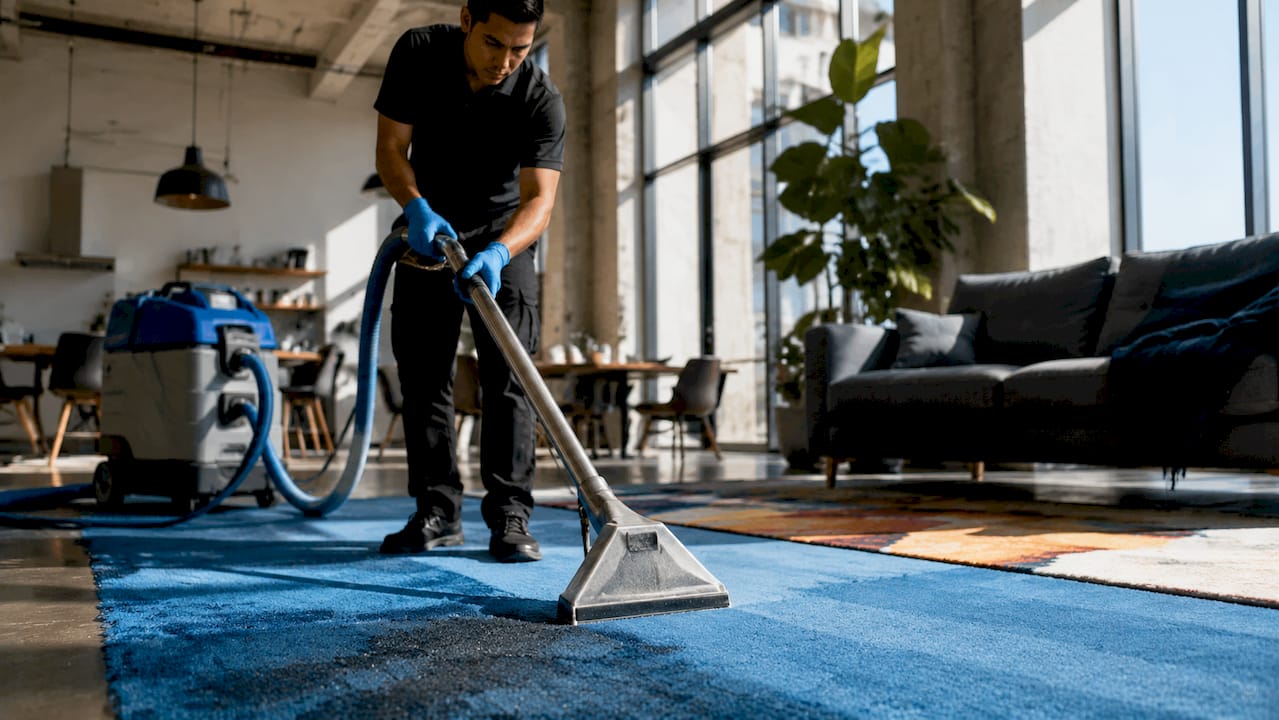
Cleaning cannot fix permanent fiber distortion caused by tension problems. Running a hot water extraction machine over a rippled carpet does not pull it flat. In fact, loose carpets impair cleaning effectiveness because the cleaning machine cannot maintain consistent pressure across uneven surfaces, leaving some areas dirtier than others.
| Factor | Carpet Stretching | Carpet Cleaning |
|---|---|---|
| Problem solved | Wrinkles, ripples, loose edges | Dirt, stains, allergens, odors |
| Tools used | Power stretcher, knee kicker | Extraction machine, encapsulation equipment |
| Frequency | Every 5–10 years | Every 6–18 months depending on traffic |
| Safety impact | Reduces tripping hazards | Improves indoor air quality |
| Can replace the other? | No | No |
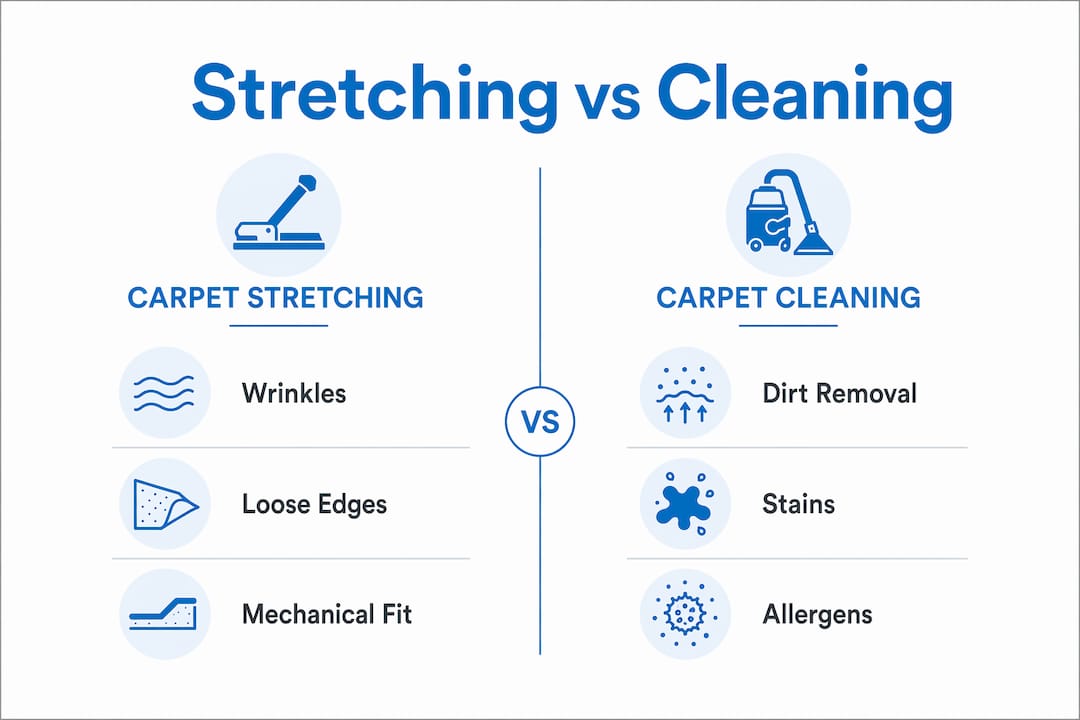
The most common mistake homeowners make is scheduling a cleaning when they actually need a stretch first. Cleaning a rippled carpet wastes money because the results look uneven and the underlying problem remains. The correct order is always stretch first, then clean.
When should you choose stretching over cleaning, or vice versa?
The decision comes down to what problem you are actually looking at. Stretching and cleaning each have clear indicators, and reading them correctly saves you time and money.
Choose carpet stretching when you see:
- Visible waves or ripples running across the room
- Carpet edges pulling away from baseboards or transition strips
- Bunching or buckling near doorways or high-traffic paths
- A spongy or uneven feel when walking across the floor
- Carpet that shifts when you walk on it
Choose professional cleaning when you notice:
- Visible dirt, tracked-in soil, or gray discoloration in traffic lanes
- Stains from food, pets, or spills that have set into fibers
- Persistent odors even after vacuuming
- Increased allergy symptoms indoors, especially in carpeted rooms
- It has been more than 12 months since the last professional clean
Stretching is less worthwhile when the carpet backing is severely damaged, the carpet is older than 10 years, or staining covers large areas. In those cases, replacement delivers better long-term value. A professional inspection from a certified technician gives you a clear answer before you commit to either service.
Pro Tip: If you are unsure whether you need stretching or cleaning, get down at floor level and look across the room toward a light source. Any ripples or waves will be immediately visible at that angle. This is the same check professionals use on a first visit.
For business managers, the commercial office carpet checklist from Carpetandtileplus is a practical tool for tracking both stretching and cleaning needs across multiple rooms or floors.
How to combine stretching and cleaning for long-term carpet care
A maintenance routine that includes both services extends carpet life significantly beyond what either service achieves alone. The key is sequencing them correctly and scheduling them at the right intervals.
Always stretch before cleaning, not after. Stretching damp fibers after a hot water extraction risks fiber damage and re-soils the carpet through mechanical handling. Doing it in the right order protects your investment.
- High-traffic residential areas (hallways, living rooms, stairs): professional cleaning every 6–12 months
- Low-traffic residential areas (guest rooms, formal dining rooms): professional cleaning every 12–18 months
- Commercial spaces: cleaning every 3–6 months depending on foot traffic volume; review stretching needs annually
- Stretching schedule: inspect every 3–5 years, re-stretch every 5–10 years or after any major furniture move
- After stretching: wait at least 24 hours before scheduling a cleaning appointment to allow the carpet to fully settle on the tack strips
Good maintenance also improves indoor air quality. Carpets act as filters, trapping dust, pollen, and pet dander. Regular cleaning releases and removes those particles rather than letting them accumulate. Combining that with a flat, properly tensioned surface means cleaning equipment works at full efficiency every time. You can learn more about cleaning new carpet to understand why starting a maintenance routine early pays off over the life of the floor.
Key takeaways
Carpet stretching fixes structural tension problems, while carpet cleaning removes contamination. These two services work best when scheduled together, with stretching always completed before cleaning.
| Point | Details |
|---|---|
| Different problems, different solutions | Stretching fixes wrinkles and looseness; cleaning removes dirt, allergens, and stains. |
| Sequence matters | Always stretch before cleaning to protect fibers and maximize cleaning results. |
| Stretching frequency | Inspect every 3–5 years and re-stretch every 5–10 years as preventive maintenance. |
| Cleaning frequency | Clean high-traffic areas every 6–12 months; commercial spaces every 3–6 months. |
| Know when to replace | Carpets older than 10 years with backing damage are better replaced than stretched. |
What i’ve learned after years of carpet inspections
The question I hear most often is some version of “Can’t you just clean it and make it look better?” Sometimes yes. But when a carpet has ripples, the honest answer is no. Cleaning a loose carpet is like washing a wrinkled shirt without ironing it. It comes out cleaner but still looks wrong.
The safety angle is the one that surprises people most. Most homeowners treat ripples as a cosmetic annoyance. I have seen seniors trip on carpet waves in hallways that the family had lived with for years because nobody thought it was urgent. It is urgent. A stretch takes a few hours and costs a fraction of an emergency room visit.
The other misconception I run into constantly is that stretching is only for old carpets. Carpets installed in a hurry, or in rooms with heavy furniture that gets rearranged frequently, can loosen within two or three years. Age is not the only factor. Installation quality and how the space is used matter just as much.
My advice: get a professional to look at both issues at the same time. A good technician will tell you honestly whether you need a stretch, a clean, or both. Trying to diagnose it yourself from a photo or a quick walk-through often leads to spending money on the wrong service first.
— Jim
Professional carpet care in the northwest suburbs of chicago

Carpetandtileplus serves homeowners and businesses across Elgin, Bartlett, Streamwood, Arlington Heights, Palatine, Barrington, and Hanover Park with IICRC-certified carpet cleaning using organic products and truck-mounted equipment. The team delivers a one-hour dry time on most residential jobs, so your day stays on track. Whether your carpet needs a deep clean, odor treatment, or you want a professional assessment of whether stretching is the right call before your next clean, Carpetandtileplus has the experience to give you a straight answer. Explore residential carpet cleaning services or commercial carpet cleaning to book your next appointment with a team that has earned hundreds of five-star reviews across the Chicago suburbs.
FAQ
What is the main difference between carpet stretching and cleaning?
Carpet stretching fixes mechanical problems like wrinkles and loose edges by re-tensioning the carpet to tack strips. Carpet cleaning removes dirt, allergens, and stains through methods like hot water extraction.
Should carpet be stretched before or after cleaning?
Stretching must be done before cleaning to avoid damaging damp fibers and to prevent re-soiling during the mechanical stretching process. Cleaning a flat, properly tensioned carpet also produces better results.
How often does carpet need to be stretched?
Carpet stretching is recommended every 5–10 years as part of routine maintenance. Carpets in rooms with frequent furniture movement may need inspection sooner.
Can cleaning fix carpet ripples or wrinkles?
No. Cleaning addresses contamination only and cannot fix fiber distortion caused by tension problems. Only mechanical stretching restores a flat surface.
When is carpet replacement better than stretching?
Replacement offers better value when the carpet backing is severely damaged, the carpet is older than 10 years, or widespread staining makes restoration impractical. A professional inspection confirms which option makes financial sense.