A whole-house air duct cleaning in Lake Zurich typically runs between $275 and $900 depending on home size and services included, while a thorough source-removal job on a single-family system often lands in the $350 to $900 range; for best year-round results, it’s wise to follow an HVAC maintenance checklist alongside duct cleaning. Hire a pro when you see visible mold, pest activity, or heavy debris, per EPA guidance; otherwise, get a written, itemized estimate before you sign anything.
TL;DR:
- A 2,000 square foot home typically costs $400 to $650 for a complete job, while homes over 3,000 square feet can exceed $900.
- The EPA does not recommend scheduled cleaning; reserve it for visible mold, pest activity, or ducts clogged with heavy debris.
- A valid source removal job uses mechanical agitation with negative pressure vacuuming; brushing debris loose without collection does not meet that standard.
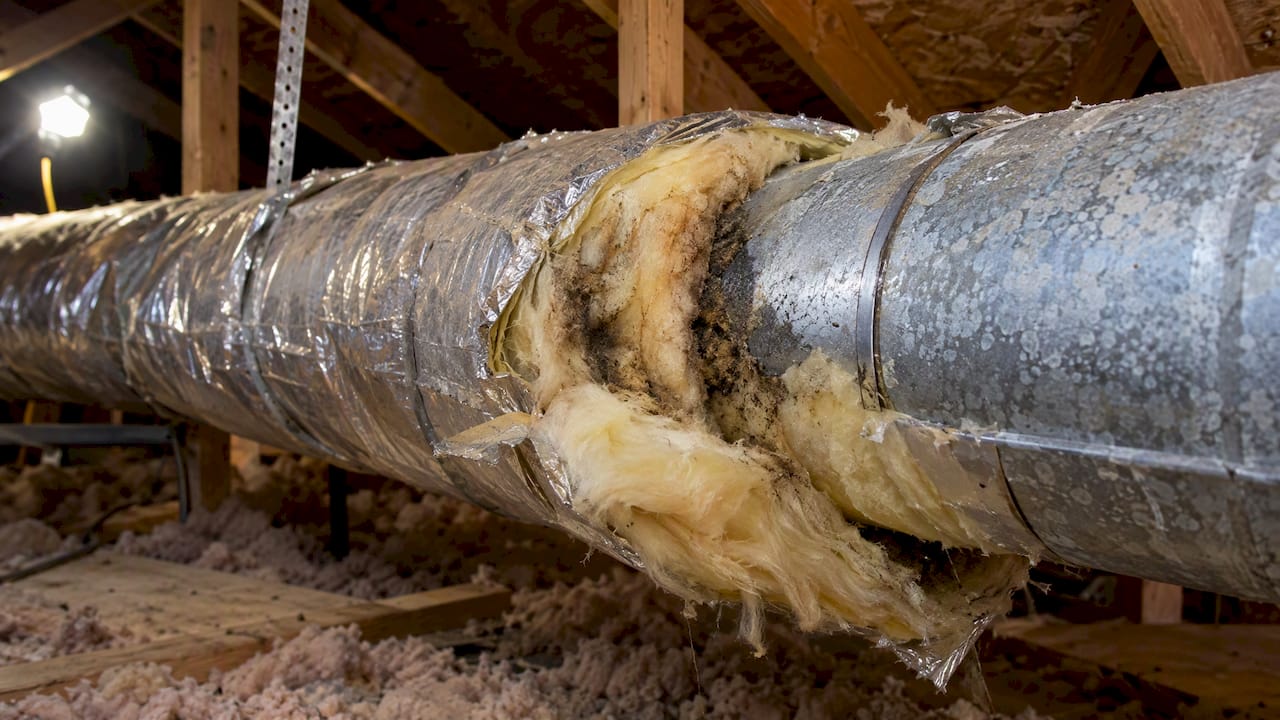
- Wet or moldy duct insulation usually needs replacement, not another cleaning pass, so ask the technician to inspect insulation before approving work.
- Get a written, itemized estimate that separates coils, blower, sanitizing, and fees; reject pressure to pay in full before work begins.
What information is covered in this Lake Zurich air duct cleaning cost guide?
- Typical cost breakdown and sample Lake Zurich price examples
- What affects price: a homeowner checklist of cost drivers
- What a proper professional cleaning includes
- How to collect comparable written estimates and exact questions to ask
- Red flags and common scams to watch for
- Lake Zurich municipal note: permits and who to call
- A local perspective on fair duct cleaning pricing
- Request a written air duct cleaning estimate from Carpet & Tile Plus
- FAQ
- Sources
Typical cost breakdown and sample Lake Zurich price examples
The EPA notes that professional duct cleaning nationally runs roughly $450 to $1,000 per heating and cooling system, depending on services offered, home size, accessibility, and contamination level. Local listings for Lake Zurich and the surrounding area tend to run a bit lower at the entry point, with honest full-service jobs commonly falling in the $275 to $900 band. Contractors advertising specials under $150 are frequently offering a stripped-down service meant to lead into a paid upsell once they are inside your house.
A written estimate usually breaks the job into separate line items, and understanding each one helps you compare bids fairly:
- Labor: the time spent accessing, agitating, and vacuuming each run
- Vent and duct cleaning: the core service, priced per system or per vent
- Coil and blower cleaning: often optional, priced separately
- Sanitizing or deodorizing: an add-on that should be itemized, not bundled silently
- Disposal and travel fees: smaller charges that still belong on the invoice
Three scenarios illustrate how size changes the math. A small 1,200 square foot home with a single system and easy attic access tends to land near the low end of the local range. A typical 2,000 square foot home with a standard furnace closet setup usually falls in the middle of the band, often $400 to $650 for a complete job. A large 3,000-plus square foot home, especially one with two HVAC zones or a crawlspace run, tends to push toward the top of the range or beyond it once coil cleaning and extra vents are added in. For a nearby comparison, see how air duct cleaning costs break down in Hoffman Estates, where the pricing logic is similar.
What affects price: a homeowner checklist of cost drivers
Two quotes for the same house can differ by hundreds of dollars, and the gap almost always traces back to a handful of variables.
- Duct and vent count: more registers and longer runs mean more labor hours
- Accessibility: attic crawlspaces, tight furnace closets, or finished basements with buried ductwork add time and cost
- Contamination level: routine dust costs less to clear than visible mold, rodent droppings, or thick settled debris
- Scope of components: cleaning just the ducts costs less than cleaning ducts plus coils, blower, and registers
- Insulation condition: wet or moldy duct insulation may need replacement rather than cleaning, which changes the job entirely
- Timing: scheduled appointments during normal business hours typically cost less than rush or emergency visits
Pro Tip: Ask every contractor to walk your attic or furnace closet with you before quoting. A quote given sight-unseen over the phone is the one most likely to balloon once the crew arrives.
Insulated ducts that have absorbed moisture over time are a special case. If a technician finds wet or moldy insulation inside the ductwork, cleaning alone will not solve the problem, and replacing that section is usually the honest recommendation rather than a more expensive cleaning pass.
What a proper professional cleaning includes
A real duct cleaning job follows what NADCA calls “source removal”: mechanical agitation paired with a vacuum collection device that pulls debris out under negative pressure, rather than just loosening it and hoping it settles elsewhere. A crew running a brush through a vent with no vacuum attached is not performing source removal, no matter what the invoice calls it.
A full-system approach typically includes:
- Access points large enough for mechanical tools to reach the full duct run
- Negative-pressure vacuuming that actually collects loosened debris instead of just stirring it
- Coil, blower, and register cleaning, since EPA and industry sources note that cleaning these components often does more for system performance than cleaning ducts alone
- Damper marking and restoration so airflow balance is not disrupted
- Documentation that the work did not impair fire or smoke detection equipment tied to the system
The EPA’s cost guidance puts professional duct cleaning at roughly $450 to $1,000 per system, a range that generally reflects whether coils and other components are included.
Sanitizers and sealants are sometimes offered as add-ons, but the EPA cautions against using chemical biocides or sealants as a routine step rather than a targeted response to a documented problem. Ask for before-and-after photos when possible. A legitimate contractor documenting their own work is a small ask that filters out the operations not doing real source removal, as the FTC notes in its advice on evaluating home improvement contractors. For a fuller walkthrough of what the process should look like step by step, see this HVAC duct cleaning process guide.
How to collect comparable written estimates and exact questions to ask
Getting two quotes that actually compare apples to apples takes a bit of structure. Use this sequence with every contractor you call:
- Request a written, itemized estimate that lists methods, total price, start and completion dates, and cancellation terms.
- Ask whether they follow NADCA’s ACR standard or can describe how their method achieves equivalent source removal.
- Request proof of credentials and insurance before any technician enters your home.
- Confirm whether coil and blower cleaning are included or priced as a separate line, and whether sanitizers will be applied and why.
- If billed hourly, get an estimated total labor time and a maximum price cap in writing so the job cannot balloon once it starts.
Pro Tip: Save every estimate as a PDF or photo, even from companies you rule out. If a contractor later tries to change the scope on-site, having the original written quote in hand makes the conversation much shorter.
A homeowner checklist prepared ahead of the appointment also helps you flag which rooms or vents need extra attention before the crew arrives, so the written scope matches what your house actually needs.
Red flags and common scams to watch for
The FTC warns that home-improvement scams often start with an unusually low advertised price that grows once the crew is inside your home. Watch for these patterns:
- A rock-bottom flat rate (often under $100 for a “whole house”) that expands once technicians start adding “necessary” services on site
- High-pressure, same-day pricing that pushes you to sign before you can compare other bids
- Demands for full payment up front, before any work begins
- No written contract, just a verbal agreement or a handwritten slip
- Refusal to provide insurance or licensing information when asked directly
Insist on a written contract, pay incrementally rather than in full up front, and keep every estimate, text message, and photo related to the job. If something feels off, contact your local consumer protection office or the FTC directly, and bring your paperwork with you. A closer look at how these schemes typically unfold is available in this guide to air duct cleaning scams.
Lake Zurich municipal note: permits and who to call
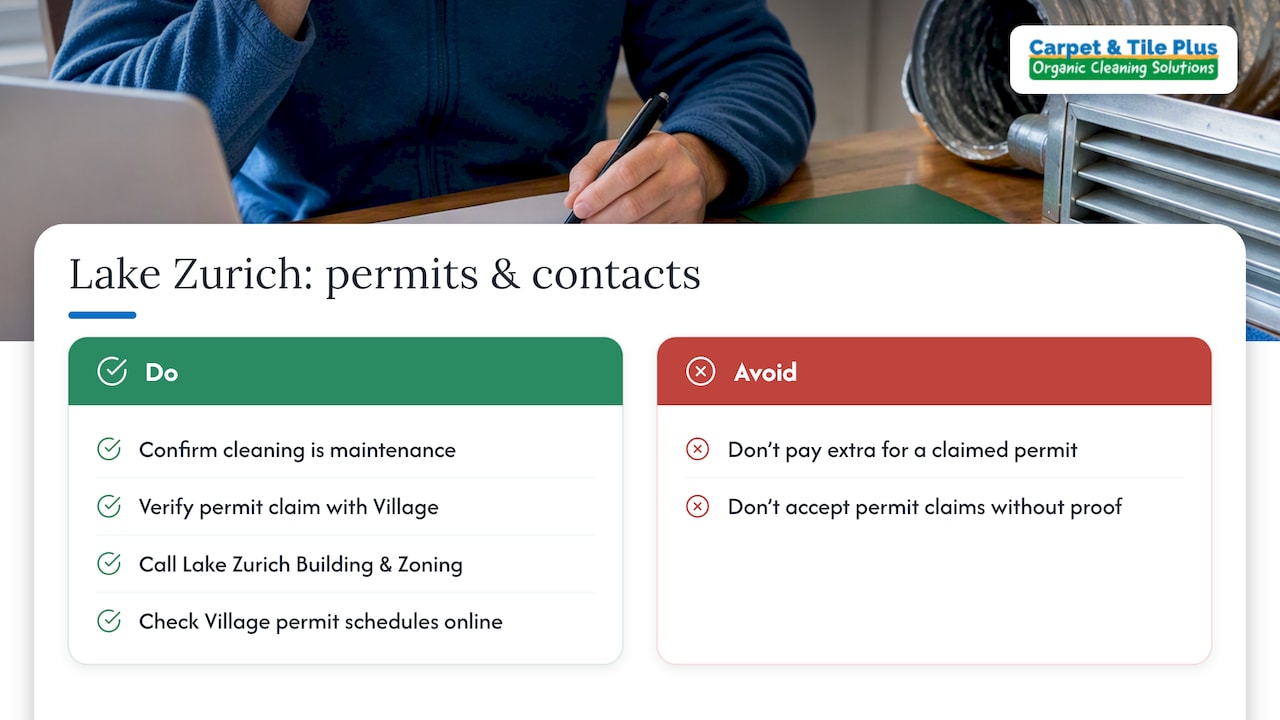
Routine air duct cleaning is maintenance, not construction, and Village of Lake Zurich documentation indicates that permits and plan-review timelines apply to new HVAC installations and equipment replacements, not to cleaning an existing system. If a contractor tells you a permit is required for a standard cleaning job, that claim is worth verifying before you pay anything extra. Contact Lake Zurich Building & Zoning directly to confirm, and check the Village’s permit schedules online if you want to see the full list of what actually requires a permit.
A local perspective on fair duct cleaning pricing
Homeowners in Lake Zurich ask us two things most often: why one quote is three times another, and whether duct cleaning is worth doing at all. The honest answer is that price gaps almost always trace back to scope, not salesmanship: a real source-removal job with coil cleaning costs more than a brush-and-vacuum pass, and it should. We built our approach around technicians, cleaning products, and a fast dry time, based on extensive experience working in residential homes. Customer reviews indicate that homeowners notice differences in service quality.
— Jim
Request a written air duct cleaning estimate from Carpet & Tile Plus
We clean air ducts, carpets, and tile and grout in the Northwest Suburbs of Chicago. Our technicians use organic cleaning products throughout the job, and our low-moisture methods minimize dry time when carpet or tile work is part of the visit.
When you request a quote, we put together a written estimate that spells out:
- The full scope of work, including which components are cleaned
- The method used, so you know exactly what source removal looks like in your home
- A total price with no hidden add-ons once the crew arrives
- Start and completion dates agreed on before work begins
If your furnace closet or attic access is unusual, mention it when you call so the estimate reflects your actual home rather than a generic average. You can see more about what we cover on our air duct cleaning page and request a local, itemized quote whenever you are ready to compare it against other bids.
Frequently Asked Questions about Air Duct Cleaning in Lake Zurich?
Is it worth the money to get your air ducts cleaned?
It depends on whether specific triggers are present. The EPA does not recommend routine duct cleaning on a schedule, but it is worth the cost when you see visible mold, signs of pests, or ducts clogged with heavy debris.
How much does professional duct cleaning typically cost?
Nationally, the EPA cites a range of roughly $450 to $1,000 per system depending on services and contamination level. Local Lake Zurich pricing for a full source-removal job commonly falls between $275 and $900, depending on home size and whether coils are included.
How much does it cost to professionally clean and seal air ducts?
Cleaning and sealing are two different services with separate pricing, and sealants are not something the EPA recommends using routinely rather than as a targeted fix for a documented leak or gap. Ask any contractor to quote sealing as its own line item rather than bundling it automatically into a cleaning estimate.
What are the drawbacks of duct cleaning?
Done poorly, duct cleaning can disturb settled dust without fully removing it, or damage ductwork if technicians use aggressive tools without proper access points. The EPA also cautions against routine use of chemical biocides or sealants, since they are meant for specific problems rather than standard maintenance.
How do I know if a cheap quote is a scam?
The FTC warns that bait pricing, high-pressure tactics, and demands for full payment up front are common red flags in home improvement scams. A legitimate contractor will provide a written, itemized estimate and will not pressure you to sign the same day.
What are the sources for this Lake Zurich air duct cleaning cost guide?
- Should I have the air ducts in my home cleaned? | US EPA
- How To Avoid a Home Improvement Scam | FTC
- ACR — The NADCA Standard for Assessment, Cleaning & Restoration of HVAC Systems (2021 edition)
- Air Conditioning handout | Village of Lake Zurich