An air duct cleaning checklist for homeowners is a stepwise guide that identifies when cleaning is justified, what preparation is required, and how to verify the job was done right. The EPA recommends cleaning only under three specific conditions: visible mold, confirmed pest infestation, or excessive dust blowing into living spaces. The industry standard for service quality comes from NADCA, the National Air Duct Cleaners Association, whose ACR Standard defines what a complete cleaning must cover. Most homeowners skip the verification step entirely, which is where money gets wasted. This guide walks you through every stage, from the first red flag to the final inspection photo.
1. When should you consider air duct cleaning?
Cleaning is a targeted remediation tool, not a routine chore. The EPA does not recommend routine air duct cleaning and finds no scientific proof that it prevents health issues or reduces household dust on its own.
The three conditions that justify cleaning are clear:
- Visible mold growth inside ducts or on other HVAC components
- Confirmed rodent or insect infestation inside the duct system
- Excessive dust or debris visibly blowing out of supply registers into living areas
Beyond those three, a few other situations warrant a serious look. Post-renovation dust is a legitimate trigger, especially after drywall work or demolition. Musty odors that persist after filter changes often point to biological growth inside the system. New homeowners should also consider an air duct inspection if the previous occupants’ maintenance history is unknown.
Routine annual cleaning without visible contamination is widely considered unnecessary. Cleaning frequency varies by home conditions, typically every 3–5 years or triggered by a specific event.
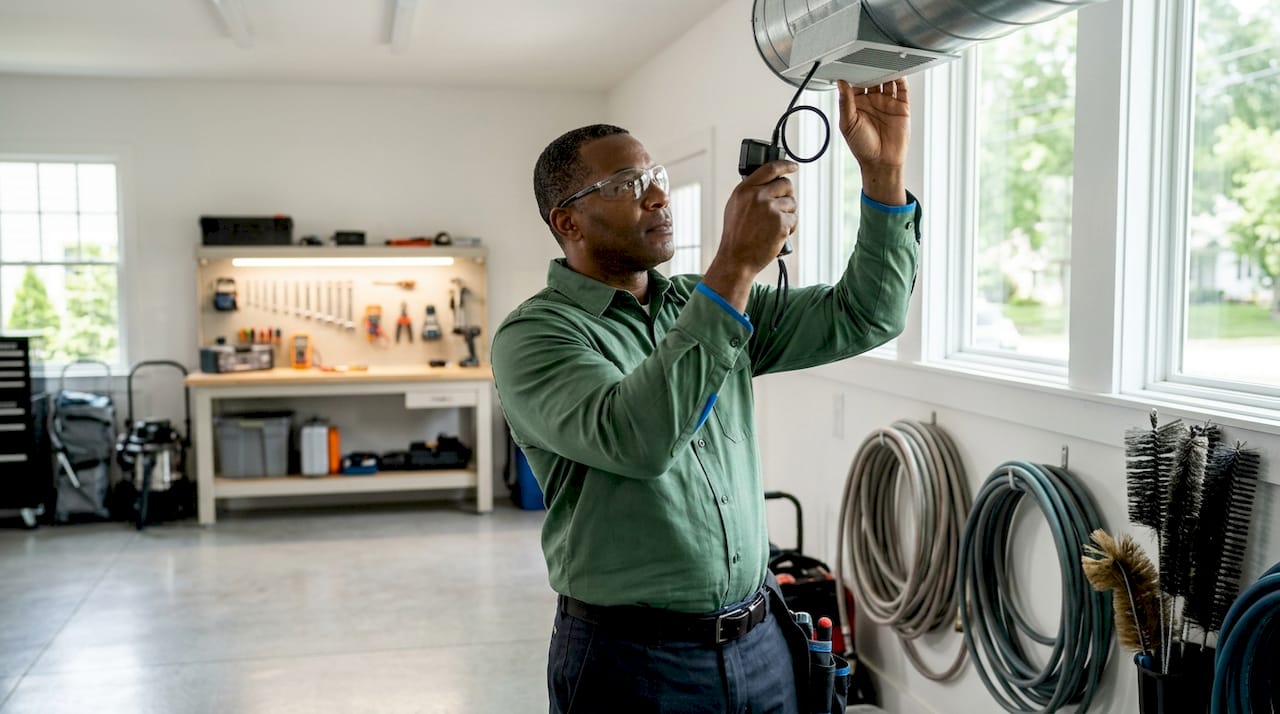
Pro Tip: If a company contacts you unsolicited and promotes a scheduled cleaning without first inspecting your system, treat that as a red flag. Legitimate providers inspect before they recommend.
2. How to prepare your home before the service
Preparation directly affects how thorough the cleaning will be. A technician who cannot access a return vent or air handler cannot do a complete job.
Follow these steps before the crew arrives:
- Check and replace your air filter. A clogged filter is sometimes the entire problem. Replacing a dirty filter may resolve airflow issues before any cleaning is needed.
- Clear all supply and return vents. Move furniture, rugs, and storage boxes away from every register in the house.
- Provide unobstructed access to the air handling unit. Clear the area around your furnace or air handler in the basement, attic, or utility closet.
- Document the current condition. Take photos of visible dust buildup at registers, any discoloration around vents, and the filter condition before removal.
- List any known issues. Write down recent renovations, pest sightings, water leaks near ducts, or any odors you have noticed. Share this list with the technician before work begins.
- Confirm the written scope of work. Before anyone touches your system, get a written document listing every component to be cleaned. If it only mentions “ducts,” ask for specifics.
Pro Tip: Ask the company whether they will clean the evaporator coil and drain pan. Many low-cost services skip these components entirely, which leaves the most contamination-prone parts untouched.
3. What professional cleaning must include
A legitimate air duct cleaning service covers far more than the ducts themselves. The NADCA ACR Standard requires cleaning of supply and return ducts, the air handler, evaporator coil, fan motor, and drain pans. Skipping any of these components is not accepted by standard-setting bodies and leaves the job incomplete.
The cleaning method matters as much as the scope. Source removal cleaning is a two-step process: mechanical agitation using brushes or air sweeps loosens debris, followed by continuous negative pressure vacuuming with HEPA filters to capture it. Any service that only blows air through the ducts without negative pressure is not source removal cleaning.
Here is what a compliant service must include:
- Mechanical agitation of all duct surfaces using brushes or compressed air tools
- Continuous negative air pressure with HEPA-filtered vacuum equipment
- Cleaning of registers, grilles, diffusers, and return air boots
- Cleaning of the evaporator coil, fan motor, and drain pan
- Protection of household surfaces and furnishings during the process
- Before and after photographs of internal duct surfaces
Watch for these warning signs during service. A crew that finishes a whole house in under an hour almost certainly did not clean the full system. A price under $100 for a whole-home service is a strong indicator of a scam. ASCS-certified technicians following NADCA standards provide written scopes, protect household surfaces, and document results with photos or video.
Not every part of an HVAC system is equally accessible. Experienced inspectors identify inaccessible zones and document what cannot be cleaned and the reasons why. That transparency is a mark of a qualified provider.
4. How to verify the job after cleaning
Post-cleaning verification is the step most homeowners skip. It is also the step that confirms whether you got what you paid for.
- Request before and after photos. Visual proof of cleaning is the best evidence you can use to confirm a thorough job. Ask for these before the technicians leave.
- Apply the NADCA “Visibly Clean” standard. Internal duct surfaces should show no visible debris, dust accumulation, or biological growth when photographed. If the photos are blurry or only show vent covers, ask for clearer images of the duct interior.
- Confirm the inspection report. A qualified provider following NADCA standards delivers a written post-cleaning report that documents what was cleaned, what was found, and any areas that could not be accessed.
- Check every register. Walk through the house and remove a few vent covers to visually inspect the first 12 inches of duct. Clean ducts show bare metal or insulation with no dust layer.
- Schedule your next HVAC inspection. Plan a professional HVAC inspection every 1–2 years to catch issues before they require another full cleaning.
Cleaning alone does not fix systemic problems. Correcting moisture issues, sealing leaks, and pest-proofing duct entry points are required to prevent recontamination. A clean system that still has a slow leak will accumulate dust again within months.
5. Ongoing maintenance to protect indoor air quality
Maintenance between cleanings matters more than the cleaning itself. Duct sealing and filter maintenance often provide more benefit for indoor air quality than cleaning alone.
The most effective ongoing habits are straightforward. Replace HVAC filters on schedule, typically every 60–90 days for standard filters, or monthly if you have pets or allergy sufferers in the home. Use filters rated MERV 8 or higher to capture fine particles without restricting airflow beyond your system’s design limits.
Seal duct leaks with mastic sealant or metal tape, not standard duct tape, which degrades quickly. Leaky ducts pull unconditioned air from attics, crawlspaces, and wall cavities directly into your living areas. That unconditioned air carries dust, mold spores, and humidity that no amount of cleaning will fix if the leak remains open.
For homeowners with allergy concerns, supplementary air purification with a whole-home HEPA unit or UV germicidal light installed at the air handler adds a meaningful layer of protection. These tools address airborne particles that ducts never capture. You can find additional guidance on why ducts need attention and how maintenance intervals are determined by home conditions.
Key Takeaways
A complete homeowner air duct maintenance plan requires justified triggers, NADCA-compliant cleaning methods, and post-service visual verification to confirm the job was done correctly.
| Point | Details |
|---|---|
| Clean only when justified | EPA identifies three valid triggers: mold, pests, and excessive dust emission. |
| Prepare before service | Replace filters, clear vents, and get a written scope of work before work begins. |
| Demand full-system cleaning | NADCA ACR Standard requires coils, fan motor, and drain pans, not just ducts. |
| Verify with photos | Request before and after photos and confirm the NADCA “Visibly Clean” standard is met. |
| Maintain between cleanings | Filter replacement and duct sealing prevent recontamination more effectively than frequent cleaning. |
What I’ve learned after years of watching homeowners overspend on duct cleaning
The most common mistake I see is homeowners scheduling duct cleaning the same way they schedule carpet cleaning: on a calendar, not on a condition. That approach wastes money and sometimes causes more harm than good. Disturbing a duct system that has settled dust and no active contamination can temporarily worsen air quality.
The dirty ducts equal dirty air assumption is the myth that drives most unnecessary cleanings. Dust adheres to duct surfaces and does not enter living areas unless airflow is compromised. That single fact should change how you think about the whole category.
What actually works is fixing the source. I have seen homes where cleaning was done twice in three years with no lasting improvement because a slow roof leak kept feeding moisture into the attic ductwork. The cleaning was fine. The leak was the problem. Treat duct cleaning the way you treat pest control: call when you have a confirmed problem, fix the root cause, and then verify the result.
Ask for photos. If a company resists that request, find another company. Transparent providers welcome the verification because it protects them too. That is the standard Carpetandtileplus holds itself to, and it is the standard every homeowner should demand.
— Jim
Carpetandtileplus air duct cleaning services for Northwest Suburbs homeowners
Carpetandtileplus serves homeowners across Elgin, Bartlett, Streamwood, Arlington Heights, Palatine, Barrington, and Hanover Park with professional air duct cleaning that follows NADCA and EPA standards. Every service begins with an inspection to confirm cleaning is actually needed, so you never pay for work your system does not require.
IICRC-certified technicians clean the full HVAC system, including registers, coils, fan motors, and drain pans, and document results with before and after photos. Carpetandtileplus also offers residential carpet cleaning and tile and grout services, so you can address your entire indoor environment in one call. With over 20 years of experience and hundreds of five-star reviews, the team delivers results you can see and verify.
FAQ
What triggers a justified air duct cleaning?
The EPA identifies three valid triggers: visible mold inside ducts, confirmed rodent or insect infestation, and excessive dust blowing into living spaces. Cleaning outside these conditions is generally not supported by scientific evidence.
How often should homeowners clean their air ducts?
Cleaning frequency depends on home conditions, not a fixed schedule. Most homes need cleaning every 3–5 years, or sooner after specific events like major renovations or a confirmed pest problem.
What is the NADCA “Visibly Clean” standard?
The NADCA “Visibly Clean” standard means internal duct surfaces show no visible dust, debris, or biological growth when photographed after cleaning. Homeowners should request post-cleaning photos to confirm this standard was met.
Can I clean my air ducts myself?
Homeowners can clean accessible vent covers and the first few inches of duct with a vacuum, but full source removal cleaning requires professional equipment including HEPA-filtered negative pressure vacuums and mechanical agitation tools.
Does air duct cleaning improve indoor air quality?
Cleaning improves air quality when contamination is present and the full HVAC system is cleaned using source removal methods. Filter maintenance and duct sealing often deliver equal or greater long-term benefit for indoor air quality.