A typical Mount Prospect home should budget a few hundred dollars for a professional whole-house air duct cleaning, with larger or more complex systems running higher. The final number depends on your home’s size, vent count, and how contaminated the ductwork is. Before you book anything, get written, itemized quotes from a couple of NADCA member companies so you can compare scope, not just price.
TL;DR:
- Prices typically range from $450 to $1,000 nationally, with local Mount Prospect homes costing about $300 to $500 on average for standard cleaning.
- Complex duct systems, heavy debris, or added services like coil sanitizing can push costs toward the higher end or beyond.
- Proper cleaning involves mechanical agitation, negative-pressure vacuuming, and cleaning of coils and blower components, often with parts replaced if mold or damage is present.
- Always get written, itemized estimates from certified NADCA or IICRC companies that include full scope details and equipment used to avoid hidden charges.
- Flat-rate phone quotes below $300 are usually incomplete; a thorough on-site inspection provides a reliable, scope-based cost estimate.
Table of Contents
- Mount Prospect price ranges and what drives them
- What a professional duct cleaning actually covers
- How to get an estimate you can actually trust
- Sample estimates for Mount Prospect homes
- Why local credentials matter more than the lowest bid
- The real cost calibration problem in this market
- Get a written quote from Carpet & Tile Plus
- Sources
- FAQ
Mount Prospect price ranges and what drives them
Homeowners in Mount Prospect generally see three pricing bands. A basic clean on a smaller home with easy attic or crawlspace access tends to land near the low end, while a larger home with a complicated duct layout or heavy dust buildup pushes toward the high end. The EPA notes that whole-system cleaning nationally tends to run from roughly $450 to $1,000, depending on the services performed, system size, and how contaminated the ducts are, a range that overlaps with what local providers quote once add-ons are included.
Several factors move the price within that range:
- Square footage and vent count: more supply and return registers mean more time on the job and more labor cost.
- Accessibility: ducts buried in finished ceilings or tight crawlspaces take longer to reach than an open unfinished basement.
- Contamination level: pet hair, construction dust, or years of neglect all add cleaning time.
- System complexity: multiple HVAC zones or older, poorly documented ductwork slow the work down.
Add-on services change the total as well. Coil cleaning, dryer vent cleaning, and antimicrobial sanitizer application are common upsells that each add to the base price. The EPA cautions that biocide or sanitizer use inside ducts should only happen after mold or contamination is confirmed, and only products registered for that specific use should go anywhere near your ductwork.
Be wary of flat-rate ads under $300 for a whole house. These offers often exclude the return plenum, coils, or the furnace fan, and the low number is designed to get a technician in your door for an upsell. A legitimate ACR-based cleaning simply takes more labor and equipment than a bargain price can cover.
What a professional duct cleaning actually covers
A proper cleaning follows the industry’s ACR standard rather than a quick pass with a shop vacuum. Under NADCA’s Standard for Assessment, Cleaning & Restoration, a full-system job typically includes:
- Mechanical agitation of duct interiors to loosen dust and debris stuck to the walls.
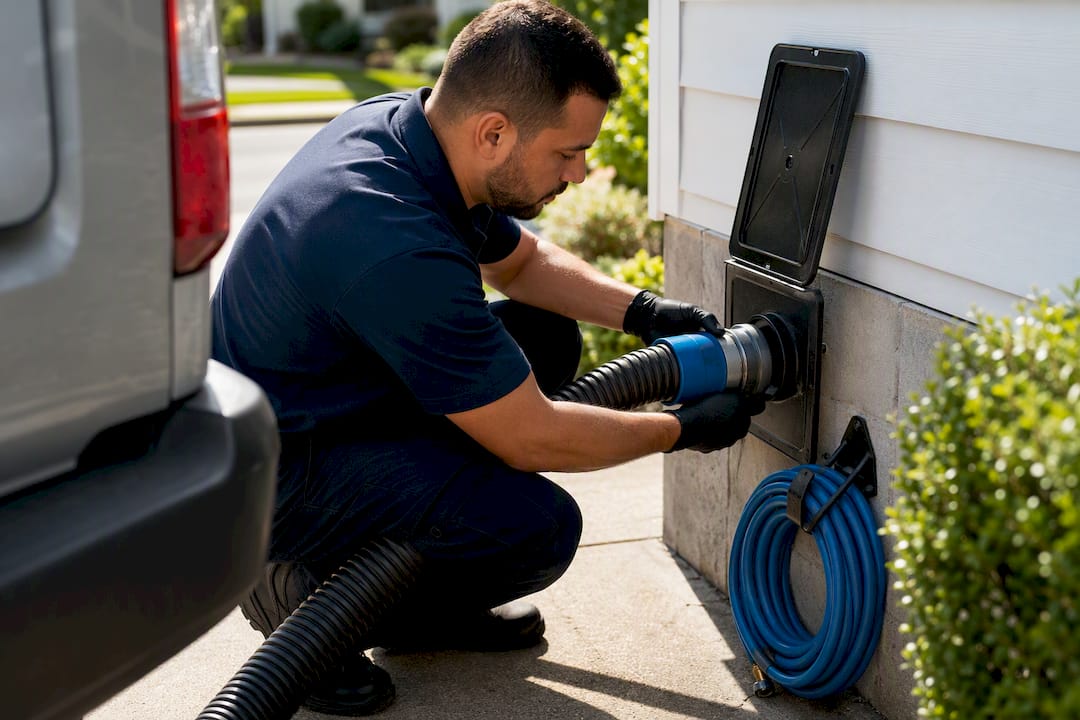
- Negative-pressure vacuuming that pulls loosened material to a sealed collection point instead of blowing it into your living space.
- Cleaning of the coils, blower, and fan housing, which are usually where recontamination starts if left untouched.
- Access panel installation where needed, so the crew can reach sections of the system that were never designed to open.
Some components get replaced rather than cleaned. Wet or moldy insulation inside ductwork, for instance, cannot be sanitized back to a usable state and should be removed and replaced, which is why some estimates include a repair line item alongside the cleaning charge.
Common separate charges include dryer vent cleaning, UV light installation, and any duct repair or sealing work discovered mid-job. These are legitimately outside the base scope, but a trustworthy contractor will flag them before starting, not after.
Pro Tip: Ask for before-and-after photos of your coils and main trunk lines, confirm NADCA or IICRC credentials, and ask what type of vacuum equipment they use. Truck-mounted negative-pressure units clean more thoroughly than portable shop vacuums.
How to get an estimate you can actually trust
Getting comparable quotes takes a little more effort than calling the first number you find, but it saves money and headaches later. Before you agree to anything, run through this checklist:
- Ask whether an on-site inspection is required before pricing, since accurate quotes almost always need one.
- Confirm NADCA membership or IICRC certification and ask for a member number you can verify.
- Ask what equipment they use and whether coils, the blower, and the plenum are included in the base price.
- Get the full scope in writing, including labor hours, access requirements, and cleanup procedures.
- Ask how they protect flooring and furniture near access points during the job.
Watch for red flags: technicians who quote a flat rate over the phone with no inspection, vague language like “whole house special” with no vent count attached, or pressure to add services on the spot. The EPA’s consumer guidance recommends getting written estimates from at least three companies before choosing one, specifically because improperly performed cleaning can stir up more dust than it removes.
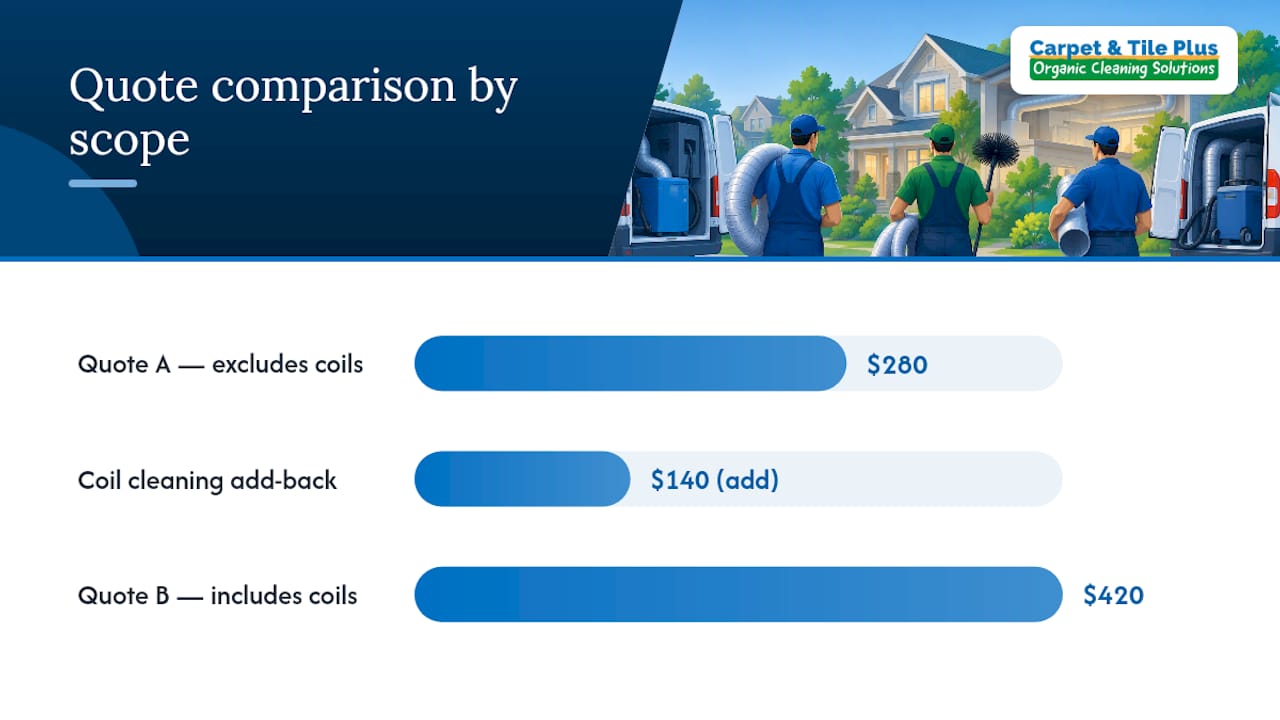
When comparing bids, match them line by line. A $280 quote that excludes coil cleaning is not actually cheaper than a $420 quote that includes it once you add the coil work back in.
Sample estimates for Mount Prospect homes
These are illustrative examples, not quotes. Your actual price depends on an on-site inspection, but they show how scope and size typically translate into cost.
- Small home (900 to 1,200 square feet, 6 to 8 vents): basic supply and return cleaning with coil check, roughly at the lower end of the local range.
- Medium home (1,500 to 2,200 square feet, around 12 vents): full-system cleaning including blower and coil work, landing near the middle of the range.
- Large or complex system (multiple zones, heavy debris, or visible mold): full ACR-based cleaning plus coil sanitizing and possible insulation replacement, pushing toward the top of the range or beyond it.
Always treat these as starting points. A technician who walks your basement and attic will give you a far more accurate number than any online estimate, local or otherwise.
Why local credentials matter more than the lowest bid
A local carpet and tile cleaning company serving the Northwest Suburbs of Chicago, including Mount Prospect, offers services backed by extensive experience and many positive reviews. Their technicians hold industry certifications, and the company utilizes organic cleaning products with a fast dry time to minimize disruption during service visits.
Those credentials matter because they reduce the guesswork a homeowner otherwise takes on. A certified technician follows a documented process rather than an improvised one, eco-friendly products lower the risk of leaving harsh residue behind, and a fast dry time means less time waiting around for a system to be usable again. Before hiring anyone for air duct cleaning, ask for a written estimate and confirm their NADCA or IICRC standing directly, the same verification step that applies no matter which company you choose.
The real cost calibration problem in this market
Most advice on duct cleaning cost focuses on the number and skips the scope, which is backward. A $250 quote and a $500 quote are not the same product with different price tags. They are often two different jobs wearing the same name, one that touches the ducts and one that touches the ducts, coils, and blower.
The conventional wisdom that “cheaper is better as long as it’s clean” ignores what the EPA’s own field study found: mechanical cleaning can remove adhered dust and often improves airflow, but sloppy work with weak equipment risks doing the opposite. Price alone tells you nothing about which outcome you are buying.
If you take one key point from this article, make it this: get the scope in writing before you compare any price. Ask about coils, the blower, and what equipment will be used. Homeowners who encounter problems usually are those who never clarified the details of the work, rather than those who paid more.
— Jim
Get a written quote from Carpet & Tile Plus
If you want a straightforward answer to what your Mount Prospect home will actually cost, skip the flat-rate phone quotes and get an on-site estimate that spells out the full scope in writing. The company brings certified technicians, organic cleaning products, and a fast dry time to every job, supported by many years of local service experience in the Northwest Suburbs of Chicago.
Whether your home needs a standard whole-system cleaning or you are also weighing dryer vent work or coil sanitizing, our team will walk your system, explain what is included, and put the full scope on paper before any work starts. Request a quote for air duct cleaning and get pricing specific to your home, not a generic phone estimate.
Sources
- Should You Have the Air Ducts in Your Home Cleaned? | US EPA
- Proper cleaning methods | National Air Duct Cleaners Association (NADCA)
- EPA field study on mechanical air duct cleaning (nine-home study)
FAQ
What is the average cost to clean air ducts?
Nationally, the EPA notes that whole-system cleaning commonly runs from about $450 to $1,000 depending on system size and services performed. In Mount Prospect, a typical home often falls in the $300 to $500 range for a standard job, with complex systems or add-ons pushing higher.
Is air duct cleaning really worth the money?
It depends on your ducts’ condition. The EPA does not recommend routine cleaning on a schedule, only when ducts show visible mold, pest infestation, or heavy debris, a distinction covered in more depth in our discussion of whether duct cleaning is worth it.
How often do house air ducts need to be cleaned?
There is no fixed interval that applies to every home. The EPA advises cleaning only when there is visible contamination such as mold growth, pest debris, or significant dust buildup rather than on a set calendar schedule.
What are the drawbacks of duct cleaning?
Improperly performed cleaning, such as inadequate vacuuming or poor containment, can actually release more dust into your home than it removes, according to EPA guidance. That is why verifying equipment and technique before hiring matters as much as the price you are quoted.
How long does a professional air duct cleaning take?
Most single-family homes take a few hours from setup to final vacuum pass, though larger homes or systems with heavy contamination can take longer. An on-site inspection is the only reliable way to get a time estimate specific to your ductwork.