Hire a professional right away if you see visible mold inside hard ductwork, evidence of vermin, or heavy debris coming out of your registers. Outside those signs, cleaning is often unnecessary. Whoever you hire, demand a written scope naming every component and the exact cleaning method, plus proof of insurance and a real payment structure before any work starts.
TL;DR:
- Professional duct cleaning is necessary only if there is visible mold, vermin infestation, or debris blowing from registers, not for routine maintenance.
- A written scope, proof of insurance, NADCA or IICRC certification, and transparent pricing are essential verification steps before hiring a contractor.
- Proper cleaning combines agitation and negative-pressure vacuuming of all system components, including ducts, coils, and air handlers, not just accessible areas.
- Mechanical cleaning may improve airflow but does not reliably lower indoor particle levels or address allergy symptoms unless specific issues are present.
- Beware of scams such as vague estimates, full upfront payments, or pressure tactics, and always pay by credit card or check for dispute protection.
Table of Contents
- Checklist: credentials and paperwork to verify before you hire
- What a proper cleaning process looks like
- When cleaning helps: EPA evidence and realistic expectations
- Estimates, pricing factors, and contract red lines
- Red flags, common scams, and consumer protections
- Mold claims and moisture remediation: what homeowners must insist on
- What experience actually teaches you about this industry
- Carpet & Tile Plus: how our air duct service fits the checklist
- Sources
- FAQ
Checklist: credentials and paperwork to verify before you hire
A written estimate is your first filter. It should list the components being cleaned, the materials and equipment used, an estimated timeline, the total price, and payment terms. If a contractor doesn’t put this on paper, move on.
Credentials matter just as much as paperwork. Ask for proof of general liability insurance, any state license your area requires, and membership with the National Air Duct Cleaners Association, often shown through a certified Air Systems Cleaning Specialist (ASCS) on staff. IICRC certification is a useful signal too, especially for technicians handling related indoor air quality work.
Verifying these claims takes minutes, not days.
- Search the NADCA member directory for the company name and ask for their certificate number directly.
- Search the company name alongside “scam” or “complaint” to check for a pattern of problems.
- Check the Better Business Bureau and your state’s consumer protection office for filed complaints.
- Confirm insurance by asking for a certificate of insurance, not just a verbal assurance.
Pro Tip: Call the number on the certificate of insurance rather than trusting the paperwork alone. A five-minute call confirms the policy is active and covers the work being done.
What a proper cleaning process looks like
Real duct cleaning combines two things: agitation and negative-pressure vacuum collection. NADCA’s process guidance describes technicians using power brushes or air whips to loosen dust and debris from duct walls while a vacuum system, connected to the ductwork, pulls contaminants out under negative pressure so they don’t spread into your living space.
The scope should never stop at the registers you can see. A complete job covers:
- Supply and return ductwork throughout the system, not just accessible sections.
- Coils, drain pans, and the air handler itself, where moisture and buildup often collect.
- Registers and grills, cleaned as part of the whole system rather than the main event.
Equipment varies. Truck-mounted systems and portable units can both do the job correctly when operated properly, though NADCA notes that porous or fiberglass-lined ducts need gentler handling since aggressive brushing can damage the lining rather than clean it.
When cleaning helps: EPA evidence and realistic expectations
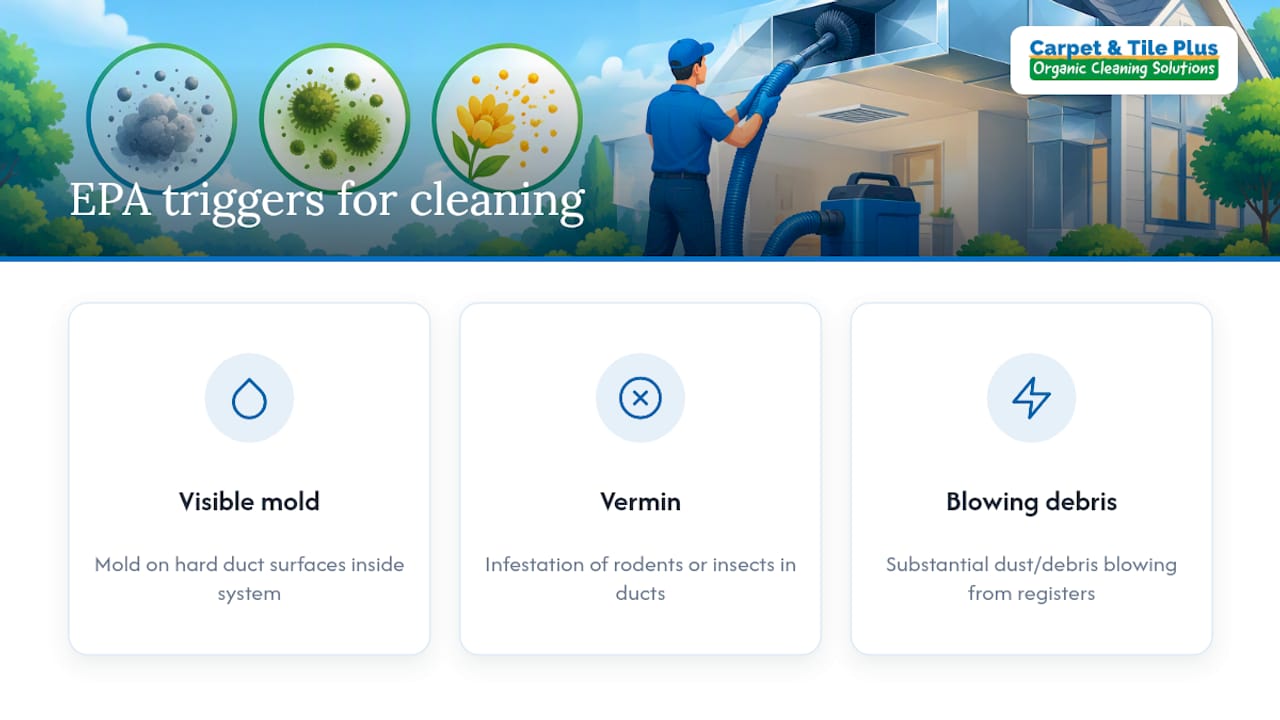
The EPA doesn’t recommend routine duct cleaning as a blanket practice. Its guidance points to three specific triggers: visible mold growing inside hard duct surfaces, an infestation of vermin, or substantial dust and debris actually blowing out of supply registers.
A nine-home EPA field study found that mechanical duct cleaning removed dust and dirt that had settled in the ductwork, but did not reliably lower indoor particle levels or bioaerosols, though supply airflow improved in several homes tested. That’s a useful reality check: cleaning removes what’s stuck to the duct walls, but it isn’t a guaranteed fix for allergy symptoms or dusty rooms.
A written proposal should reflect this honestly. It should state what will physically be removed from the system, and separately flag anything that may require replacement, like moldy insulation, or a referral to a moisture specialist rather than a cleaning-only fix.
Estimates, pricing factors, and contract red lines
Price swings come from a handful of variables: the size and complexity of your HVAC system, how easily technicians can access the ductwork, whether the ducts are lined with fibrous insulation that needs careful handling, and how much time the crew spends on site. A home needing moisture remediation alongside cleaning will cost more than a straightforward vacuum-and-agitate job.
Compare bids on equal footing. If one estimate lists coils and drain pans and another only mentions “duct cleaning,” you’re not comparing the same job.
Watch for these contract red lines before signing anything:
- A demand for full payment upfront, before any work is done.
- A vague scope that never names specific components or methods.
- Chemical or biocide treatments mentioned without a Safety Data Sheet or written justification for their use.
Red flags, common scams, and consumer protections
Duct cleaning scams follow a familiar pattern: door-to-door solicitors offering suspiciously cheap deals, inflated claims about instantly curing allergies or asthma, reviews that read like they were written by the same person, and pressure to pay in cash or with a gift card.
The FTC’s consumer guidance lays out a simple defense.
- Get recommendations from people you trust, then verify the contractor’s ID, license, and insurance yourself.
- Search the company’s name alongside “complaint” before signing anything.
- Pay by credit card or check, since both offer dispute protections that cash and gift cards don’t.
- Insist on a written contract and never pay the full amount before work is complete.
If something feels off during a consultation, our guide to common duct cleaning scams covers the warning signs in more detail.
Pro Tip: Take photos of any mold, debris, or damage before and after the work. If a dispute arises later, dated photos are worth more than your memory of the conversation.
Mold claims and moisture remediation: what homeowners must insist on
If a contractor tells you there’s mold in your ducts, ask for proof: a photo, a written inspection note, or a lab confirmation for anything ambiguous. Plenty of substances get mistaken for mold, and a reputable technician should be able to explain exactly how they identified it.
Mold in porous duct insulation is a different problem than dust buildup. The EPA’s guidance is direct about it: wet or moldy porous insulation generally needs to be removed and replaced, not cleaned, because moisture control is what actually stops mold from returning.
- Ask whether the contractor coordinates with moisture remediation specialists when needed.
- Require documentation of any moisture source that gets fixed.
- Treat cleaning-only proposals for confirmed mold as incomplete.
What experience actually teaches you about this industry
Over 20 years in the cleaning trade, I’ve watched the duct cleaning side of this business attract more shortcuts than almost any other service we offer. The paperwork trail matters more than the sales pitch, every time.
The proof points worth looking for aren’t complicated: a company that’s family owned tends to answer the phone when something goes wrong. IICRC-certified technicians and organic cleaning products signal a team that treats chemical disclosure seriously rather than as an afterthought. Hundreds of five-star reviews mean something only when the underlying process, written estimates, documented methods, and clear component lists, matches what NADCA and the EPA describe as proper practice.
— Jim
Carpet & Tile Plus: how our air duct service fits the checklist
We built our air duct cleaning service around the same standards laid out above, because homeowners in the Northwest Suburbs of Chicago deserve the paperwork and process, not just a truck in the driveway.
- We provide a written estimate before any work begins, so you know the scope and price upfront.
- Our technicians use organic cleaning products throughout the process.
If you’re in Elgin, Bartlett, Streamwood, Arlington Heights, Palatine, Barrington, or Hanover Park, request an estimate through our air duct cleaning page and we’ll walk you through the scope before you commit to anything.
Sources
- Should You Have the Air Ducts in Your Home Cleaned? | US EPA
- Proper Cleaning Methods | National Air Duct Cleaners Association (NADCA)
- How to Avoid Home Improvement Scams | FTC
- EPA nine-home field study of mechanical air duct cleaning (ADC methods)
FAQ
How do I choose an air duct cleaning company?
Verify insurance, licensing, and NADCA membership or ASCS certification before anything else, then get a written estimate naming every component and the cleaning method used. Compare at least two bids that quote the same scope, and confirm the company appears clean in a complaint search through the BBB or your state’s consumer protection office.
What is the average cost to clean air ducts?
Pricing depends on system size, access difficulty, and whether porous ductwork needs extra care, so costs vary by job rather than following one flat rate. Ask for a written estimate that breaks down the components covered and the total price before comparing contractors.
What are the downsides of duct cleaning?
An EPA field study found that mechanical cleaning removed dust stuck to duct walls but didn’t reliably reduce indoor particle levels or bioaerosols, so it isn’t guaranteed to fix allergy symptoms. Poorly done cleaning on porous or fiberglass-lined ducts can also damage the lining rather than clean it.
What is the best type of air duct cleaning?
NADCA’s guidance describes proper cleaning as agitation, using power brushes or air whips, combined with negative-pressure vacuum collection that covers the whole HVAC system, not just visible registers. Both truck-mounted and portable vacuum equipment can do this correctly when technicians follow the full process.
When should I actually hire someone to clean my ducts?
Hire a professional when you see visible mold inside hard ductwork, signs of vermin, or heavy debris blowing out of your registers, since these are the specific triggers the EPA identifies as warranting cleaning. Outside those signs, routine cleaning on a fixed schedule usually isn’t necessary.