
Air duct cleaning is defined as the professional removal of dust, debris, allergens, and biological contaminants from a home’s HVAC ductwork, registers, and related components. Understanding why air ducts need regular cleaning comes down to two facts: contaminated ducts circulate pollutants through every room you breathe in, and dust buildup forces your HVAC system to work harder than it should. The National Air Duct Cleaners Association (NADCA) recommends cleaning every 3–5 years for most homes, though that interval shortens significantly based on your household’s specific conditions. Getting this right protects both your family’s health and one of the most expensive systems in your home.
How often should you clean your air ducts?
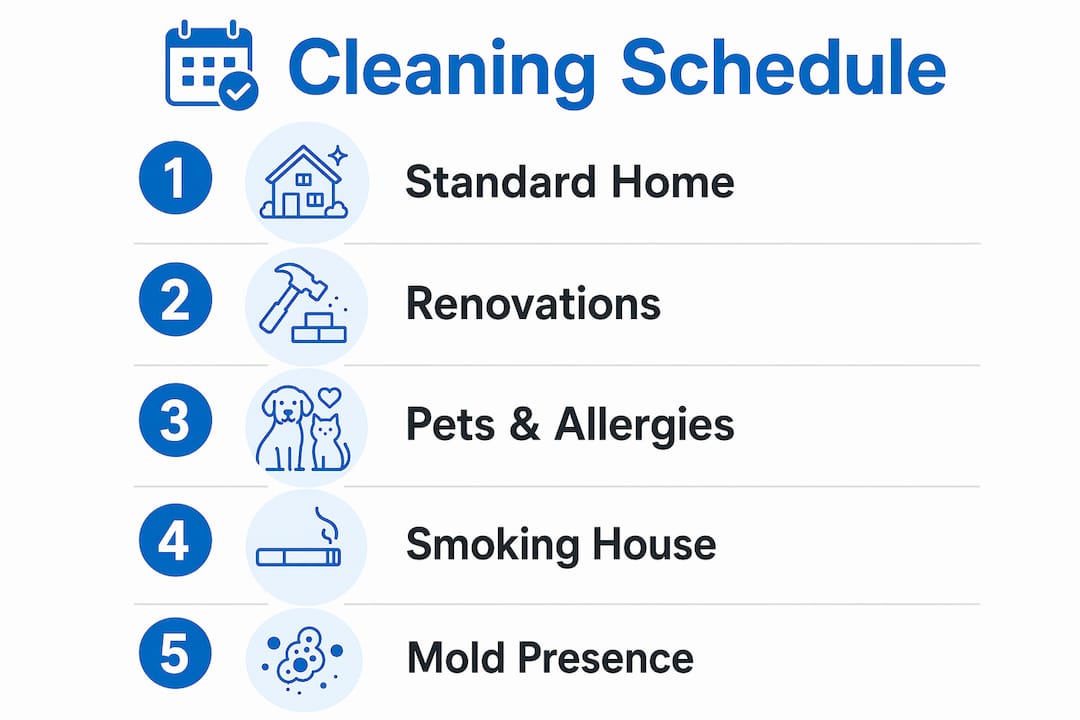
The right cleaning interval depends on your household, not a one-size-fits-all calendar. NADCA’s guidance recommends professional cleaning every 3–5 years for most homes, every 2–3 years for homes with pets or smokers, and every 2 years for households where someone has allergies or asthma. That difference matters because pets shed dander continuously, smokers deposit sticky residue on duct walls, and allergy sufferers react to far lower concentrations of airborne particles than the average person.
Certain situations call for cleaning right away, regardless of when you last had it done. These include moving into a previously owned home, completing a renovation or remodel, discovering visible mold near vents, noticing a pest infestation, or finding that rooms are heating and cooling unevenly. Each of these conditions introduces contaminants or blockages that a standard schedule cannot account for.
The table below summarizes recommended cleaning frequencies by household type.
| Household condition | Recommended cleaning interval |
|---|---|
| Standard home, no special factors | Every 3–5 years |
| Home with pets or smokers | Every 2–3 years |
| Allergy or asthma sufferers present | Every 2 years |
| Recent renovation or new home purchase | Inspect and clean immediately |
| Confirmed mold, pests, or blockage | Clean as soon as possible |
Pro Tip: Schedule your duct inspection in the fall before heating season starts. Technicians are less booked, and you will catch problems before your furnace runs at full capacity.
What are the health impacts of dirty air ducts?
The health case for duct cleaning is real but often overstated. The most important distinction is between ordinary dust accumulation and biological contamination. Experts stress that mold growth, rodent droppings, and insect debris inside ducts pose legitimate health risks, while a thin layer of surface dust on duct walls is far less critical. Knowing which situation you have determines whether cleaning is genuinely necessary for health reasons.
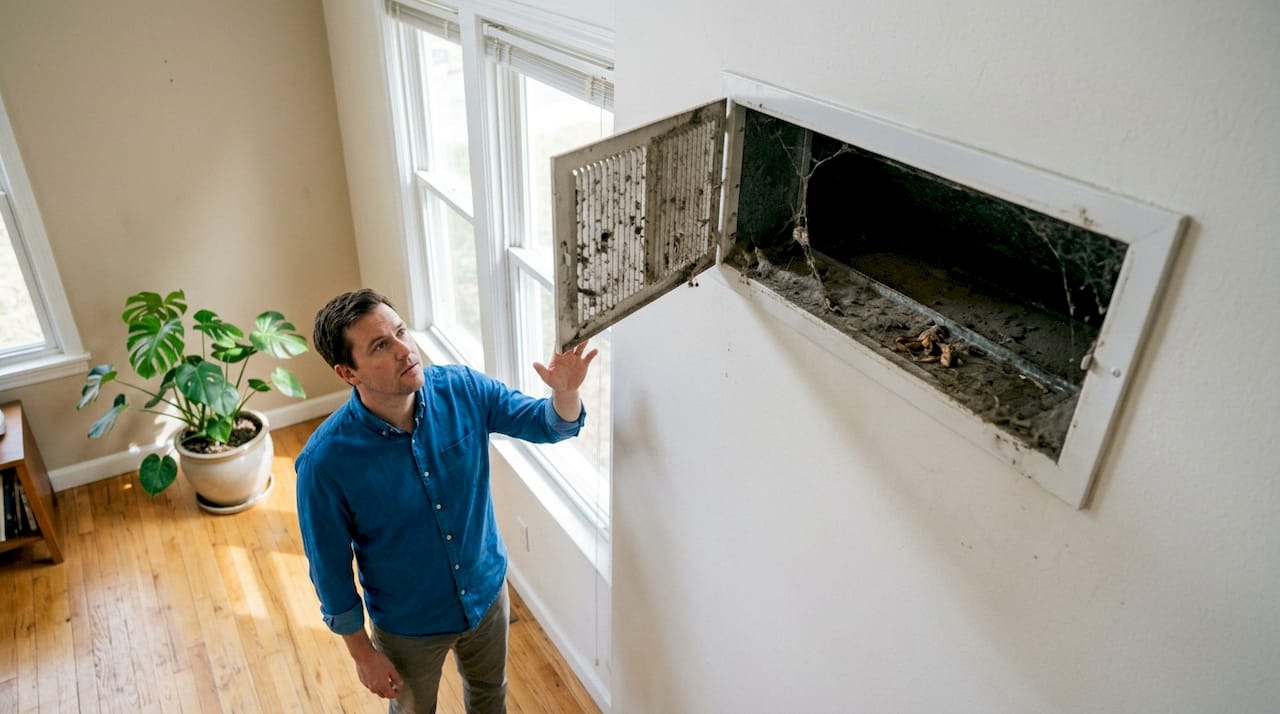
When biological contaminants are present, the HVAC system distributes them to every room with each heating or cooling cycle. This can worsen symptoms for people with asthma, allergic rhinitis, or other respiratory sensitivities. The EPA’s position discourages routine annual cleaning and recommends cleaning only when mold, pests, or significant clogging are confirmed. That is a meaningful distinction: the EPA is not saying ducts never need cleaning. It is saying that cleaning without a confirmed reason does not guarantee health benefits.
Dirty ducts can worsen symptoms, but they are rarely the sole cause of illness. Homeowners dealing with persistent respiratory symptoms should address filter quality, indoor humidity, and ventilation before assuming the ducts are the primary problem. A doctor’s input is more useful than a duct cleaning appointment when symptoms are the main concern.
Key conditions that make duct cleaning a legitimate health measure:
- Visible mold on duct surfaces or near registers
- Evidence of rodent or insect activity inside the ductwork
- Musty or unusual odors coming from vents
- Confirmed water intrusion or flooding affecting the duct system
- Household members with worsening allergy or asthma symptoms tied to HVAC use
Pro Tip: Pair duct cleaning with a MERV 8 or higher filter upgrade and a dehumidifier if your home runs above 50% relative humidity. These two steps do more for daily air quality than cleaning alone.
How does duct cleaning benefit your HVAC system?
Clean ducts directly affect how hard your HVAC system works. Dust accumulation as thin as 0.042 inches on heat exchangers and coils can reduce system efficiency by up to 21%. That efficiency loss shows up as higher energy bills, longer run times, and components that wear out faster than they should.
The mechanical benefits of cleaning go beyond the ducts themselves. Here are the four areas where buildup causes the most damage:
- Heat exchangers and evaporator coils. Dust acts as insulation on these components, blocking heat transfer and forcing the system to run longer cycles to reach your set temperature.
- Blower fans and motors. Debris on fan blades throws them out of balance, increasing vibration and motor wear over time.
- Supply and return registers. Blocked registers create pressure imbalances that push the blower motor harder than its design allows.
- Ductwork itself. Heavy buildup narrows the airflow path, and field studies show that mechanical cleaning can improve airflow by 4%–32% depending on the level of restriction.
A common misconception is that duct cleaning alone will produce a dramatic drop in your energy bill. The honest answer is that the savings depend on how dirty the system was to begin with. A lightly used system in a newer home will see modest gains. A system in an older home with pets, heavy use, and years between cleanings will see more meaningful improvement.
Pro Tip: Ask your technician to clean the evaporator coil and blower assembly during the same visit. These components collect as much debris as the ducts and are often overlooked in a basic cleaning package.
What should you expect from a professional duct cleaning service?
A quality duct cleaning job follows a specific process, and knowing what that looks like protects you from poor work. Proper technique requires negative pressure and HEPA filtration. The technician attaches a powerful vacuum to the duct system to create negative pressure, then uses agitation tools such as brushes or air whips to dislodge debris. The HEPA-filtered vacuum captures everything before it can re-enter your living space. Without this setup, cleaning can actually worsen air quality by blowing settled dust back into rooms.
Watch for these red flags when evaluating a service provider:
- Quoting a price over the phone without an inspection
- Recommending annual cleaning for every home without assessing conditions
- Pushing chemical biocides or sealants as standard add-ons
- Refusing to show you before-and-after photos of the ductwork
- Using only a shop vacuum without negative pressure equipment
The chemical biocide issue deserves specific attention. No EPA-registered biocides exist for use inside internally insulated ducts, and the long-term inhalation effects of these products are not well understood. A reputable company will not push them as a default. If a technician insists that chemical treatment is necessary without evidence of mold or biological contamination, that is a clear warning sign.
Routine filter replacement and consistent HVAC maintenance are more impactful for daily air quality than frequent duct cleanings. A good technician will tell you this honestly. If a company insists you need annual cleaning regardless of your home’s conditions, find a different provider. You can also check the signs it’s time to clean your ducts before booking any service.
Key Takeaways
Regular air duct cleaning protects indoor air quality and HVAC performance, but the right schedule and method matter as much as the cleaning itself.
| Point | Details |
|---|---|
| Follow NADCA frequency guidelines | Clean every 3–5 years normally, or every 2 years for allergy and asthma households. |
| Biological contamination drives health risk | Mold and pests in ducts are serious; surface dust alone is less critical. |
| Dust hurts HVAC efficiency | Even thin buildup on coils can cut system efficiency by up to 21%. |
| Proper technique is non-negotiable | Negative pressure and HEPA filtration prevent contaminants from re-entering your home. |
| Filters matter more than frequency | Consistent filter changes and humidity control do more for daily air quality than cleaning alone. |
What 20 years of duct work taught me about cleaning schedules
Most homeowners I talk to fall into one of two camps. Either they have never thought about their ducts at all, or they have been told by someone that annual cleaning is mandatory. Both positions miss the point.
The homes that genuinely benefit from cleaning are the ones with a specific trigger: a renovation, a new pet, a mold discovery, or a system that has not been touched in seven years. Cleaning a duct system that does not need it does not hurt anything, but it does cost money that could go toward a better filter or a coil cleaning that actually moves the needle on efficiency.
My honest advice is to start with an inspection, not a cleaning. A good technician will look inside the system with a camera or flashlight and tell you what is actually there. If the answer is ordinary dust and no biological contamination, a filter upgrade and a scheduled return visit in two years is the right call. If the answer is mold, rodent debris, or a system that has not been serviced since the home was built, clean it immediately.
The air quality benefits of duct cleaning are real. They are just not magic. Pair the cleaning with good filter habits and reasonable humidity control, and you will notice the difference. Skip those steps and expect the ducts to do all the work, and you will be disappointed.
— Jim
Carpetandtileplus: professional duct cleaning for Northwest Chicago homeowners
Carpetandtileplus has served homeowners across Elgin, Bartlett, Streamwood, Arlington Heights, Palatine, Barrington, and Hanover Park for over 20 years. The team is IICRC-certified and uses organic cleaning products throughout every job, so you are not trading one air quality problem for another.

If your home is overdue for service or you have a specific trigger like a recent renovation or a new pet, Carpetandtileplus offers professional air duct cleaning built around an honest inspection first. The team also handles residential carpet cleaning, which removes the dust and allergens that carpets trap at floor level and recirculate through your home. Cleaner ducts and cleaner carpets together make a measurable difference in the air your family breathes every day.
FAQ
How often should air ducts be cleaned?
Most homes need professional duct cleaning every 3–5 years. Homes with pets, smokers, or allergy sufferers should clean every 2–3 years.
Does the EPA recommend annual duct cleaning?
No. The EPA advises against routine annual cleaning and recommends cleaning only when mold, pests, or significant blockages are confirmed.
Can dirty air ducts make you sick?
Dirty ducts can worsen allergy and asthma symptoms, but they are rarely the sole cause of illness. Mold and pest contamination inside ducts carry the most significant health risk.
What happens if duct cleaning is done incorrectly?
Improper cleaning without negative pressure and HEPA filtration can resuspend settled dust into your living space, making air quality worse immediately after the service.
Are chemical biocides safe to use in air ducts?
No EPA-registered biocides exist for use inside internally insulated ducts. Avoid any company that pushes chemical treatments as a standard part of every cleaning job.