pH controls whether a carpet cleaning solution removes a stain or locks it in permanently. The wrong pH doesn’t just leave dirt behind. It can strip dye, weaken fibers, and create residue that pulls in new soil faster than the carpet was getting dirty before. For homeowners, understanding how pH levels affect carpet cleaning is the difference between a carpet that lasts 15 years and one that looks worn out in five.
Here’s what you need to know before you reach for any cleaning product:
- Carpet fibers have a natural pH near neutral (around 7), with wool sitting slightly acidic at about 5.5
- Alkaline cleaners with pH above neutral cut through grease and protein soils but can damage sensitive fibers if left unrinsed
- Acidic cleaners (pH 3–6) dissolve mineral deposits and correct alkaline residue buildup
- IICRC standards require a multi-step process that includes an acid rinse after alkaline cleaning phases
- Skipping neutralization leaves fibers chemically imbalanced, accelerating resoiling and color loss
- DIY products like baking soda and vinegar create pH conditions that can cause mold, browning, and fiber damage
Understanding the pH scale in carpet cleaning
The pH scale runs from 0 to 14. Below 7 is acidic, above 7 is alkaline, and 7 is neutral. What most people miss is that the scale is logarithmic. pH 4 is ten times more acidic than pH 5, and a hundred times more acidic than pH 6. That’s not a small difference when you’re talking about chemistry that touches your carpet fibers directly.
Most cleaning is accomplished by physical changes, not chemical reactions. But chemical reactions can remove color and damage fibers. pH is only part of the reason chemical reactions occur — reactivity, buffering, and total alkalinity all play a role.
— Cleaning with Chemistry
Carpet cleaning solutions are formulated across this scale deliberately. Alkaline solutions saponify fats and oils, turning them into a soap-like compound that rinses away. Acidic solutions dissolve mineral salts and neutralize leftover alkaline residue. A buffered solution holds its pH even when it contacts soil, which matters because most household soils are acidic, averaging between pH 4 and 5.
Common cleaning solution pH ranges and their roles:
- pH 0–3: Strong acids. Used for rust and heavy mineral deposits. Not safe for most carpet fibers.
- pH 3–6: Mild acids. Effective for tannin stains, mineral deposits, and post-cleaning neutralization.
- pH 6–8: Near-neutral. Safest for routine cleaning and sensitive fibers.
- pH 8–10: Mild to moderate alkaline. Effective on oily and protein-based soils.
- pH 10–12: Strong alkaline. Powerful degreasers, but risky on natural fibers without careful rinsing.
How pH affects carpet fibers and cleaning outcomes
Not all carpet fibers react the same way to pH shifts, and that’s where most cleaning mistakes happen. Synthetic fibers like nylon tolerate solutions up to pH 11, while natural fibers like wool require a near-neutral pH 5–8 to avoid irreversible damage. The American Association of Textile Chemists and Colorists recommends limiting pH to a moderate alkaline range for nylon and most synthetic fibers.
Wool is the most vulnerable fiber in common use. Its natural acidity sits around pH 5.5, and high alkalinity disrupts the disulfide bonds that hold wool’s protein structure together. The result is felting, where fibers mat and shrink permanently, along with browning and color loss. Repeated alkaline exposure can shorten wool carpet lifespan noticeably. For high-end carpets, that kind of damage is irreversible and expensive.
Fiber-specific pH sensitivities at a glance:
- Wool: Natural pH ~5.5. Safe range pH 5–8. Alkalinity above pH 10 causes felting, dye migration, and brittleness.
- Nylon: Tolerates up to pH 11. Risk is residue buildup and resoiling, not immediate fiber damage.
- Olefin (polypropylene): Tolerates higher alkalinity than nylon. Less dye-sensitive but prone to oil attraction.
- Polyester: Moderate tolerance. Sensitive to high-heat and strong alkaline combinations.
- Natural blends: Treat as wool. Any alkaline exposure above pH 8 carries risk.
pH also controls dye stability directly. Rug dyes can migrate during cleaning due to excess moisture, urine contamination, or too-high pH. Even moderate pH imbalance can trigger dye movement that only becomes visible after the carpet dries, by which point the damage is done.
Pro Tip: If you own a wool or wool-blend rug, test any cleaning product on a hidden corner first. Apply it, wait two minutes, then press a white cloth against the area. Color transfer means the dye is already moving.
When to use acidic, neutral, and alkaline cleaners
Choosing the right pH cleaner comes down to two questions: what fiber is the carpet made of, and what type of soil or stain are you dealing with? Stains are chemical compounds bonded to fibers, and pH determines whether those bonds loosen for removal or tighten permanently into the fiber structure.
Acidic cleaners (pH 3–6) work best for:
- Mineral deposits and hard water stains
- Tannin stains from coffee, tea, wine, and plant matter
- Correcting browning caused by alkaline residue
- Stabilizing dyes on sensitive fibers after alkaline cleaning
Neutral cleaners (pH 6–8) work best for:
- Routine maintenance cleaning on any fiber type
- Wool, silk, and natural fiber carpets
- Situations where you’re unsure of the fiber’s dye stability
- Final rinse applications to restore carpet pH balance
Alkaline cleaners (pH 8–12) work best for:
- Oily and greasy soils from cooking, skin oils, and tracked-in grime
- Protein-based stains like blood, food residue, and pet soils
- Heavy traffic area cleaning on synthetic fibers
- Pre-treatment before hot water extraction
A common mistake: using alkaline cleaners on tannin stains. Alkalinity can cause protein-based stains to coagulate, bonding them more tightly to the fiber. The same logic applies in reverse. Using an acid cleaner on a greasy stain won’t break down the oil at all.
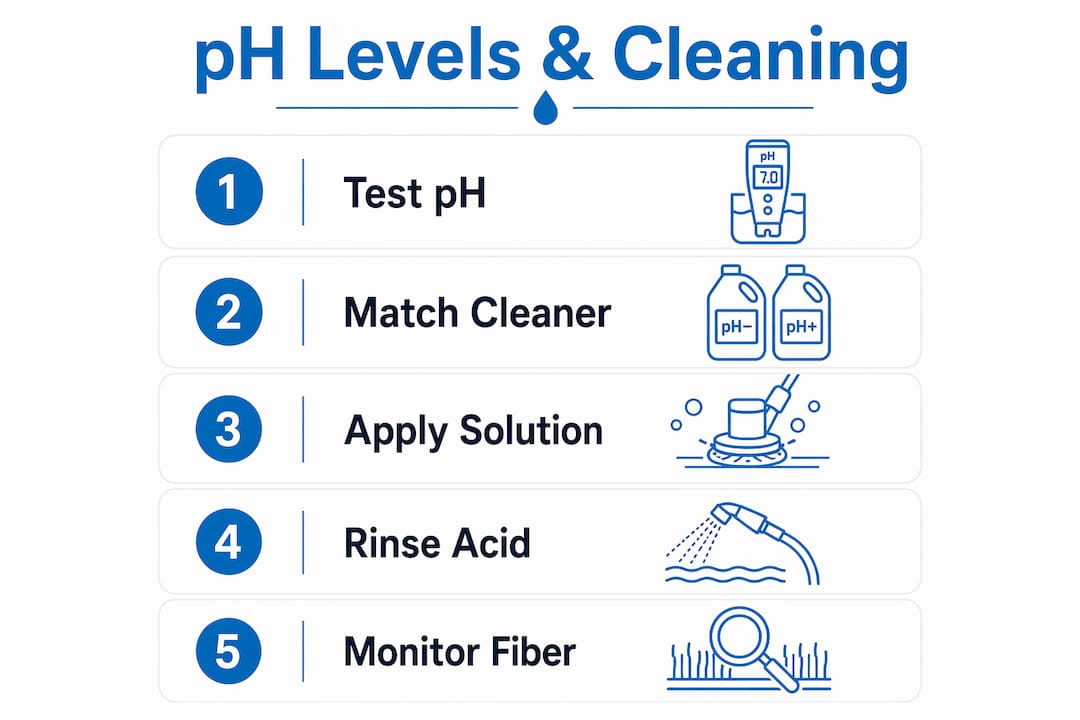
- Identify the stain type (protein, tannin, mineral, or oil-based).
- Check the carpet fiber label or manufacturer’s care guide.
- Select the pH range that matches both the stain chemistry and fiber tolerance.
- Apply, allow dwell time, then extract thoroughly.
- Follow with a near-neutral rinse to restore carpet pH balance.
Pro Tip: Dawn dish soap, which is mildly alkaline, can damage wool carpet fibers and may affect warranty terms if used repeatedly. Stick to products labeled specifically for carpet.
How to test and adjust the pH level of carpet cleaning solutions
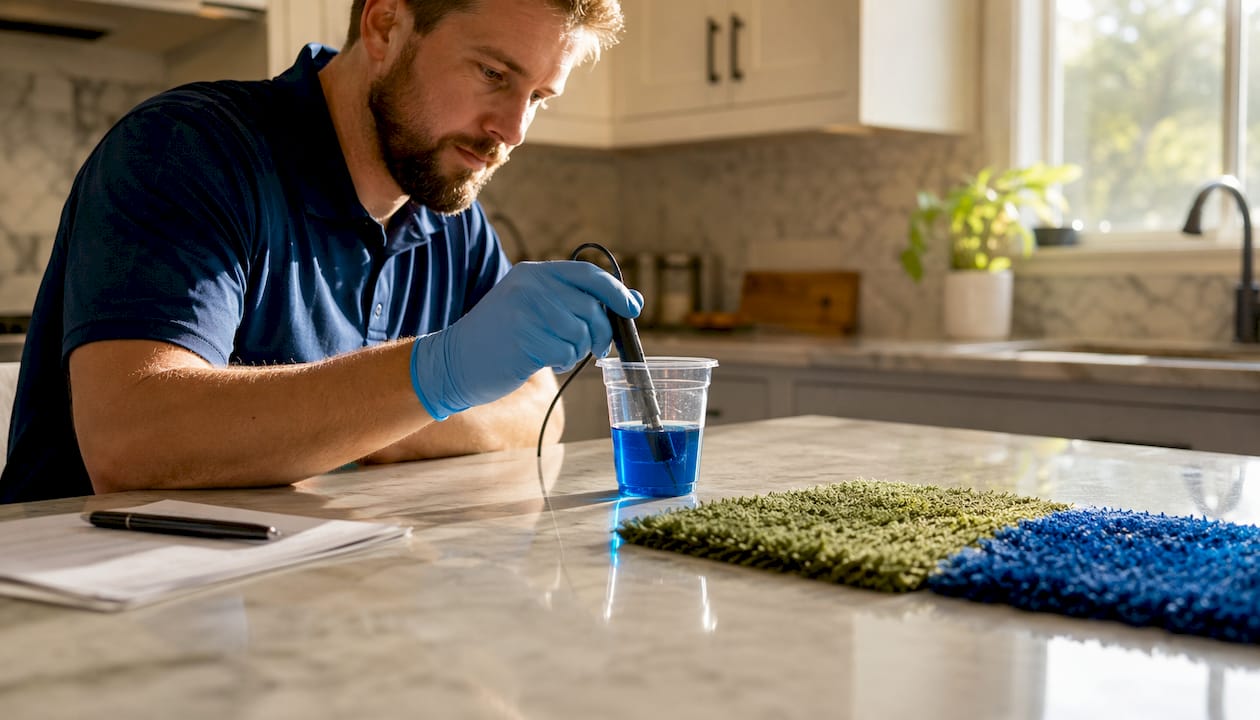
Testing pH before you apply any solution takes about 30 seconds and can prevent damage that takes years to show up. Two tools work well for this: pH test strips (sometimes called Phydrion paper) and electronic pH meters. Strips give you a general range, which is usually all you need. Meters calibrate to two decimal places, useful when you’re working with sensitive wool or specialty fibers.
Steps to test and adjust cleaning solution pH:
- Mix your cleaning solution at the manufacturer’s recommended dilution ratio. Check the dilution ratio guide if you’re unsure.
- Dip a pH strip into the solution and hold it for the time specified on the packaging (usually 5–10 seconds).
- Compare the strip color to the reference chart. A digital meter gives a direct reading.
- If the solution reads above pH 10 and you’re cleaning wool, dilute further or switch products.
- After cleaning, test the carpet surface itself with a strip pressed against damp fibers.
- If the surface reads above pH 8, apply an acid rinse product to bring it back toward neutral.
- Extract thoroughly and test again before drying.
Safety precautions when working with pH-adjusted solutions:
- Wear nitrile gloves when handling solutions below pH 3 or above pH 11
- Never mix acidic and alkaline products directly. The reaction can produce heat and fumes.
- Keep pH adjusters (acid rinse agents, alkaline boosters) in labeled, sealed containers away from children
- Ventilate the room during and after cleaning, especially with strong alkaline prespray products
- Rinse any skin contact with water immediately
IICRC standards recommend finishing every alkaline cleaning phase with an acid rinse, bringing the carpet back to a pH of 5–7. This step isn’t optional for professional results.
Professional insights and research on pH-related risks in DIY carpet cleaning
The most common DIY cleaning mistake isn’t using the wrong product. It’s using products that seem harmless because they’re “natural.” Baking soda sits at pH ~9, which sounds mild until you remember that wool prefers pH 5.5. Baking soda’s alkalinity weakens wool’s structure, causing color fading, brittleness, and permanent fiber damage after repeated use. It also lacks surfactants entirely, so it doesn’t actually break down grease or biological soils.
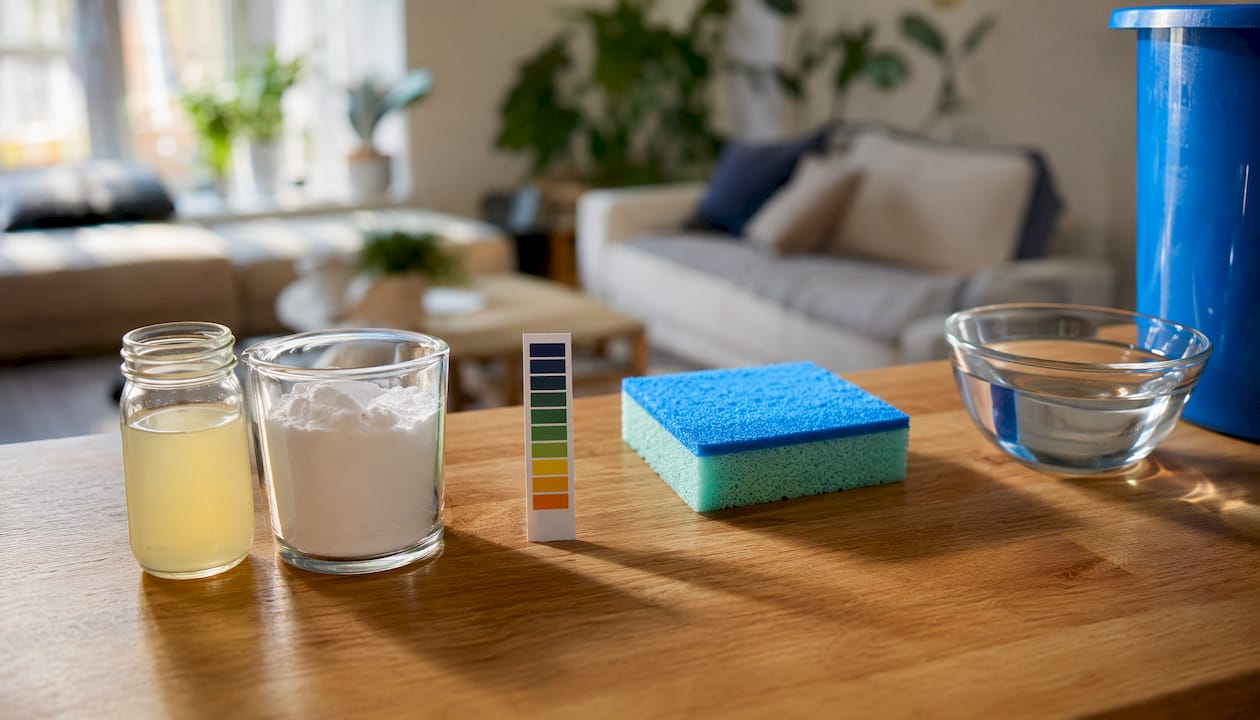
The vinegar-and-baking-soda combination is even riskier. ASTM D7269-22 testing found that relative humidity in nylon carpet samples increased from 12% to 28% after vinegar and baking soda use, surpassing the threshold at which mold growth becomes likely. The fizzing reaction looks effective. What it actually does is push moisture deeper into the carpet backing, where it can’t evaporate.
Residual alkalinity left in carpet fibers creates an electrostatic charge that attracts new soil like a magnet. Carpets cleaned with high-pH products and no neutralization step often look dirtier within weeks than they did before cleaning. That’s not coincidence. It’s chemistry.
Professional cleaning with pH monitoring avoids all of this. Carpetandtileplus uses IICRC-certified technicians and organic cleaning products that are matched to your specific fiber type, with acid rinse steps built into every job. The professional vs. DIY difference isn’t just about equipment. It’s about controlled chemistry from start to finish.
Pro Tip: If your carpet looks dull or dirty again within two to three weeks of cleaning, alkaline residue is almost certainly the cause. An acid rinse treatment can reset the fiber pH and stop the resoiling cycle.
Carpetandtileplus serves homeowners across Elgin, Bartlett, Streamwood, Arlington Heights, Palatine, Barrington, and Hanover Park. If you’re ready for a clean that actually lasts, residential carpet cleaning from a team that monitors pH at every stage is the place to start.

Key Takeaways
Matching cleaning solution pH to fiber type and soil chemistry is the single most important factor in carpet cleaning that preserves both appearance and lifespan.
| Point | Details |
|---|---|
| pH scale is logarithmic | Each whole number represents a tenfold change in acidity or alkalinity, making small differences significant. |
| Wool requires pH 5–8 | Natural fibers like wool felt, brown, and lose color when exposed to alkalinity above pH 10. |
| Neutralization is preventive | IICRC standards call for an acid rinse after alkaline cleaning to restore carpet pH to 5–7. |
| Residue causes resoiling | Unrinsed alkaline detergent creates electrostatic charge in fibers, attracting new dirt rapidly. |
| DIY mixtures carry real risk | Baking soda and vinegar raised carpet humidity from 12% to 28% in ASTM D7269-22 testing, exceeding mold thresholds. |