
Upholstery cleaning and carpet cleaning share the same core goal: remove soil, allergens, and contaminants from textile surfaces to protect your home and the people in it. But how upholstery cleaning relates to carpet cleaning goes well beyond that shared purpose. The two disciplines differ sharply in fiber types, surface construction, cleaning methods, equipment, and risk profiles. Both follow distinct IICRC industry standards, with S100 governing carpet and S300 governing upholstery, and certified professionals hold separate credentials for each. When you understand those differences, you make smarter decisions about care, cost, and who you hire.
- Carpets and upholstery both trap allergens and affect indoor air quality.
- Fiber types, construction, and cleaning risks differ significantly between the two.
- Fabric care codes (W, S, WS, X) govern upholstery treatment; carpets rarely carry such restrictions.
- Professional certifications are discipline-specific: Carpet Cleaning Technician (CCT) vs. Upholstery and Fabric Cleaning Technician (UFT).
- Combined cleaning services work best when carpets are cleaned before upholstery.
1. How surfaces and materials differ between upholstery and carpet
Carpets are built for punishment. They use durable synthetic fibers like nylon, polyester, or olefin, all engineered to resist abrasion, handle heavy foot traffic, and hold up to aggressive cleaning methods. There are relatively few carpet fiber types, and most professionals can identify them quickly.
Upholstery is a different world entirely. Fabrics can be cotton, linen, wool, velvet, microfiber, rayon, or any blend of the above, and each reacts differently to moisture, heat, and cleaning chemistry. A single sofa might combine two or three fiber types in one piece of fabric. Add decorative weaves, tufted surfaces, piping, and specialty finishes, and you can see why a single cleaning approach fails.
Carpets cover large, flat floor areas. Upholstery pieces are smaller, structurally complex, and movable, with seams, folds, and cushions that trap soil in places a wide cleaning wand can never reach. Recognizing the fiber type and construction of any upholstered piece is the first step before any cleaning begins.
2. What kinds of dirt and stains each surface collects
Carpets catch what your shoes bring in: tracked dirt, dust, pollen, and liquid spills. They act as a filter for the floor, and that filter fills up fast in high-traffic areas.
Upholstery collects a different category of contamination. Body oils, skin cells, pet dander, dust mites, food residue, and airborne particulates settle into fabric fibers over time. Up to 80% of indoor debris can settle into upholstered furniture and carpet combined, which means your sofa may be holding more than it looks like from across the room.
Furniture foam cores add another layer of risk. Liquid spills don’t stop at the fabric surface; they penetrate into the foam inside cushions, where odors and moisture can linger long after the visible stain is gone. Both surfaces harbor allergens that affect indoor air quality, but the hidden depth of contamination in upholstery makes it harder to address without professional equipment.
3. Tools and cleaning solutions: why you can’t use the same gear
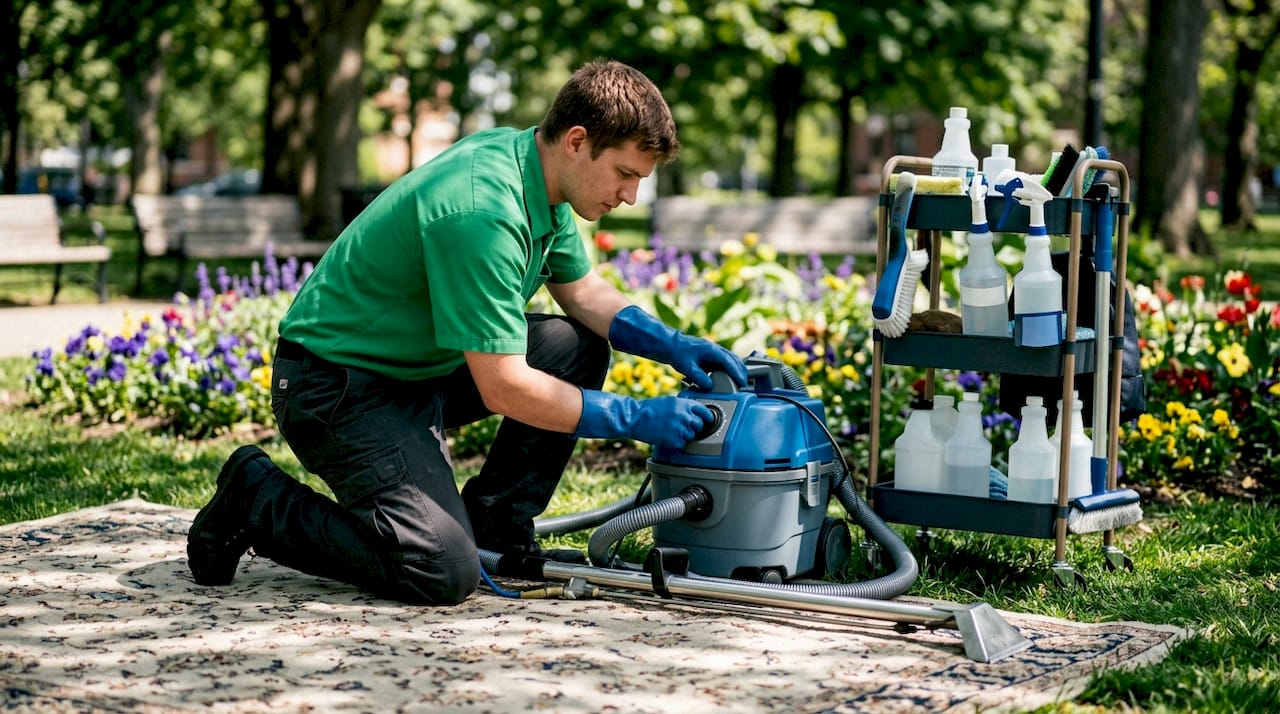
Carpet cleaning relies on wide-path extraction wands and rotary agitation machines that cover large square footage efficiently. The goal is speed and thoroughness across an open floor area.
Upholstery cleaning requires smaller hand tools, soft brushes, and purpose-built attachments designed for tight spaces and delicate surfaces. What takes one or two passes on a carpet can take dozens of passes on a sofa. That’s not inefficiency; it’s the nature of the surface.
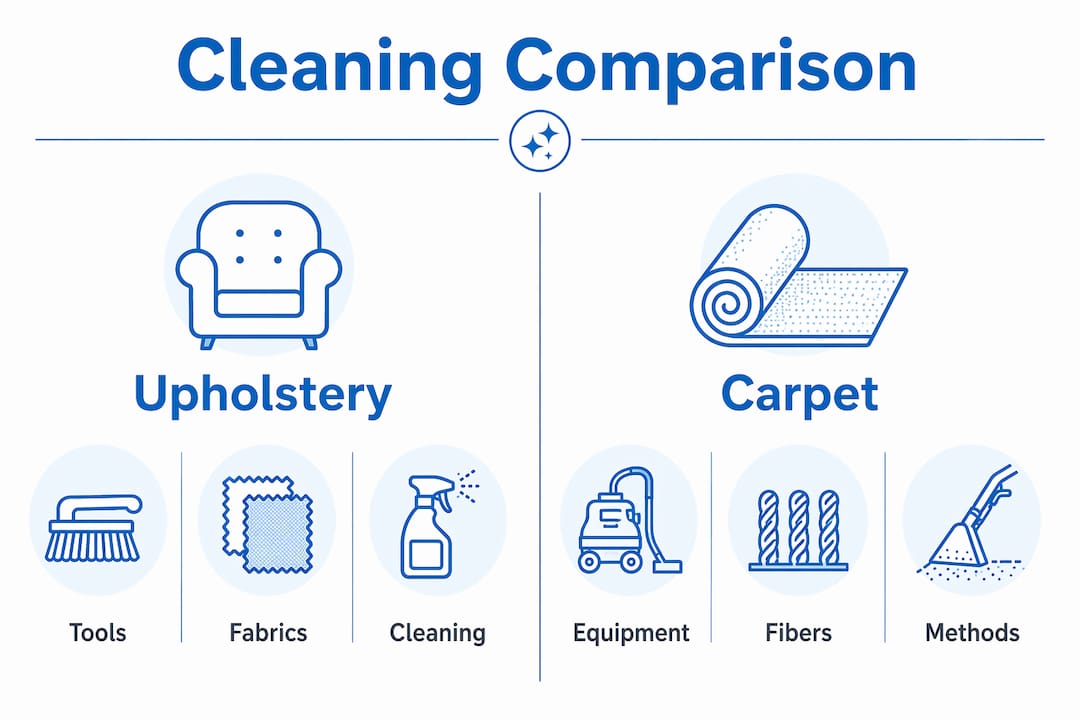
Cleaning solutions differ just as much as the tools. Carpet cleaners often contain surfactants, enzymes, and sometimes bleaching agents formulated for durable synthetic fibers. Those same chemicals can cause discoloration or damage on delicate upholstery fabrics like velvet, linen, or silk. Upholstery-specific cleaners are formulated to lift soil gently without leaving residue that attracts more dirt. The fabric care code on your furniture, W for water-based, S for solvent only, WS for either, or X for vacuuming only, determines which cleaner category is even permitted.
Pro Tip: Before applying any cleaner to upholstery, test it on a hidden area first. Color bleeding, crocking, and shrinkage can happen fast, and some damage is permanent.
4. Cleaning techniques, drying times, and what can go wrong
Hot water extraction, also called steam cleaning, is the standard carpet cleaning technique. It injects heated water and solution into the pile under pressure, then immediately extracts the suspended soil and moisture. Carpets cleaned this way typically dry in 6–12 hours under normal ventilation.
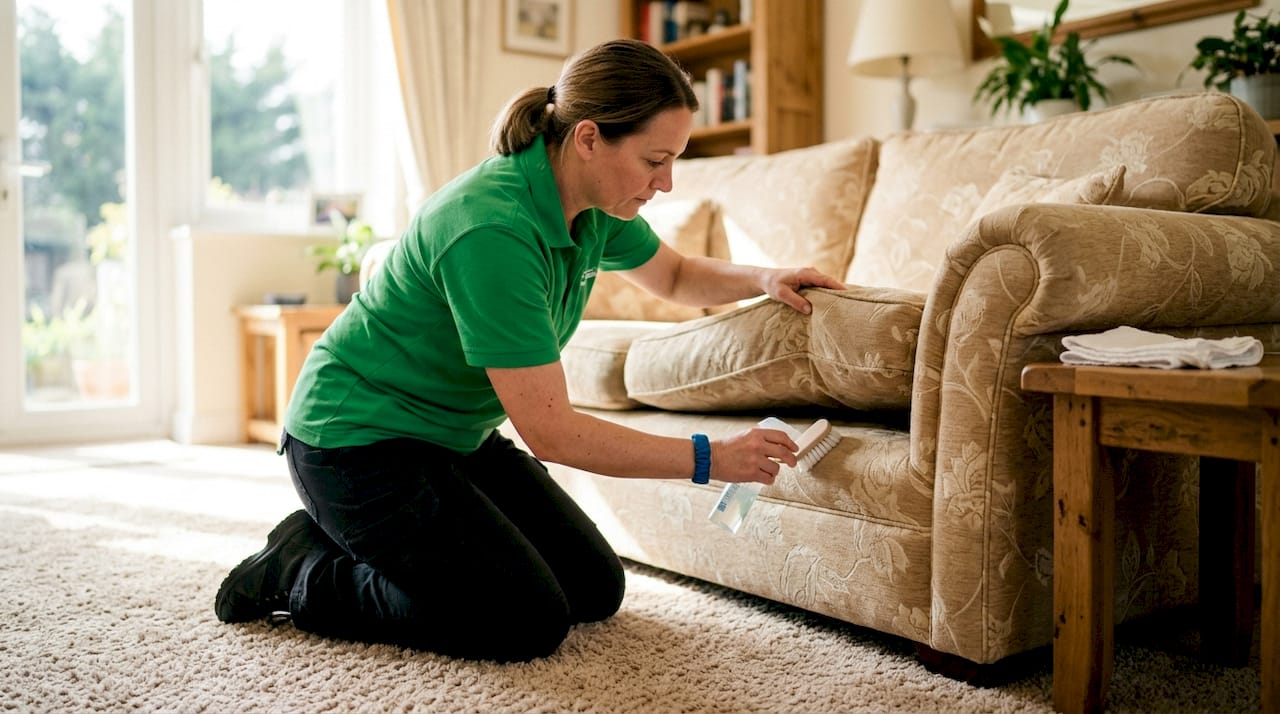
Upholstery demands a more careful approach. Delicate or water-sensitive fabrics require low-moisture or dry-foam methods to prevent shrinkage, color distortion, or ring formation. Over-wetting is one of the most common and costly mistakes: moisture trapped in upholstery foam can cause mold growth that’s invisible until the damage is done. Drying upholstery properly means directing airflow into seams and folds, not just across the surface.
Sequence matters when you’re doing both in one visit. Carpet extraction raises ambient humidity in the room. If you clean upholstery first, that elevated humidity slows drying and raises mold risk in foam-core furniture. Clean carpets first, let ventilation begin, then move to upholstery.
5. How often should you clean each, and what about eco-friendly options?
Carpets generally need professional cleaning every 12–18 months, though homes with pets, children, or allergy sufferers benefit from more frequent service. You can find detailed guidance on carpet cleaning frequency based on your specific household conditions.
Upholstery intervals typically run 12–24 months depending on use, fabric type, and how much direct contact the piece gets. A heavily used family sofa needs attention more often than a formal chair in a guest room. Regular vacuuming slows soil buildup on both surfaces and extends the time between professional cleanings.
Eco-friendly options exist for both. Organic, biodegradable, and low-chemical products work well on many fabric types and reduce indoor air contaminants, which matters especially for households with children, pets, or respiratory sensitivities. Carpetandtileplus uses organic cleaning products on every job, keeping the process safe for your family and your fabrics.
6. Why upholstery cleaning costs more than carpet cleaning
The size difference between a sofa and a carpeted room makes the pricing feel counterintuitive. Sofas are smaller, so why do they cost more to clean? The answer is labor intensity and expertise.
Carpet cleaning covers large areas with wide equipment and relatively standardized fiber types. Upholstery cleaning is piece-by-piece work with hand tools, multiple passes, and a diagnostic process that starts before any cleaning solution is applied. Upholstery cleaning is priced per piece rather than per square foot, and professional upholstery cleaning averages $174 per piece, with a typical range of $120–$232 depending on fabric type, size, and complexity.
The expertise premium is real. Identifying fiber blends, selecting the right pH-balanced cleaner, testing for colorfastness, and resetting the nap correctly after cleaning all require skilled diagnostic work that carpet cleaning rarely demands. A cleaner that’s too acidic can bleach fabric. The wrong pH causes color flip. Too much water leaves permanent yellowing. You’re paying for the knowledge that prevents those outcomes, not just the labor time. For a broader look at how residential and commercial pricing differs across service types, the cost gap between upholstery and carpet makes more sense in context.
7. Industry standards, professional best practices, and common misconceptions
The IICRC S300 standard for professional upholstery cleaning and the S100 standard for carpet cleaning are separate documents with separate certification tracks. A Carpet Cleaning Technician (CCT) is not automatically qualified to clean upholstery on code-sensitive fabrics. An Upholstery and Fabric Cleaning Technician (UFT) holds distinct training in fiber identification, fabric construction, colorfastness testing, and moisture risk management. When hiring for combined services, look for a provider holding both credentials.
The most common homeowner mistake is treating upholstery as smaller carpet. It’s an understandable assumption since both are textiles that trap soil, but the consequences of acting on it can be expensive. Applying carpet cleaning solutions to a velvet sofa or running a carpet extraction wand over a linen chair can cause shrinkage, color bleeding, or permanent texture change. Professional upholstery care is risk management first, cleaning second.
Diagnostic steps that are standard in upholstery cleaning are rarely needed for carpet. Pre-inspection, fiber identification, colorfastness testing, and care code verification all happen before a drop of solution touches the fabric. For professional upholstery care guidance, these pre-cleaning protocols are what separate a safe result from a damaged piece of furniture.
Pro Tip: Always check the manufacturer’s cleaning code tag on your furniture before attempting any cleaning. An “X” code means no wet cleaning of any kind. Ignoring it voids most fabric warranties.
Carpetandtileplus serves homeowners across the Northwest Suburbs of Chicago, including Elgin, Bartlett, Streamwood, Arlington Heights, and Palatine, with IICRC-certified carpet and upholstery cleaning using organic products. Whether you need residential carpet cleaning or a combined soft-surface service, the team brings over 20 years of experience and a one-hour dry time that keeps your day on track.

Key Takeaways
Upholstery and carpet cleaning share the goal of removing allergens and soil from textiles, but they require entirely different methods, tools, and expertise to do safely.
| Point | Details |
|---|---|
| Separate industry standards | IICRC S100 governs carpet cleaning; S300 governs upholstery, with distinct certifications for each. |
| Fabric codes determine method | Upholstery care codes (W, S, WS, X) dictate which cleaning method is safe; carpets rarely carry such restrictions. |
| Moisture risk is higher for upholstery | Over-wetting upholstery foam can cause hidden mold; carpets dry in 6–12 hours under normal ventilation. |
| Upholstery costs more per piece | Professional upholstery cleaning averages $174 per piece due to labor intensity and diagnostic expertise. |
| Clean carpets before upholstery | In combined services, carpet extraction raises humidity; cleaning upholstery afterward reduces drying time and mold risk. |