
Most homeowners and property managers assume professional grout cleaning is basically a stronger version of scrubbing on your hands and knees. That assumption is costing people money, time, and tile longevity. The reality is that professional grout cleaning relies on specialized equipment, calibrated pressure systems, and science-backed technique that go far beyond anything you can buy at a hardware store. This guide breaks down exactly how professional tools work, why they outperform DIY methods, and what kind of results you can realistically expect when you bring in trained technicians for your home or business in the Northwest suburbs of Chicago.
Table of Contents
- Why grout is so tough to clean
- The technology behind professional grout cleaning tools
- How settings and technique impact the outcome
- Results you can expect from professional grout cleaning
- What most people misunderstand about professional grout cleaning
- Connect with local experts for superior grout cleaning
- Frequently asked questions
Key Takeaways
| Point | Details |
|---|---|
| Deeper clean with science-backed tools | Professional grout tools use rotary jets and vacuum extraction to remove grime regular methods leave behind. |
| Proper settings prevent damage | Technicians adjust pressure and technique to protect your grout and tile during cleaning. |
| Superior results and longevity | Professional-grade cleaning restores grout appearance and extends floor life, outpacing any DIY method. |
| Custom approach for every job | The best results come from tailoring tool settings and workflow to your specific floors. |
Why grout is so tough to clean
After previewing the value of professional-grade cleaning, it’s critical to understand why grout is such a cleaning headache in the first place. Most people look at dirty grout lines and think the solution is simple: just scrub harder or use a stronger product. But that logic misses the actual problem.
Grout is a porous, cement-based material. It works exactly like a sponge, soaking up moisture, dirt, bacteria, cooking oils, soap residue, and anything else that touches your floor. Over time, that absorbed material builds up deep inside the grout’s surface and becomes nearly impossible to remove with conventional tools. Standard mops make this worse. Instead of lifting soil, a wet mop typically spreads dirty water across the floor and pushes it further into those open pores.
Here’s what makes grout so challenging to clean effectively:
- Porosity: Grout has a rough, open surface structure that traps particles far below what a brush can reach.
- Depth of contamination: Bacteria and mold often colonize well beneath the visible surface layer.
- Chemical buildup: Many household cleaners leave a film that actually attracts more dirt over time.
- High-traffic wear: Areas like kitchens, bathrooms, and entryways accumulate years of layered contamination that regular products can’t cut through.
- Color masking: Grout discoloration can make it hard to gauge just how dirty the surface actually is until a professional cleans a test area.
If you want to understand how to clean tile grout properly, the first step is accepting that the tools matter as much as the effort.
“Regular mopping can actually worsen grout contamination by driving soil deeper into porous surfaces rather than extracting it.”
This is exactly why professional-grade equipment exists. It’s designed not just to clean the surface, but to reach what your regular mop never touches.
The technology behind professional grout cleaning tools
Once you understand the challenge posed by grout, modern cleaning technologies begin to make sense. Professional equipment is engineered to solve a specific problem: how do you pull deeply embedded soil out of a porous surface without damaging the material itself?
The answer lies in two primary technologies used by trained technicians.
Rotary extraction systems are the most powerful option available. These tools use spinning water jets that release high-pressure water at 800 to 1,200 PSI specifically for tile and grout surfaces. The spinning motion drives cleaning solution deep into grout pores while the simultaneous vacuum recovery system pulls extracted soil, water, and contaminants immediately out of the floor. Nothing gets left behind and pushed around. It gets extracted.
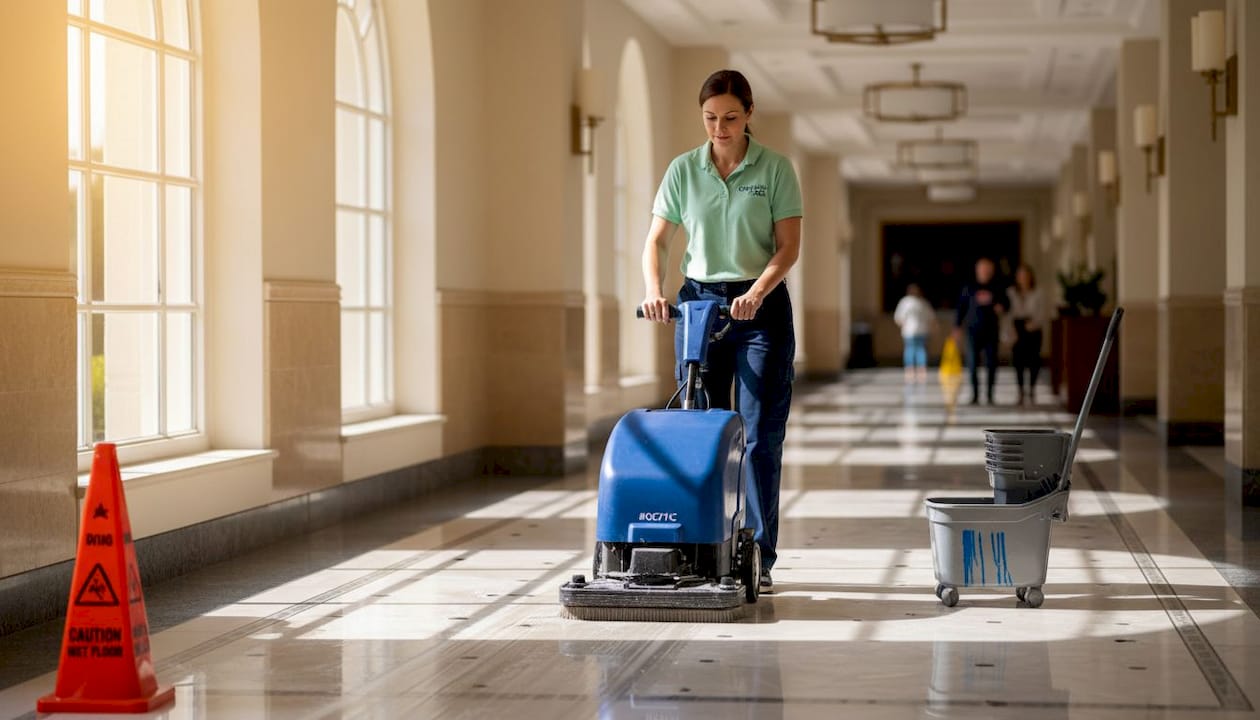
Automated scrubbing machines are used for large commercial or residential spaces where efficiency matters. Machines like the Raimondi Berta can clean 800 to 1,500 square feet per hour while including precise controls to minimize grout pull-out, which is the unintentional displacement of grout material during aggressive cleaning. For property managers overseeing large floor areas in office buildings, restaurants, or retail spaces, this kind of throughput is a major advantage.
Here’s a quick comparison of professional tool types and their key capabilities:
| Tool type | PSI range | Area per hour | Vacuum recovery | Best use case |
|---|---|---|---|---|
| Rotary extraction | 800 to 1,200 | 300 to 600 sq ft | Yes | Residential, targeted cleaning |
| Automated scrubbing machine | 200 to 600 | 800 to 1,500 sq ft | Optional | Large commercial spaces |
| Turbo hand tool | 500 to 900 | 150 to 300 sq ft | Yes | Detail work, tight areas |
| Truck-mounted extraction | 1,000 to 1,500 | 400 to 700 sq ft | Yes | Heavy contamination removal |
Pro Tip: Ask your cleaning provider whether they use truck-mounted or portable extraction. Truck-mounted systems generally provide stronger suction and faster dry times, which matters a lot if you need your space back quickly.
The commercial grout cleaning equipment used by professional services is not just “more powerful” than consumer products. It’s fundamentally different in how it interacts with grout. The combination of heat, pressure, and immediate vacuum extraction creates a cleaning cycle that no scrub brush or consumer steam cleaner can replicate.
For homeowners, residential grout cleaning with professional equipment also means a dramatically reduced risk of over-saturating floors, which can loosen tiles and cause subfloor damage over time.
How settings and technique impact the outcome
Knowing the tools is helpful, but understanding how pros use them elevates results even further. Having the right machine is only part of the equation. The technician’s skill in configuring and operating that machine determines the actual outcome for your floor.
Every grout job requires a customized approach. Here is how a professional typically works through a cleaning project:
- Initial assessment: The technician examines the grout type, tile substrate, level of contamination, and any existing damage before touching the floor.
- Pre-treatment application: An appropriate cleaning solution, often pH-balanced and organic, is applied and allowed to dwell for a set period to break down embedded soil.
- Pressure calibration: PSI and dwell time are adjusted based on grout sensitivity. Delicate or older grout requires lower pressure to avoid cracking or pulling. Newer, denser grout can tolerate higher pressure for a more aggressive clean.
- Extraction pass: The rotary tool or scrubbing machine is applied in controlled, overlapping passes to ensure full coverage without over-saturating any one area.
- Rinse and neutralize: A clean water rinse removes any remaining cleaning solution. This step is critical. Skipping it leaves a chemical film that actually attracts new dirt faster.
- Final inspection: The technician checks for missed areas, hazing, or residue under proper lighting before considering the job complete.
“One of the most common mistakes made by untrained operators is skipping or rushing the rinse phase, which leaves a sticky film that turns clean grout back into a dirt magnet within weeks.”
The benefits of professional techniques extend well beyond the immediate visual result. Proper rinsing and neutralization protect the integrity of both the grout and the tile surface for years after the cleaning is done.
Pro Tip: If you’ve ever had your grout cleaned and it seemed to get dirty again within a few months, a poor rinse technique is a likely culprit. Ask any provider you hire how they handle the rinse and neutralization step.
Technicians who skip the assessment phase often set pressure too high for delicate grout or too low for heavily contaminated surfaces. Both errors waste your money. A trained eye and calibrated equipment make the difference between a surface that looks clean and one that actually is clean.
Results you can expect from professional grout cleaning
After discussing technology and technique, the next question is: what transformation can property owners actually see? The honest answer is that the difference between professionally cleaned grout and DIY-cleaned grout is often dramatic, especially in spaces that haven’t had professional attention in several years.
Here’s what you should realistically expect:
- Restored color: Grout that has been gray or brown for years often returns to its original tone after a professional cleaning cycle.
- No sticky residue: Floors feel cleaner underfoot because there’s no chemical film left behind.
- Improved air quality: Removing mold, bacteria, and allergens from grout lines directly benefits the air in your home or business.
- Intact grout joints: Professional machines like the Raimondi Berta are designed to avoid pulling grout from joints, leaving a full and structurally sound appearance.
- Longer-lasting cleanliness: Because soil is fully extracted rather than redistributed, surfaces stay cleaner longer after a professional service.
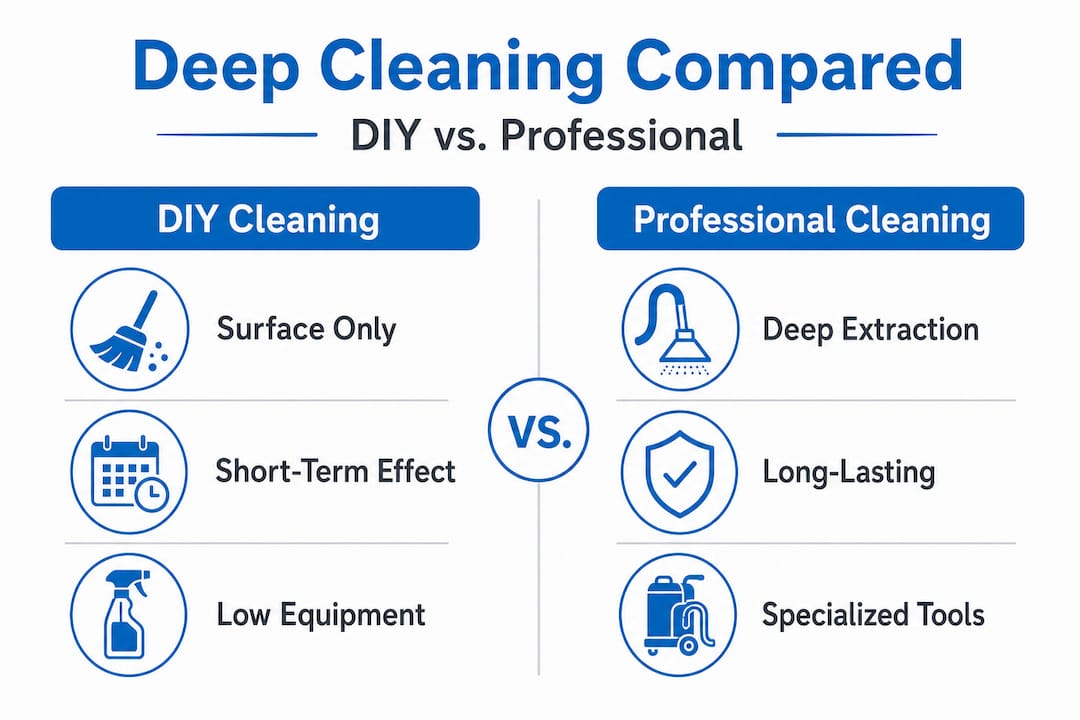
Here’s a side-by-side comparison of what DIY and professional cleaning typically deliver:
| Factor | DIY cleaning | Professional cleaning |
|---|---|---|
| Soil removal depth | Surface only | Deep extraction from pores |
| Residue left behind | Often yes | Minimal to none |
| Risk of grout damage | Moderate to high | Low with proper settings |
| Time to dirty again | Weeks | Months |
| Grout integrity | Can degrade over time | Protected and preserved |
| Bacteria and mold removal | Partial | Near-complete |
| Appearance result | Improved but uneven | Consistent, near-original |
For homeowners in Elgin, Bartlett, and Arlington Heights, or property managers in Palatine and Barrington, investing in periodic professional cleaning extends the life of your tile investment and maintains a healthier environment. Grout replacement is expensive. Professional cleaning is not.
Explore the top tile and grout cleaners serving the area to see how results compare and what local providers offer.
A good professional cleaning sets a new baseline. Your ongoing maintenance becomes far more effective when you’re starting from truly clean grout rather than a surface that’s been partially cleaned for years.
What most people misunderstand about professional grout cleaning
Here’s what we’ve seen consistently over more than 20 years of serving homeowners and property managers across the Northwest suburbs: the people who get the least value from professional grout cleaning are the ones who think of it as a commodity. They shop purely on price, book the cheapest option, and then wonder why their floors don’t look much different afterward.
The real value of professional cleaning isn’t the machine. It’s the person operating it and the judgment they bring to every square foot of your floor. Two technicians using identical equipment can produce wildly different results depending on how they assess the floor, calibrate their settings, and handle the rinse. This is not a simple process, and treating it like one is a mistake we see cause real damage.
Renting a high-powered machine and running it over your floor yourself is tempting. We understand that. But overuse or incorrect use of powerful grout cleaning equipment is one of the leading causes of preventable grout damage. The machine doesn’t know whether your grout is two years old or twenty. It doesn’t know whether you’ve used a silicone-based cleaner that’s left a residue requiring a different pre-treatment. Only an experienced technician reads those variables correctly.
When we approach deep cleaning grout in any home or commercial space, every decision is tailored: the pre-treatment chemistry, the pressure, the dwell time, the rinse protocol. That customization is what produces lasting results. A machine alone is just a machine.
Our honest advice is to stop asking “can I do this myself?” and start asking “what will protecting this investment actually cost me over the long term?” The math almost always favors professional service, not because we’re biased, but because tile and grout replacement costs genuinely dwarf the price of routine professional maintenance.
Connect with local experts for superior grout cleaning
If you’re ready to see the real difference quality grout cleaning can make, connecting with a local expert is the right next step. At Carpet & Tile Plus, we’ve spent over two decades delivering professional results for homeowners and property managers throughout the Northwest suburbs of Chicago, from Elgin and Streamwood to Hanover Park and Barrington. Our IICRC-certified team uses organic, eco-friendly cleaning products and advanced extraction equipment to restore your grout to near-original condition, all with a one-hour dry time that minimizes disruption to your day.

Whether you manage a commercial property or want spotless tile in your own home, we have targeted solutions for every situation. Our commercial tile and grout experts handle large-scale projects with efficiency, while our residential tile and grout care services bring the same precision and care to your living spaces. Reach out today to request a quote or schedule a consultation. With hundreds of five-star reviews, our results speak for themselves.
Frequently asked questions
Can professional grout cleaning damage my tiles or grout?
When performed correctly, professional grout cleaning uses controlled pressure and moisture to avoid damage, and reputable providers adjust settings for grout sensitivity and substrate risk specifically for each floor type.
How often should I have my grout professionally cleaned?
Most homes and businesses benefit from professional grout cleaning every 12 to 24 months, with more frequent service recommended for high-traffic areas, kitchens, and bathrooms where moisture and soil accumulate faster.
Is professional grout cleaning safe for all types of grout?
Yes, professionals adjust machines and technique to work safely across sanded, unsanded, and epoxy grouts, and equipment like the Raimondi Berta is specifically designed to work across all three substrates without causing damage.
Will my grout look new after professional cleaning?
Professional cleaning removes deep-seated dirt and discoloration and often restores grout to near-new appearance, though the final result depends on the existing level of staining, the age of the grout, and whether any permanent color change has occurred.
What makes professional grout cleaning better than DIY?
Professionals use high-pressure spinning jets with simultaneous vacuum extraction and precision settings that pull deeply embedded soil from grout pores without damaging the surface, which is something consumer tools simply cannot replicate.