Choosing a carpet cleaner sounds simple until you realize the stakes. The product you pick gets rubbed deep into fibers where your kids crawl, your pets nap, and your family breathes air that rises from the floor all day. For homeowners and property managers in Elgin, Bartlett, Palatine, and across the Northwest Suburbs of Chicago, the pressure is real: you need something strong enough to tackle tough stains but gentle enough to protect the people and animals living in the space. This guide gives you a clear, practical breakdown of organic carpet cleaning products so you can make that choice with confidence.
Table of Contents
- How to evaluate organic carpet cleaning products
- Top benefits of organic carpet cleaning formulas
- Organic vs. conventional cleaners: a practical comparison
- When (and when not) to use organic enzyme-based cleaners
- Why real-world results matter more than labels
- Get expert help for safer, greener carpets
- Frequently asked questions
Key Takeaways
| Point | Details |
|---|---|
| Prioritize certified organics | Look for third-party labels and low-VOC products that guarantee safety for your home. |
| Enzymes excel at biological stains | Choose enzyme-based formulas for pet accidents and food spills for best results. |
| Proper use and extraction are vital | Even organic products require correct application and thorough removal for true health and cleaning benefits. |
| Compare options for your needs | Evaluate both organic and conventional cleaners based on your stain types and indoor air priorities. |
| Experts deliver safe results | Professional green cleaning ensures protocols and extraction meet safety and performance standards. |
How to evaluate organic carpet cleaning products
Before you buy anything labeled “organic,” “natural,” or “green,” you need a way to judge whether those words mean anything real. The carpet cleaning industry is full of marketing terms that sound reassuring but carry little legal weight. Knowing the difference protects your family and your investment.
The word “organic” trips up a lot of buyers. In chemistry, organic simply means a compound contains carbon, which covers nearly every cleaning agent ever made. When a carpet cleaner uses “organic” on the label, they usually mean plant-derived or biodegradable, but that is not guaranteed. “Plant-based” products come from botanical sources like coconut, corn, or citrus. “Green” is an even broader and less regulated term. None of these labels automatically guarantee safety or performance.
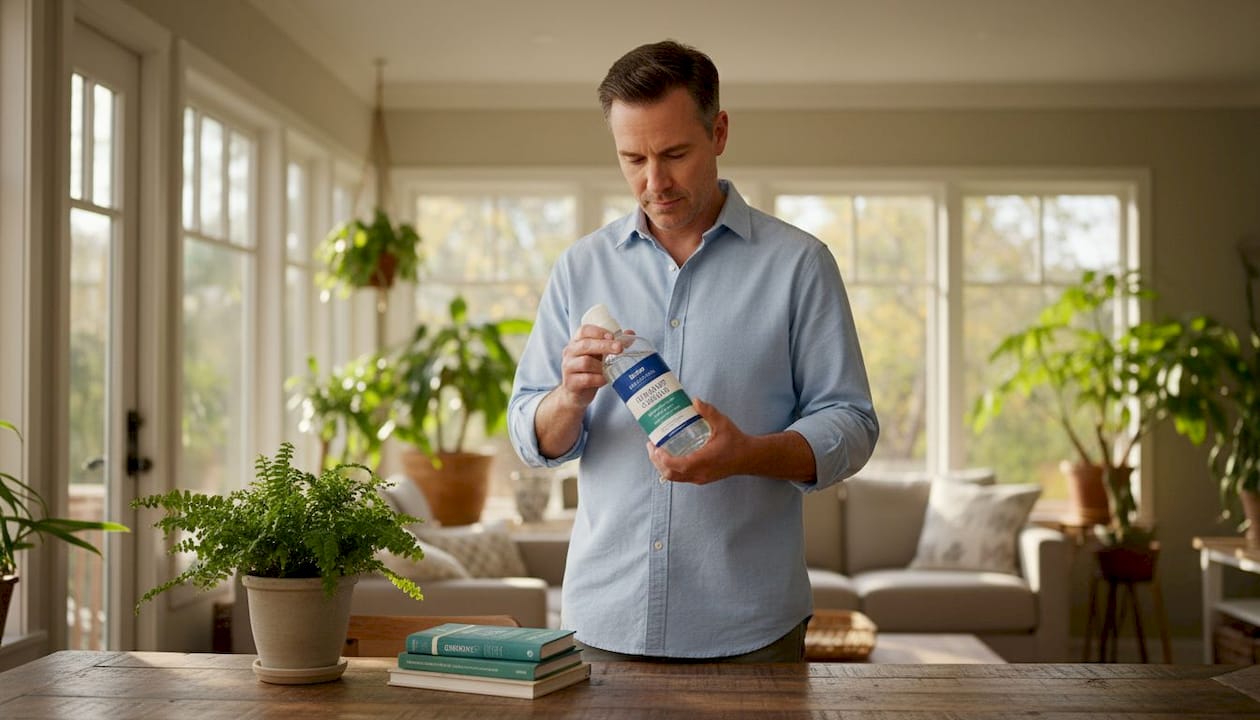
Third-party certifications are your best filter. Look for products carrying Green Seal certification or the CRI Green Label Plus standard, which is issued by the Carpet and Rug Institute. The CRI Green Label Plus quality standard is particularly useful because it evaluates both chemical safety and cleaning performance together. A product can earn this mark only when it meets strict limits on chemical emissions and demonstrates effective soil removal.
VOC (volatile organic compound) content is another critical number. VOCs are gases that off-gas from cleaning solutions and can linger in indoor air long after the carpet dries. Low-VOC certification means a product releases minimal airborne chemicals, which is especially important in homes with asthma sufferers, infants, or elderly residents. Always look for this specification on the product data sheet, not just the front label.
Residue matters too. Even a plant-based formula can leave a sticky film in carpet fibers if it is not fully extracted. That residue attracts dirt faster and can irritate sensitive skin. The organic carpet cleaning benefits you actually experience depend as much on extraction thoroughness as on what is in the bottle.
Here is a quick checklist for evaluating any organic carpet cleaner:
- Carries a recognized third-party certification (Green Seal, CRI Green Label Plus)
- Listed as low-VOC with a documented emission level
- Biodegradable formula with no phosphates or synthetic fragrances
- Compatible with hot-water extraction or steam cleaning methods
- Manufacturer provides a safety data sheet (SDS) on request
Pro Tip: Ask any carpet cleaning company for their product’s SDS before scheduling service. A reputable company will share it without hesitation. If they can’t name the product or won’t show documentation, that tells you something important.
As the CRI Green Label Plus manual notes, “organic” or plant-based does not automatically mean no VOCs or safe if misapplied. The most defensible approach is to choose certified low-emission products and ensure the service protocol extracts residues effectively.
Top benefits of organic carpet cleaning formulas
Once you know how to evaluate a product, the next question is whether organic formulas actually deliver better outcomes. For most households in the Northwest Suburbs, the answer is yes, with some important nuances worth understanding.
The benefits are most noticeable in homes where health sensitivity is already a concern. Here is why organic formulas consistently outperform conventional cleaners in the categories that matter most to families:
- Reduced allergen load. Harsh chemical cleaners can leave residues that irritate airways or trigger allergic reactions. Certified organic formulas minimize this risk because they rely on gentle, plant-derived surfactants rather than synthetic petrochemicals.
- Better indoor air quality. Low-VOC products release fewer airborne irritants during and after cleaning. This is a measurable improvement, not just a marketing claim.
- Safer for pets. Dogs and cats spend hours pressed against carpet fibers and groom themselves constantly, which means they ingest whatever residue stays in the carpet. Organic products with low residue profiles significantly reduce that exposure risk.
- Enzyme formulas destroy biological stains. Standard detergents push stains around. Enzyme-based cleaners break down the actual molecules causing the stain and the odor, including proteins and ammonia found in pet urine. This is a structural difference in how the cleaning happens, not just a matter of scrubbing harder.
- Gentler on carpet fibers. Synthetic cleaners can weaken fiber structure with repeated use, causing premature wear. High-end or delicate carpets benefit especially from plant-based formulas that clean without degrading the material.
- Lower environmental footprint. Biodegradable formulas break down in wastewater systems without releasing persistent chemicals into local waterways or soil, which matters in communities like Barrington and Hanover Park that sit near natural preserves.
“Enzyme-based carpet cleaning can be particularly effective for organic and biological stains by breaking down stain molecules, such as proteins and ammonia in pet urine, when used with appropriate dwell time and moisture.” Enzyme Magic Carpet Care
That last point about dwell time is important. Enzyme cleaners are not instant solutions. They need time, typically 10 to 20 minutes of contact, to complete the biological reaction that destroys stain compounds. Rushing this step is the most common reason people feel enzyme products “didn’t work.”
Organic vs. conventional cleaners: a practical comparison
Side-by-side comparisons reveal where each type of cleaner genuinely shines and where each has real limitations. Understanding these tradeoffs helps you make smarter decisions, whether you are managing a single-family home in Streamwood or a multi-unit property in Arlington Heights.
| Feature | Organic/enzyme cleaner | Conventional synthetic cleaner |
|---|---|---|
| Biological stains (pet urine, food) | Excellent, breaks down at molecular level | Moderate, masks odor without full removal |
| Synthetic stains (ink, paint, grease) | Limited effectiveness | Better range of stain coverage |
| VOC emissions | Low to none | Often moderate to high |
| Residue left in fibers | Minimal with proper extraction | Can be significant |
| Safe for pets and children after drying | Yes, when certified | Requires longer airing and drying periods |
| Impact on carpet fiber longevity | Gentle, preserves fiber structure | Can degrade fibers with repeated use |
| Dwell time requirement | Longer (10 to 20 minutes) | Usually shorter |
| Environmental biodegradability | High | Low to moderate |
The table makes clear that neither product type wins every category. The key insight is matching your cleaner to your actual cleaning challenge.
For homes with pets or young children, organic enzyme formulas win decisively on the categories that matter most: safety, odor elimination, and fiber protection. For a stubborn ink stain or automotive grease tracked in from the garage, a conventional spotter may still be the right tool, used carefully and with thorough rinsing afterward.
Knowing how often carpets should be cleaned also factors into this equation. Homes with pets or heavy foot traffic in Palatine or Elgin typically need professional cleaning every 6 to 12 months. In those cases, the cumulative effect of chemical residue from repeated conventional cleaning is far more significant than most people realize, making the shift to organic formulas even more worthwhile over time.
As one important note from enzymatic cleaner research confirms, enzyme products are generally formulated for organic and biological soils. They may not address non-organic stains with the same effectiveness, and dwell time directly impacts performance. Under-applying or rushing the process produces disappointing results that are often blamed on the product when the issue is really about technique.
When (and when not) to use organic enzyme-based cleaners
Choosing the right cleaner for the right situation is where most homeowners and property managers gain or lose real value. Organic enzyme-based products are genuinely powerful tools in the right context and genuinely limited tools in the wrong one.
Best situations for enzyme-based organic cleaners:
- Pet urine, feces, or vomit anywhere on carpet or upholstery
- Food and beverage spills including wine, juice, and dairy products
- Child accident areas, including potty training zones
- General deep cleaning in homes with allergy-sensitive occupants
- Older set-in biological odors that surface cleaning has not eliminated
Situations where enzyme cleaners underperform:
- Oil-based stains from motor oil, cooking grease, or cosmetics
- Glue, adhesive residue, or paint
- Ink from pens, markers, or printer cartridges
- Synthetic chemical spills
For the second category, a targeted conventional spot treatment may be necessary, followed by a full organic extraction to remove any residue from the spot treatment itself.
| Soil type | Enzyme cleaner performance | Recommended approach |
|---|---|---|
| Pet urine (fresh) | Excellent | Apply, dwell 15 minutes, extract |
| Pet urine (set-in) | Good to excellent | Saturate, dwell 20+ minutes, professional extract |
| Food spill | Excellent | Apply, dwell 10 minutes, extract |
| Red wine | Good | Pre-treat, dwell, professional hot-water extraction |
| Ink stain | Poor | Use targeted spot treatment first |
| Grease or oil | Poor to fair | Use degreaser first, then organic extract |
One mistake that genuinely ruins results: mixing enzyme cleaners with bleach, ammonia-based products, or harsh alkaline cleaners. These chemicals deactivate or destroy the enzymes entirely. The enzyme formulation chemistry makes this clear because the beneficial biological agents in enzyme products are sensitive to aggressive chemical environments.
Pro Tip: If you have already sprayed a conventional spot treatment on a stain, rinse the area thoroughly with plain water before applying an enzyme cleaner. This gives the enzymes a chance to work without interference from conflicting chemistry.
For pet stain situations where the urine has soaked through the carpet backing into the pad underneath, consumer-grade enzyme products may not penetrate deeply enough to eliminate the source of the odor. That is exactly when professional extraction with truck-mounted equipment makes the difference between a problem solved and a problem managed.
Why real-world results matter more than labels
Here is a perspective that comes from doing this work in Chicago-area homes and commercial properties for over two decades. The single biggest mistake people make is stopping at the purchase decision. They buy a certified organic product, apply it, and assume the job is done. It is not.
The cleaning protocol is where safety and performance are actually won or lost. A certified organic formula applied incorrectly, left to dry without extraction, or used at the wrong dilution can still leave residue, fail to remove the stain, and create conditions that encourage mold in humid Illinois summers. The product label got you to first base. Proper technique gets you home.
We have seen properties in Barrington and Arlington Heights where homeowners switched to premium organic cleaners and still dealt with recurring odors, because no one extracted the residue. The carpet smelled clean for a day and then worse than before. That is not an organic cleaner problem. That is a protocol problem.
The CRI’s guidance reinforces this exactly. Choosing certified low-emission products and ensuring the service protocol extracts residues effectively are both required, not optional steps. You cannot skip one and rely on the other.
Our approach combines IICRC-certified technique with organic cleaning formulas that have been validated for both safety and performance. The one-hour dry time we deliver is not just a convenience feature. It reflects the quality of extraction. Carpets that stay wet for hours are carpets that are still full of whatever was applied to them, organic or otherwise.
The most important shift is moving from label-focused thinking to outcome-focused thinking. Ask not just what is in the bottle, but how it is applied, how completely it is removed, and what the carpet looks and smells like 48 hours later. That is the real measure of a clean, healthy home.
Get expert help for safer, greener carpets
If you want both the peace of mind of certified organic products and the confidence that comes from proper extraction and technique, professional service is the most reliable path forward.

Our IICRC-certified team serves homeowners and property managers throughout Elgin, Bartlett, Streamwood, Arlington Heights, Palatine, Barrington, and Hanover Park. We use organic, low-VOC formulas specifically chosen for safety and performance, and our truck-mounted extraction equipment ensures full residue removal every time. Whether you need residential carpet cleaning for your family’s home or commercial carpet cleaning for a managed property, we bring the same certified approach to every job. For stubborn biological odors or pet accidents, our professional pet stain removal service goes deeper than any consumer product can reach. Contact us to schedule your cleaning today.
Frequently asked questions
Are organic carpet cleaners safe for pets and children?
Most certified organic cleaners are significantly safer due to lower toxic residue and minimal VOC emissions, but proper application and thorough professional extraction are still essential to ensure nothing harmful remains in the fibers. As CRI’s guidance confirms, even organic products can pose risks if misapplied or not fully extracted.
Do organic carpet cleaners remove all types of stains?
Organic enzyme-based cleaners excel at biological stains like pet accidents, food spills, and beverages, but they are less effective on ink, paint, glue, or synthetic grease stains. Enzymatic cleaner research notes that insufficient dwell time also significantly reduces performance even on organic soils.
Can I mix organic enzyme cleaners with other spot treatments?
No. Mixing enzyme cleaners with bleach, ammonia, or harsh alkaline products deactivates the beneficial enzymes entirely, as noted in Enzyme Magic’s formulation guidance. Always rinse the area with plain water first if another product has already been applied.
Is professional extraction necessary with organic products?
Professional truck-mounted extraction removes residue far more completely than consumer equipment, which directly impacts both safety and cleaning results. The CRI’s low-emission standard specifically emphasizes that effective residue extraction is as important as the product choice itself.
Do organic carpet cleaners impact indoor air quality?
Low-VOC certified organic cleaners genuinely improve indoor air quality compared to conventional products, especially in enclosed spaces during and after cleaning. Pairing them with good ventilation and professional extraction produces the most measurable air quality benefit, as supported by CRI’s certification framework.