Carpet pet odor elimination is the process of breaking down uric acid crystals trapped deep in carpet fibers, the pad, and sometimes the subfloor using enzymatic cleaners and targeted extraction methods. Standard vacuuming and baking soda do not reach these crystals. The odor returns because the source stays active. Pet owners who understand how to clean carpet pet odor elimination correctly, starting with enzymatic treatment and proper saturation, get lasting results instead of temporary masking.
What causes pet odors in carpets and why smells persist
Pet urine does not stay on the surface. It soaks downward through carpet fibers, through the backing, and into the carpet pad within minutes of contact. Once it reaches the pad, uric acid begins to crystallize and bond to the material. Those crystals are the real source of the smell.
The problem with most home remedies for carpet odor is that they treat the surface only. Baking soda absorbs surface moisture but cannot dissolve uric acid crystals sitting an inch below the carpet. Baking soda and steam cleaning alone will not remove deep-set uric acid crystals and may actually worsen the stain. That is a critical point most pet owners miss.
Humidity makes the problem worse. Uric acid crystals reactivate when they absorb moisture from the air. That is why your carpet smells fine in dry weather but reeks on a humid day. Odors reactivated on humid days or after vacuuming signal that crystals are still active in the pad.
Pet urine also contains pheromones. Those chemical signals tell your dog or cat that the spot is an acceptable bathroom location. If the uric acid crystals remain, the pheromones remain. Your pet will return to the same spot repeatedly, compounding the problem with every accident.
Here is what makes pet odors so stubborn:
- Urine penetrates carpet fibers, backing, pad, and sometimes the subfloor in a single accident.
- Uric acid crystals bond tightly to carpet materials and resist water-based cleaning.
- Pheromones left behind encourage repeat accidents in the same location.
- Heat from steam cleaners bakes proteins into fibers, locking the odor in permanently.
- Surface sprays and deodorizers mask the smell without neutralizing the source.
What tools and products do you need for pet odor removal?
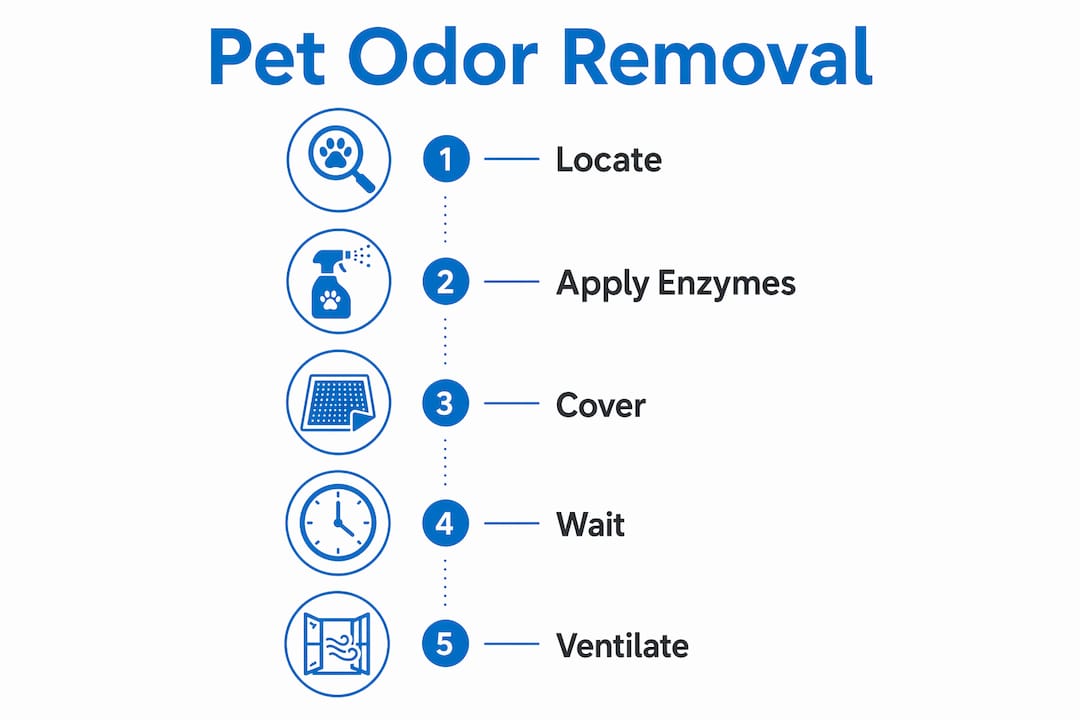
The right product for removing pet smells from carpet is an enzymatic cleaner. Enzymes break down the uric acid crystals at a molecular level, which is the only way to fully neutralize the odor. Spray bottles of general carpet deodorizer do not contain enzymes and will not solve the problem.
The application method matters as much as the product. Pour enzyme cleaner rather than spray it to get enough liquid volume into the pad. For medium-sized stains, you need to treat an area two to three times larger than the visible stain because urine spreads outward as it soaks down.
| Tool or Product | Purpose | Common Mistake |
|---|---|---|
| Enzymatic cleaner | Breaks down uric acid crystals | Using too little or spraying instead of pouring |
| Plastic wrap or wet towel | Keeps treated area moist during enzyme activation | Letting the area dry too fast, stopping enzyme action |
| UV blacklight | Reveals hidden urine spots invisible to the naked eye | Skipping detection and missing active spots |
| Moisture meter | Measures how deep urine has penetrated | Only used by professionals; rarely available at home |
| Clean white cloths | Blotting fresh stains without spreading | Rubbing the stain instead of blotting |
Avoid heat-based tools during treatment. Steam cleaning before enzyme treatment can bake urine proteins into fibers, making the odor permanent. Apply your enzymatic cleaner first. Heat comes later, if at all.
Pro Tip: Use a UV blacklight in a darkened room to find every urine spot before you start cleaning. Dried urine glows under UV light. Treating only the visible stains leaves active odor sources behind.
For pet-friendly home maintenance, keeping enzymatic cleaner stocked and ready means you can treat accidents within the critical first 15 minutes, before crystals form.
Step-by-step method to remove pet urine odors from carpet
Speed is the single biggest factor in how well you eliminate dog smell from carpet. The faster you act, the less uric acid bonds to the fibers.
-
Blot the stain immediately. Use a clean white cloth or paper towels. Press firmly and lift straight up. Blot within 15 minutes to prevent uric acid from crystallizing. Never rub. Rubbing pushes the urine deeper into the fibers and spreads it outward.
-
Apply cold water and blot again. Pour a small amount of cold water over the stain to dilute the urine. Blot again with a dry cloth. This step reduces the concentration of uric acid before enzyme treatment.
-
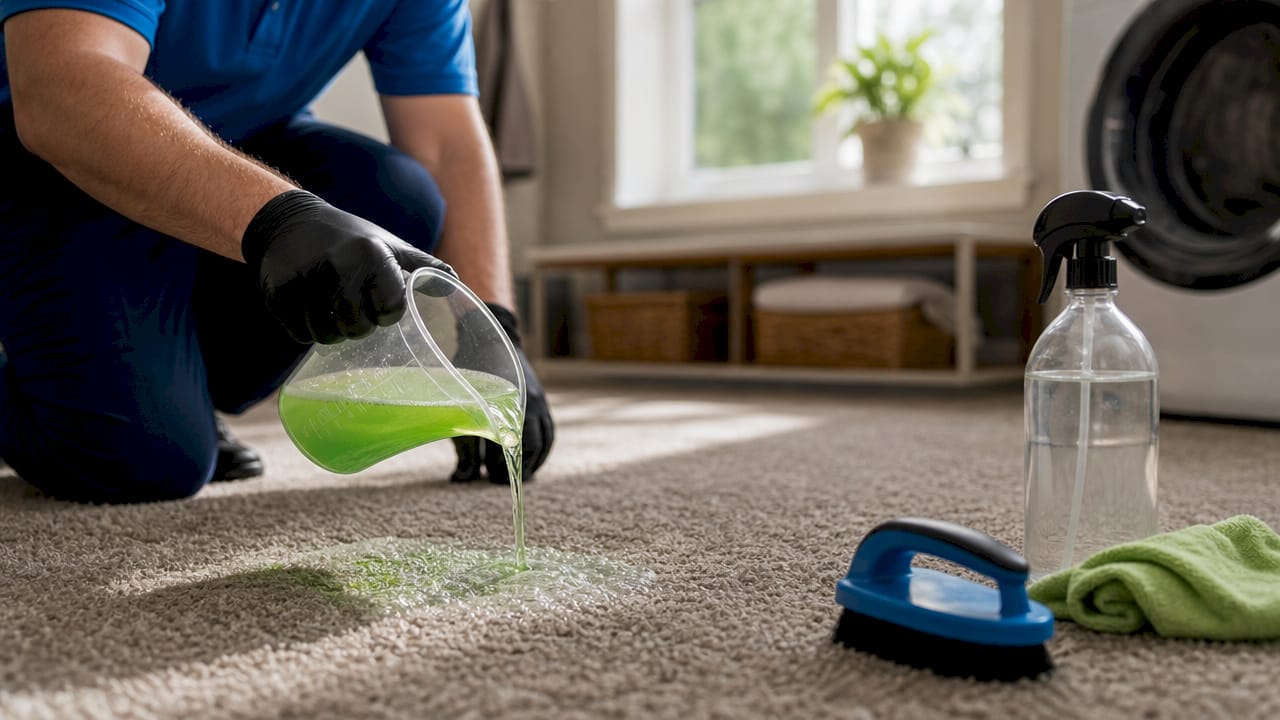
Saturate with enzymatic cleaner. Pour, do not spray. Use 8–12 ounces of enzyme cleaner for a standard stain. Make sure the liquid soaks through the carpet fibers and reaches the pad. If the stain is old or large, use more.
-
Cover the treated area. Lay plastic wrap or a damp towel over the wet area. This traps moisture and keeps the enzymes active. Enzymes need a wet environment to work. Letting the area dry too quickly stops the chemical reaction before the crystals are fully broken down.
-
Wait 12–24 hours. Patience is the step most pet owners skip. Enzymatic cleaners take 12–24 hours to fully break down set-in urine. Removing the cover after two hours and calling it done is the most common reason odors return.
-
Blot up the remaining moisture. After the wait time, press clean dry towels into the area and apply firm pressure. Do not use a fan or heat source to speed drying. Heat at this stage can still damage the treatment.
-
Check and repeat if needed. Once dry, use your UV blacklight to check the spot. If it still glows, repeat the enzyme treatment. Some deep or old stains require two or three rounds.
Pro Tip: Block your pet’s access to the treated area during the full 12–24 hour wait. A dog or cat walking on wet enzyme cleaner will track it across the floor and may re-soil the spot before treatment is complete.
The most common mistake in DIY carpet cleaning tips for pet owners is underestimating how far urine has spread. Treat a wider area than you think is necessary. It costs a little more product but prevents the frustrating cycle of odor returning.
When should you hire a professional for carpet odor removal?
Surface treatment works for fresh, isolated accidents. For old stains, repeated accidents in the same spot, or odors you can smell but cannot locate, professional service is the right call. Most homeowners underestimate urine penetration depth, which leads to repeated failed treatments.
Professionals use tools that are not available to most homeowners. Specialized subsurface extraction tools like the Water Claw inject enzyme solution directly into the carpet pad and then extract the contaminated liquid. This reaches the uric acid crystals that no surface treatment can touch. Surface-only treatments fail because urine soaks down to the pad and subfloor, where DIY products simply cannot follow.
Professional services also use a four-step chemistry stack that includes an alkaline pre-spray, enzyme treatment, oxidative chemistry, and an acid rinse. Skipping any one of these steps often causes the odor to return within 30 days. That is why a single-product DIY approach rarely delivers permanent results on severe cases.
The best carpet cleaner for pet odors at the professional level also includes UV light mapping and moisture meter diagnostics to find every active spot before treatment begins.
Professional service pricing reflects the severity of the problem:
| Service tier | What it covers | Typical cost range |
|---|---|---|
| Surface treatment | Fiber-level enzyme cleaning for fresh or light stains | $95–$185 per room |
| Full-depth pad treatment | Subsurface extraction reaching the carpet pad | Mid-range, varies by room size |
| Pad replacement | Removal and replacement of contaminated pad | Starting at $695 per room |
Professional pricing tiers are determined by UV light mapping and moisture meter readings taken before work begins. You pay for what the diagnostics reveal, not a flat guess.
Jim’s take: why patience and volume are everything
Most pet owners I talk to have tried to fix carpet odors themselves and failed. The reason is almost always one of two things: they used too little product, or they did not wait long enough. Enzyme cleaners are not instant. They are biological tools that need time and moisture to do their job. Pulling up the plastic wrap after a few hours and declaring the job done is like taking antibiotics for two days and stopping because you feel better.
The other mistake I see constantly is treating only the visible stain. Urine spreads outward and downward in a cone shape. The spot on the surface is the smallest part of the problem. The real contamination is wider and deeper than what you can see. I always tell people to treat at least twice the visible area and use more product than feels necessary.
For homes with multiple pets or years of accumulated accidents, DIY methods will not get you to a clean result. The pad is saturated. The subfloor may be affected. At that point, professional diagnostics and subsurface extraction are the only path to a genuinely odor-free home. I have seen rooms that looked clean but registered as heavily contaminated on a moisture meter. You cannot fix what you cannot find.
My honest recommendation for any pet owner: keep enzymatic cleaner stocked, act fast on fresh accidents, and do not let old stains sit untreated for months. The longer uric acid crystals stay active, the harder and more expensive the fix becomes.
— Jim
Carpetandtileplus can handle what home treatment cannot
Pet odor problems that have built up over months or years need more than a bottle of enzyme cleaner. Carpetandtileplus provides professional pet stain and odor removal services for homeowners across the Northwest Suburbs of Chicago, including Elgin, Bartlett, Streamwood, Arlington Heights, and Palatine.

IICRC-certified technicians use UV detection, moisture mapping, and subsurface extraction to find and treat every active odor source. Service tiers cover everything from light surface treatment to full pad replacement for severe cases. Carpetandtileplus also offers residential carpet cleaning for complete home refreshes beyond pet-related issues. With hundreds of five-star reviews and over 20 years of experience, the team delivers results that last, with a one-hour dry time that keeps your day on track.
Key takeaways
Enzymatic treatment applied with enough volume and time is the only method that permanently eliminates pet carpet odors at the source.
| Point | Details |
|---|---|
| Act within 15 minutes | Blot fresh stains immediately to stop uric acid from crystallizing in carpet fibers. |
| Pour, do not spray | Use 8–12 ounces of enzyme cleaner and pour it to saturate down to the carpet pad. |
| Wait the full 12–24 hours | Covering the treated area and waiting is what makes enzyme cleaners actually work. |
| Avoid heat before enzymes | Steam cleaning before enzyme treatment bakes urine proteins into fibers permanently. |
| Call a professional for deep stains | Subsurface extraction and UV diagnostics are required when surface treatment has failed. |
FAQ
What is the best carpet cleaner for pet odors?
Enzymatic cleaners are the most effective option for removing pet odors from carpet. They break down uric acid crystals at a molecular level, which deodorizers and baking soda cannot do.
How do I remove old pet stains from carpet at home?
Pour 8–12 ounces of enzymatic cleaner over the stain, cover with plastic wrap, and wait 12–24 hours. Repeat the treatment if the odor or UV glow persists after drying.
Why does my carpet still smell after cleaning?
Recurring odor means uric acid crystals remain active in the carpet pad. Surface sprays do not reach the pad, so the smell returns whenever humidity activates the crystals.
When should I replace the carpet pad?
Pad replacement is needed when urine has saturated the pad across multiple layers or when professional moisture meter readings show deep contamination that extraction cannot fully resolve.
Does steam cleaning remove pet odors?
Steam cleaning applied before enzymatic treatment makes pet odors worse by baking urine proteins into carpet fibers. Always apply enzyme cleaner first and avoid heat during the treatment period.