
Most people think deodorizing a carpet means spraying something that smells good over something that smells bad. That’s not what the carpet deodorizing process actually is. True deodorization works at the molecular level, targeting the compounds that cause odor rather than covering them up. Whether you’re a homeowner dealing with pet smells or a business operator maintaining a client-facing space, understanding how this process works will save you time, money, and a lot of frustration from odors that keep coming back.
Table of Contents
- Key takeaways
- What really causes carpet odors and how deodorizing works
- How to deodorize carpet at home, step by step
- Professional carpet deodorizing methods
- Pet odors and water damage: two cases that need special attention
- Keeping carpets fresh after deodorizing
- My honest take on what homeowners get wrong about deodorizing
- Get professional help when it counts
- FAQ
Key takeaways
| Point | Details |
|---|---|
| Deodorizing neutralizes, not masks | Effective carpet deodorizing targets odor-causing molecules at the source, not just the surface smell. |
| DIY has real limits | Baking soda and vinegar work well for maintenance but cannot replace deep cleaning for heavy contamination. |
| Padding is often the real problem | Odors that keep returning usually mean the carpet backing and padding are contaminated, not just the fibers. |
| Timing matters more than most realize | Odor-causing bacteria and mold can develop within 24 to 48 hours of moisture exposure, so fast treatment is critical. |
| Combining methods works best | Pairing DIY maintenance with periodic professional cleaning gives you lasting freshness that neither approach alone can match. |
What really causes carpet odors and how deodorizing works
Before you can fix a smell, you need to know what you’re actually dealing with. Carpet fibers are made to trap particles. That’s part of what makes them comfortable underfoot and effective at filtering airborne debris. The problem is that the same structure that traps dust also holds onto organic matter, moisture, pet dander, bacteria, and mold spores.
The main sources of carpet odor fall into a few clear categories:
- Pet urine and feces, which contain uric acid, proteins, and bacteria that break down over time into increasingly potent compounds
- Moisture and water damage, which create the conditions for mold and mildew to grow inside the carpet backing and padding
- Body oils, sweat, and food spills, which feed bacteria living in the fibers
- Airborne contaminants, including smoke and cooking odors that settle into the pile over time
The reason these smells are so persistent is that odor molecules physically bind to carpet fibers and can penetrate all the way through to the padding below. Surface cleaning does not reach them.
This is where the chemistry of deodorization matters. Baking soda is alkaline and neutralizes acidic odor-causing particles, including sweat, pet urine, and body oils, by chemically reacting with them and reducing their volatility. That’s fundamentally different from an air freshener, which just adds a competing scent.
Odor neutralization changes the chemical structure of the compound causing the smell. Odor masking just adds a stronger smell on top. Only one of these actually solves the problem.
Enzyme cleaners work differently. They contain beneficial bacteria and enzymes that break down proteins and uric acid at the molecular level. This is why they’re the go-to solution for pet urine rather than baking soda alone. Vinegar works through acidity and is particularly useful for mildew and mild water damage odors. Each of these approaches targets different types of odor compounds, which is why knowing your odor source before you treat is half the battle.
How to deodorize carpet at home, step by step
DIY carpet deodorizing is genuinely effective for routine maintenance and mild odors. The key is doing it correctly and knowing what it can and cannot handle.
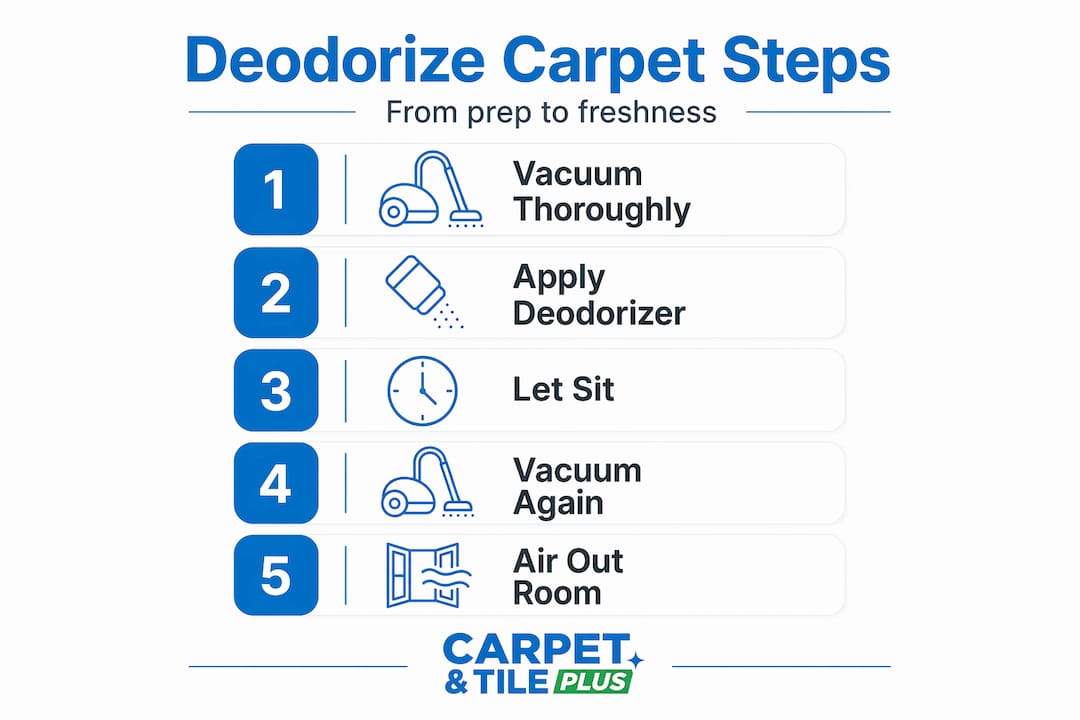
- Vacuum the carpet thoroughly. This removes the loose debris, pet hair, and surface particulates that would otherwise get in the way of any treatment. Use slow, overlapping passes rather than a quick once-over.
- Treat visible stains before deodorizing. Deodorizing over an untreated stain locks in the problem. Blot any wet spots. For pet accidents, address those first with an enzyme cleaner before moving to general deodorizing.
- Apply baking soda generously. Sprinkle baking soda across the carpet and leave it for 15 to 30 minutes for mild odors, or overnight for heavier ones. Add 10 to 15 drops of essential oil per cup of baking soda if you want a light fresh scent alongside the neutralization.
- Vacuum it up completely. Make multiple slow passes in different directions. Baking soda left in the fibers can attract moisture and cause more buildup over time.
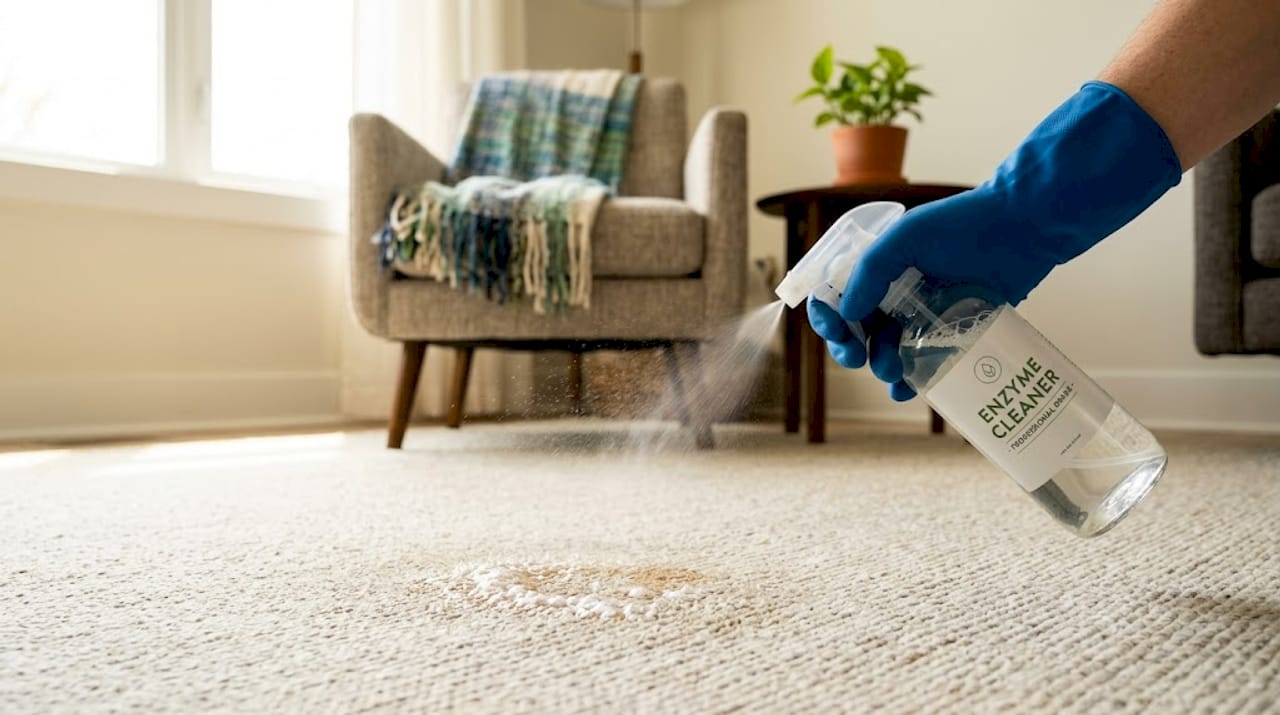
- Apply enzyme cleaner to pet urine spots. Saturate the affected area fully, including the area around the visible stain, because urine spreads outward. Cover the treated area with plastic wrap to keep the solution active and allow it to dry for 8 hours or overnight. Don’t blot or rinse it early.
- Use a vinegar solution for mildew or water damage odors. Mix equal parts white vinegar and water, apply to the affected area, let it sit for 10 to 15 minutes, then blot dry. The vinegar smell fades once it dries completely.
Pro Tip: Never apply baking soda to a damp carpet. Powder clumps when it contacts moisture and becomes difficult to vacuum out, which can leave a residue that causes new odors. Always start with a fully dry carpet.
One important reality check: baking soda deodorizing is a maintenance step, not a deep clean. It won’t remove set-in stains, and it won’t reach contamination that’s worked its way into the backing or padding. Think of it as the space between professional cleanings, not a replacement for them.
Professional carpet deodorizing methods
When DIY is not enough, professional carpet deodorizing and cleaning fills the gap with equipment and treatments that simply aren’t available in a hardware store.
| Method | What it does | Best for |
|---|---|---|
| Hot water extraction | Injects hot water and cleaning solution deep into fibers, then extracts it along with contaminants | General deep cleaning, heavy soil buildup |
| Low-moisture cleaning | Uses minimal water to clean and deodorize, reducing dry time significantly | Offices, high-traffic commercial areas |
| Commercial enzyme treatments | Industrial-strength enzymatic formulas applied at higher concentrations than retail products | Pet urine, biological contamination |
| Encapsulation cleaning | Polymer crystals surround and trap odor particles for vacuuming after drying | Routine maintenance in commercial settings |
One thing professionals know that many homeowners don’t: excessive heat can cause pet urine compounds to permanently bond to wool and natural fibers. This is why a reputable cleaner will always identify your carpet fiber type before applying hot water extraction to a urine-contaminated area.
Pro Tip: If you’re scheduling professional cleaning for a pet odor problem, tell the technician about the specific odor source before they start. It changes the treatment entirely. A good cleaner should ask, but you shouldn’t wait to be asked.
Professional cleaning methods can handle deep contamination using large-scale equipment and commercial-grade enzymatic treatments in ways that DIY simply cannot match. The signs that you need professional help include: odors that return within days of DIY treatment, water damage that affected more than a small area, heavy pet staining that has been present for more than a few weeks, or any situation where you’re noticing mold or musty smell after moisture exposure. Learn more about what organic professional cleaners bring to the table that retail products can’t replicate.
Pet odors and water damage: two cases that need special attention
These two situations come up constantly and both require a strategy beyond standard deodorizing. Generic approaches consistently fail here, and understanding why helps you avoid wasted effort.
Pet urine is chemically complex. Cat urine in particular contains concentrated uric acid crystals that dry and harden in the fibers and padding. When humidity rises, those crystals reactivate and the smell returns. This is why a spot can seem fine for weeks and then smell terrible again after a rainy day. The only reliable fix is an enzyme cleaner that degrades uric acid and the bacteria producing the odor. Vinegar, baking soda, and masking sprays do not dissolve uric acid crystals. They just make the area smell temporarily better.
Saturation also matters here. Urine migrates into the backing and padding, often spreading outward in a larger area than the visible stain. Treatment that only covers the surface stain leaves the odor source fully intact underneath.
Water damage creates a different kind of urgency. Odors develop within 24 to 48 hours after wetting because that’s how quickly mold and bacteria start growing in a moist, dark environment. Before any deodorizing can be effective, the carpet and padding need to be thoroughly dried using fans, dehumidifiers, and airflow. Deodorizing a still-damp carpet simply won’t work.
Key points to manage these tough situations:
- Act within the first few hours of any water or urine exposure
- Blot, never scrub, to avoid driving contamination deeper into the pile
- Use enzyme cleaners on biological odors; use vinegar solutions on mildew
- Address moisture trapped under fibers before any deodorizing treatment
- Call a professional when the affected area is larger than a few square feet or when the padding is saturated
Keeping carpets fresh after deodorizing
Getting your carpet smelling clean is one thing. Keeping it that way is a different challenge that comes down to consistent habits.
- Vacuum at least once a week in normal household use, and two to three times a week in high-traffic areas or homes with pets. Regular vacuuming removes the organic material that feeds odor-causing bacteria before it becomes a problem.
- Deodorize with baking soda monthly as a maintenance step between professional cleanings. It takes about 20 minutes and makes a real difference in background odor levels.
- Control moisture aggressively. Use bathroom and kitchen exhaust fans, address any water leaks immediately, and consider a dehumidifier in humid climates or basements. Odor-causing bacteria and mold need moisture to thrive, so removing it removes their food source.
- Schedule professional deep cleaning once a year for typical household use, and every 6 months for homes with pets, children, or heavy traffic. Commercial spaces often need quarterly service.
- Consider how carpet cleanliness connects to your indoor air quality. Carpets that hold onto organic matter and bacteria affect the air you breathe. Clean carpets are part of a healthier indoor environment.
Pro Tip: Place washable mats at all entry points and wash them monthly. They catch a significant portion of the outdoor debris, oils, and moisture that would otherwise end up deep in your carpet.
My honest take on what homeowners get wrong about deodorizing
I’ve seen a lot of carpets over the years, and the pattern is almost always the same. Someone notices a smell, tries a spray or a powder, it gets better for a few days, then the smell comes back. They repeat the process, usually with something stronger, and wonder why nothing sticks.
What I’ve learned is that the padding is the real culprit in most recurring odor cases. When pet urine or water gets into the padding, no amount of surface treatment will fix it permanently. The contamination is physically below the level you can reach with a powder or a spray bottle. I’ve seen padding that looked fine on top but was completely soaked through from the bottom up.
The other mistake I see constantly is treating deodorizing as a separate step from cleaning. They work together. Baking soda on a carpet that hasn’t been deep cleaned in two years is maintenance on top of a foundation that needs rebuilding. The most effective approach I’ve found in practice is combining regular at-home maintenance with professional cleaning on a schedule that matches how the space is actually used.
What homeowners should realistically expect is this: DIY deodorizing handles day-to-day freshness well. Professional treatment handles the deeper stuff that DIY can’t reach. You need both. If you’re only doing one, you’re leaving performance on the table and probably dealing with odors that come back faster than they should.
— Jim
Get professional help when it counts
At Carpetandtileplus, we handle the odor situations that DIY methods simply can’t fix on their own. From pet stain and urine contamination to post-water-damage deodorizing, our IICRC-certified team uses commercial-grade enzyme treatments and organic cleaning products that reach all the way through to the backing and padding. We serve homeowners and businesses throughout the Northwest Suburbs of Chicago, including Elgin, Bartlett, Streamwood, Arlington Heights, and Palatine. Our one-hour dry time means minimal disruption to your day. Whether you need residential carpet cleaning or a full commercial carpet service, we’re ready to help you get lasting results.
FAQ
What is the carpet deodorizing process?
The carpet deodorizing process involves neutralizing odor-causing molecules in carpet fibers, backing, and padding using agents like baking soda, enzyme cleaners, or vinegar, rather than simply masking smells with fragrance. Professional methods add deep extraction and commercial-grade treatments for contamination that DIY can’t reach.
How often should you deodorize your carpet?
For most homes, a monthly baking soda treatment works well as maintenance, with professional deep cleaning at least once a year. Homes with pets or heavy traffic benefit from professional service every 6 months.
Why do carpet odors keep coming back after treatment?
Recurring odors almost always mean the contamination reached the carpet backing or padding and was never fully treated. Surface-level deodorizing leaves the source intact, so the smell returns as conditions change, especially with humidity. See Carpetandtileplus’s pet odor removal service for situations where the odor keeps returning.
Can you use baking soda and vinegar together on carpet?
You can use them in sequence but not simultaneously. They neutralize each other when mixed, eliminating the effectiveness of both. Apply vinegar first for mildew odors, let it dry fully, then use baking soda in a separate step.
When should you call a professional instead of using DIY methods?
Call a professional when odors return within a few days of treatment, when water damage has affected more than a small area, or when pet staining has been present long enough to penetrate the padding. DIY methods are not designed to handle deep contamination.