Yes: when done with low-residue methods, transparent products, and proper drying and ventilation, professional carpet cleaning can be kid-safe. The two pillars are mechanical removal, meaning thorough vacuuming and extraction that pulls soil out instead of masking it, and low-toxicity products paired with real ventilation during and after the job. Book a certified pro who can answer the questions below, or use our checklist to vet your current provider.
TL;DR:
- Hot water extraction removes soil but needs thorough rinsing; low moisture methods dry faster, while dry compound cleaning may struggle with stains.
- Before booking, ask for IICRC certification, exact product ingredients, fragrance free, low VOC options, a rinse that removes residue, and expected drying time.
- Keep kids and pets away until carpet is dry to the touch, ventilate during service, and postpone cleaning if it smells musty or feels damp.
- Vacuuming removes roughly 90 to 95% of dry soil by weight, while professional deep cleaning is recommended every 12 to 18 months.
Table of Contents
- Kid-safe cleaning methods and their trade-offs
- How to pick a kid-safe provider: one checklist parents can use
- Before, during, and after: a practical home-prep and safety checklist
- What the research says about vacuuming, cleaning frequency, and safe products
- What to look for in a certified, family-focused cleaning company
- What actually matters most when it comes to kid safety
- Ready for a kid-safe clean? Here’s how we make it simple
- FAQ
- Sources
Kid-safe cleaning methods and their trade-offs
Not every carpet cleaning method treats residue and air quality the same way, and that matters when a toddler is crawling on the floor an hour after the crew leaves.
Hot-water extraction, often called steam cleaning, flushes a cleaning solution deep into carpet fibers and then pulls it back out with strong suction. Done correctly, with enough rinse passes, it leaves very little residue behind. Low-moisture methods, including encapsulation, use less water and dry faster, which shortens the window when a damp carpet could support mold growth. Dry compound cleaning skips liquid almost entirely, using an absorbent compound worked into the fibers and then vacuumed out, which minimizes aerosolization but can struggle with deep, set-in stains.
The method matters less than the execution. A low-moisture carpet cleaning job with poor rinsing can leave as much residue as a rushed steam clean, and leftover cleaner attracts new soil faster, making carpets look dirty again within weeks.
- Hot-water extraction removes deep soil well but needs thorough rinsing to avoid residue buildup.
- Low-moisture and encapsulation methods dry quickly, which lowers mold risk for crawling kids.
- Dry compound cleaning reduces aerosol exposure but may leave heavier stains behind.
Avoid providers who rely on heavily fragranced sprays, skip a rinse step, or leave carpet soaked for a day or more. Aerosolized sprays increase the amount of chemical suspended in the air, which is exactly what you want to limit around small lungs.
Pro Tip: Ask your cleaner whether their process includes a dedicated rinse or extraction pass, not just a solution application.
How to pick a kid-safe provider: one checklist parents can use
A short conversation before booking tells you almost everything you need to know about how a company handles child safety.
- Ask for proof of IICRC certification and how technicians are trained on product use.
- Request the exact product names and active ingredients, and insist on fragrance-free, low-VOC options.
- Confirm the process includes a rinse or extraction step to pull residue out rather than leave it to dry in place.
- Ask for expected dry time and what they do to control moisture, since a damp carpet left too long can support mold.
- Discuss scheduling around nap times, ventilation during the job (open windows, fans), and whether a satisfaction guarantee covers re-cleaning if residue or odor remains.
A provider who answers these without hesitation is usually one that has built child safety into its standard process, not just its marketing.
Before, during, and after: a practical home-prep and safety checklist
A little prep on your end makes the service faster and reduces exposure for everyone in the house.
- Pick up toys, baby gear, and anything on the floor before the crew arrives.
- Vacuum first, ideally with a HEPA-capable vacuum, since regular vacuuming already removes most dry soil before any wet cleaning starts.
- Open windows or run fans during the service to keep air moving and reduce chemical concentration indoors.
- Keep children and pets out of the work area until the carpet is dry to the touch, and check with your technician on the exact timeline.
- Postpone the appointment, or ask about mold and water-damage remediation instead, if you already have a damp spot or musty smell in the carpet.
Simple habits like reducing dust mites between cleanings also cut down how much your carpet needs deep treatment in the first place.
What the research says about vacuuming, cleaning frequency, and safe products
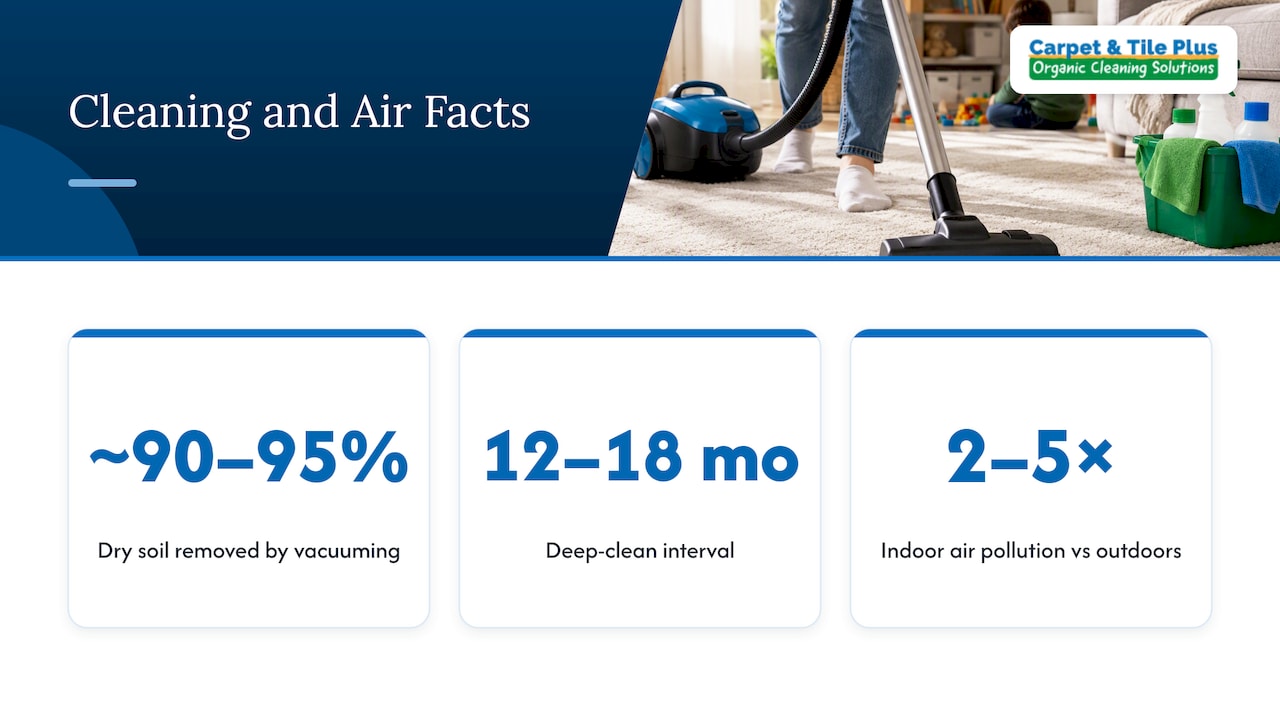
The guidance behind these recommendations is not guesswork. Regular vacuuming removes roughly 90 to 95% of dry soil by weight, which is why a consistent vacuuming routine does more for everyday cleanliness than people expect, and the same guidance recommends a deep professional clean every 12 to 18 months.
Children face higher exposure risk from indoor pollutants than adults do, since they breathe more air relative to their body weight and spend more time close to the floor, and indoor air can be 2 to 5 times more polluted than outdoor air, which is the core reason ventilation and low-VOC products matter so much during a carpet cleaning visit.
When sanitizing is actually necessary, the safer active ingredients to look for are hydrogen peroxide, citric acid, L-lactic acid, and ethanol, always used with good ventilation. Carpets maintained this way are not a significant driver of childhood asthma; the American Academy of Pediatrics notes that reducing indoor pollutant exposure through proper cleaning can be as effective as medication for some asthma cases.
What to look for in a certified, family-focused cleaning company
A family-owned business with two decades in the industry tends to have refined its process around exactly these concerns. We have worked across suburban areas of Chicago for over 20 years, building a residential carpet cleaning process around organic products and IICRC-certified technicians.
- Our cleaners are IICRC-certified and use organic cleaning products as part of an allergy-friendly process.
- We have earned many positive reviews from families across the suburbs we serve.
- Our dry time is designed to minimize the window when kids need to stay off the carpet.
- We treat product transparency and ventilation planning as standard parts of every booking conversation, not an upsell.
These are the kinds of checkable facts worth asking any provider for, whether you book with us or someone else.
What actually matters most when it comes to kid safety
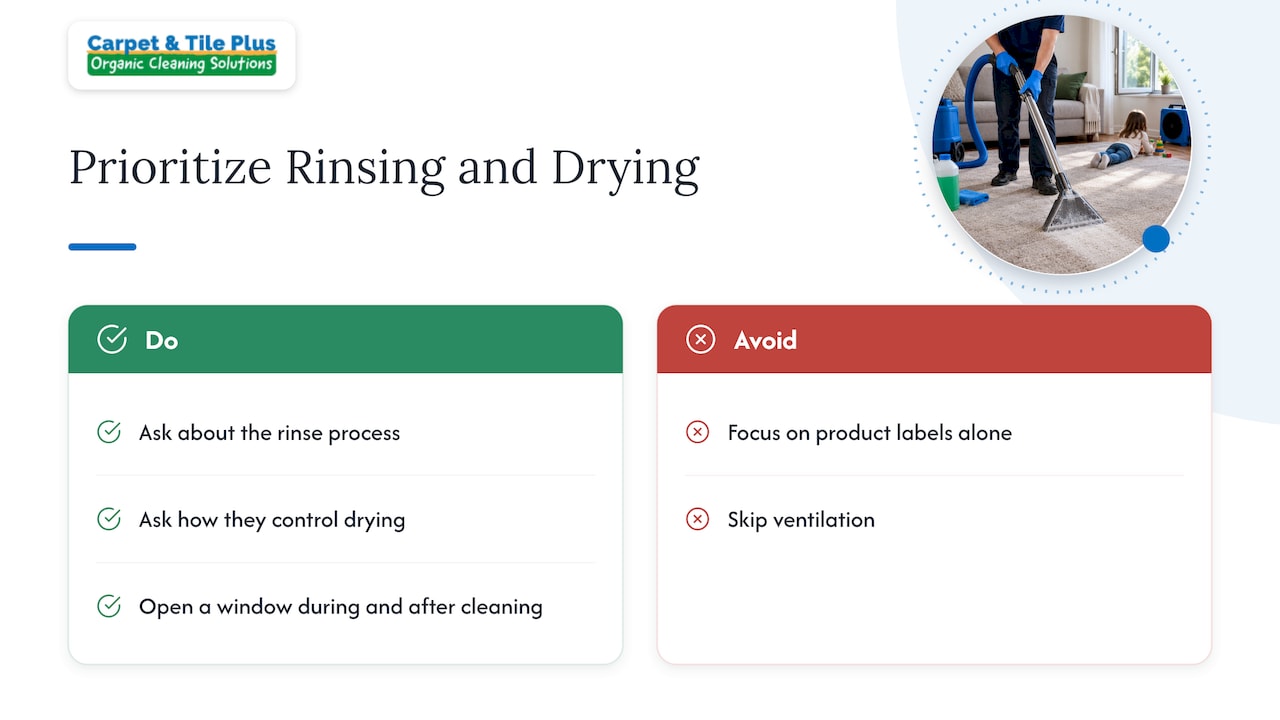
Most advice on this topic focuses too heavily on which chemical to fear and not enough on execution. A mediocre job with an organic product can leave more residue than a well-rinsed job with a conventional one, and residue, not the product label alone, is what attracts soil and prolongs exposure. Parents searching for “natural” or “green” cleaners sometimes skip the more useful question: does this company rinse thoroughly and dry the carpet quickly?
The conventional advice also underweights ventilation. Opening a window during and after a cleaning visit costs nothing and measurably reduces the concentration of whatever product is used, yet it rarely makes anyone’s checklist. If you prioritize one thing from everything here, prioritize asking your provider two questions: what is your rinse process, and how do you control drying time? Everything else, from product selection to certification, supports those two outcomes.
— Jim
Ready for a kid-safe clean? Here’s how we make it simple
We built our process around the two things that matter most for families: thorough rinsing to remove residue, and a one-hour dry time so kids aren’t kept off the carpet for long. Our technicians are IICRC-certified and use organic products, which fits the low-VOC, low-residue standard this article has walked through.

When you request a quote, ask us directly about:
- The specific product names and active ingredients we’ll use in your home.
- Expected dry time and our moisture control plan for your space.
- Ventilation options and scheduling around nap times or young kids at home.
Request a quote through our residential carpet cleaning page and we’ll walk you through the process before we ever step on your carpet.
FAQ
How do I sanitize carpet safely around kids?
Use a professional process that rinses thoroughly and relies on safer active ingredients like hydrogen peroxide, citric acid, L-lactic acid, or ethanol rather than heavily fragranced sprays. Always ventilate the room during and after sanitizing, and keep kids out of the area until the carpet is dry.
How can I get kids involved in cleaning their rooms?
Start with simple, age-appropriate tasks like putting toys in bins or placing laundry in a hamper before a deeper carpet cleaning happens. Keeping floors clear also makes it easier for a professional crew to vacuum and treat the carpet thoroughly.
Is renting a carpet cleaner a good idea for a kid-safe clean?
Rental machines often use less suction than professional equipment, which can leave more moisture and residue behind, both of which raise exposure concerns for young kids. A professional service with proper extraction and a fast dry time generally reduces that risk more reliably.
Are there baby-friendly carpet deodorizers?
Fragrance-free, low-VOC options exist, but fragranced deodorizers and air fresheners can add unnecessary respiratory irritants to indoor air. If odor control matters, a low-VOC, ventilation-first approach is generally a safer starting point than a scented spray.
How often should carpets get a deep clean for kids’ safety?
Regular vacuuming handles most day-to-day dirt, removing roughly 90 to 95% of dry soil, but a professional deep clean every 12 to 18 months is recommended to remove what vacuuming alone can’t reach.
Sources
- How to extend the life of carpet in your facility | Carpet and Rug Institute
- Environmental health topics for child care facilities and parents | U.S. EPA
- Safer cleaning, sanitizing, and disinfecting products | UCSF CHEERS / CCHP
- Healthychildren