
Professional grout cleaning delivers three measurable benefits: cleaner, healthier air by removing trapped mold and allergens, a visibly restored floor, and longer-lasting grout when the job follows IICRC standards. Extraction and correct sealing chemistry protect grout in ways mopping cannot. For the best and safest outcome, hire an IICRC-trained technician rather than relying on store-bought products or guesswork.
TL;DR:
- Professional grout cleaning with proper extraction and sealing slows grout erosion and extends regrouting timelines by avoiding harmful acidic or alkaline chemicals.
- Using IICRC-trained technicians and organic cleaning products ensures safe, effective removal of mold, allergens, and soil deep within grout pores.
- Regular sealing after cleaning, especially in high-traffic areas, is essential to prevent rapid dirt accumulation and recurring mold or mildew issues.
- Costs vary significantly based on soil level and square footage but are justified for homes with persistent grime, mold, or aged grout that won’t respond to DIY methods.
- Most homes should schedule professional cleaning at least once annually, with more frequent visits in commercial or heavily used spaces to maintain appearance and health benefits.
Table of Contents
- What Are the Real Professional Grout Cleaning Benefits?
- How Does Professional Grout Cleaning Actually Work?
- Sealing and Maintenance: What Keeps Grout Clean Longer
- What Does Professional Grout Cleaning Cost, and When Is It Worth Hiring?
- Why a Certified Local Pro Delivers These Results
- Why Homeowners Underestimate What Grout Cleaning Actually Fixes
- Get a Grout Floor That Actually Stays Clean Longer
- Sources
- FAQ
What Are the Real Professional Grout Cleaning Benefits?
Grout is porous, closer in texture to unglazed concrete than to tile. That porosity is exactly why it traps soil, moisture, and mold spores that a mop and surface cleaner can’t reach.
Health. Mold and allergens embedded in grout lines can degrade indoor air quality and aggravate respiratory conditions in sensitive occupants, according to the Allergy & Asthma Network. Hot-water extraction physically pulls contaminants out of the grout’s pore structure instead of pushing them around, which shrinks the reservoir where spores and bacteria accumulate.
Aesthetics. Surface mopping cleans the top layer of a tile floor while leaving the grout lines gray or discolored underneath. Professional extraction reaches into the joint itself and can restore much of the original color, but not always all of it. Grout that has suffered structural erosion, or picked up rust and dye stains, often cannot be fully lifted with cleaning alone. In those cases, the fix is regrouting or a color-seal treatment rather than another cleaning pass, according to the Opora grout care playbook.
Longevity. Grout erosion accelerates when the wrong chemistry hits the joint repeatedly. IICRC tip-sheet guidance flags acidic and strongly alkaline products as the main culprits behind long-term sealer breakdown and premature grout wear. Correct pH selection and controlled moisture during cleaning slow that erosion and push back the eventual regrouting timeline.
A quick way to think about the three benefits together:
- Health: fewer allergen and mold reservoirs in porous joints
- Aesthetics: extraction reaches soil mopping physically cannot touch
- Longevity: correct chemistry slows erosion and delays regrouting
Pro Tip: If a grout line looks permanently gray no matter how hard you scrub, that’s usually staining locked into eroded grout, not surface dirt. A technician can tell you in minutes whether extraction will fix it or whether you’re looking at a regrouting job.
How Does Professional Grout Cleaning Actually Work?
A legitimate grout cleaning job follows a sequence, not a single spray-and-wipe step. Skipping steps is usually what leads to disappointing results or, worse, damaged grout.
- Inspection and spot testing. A technician checks tile material, grout condition, and existing sealer, then tests cleaning chemistry on an inconspicuous area before treating the whole floor.
- Pre-treatment and agitation. A cleaning solution matched to the soil level sits on the grout for a dwell time, then gets mechanically agitated to loosen embedded debris.
- Extraction or rotary cleaning. Hot water under pressure lifts the loosened soil, followed by full rinse and vacuum recovery so no residue or moisture stays trapped in the joint.
- Drying. Air movers speed evaporation, since sealing over damp grout traps moisture and undermines the seal.
The IICRC’s standards exist specifically to govern steps one through three: which chemistry is safe for which stone or tile, how long a product should dwell, and how moisture gets managed throughout. A DIY approach or an undertrained crew skipping the spot test or rushing drying time is exactly how grout ends up etched, discolored, or moldy again within weeks.
Pro Tip: Ask any company you’re considering whether their technicians follow IICRC protocols. It’s a fast way to separate a trained crew from someone with a rental machine.
Sealing and Maintenance: What Keeps Grout Clean Longer
Sealing clean, fully dry grout is what actually extends the results of a professional cleaning. Sealer applied over damp or still-soiled grout fails faster and wastes the investment, according to Opora’s grout care guidance. Reseal windows vary with foot traffic and product, but sealing after a professional cleaning and sealing appointment is one of the more cost-effective ways to delay the next full restoration cycle.
Frequency depends on where the floor sits and how much traffic it takes:
- Residential kitchens and bathrooms: roughly once a year, more often with pets or heavy cooking
- Commercial entries, restrooms, and breakrooms: several times a year, since facility guides recommend scheduling by area type rather than a single blanket interval
- Signs you’re due: grout that looks dingy within weeks of mopping, recurring mildew smell, or water beading less than it used to on a sealed floor
Between professional visits, day-to-day maintenance matters more than most homeowners realize; for advice on the best approaches, see this homeowner’s guide to choosing paint for bathrooms. The IICRC recommends neutral-pH, no-rinse cleaners for routine upkeep. Acidic products (vinegar-based cleaners are a common offender) and strongly alkaline ones both degrade sealer and grout over time, even when they seem to clean effectively in the moment.
What Does Professional Grout Cleaning Cost, and When Is It Worth Hiring?
Price depends on soil level, square footage, and how much furniture or equipment a crew has to work around, so quotes vary from one job to the next more than most homeowners expect. A lightly soiled bathroom floor costs far less to restore than a kitchen with years of grease embedded in the grout lines.
Turnaround depends mostly on drying time. Crews using air movers can cut dry time significantly, which matters for commercial sites trying to reopen a kitchen or lobby floor without a full-day shutdown. Many commercial jobs get scheduled off-hours specifically to avoid disrupting operations.
A few signs point clearly toward calling a professional instead of scrubbing harder or waiting:
- Grout stays discolored or gritty no matter how often you mop it
- Mold or mildew keeps coming back in the same spots
- Grout feels crumbly or soft to the touch
- A sealer applied within the last year or two has already failed
Why a Certified Local Pro Delivers These Results
Every benefit described above (the health improvement, the visual restoration, the extended lifespan) depends on the technician actually following IICRC-backed practice. That’s the gap between a rental machine and a trained crew.
Carpetandtileplus is local and family-owned, with more than 20 years serving the Northwest Suburbs of Chicago. A few things worth knowing about how the crew operates:
- IICRC-certified technicians trained in the inspection-to-sealing process described above
- Organic cleaning products, which matters directly for the health benefits tied to indoor air quality
- A dry time that shortens the window where damp grout could reabsorb moisture or mold
- Many positive customer reviews across the service area
Faster drying isn’t a convenience feature. It directly reduces the mold-reservoir risk covered earlier. Explore the residential or commercial tile and grout pages for what a visit actually includes.
Why Homeowners Underestimate What Grout Cleaning Actually Fixes
Most people treat grout like it’s just dirty tile, something a stronger cleaner or more elbow grease will eventually fix. That’s the wrong mental model. Grout behaves more like a sponge embedded in your floor, and the conventional advice (scrub harder, use bleach, try a steam mop) mostly moves soil around inside that sponge instead of removing it.
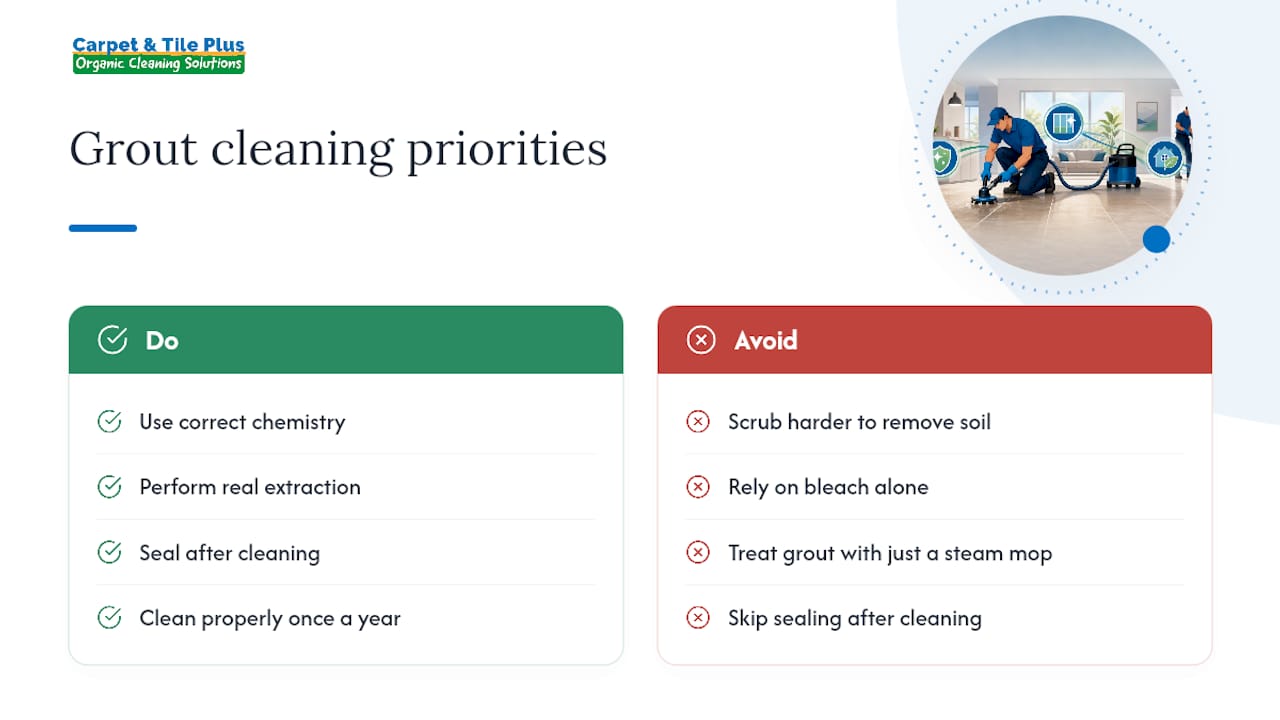
The evidence points somewhere more specific: the biggest wins come from combining correct chemistry with real extraction and follow-up sealing, not from any single miracle product. Skipping the sealing step after cleaning is the most common mistake I see recommended in generic cleaning advice, and it quietly undoes most of the work.
If you take one thing from this, prioritize timing over intensity. A grout floor cleaned properly once a year with correct sealing will outlast one scrubbed aggressively every week with the wrong chemistry. Consistency beats force here, every time.
— Jim
Get a Grout Floor That Actually Stays Clean Longer
Carpetandtileplus handles the entire process covered here (inspection, correct chemistry, extraction, and sealing) with IICRC-trained technicians and organic cleaning products, so you get the health, appearance, and lifespan benefits without guessing which store-bought cleaner is safe for your floor.

A typical visit starts with a walkthrough where technicians check grout condition, existing sealer, and tile type before recommending a treatment plan. Most residential appointments wrap up the same day, with drying time that minimizes disruption to your kitchen or bathroom. If your grout keeps looking dingy no matter how often you mop, or a mold smell keeps returning near the shower, request a quote through the residential tile and grout cleaning page and get a real assessment instead of another bottle of cleaner that won’t fix the underlying problem.
Sources
The IICRC Standards define the inspection, chemistry, and moisture-control practices referenced throughout this guide. The IICRC tile, stone, and grout tip sheet covers safe daily maintenance products. Allied Facility Care’s commercial guide details extraction methods and frequency by space type. Opora’s grout care playbook explains sealing timing and restoration limits. The Allergy & Asthma Network covers mold’s role in respiratory health.
- IICRC Standards – IICRC
- Commercial tile and grout cleaning: A facility guide – Allied Facility Care
- Ceramic and porcelain tile grout care playbook – Opora
- Allergy & Asthma Network — mold allergy guidance
FAQ
Is Professional Grout Cleaning Worth It?
Yes, for most homes and commercial spaces with visibly soiled or moldy grout. It reduces allergen reservoirs, restores appearance beyond what mopping achieves, and slows the erosion that eventually forces a regrout.
How Much Does Professional Grout Cleaning Cost?
Cost varies by soil level, square footage, and site access, so prices differ meaningfully from one job to the next. Getting a walkthrough and quote is the only reliable way to know your actual price.
How Often Should You Get Your Grout Cleaned?
Most homes benefit from a professional cleaning around once a year, while commercial spaces like entries and restrooms often need service several times a year depending on traffic, according to Allied Facility Care’s frequency guidance.
Is It Better to Clean Grout or Regrout?
Cleaning restores grout that’s simply soiled, while regrouting is necessary when the grout itself has eroded, crumbled, or developed stains that extraction can’t lift, per Opora’s grout care playbook. A technician can usually tell you which situation you’re in during an initial inspection.