
Penetrating sealers typically protect grout for several years, while topical sealers hold up for a shorter period before they need reapplication. The fastest way to know where your grout stands: sprinkle a few drops of water on the surface right now. If it beads up and sits there, you’re still protected. If it soaks in within a minute, the sealer has already failed.
TL;DR:
- Penetrating sealers last 3 to 5 years and are best for high-moisture areas, while topical sealers typically last 1 to 2 years and suit dry, decorative surfaces.
- Water-bead tests can accurately determine if a sealer is still effective within seconds, with soaking in within a minute indicating failure.
- Proper surface cleaning, crack repair, and correct application are essential for maximizing sealer lifespan; skipping these steps causes early failure.
- Frequent moisture exposure, dirt, poor application, and improper cleaning habits significantly shorten sealer effectiveness.
- Regular maintenance checks and professional deep cleaning before resealing extend the durability and effectiveness of grout sealers.
Table of Contents
- Grout Sealer Lifespan: Penetrating vs. Topical Explained
- What Factors Shorten or Extend Sealer Life?
- How Do You Know If Grout Sealer Has Worn Off?
- How to Reseal Grout: Prep, Application, and Cure Times
- What Maintenance Habits Actually Extend Sealer Life?
- What Professionals See That Homeowners Miss
- Does Grout Color or Type Change How Long Sealer Lasts?
- Are Some Grout Sealers Better for the Environment Than Others?
- Your Simple Reseal Schedule and Checklist
- Professional Grout Cleaning and Sealing From Carpet and Tile Plus
- Sources
- FAQ
Grout Sealer Lifespan: Penetrating vs. Topical Explained
Not all grout sealers work the same way, and that difference explains most of the confusion around how long a sealer actually lasts. Manufacturers split them into two categories, and picking the wrong one for the wrong room is the single biggest reason people think their sealer failed in six months.
Penetrating sealers (sometimes called impregnating sealers) soak into the grout using silane, siloxane, or fluoropolymer chemistry. Instead of sitting on top, they fill the microscopic pores in the grout itself, repelling water and oil while still letting the grout breathe. That breathability matters more than most people realize. It’s why MAPEI’s technical guidance recommends penetrating formulas for wet and high-traffic areas, where they typically last 3 to 5 years.
Topical sealers form a visible film on the surface, similar to a thin coat of varnish. They can look great initially, adding sheen and enhancing grout color, but that film has a weakness: it can peel, flake, or cloud over time, and it traps moisture underneath rather than letting it escape. That’s a serious problem in a shower, where trapped moisture accelerates deterioration and can encourage mold growth behind the very layer meant to protect against it, according to Groutastic’s comparison of sealer types.
Here’s how the two stack up in practice:
- Penetrating sealers: 3 to 5 years typical lifespan; ideal for showers, floors, and any area exposed to regular moisture.
- Topical sealers: 1 to 2 years typical lifespan; best reserved for dry, low-traffic decorative surfaces like a backsplash.
- Premium penetrating formulas: can extend performance further and add oil resistance, which matters in kitchens.
If you’re not sure which type is on your floor right now, the water-bead test covered below will tell you within seconds.
What Factors Shorten or Extend Sealer Life?
Two identical sealers, applied the same week, can fail at completely different rates depending on where they’re used and how they’re treated afterward. Traffic is the most obvious variable. A kitchen floor or entryway grinds through sealer faster than a guest bathroom that gets used twice a month, simply because grit and foot traffic wear down the protective barrier mechanically.
Moisture exposure works differently but hits just as hard. Showers, steam rooms, and outdoor patios put grout in near constant contact with water, which is exactly why penetrating sealers earn their reputation there. A film-forming topical product in a shower is fighting a battle it can’t win long term.
Cleaning habits matter more than most homeowners expect. Bleach and acidic cleaners break down sealer chemistry, according to MAPEI’s guidance, which recommends pH-neutral cleaners specifically to avoid degrading the sealer prematurely. Reach for a bathroom cleaner labeled “tile safe” or “pH balanced” instead of anything with bleach as a first ingredient.
A few more variables that quietly determine how long your sealer holds up:
- Application quality: sealer applied over dirty or still-damp grout fails early, sometimes within months.
- Product tier: premium penetrating sealers with oil resistance last noticeably longer than budget versions.
- Surface prep: skipping a deep clean before sealing traps residue underneath the protective layer.
Pro Tip: Keep a small bottle of pH-neutral cleaner under the sink specifically for grout. Grabbing the all-purpose bleach spray out of convenience is the single most common way homeowners shave years off their sealer’s life without realizing it.
How Do You Know If Grout Sealer Has Worn Off?
The water-bead test is the fastest, cheapest diagnostic you have, and it takes less than five minutes.
- Clean the area first. Wipe the grout lines so you’re testing the sealer, not a layer of soap residue.
- Sprinkle a few drops of water directly onto several grout lines, not just one spot.
- Watch what happens for 60 seconds. Water that beads up and stays on the surface means the sealer is still active, according to This Old Grout’s testing guidance.
- Note how fast it soaks in. If the water darkens the grout within a minute, the sealer has already worn through and it’s time to reseal.
Beyond the bead test, watch for visual clues between checks. Grout that darkens quickly after a shower, develops staining you can’t scrub out, or shows mildew creeping along the lines is telling you the same thing the water test would. Topical sealers add one more warning sign: visible peeling or a cloudy, flaking film means it’s past due.
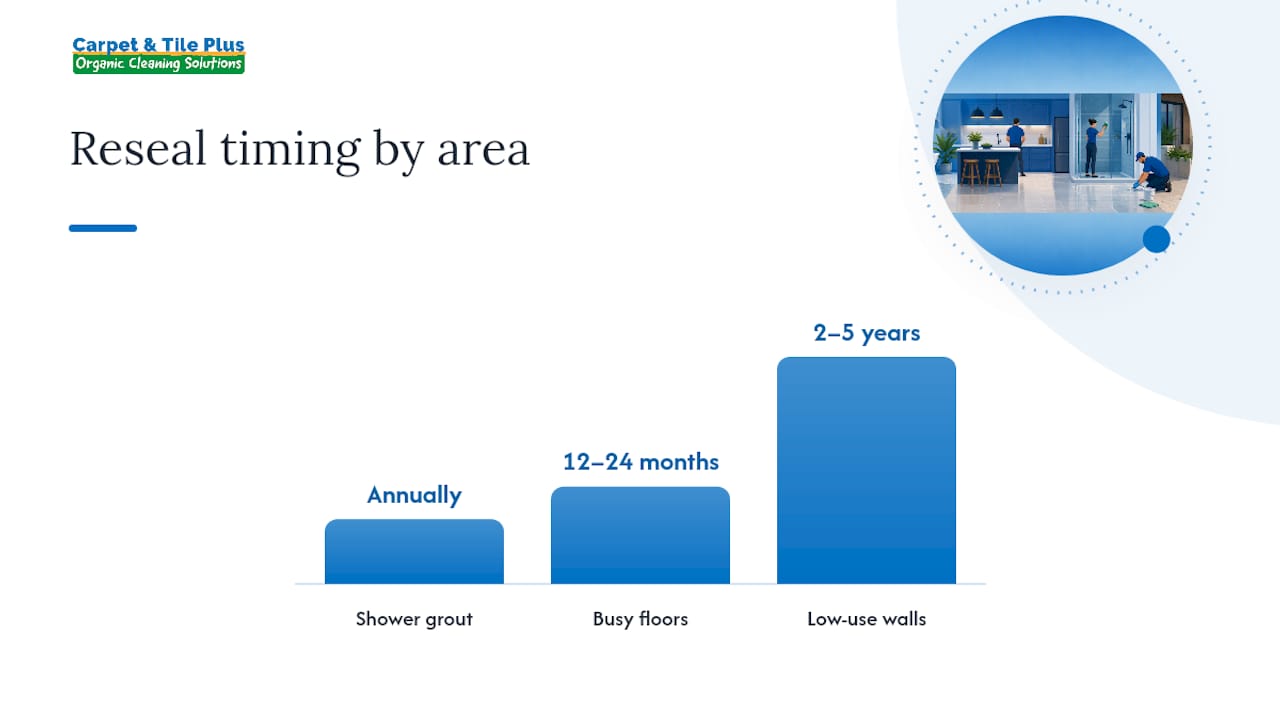
Timing your checks by location saves you from guessing. Shower grout deserves an annual look given constant moisture exposure. High-traffic floors should get checked every 12 to 24 months, according to Bob Vila’s sealing guidance, while low-use walls and backsplashes can often go 2 to 5 years between checks.
How to Reseal Grout: Prep, Application, and Cure Times
Resealing isn’t just spraying a product on old grout and walking away. The prep work determines whether that new sealer lasts three years or three months, and skipping steps is the number one reason DIY resealing jobs underperform.
- Wait after fresh grouting. New grout needs 48 to 72 hours to cure before sealing, longer in humid conditions. Sealing too early traps moisture inside the grout itself.
- Deep-clean before anything else. Strip away soap scum, mildew, and grime completely. D and G Flooring’s guidance points out that professional cleaning before sealing meaningfully extends the sealer’s effective life because the product bonds to clean, dry substrate rather than locking contaminants underneath. A thorough grout cleaning beforehand is what separates a sealer that lasts from one that fails in months.
- Repair cracks or voids first. Sealing over damaged grout traps moisture behind the crack and accelerates failure from the inside out.
- Apply the sealer correctly. Penetrating sealers get wiped on or soaked in, with excess removed before it dries on the surface; topical sealers need even, thin coats, sometimes two, following the manufacturer’s spacing.
- Respect the cure window. Light foot traffic is often fine within 2 to 4 hours for many modern penetrating formulas, but full water exposure protection typically needs 24 to 72 hours, according to D and G Flooring’s cure guidance. Always check the product’s own technical data sheet since chemistries vary.
The full sealing process runs faster when the prep work is already done right, which is exactly where most DIY jobs lose time and durability.
What Maintenance Habits Actually Extend Sealer Life?
The sealer does the heavy lifting, but daily habits decide whether it lasts the full 3 to 5 years or fails at year one. Stick with pH-neutral, tile-safe cleaners as your everyday go-to, and save anything acidic or bleach-based for emergencies only, since repeated exposure breaks down sealer chemistry over time.
Skip the power scrubbing and abrasive pads directly on sealed grout lines. That scouring pad that works wonders on a stainless sink is exactly what wears through a sealer’s protective layer faster than normal use ever would.
Build the water-bead test into your routine rather than waiting for a problem. A quick check every few months, especially in showers, catches a failing sealer before staining sets in permanently. And when you do spot a stain, treat it immediately. Grout that sits stained for weeks absorbs deeper than grout wiped clean the same day.
A few habits worth locking in:
- Rinse shower grout with a squeegee after use to cut down on standing moisture.
- Reserve bleach-based cleaners for rare deep cleans, not weekly maintenance.
- Address any recurring staining with a professional deep clean and reseal rather than repeated at-home fixes that never quite solve it.
If staining keeps coming back despite consistent care, that’s usually a sign the sealer has failed underneath, not that you’re cleaning wrong.
What Professionals See That Homeowners Miss
Sealing over grout that’s still damp or hasn’t been properly cleaned is the most common mistake we see in the field. The sealer looks fine going on, then fails within months because it never bonded to a clean surface in the first place.
Technicians bring extensive hands-on experience to every job, using eco-friendly cleaning products that don’t leave behind the residue that shortens sealer life. Another recurring issue: homeowners install a topical sealer in a shower because it’s what was available at the hardware store, not realizing it traps moisture instead of repelling it.
DIY sealing works fine for a dry backsplash or a low-traffic hallway. But for showers and busy floors, professional cleaning before sealing with a fast, one-hour dry time often saves money over the life of the grout, since it’s the prep work, not the product, that determines whether the sealer holds up.
— Jim
Does Grout Color or Type Change How Long Sealer Lasts?
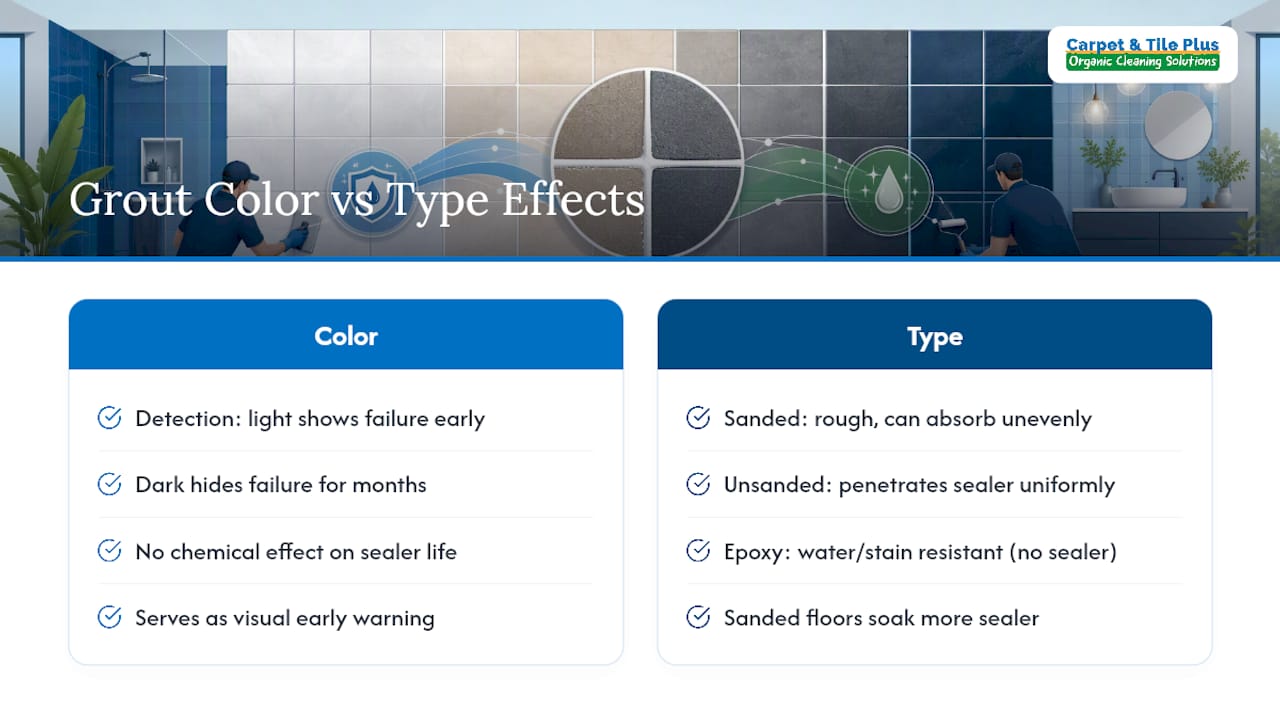
Grout color itself doesn’t chemically affect how long a sealer holds up, but it changes how quickly you’ll notice a problem. Light-colored and white grout show staining and darkening almost immediately once a sealer starts to fail, which actually works in your favor: it’s an early warning system. Dark grout can hide the same failure for months, letting mildew and grime build up underneath before you ever see a visible sign.
Grout type matters more directly. Sanded grout, common on floors, has a rougher, more porous texture that can absorb sealer unevenly if it’s not applied carefully, sometimes leaving weak spots that fail sooner. Unsanded grout, typically used in narrower joints like wall tile, tends to take penetrating sealer more uniformly. Epoxy grout is the outlier here: it’s inherently water and stain resistant on its own, and many manufacturers don’t recommend sealing it at all, since there’s no porous surface for a sealer to bond with or protect.
If you’re not sure what type of grout is in your home, check the width and location of the joints. Wide floor joints are almost always sanded; narrow wall joints, particularly in newer installations, are often unsanded or epoxy. That distinction should guide which sealer you buy and how much of it you’ll need, since sanded grout on a large floor simply soaks up more product than a small unsanded backsplash.
Are Some Grout Sealers Better for the Environment Than Others?
VOC content varies significantly between penetrating and topical sealer formulas, and it’s worth checking the label before you buy. Solvent-based topical sealers historically carried higher volatile organic compound levels, which means stronger fumes during application and a longer window before the space is comfortable to occupy. Water-based penetrating sealers generally run lower in VOCs, making them a more practical choice for enclosed bathrooms with limited ventilation.
Many manufacturers now offer low-VOC or water-based versions of both sealer types, so the environmental tradeoff isn’t strictly tied to penetrating versus topical anymore. It comes down to reading the specific product’s data sheet rather than assuming one category is automatically cleaner than the other.
Beyond fumes during application, there’s a longevity angle to the environmental conversation that often gets overlooked. A sealer that lasts 5 years instead of 1 to 2 years means fewer resealing cycles, less product manufactured and shipped, and less packaging waste over the life of your tile. In that sense, choosing a durable, well-applied penetrating sealer isn’t just about performance. It’s the lower-impact choice over a decade of ownership, simply because you’re doing the job less often.
Your Simple Reseal Schedule and Checklist
Keep it easy: check shower grout annually, busy floors every 12 to 24 months, and low-use walls or backsplashes every 2 to 5 years. Run through this order every time: water-bead test, deep clean if it fails, repair any cracks, reseal, then log the date somewhere you’ll actually find it again.
If staining keeps returning despite good habits, or you notice mold behind the grout line itself, that’s your signal to call a professional rather than keep resealing over an underlying problem.
Professional Grout Cleaning and Sealing From Carpet and Tile Plus
Skipping the deep clean before sealing is the fastest way to cut a sealer’s lifespan in half, and it’s the one step DIYers most often shortcut. Carpet and Tile Plus handles that prep work the right way: IICRC-certified technicians, eco-friendly cleaning products that won’t leave residue behind, and a one-hour dry time that gets your bathroom or kitchen back in use fast instead of leaving it roped off for a day.

Our residential tile and grout cleaning service pairs a thorough deep clean with proper sealing, so the product actually bonds to clean grout instead of locking in old grime underneath. That’s the difference between a sealer that lasts the full 3 to 5 years and one that fails in a season. We serve homeowners throughout the Northwest Suburbs of Chicago, including Elgin, Bartlett, Streamwood, Arlington Heights, Palatine, Barrington, and Hanover Park. If your grout hasn’t been checked in a while, or the water-bead test told you what you already suspected, reach out for a free estimate and get a date on the calendar.
Sources
- Choosing the right sealer (MAPEI technical guidance)
- How to seal grout (Bob Vila)
- Grout sealer FAQs (This Old Grout)
- How to seal grout (D and G Flooring)
FAQ
How often should I replace grout sealer?
Penetrating sealers generally need reapplication every 3 to 5 years, while topical sealers require it every 1 to 2 years, though high-moisture areas like showers should be checked annually regardless of type.
Why do builders not seal grout right after installation?
New grout needs 48 to 72 hours to cure fully before sealing, and sealing too early traps moisture inside the grout, which is why most installers wait rather than seal on the same day.
How long does grout sealer last?
Most penetrating sealers last 3 to 5 years and topical sealers last 1 to 2 years, though traffic, moisture exposure, and cleaning chemicals can shorten those ranges considerably.
Can I put grout sealer on old grout?
Yes, but the grout needs a full deep clean and complete drying first, and any cracks or structural damage should be repaired before sealing to avoid trapping moisture or debris underneath.