
Hiring a certified tile and grout cleaner is the fastest, most reliable way to restore dull tile and grimy grout lines, and it beats scrubbing on your hands and knees with a store-bought brush. Expect deep grout extraction, an inspection to match cleaners to your tile type, and optional sealing or recoloring once the surface is clean. A provider with IICRC-certified technicians may use fast-drying methods so floors are ready for foot traffic soon after cleaning.
TL;DR:
- Professional tile and grout cleaning includes thorough inspection, pre-treatment, mechanical extraction, rinse, and quick-dry methods, often within two hours for residential spaces.
- Sealers last only a few years on cement grout, but recoloring with epoxy-based stains can restore an even look when grout is faded or discolored.
- Low-moisture extraction techniques enable floors to be walkable within about an hour and are a key factor in choosing a reliable service.
- Costs vary based on size, grout condition, tile type, and additional services like sealing or recoloring, with most providers offering per-square-foot or fixed-price quotes.
- The best cleaning companies hold IICRC certification, use non-toxic products, and provide clear reviews and guarantees, with proper preparation improving results and drying times.
Table of Contents
- What professional tile and grout cleaning actually includes
- How the cleaning process works, step by step
- Grout sealing and recoloring after the clean
- What to expect for results and timing
- What drives the price of tile and grout cleaning
- What to look for in a reputable tile cleaner
- How to prepare for the appointment and care for floors after
- Why Carpet and Tile Plus fits the standard
- A note from Jim on why certification matters
- How to book tile and grout cleaning with us
- Sources
- FAQ
What professional tile and grout cleaning actually includes
A standard visit covers more ground than a mop and bucket ever could. Technicians inspect the tile and grout, pre-treat problem areas, agitate and extract embedded grime, then rinse and set up drying. Commercial jobs often add scope for larger square footage, kitchen grease, or slip hazards, while residential visits focus on bathrooms, kitchens, and entryways where soap scum and body oils build up fastest.
Add-on services round out the job when grout needs more than a deep clean:
- Grout sealing to protect newly cleaned grout from future staining.
- Grout recoloring to restore a uniform look when grout has darkened unevenly.
- Slip-resistance treatment for wet or high-traffic commercial floors.
- Grout replacement when cracked or missing grout can’t be salvaged by cleaning alone.
A technician can usually tell within minutes whether a room needs a spot treatment or a whole-floor restoration.
How the cleaning process works, step by step
Quality work follows a predictable sequence, which makes it easier to compare quotes on scope rather than price alone.
- Inspection and testing: The technician checks tile and grout condition and tests cleaners on a small area, a step installation and finish standards recommend to avoid damaging glazes or grout.
- Pre-treatment: A targeted solution breaks down grease, soap scum, or mildew before agitation begins.
- Extraction: Mechanical agitation paired with low-moisture rotary or encapsulation cleaning lifts embedded soil out of porous grout, which the EPA notes often needs professional-strength solutions that routine mopping can’t match.
- Rinse and dry setup: Any remaining residue gets neutralized, then fans and airflow are positioned to control drying.
Low-moisture extraction methods are what make a one-hour walk-on time possible, since less water goes down means less water has to evaporate.
Pro Tip: Ask upfront whether the crew uses low-moisture extraction, since that detail affects both dry time and how soon you can put furniture back.
Grout sealing and recoloring after the clean
Cleaning removes soil, but sealing and recoloring are what keep grout looking good afterward. Penetrating sealers make sense for cementitious grout, which stays porous even after cleaning, while fully cured epoxy grout generally skips sealing altogether. Recoloring, done with an epoxy-based grout stain, is the fix when grout has faded unevenly and a uniform look matters more than just cleanliness.
A few things to keep in mind before adding either service:
- Penetrating sealers on cement grout typically need reapplication every few years.
- Recoloring adds a fresh, even tone but works best on grout that’s structurally sound.
- Silicone-based sealers should be avoided since they can trap moisture and peel.
- Always confirm a sealer or stain is compatible with your specific tile or stone before applying it.
What to expect for results and timing
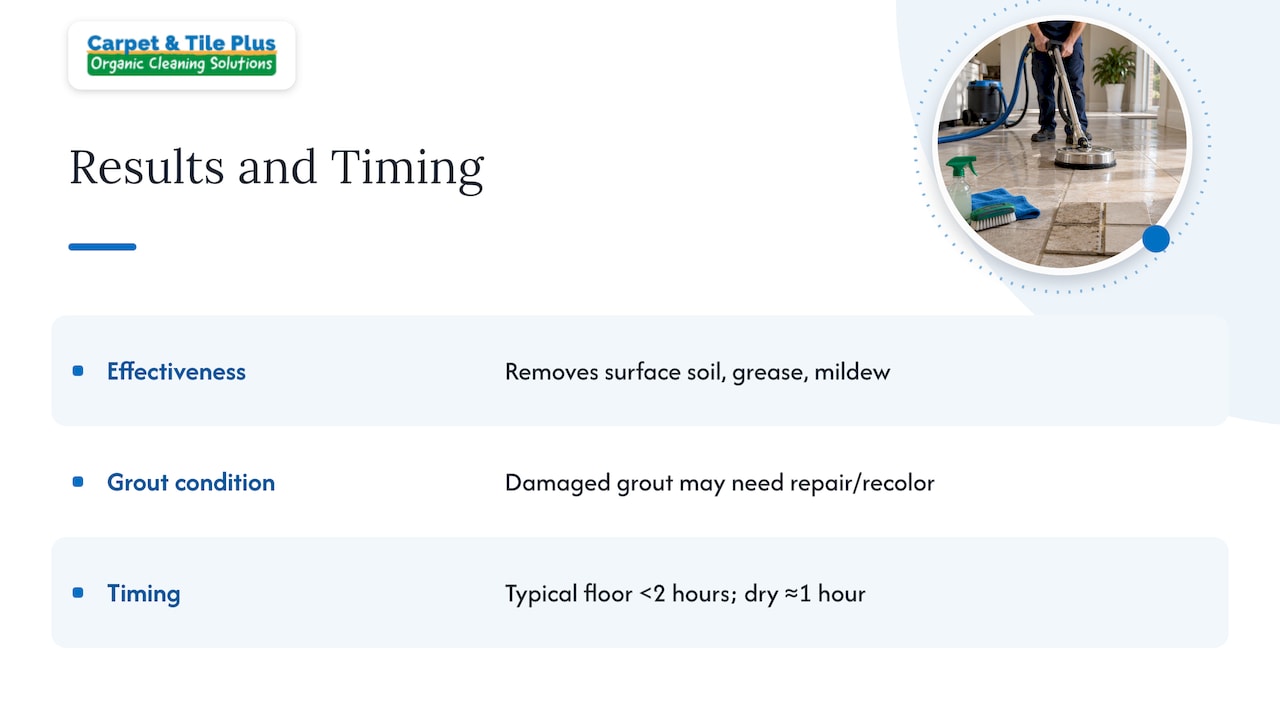
Professional cleaning lifts most surface soil, grease, and mildew staining, but grout that’s cracked, chipped, or permanently discolored may need replacement or recoloring rather than another cleaning pass. A typical bathroom or kitchen floor takes well under two hours from setup to finish, with larger commercial areas scaling up from there. Because low-moisture extraction limits how much water goes into the grout, floors are usually dry enough for normal foot traffic within about an hour.
What drives the price of tile and grout cleaning
Quotes vary because the job itself varies. The biggest factors are square footage, how soiled or damaged the grout already is, the tile material, how easy the space is to access, and whether restoration work like grout replacement is needed on top of cleaning.
Pricing structures differ by provider, but most fall into a few patterns:
- Per-square-foot rates for straightforward whole-floor cleaning.
- Flat per-room pricing for smaller bathrooms or entryways.
- Minimum service fees for small jobs that don’t hit a square footage threshold.
- Separate line items for sealing, recoloring, or slip-resistance treatments.
Before booking, ask what’s included in the base price, whether the quote covers a test area first, and whether the work comes with a satisfaction guarantee. Those questions surface the difference between a thorough job and a rushed one faster than comparing bottom-line numbers alone.
What to look for in a reputable tile cleaner
Not every cleaning company operates to the same standard, so a short vetting checklist goes a long way.
- IICRC certification shows technicians have formal training in cleaning standards, not just a truck and a pressure washer.
- Eco-friendly, non-toxic products matter most in occupied kitchens, bathrooms, and offices where residue and fumes are a real concern.
- Documented reviews and guarantees give you a way to check a company’s track record before it’s in your home.
- Ventilation and containment during cleaning protect indoor air quality, since EPA guidance points to moisture control as key to preventing mold growth after wet cleaning.
A provider that’s vague about any of these is worth a second look before you book.
How to prepare for the appointment and care for floors after
A little prep on your end makes the visit faster and the results last longer.
- Clear the floor of rugs, mats, and furniture before the technician arrives.
- Mention any existing sealer, known stains, or pet accidents so the crew can adjust their approach.
- Keep the area ventilated during cleaning, especially in smaller bathrooms.
- Wait for the crew’s guidance on when foot traffic can resume, generally close to an hour with fast-dry methods.
- Stick to neutral-pH cleaners for routine mopping afterward. Different tile types respond differently to cleaners, and acidic or ammonia-based products can dull grout sealer or damage certain stone.
Pro Tip: Skip vinegar and bleach on sealed grout between professional visits. They break down sealers faster than plain water and a neutral cleaner ever will.
Why Carpet and Tile Plus fits the standard
This family-owned company features IICRC-certified technicians, uses organic cleaning products, and emphasizes low-moisture methods that enable a quick dry time. It has a history of positive customer feedback in the Northwest Suburbs of Chicago over many years, a track record important to consider when choosing a cleaning service.
A note from Jim on why certification matters
Certified training and the right equipment are what separate a floor that looks clean from one that’s actually been cleaned properly. We built our process around organic products and fast drying because homeowners and property managers shouldn’t have to choose between a clean floor and a disrupted day. If that sounds like what you need, booking is straightforward, and the next section covers exactly how.
— Jim
How to book tile and grout cleaning with us
Carpet and Tile Plus handles residential tile and grout cleaning, including grout sealing, and commercial tile and grout cleaning for property managers who need grout replacement or slip-resistance treatment on top of a standard clean.

To get a free estimate, share your square footage, tile type, and any known problem areas like grease buildup or standing stains. That’s enough for a technician to scope the job accurately before ever stepping through your door. Reach out through our tile and grout cleaning page to check availability near you.
Sources
- Mold course chapter 4 | US EPA
- CERAMIC TILING construction standards | Michigan State University
- IICRC — Institute of Inspection, Cleaning and Restoration Certification
FAQ
How much does it cost to get tile floors professionally cleaned?
Cost depends on square footage, grout condition, tile material, and whether sealing or recoloring is added to the job. Carpet and Tile Plus provides pricing after reviewing these details, so the fairest way to compare is to request quotes with the same scope from each provider.
Is it worth it to have tile professionally cleaned?
Professional cleaning removes embedded grime that routine mopping can’t reach, since porous grout often needs professional-strength solutions to lift grease, soap scum, and mildew. For most households and businesses, the time saved and the results achieved make it worth skipping the DIY route for grout specifically.
How much does Stanley Steemer charge to clean tile?
Pricing for tile and grout cleaning varies by provider and job scope, and we don’t have published rates for other companies to cite accurately. Request a quote directly from any provider you’re considering, and compare what’s included in the base price before deciding.
Can I use Dawn dish soap to wash my tile floors?
Mild detergent works fine for routine cleaning of many glazed tiles, but some tile and grout materials need neutral-pH cleaners instead, and heavily soiled grout usually needs a professional-strength solution to get fully clean. When in doubt, test any cleaner on a small area first or ask a technician what’s safe for your specific tile.