
Property managers should hire a certified contractor for multi-unit duct cleaning as soon as two conditions appear: visible contamination or mold, or sustained performance complaints from occupants. The NADCA ACR standard and EPA guidance treat these as the clearest signals that cleaning is overdue. We offer multi-unit capable duct cleaning built around that framework.
TL;DR:
- The most accurate trigger for scheduling duct cleaning is the presence of visible mold, heavy dust, or persistent musty odors that regular filter changes cannot fix.
- Contaminants in one riser can compromise entire shared HVAC systems, requiring comprehensive cleaning of supply, return ducts, and components like coils and drain pans.
- Proper multi-unit duct cleaning involves inspection, containment, agitation, HEPA vacuum collection, and verification with documentation before and after the job.
- Cost depends on the number of units, duct runs, contamination level, and remediation needs, with larger buildings requiring phased scheduling over several days or weeks.
- Mold contamination requires physical removal and moisture source correction; cleaning alone is ineffective and may involve replacing porous materials like fiber-lined ducts.
Table of Contents
- Services multi-unit buildings need that single-family homes don’t
- Signs it’s time to schedule cleaning now
- How professional multi-unit duct cleaning actually works
- What drives cost, timeline, and access requirements
- When cleaning isn’t enough: mold and heavy contamination
- Choosing a contractor: credentials, contract terms, and red flags
- Our experience with local multi-unit and commercial duct work
- What property managers consistently get wrong about scheduling
- Ready to schedule multi-unit duct cleaning
- FAQ
- Sources
- Primary guidance and standards
Services multi-unit buildings need that single-family homes don’t
Multi-unit systems share plenums, stacked risers, and sometimes rooftop air handling units that serve several apartments or suites at once. A contaminant in one riser can spread through interconnected returns, so cleaning scope has to account for the whole system rather than one unit at a time.
A complete job typically includes:
- Supply and return duct cleaning throughout shared and individual runs.
- Air handling unit coil and drain pan cleaning to remove buildup that restricts airflow.
- Dryer vent service for shared laundry rooms, where lint accumulation is a fire risk.
- Grille and register cleaning in common areas and individual units.
- Odor remediation and HVAC sanitization when conditions warrant it.
Because multi-unit systems are older or harder to access, technicians often find failed access panels, unsealed joints, or degraded insulation during inspection. Associated repairs, resealing ductwork or replacing damaged insulation, are common add-ons rather than separate projects, and a reputable contractor will flag these during the walkthrough instead of after the invoice.
Signs it’s time to schedule cleaning now
Routine calendar intervals matter less than actual conditions. Prioritize scheduling when you see:
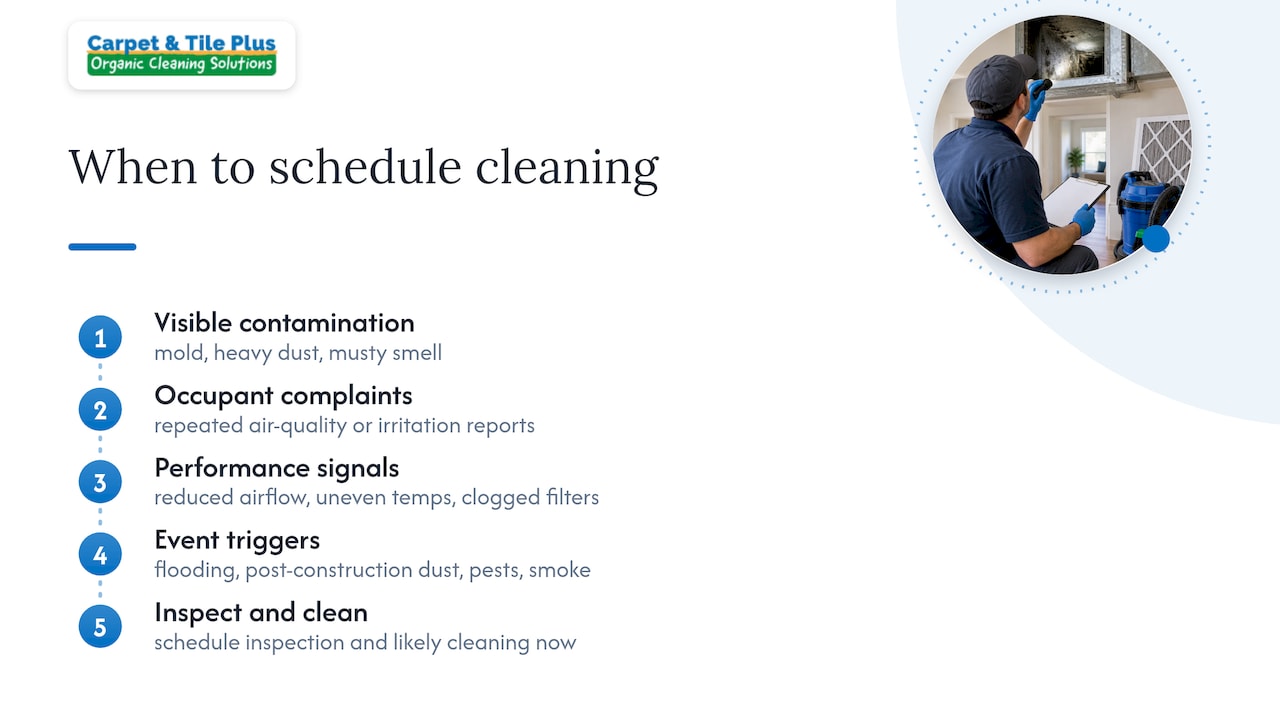
Visible mold, heavy dust buildup, or a persistent musty smell in units or hallways signals a problem that routine filter changes will not fix. Repeated occupant complaints about air quality or respiratory irritation tied to HVAC operation are a second strong trigger, especially when several tenants in the same stack report similar symptoms.
Performance signals matter too: reduced airflow, uneven heating or cooling between units, filters clogging faster than expected, or a jump in energy use often point to duct contamination restricting the system. Event triggers override any schedule entirely, flooding or water intrusion, post-construction dust, pest evidence, or smoke exposure all call for inspection and likely cleaning regardless of when the last service happened.
How professional multi-unit duct cleaning actually works
A properly run job follows a sequence, not a single visit with a vacuum truck.
- Pre-inspection and documentation. Technicians use a camera or borescope to assess duct condition and produce a written assessment before touching anything.
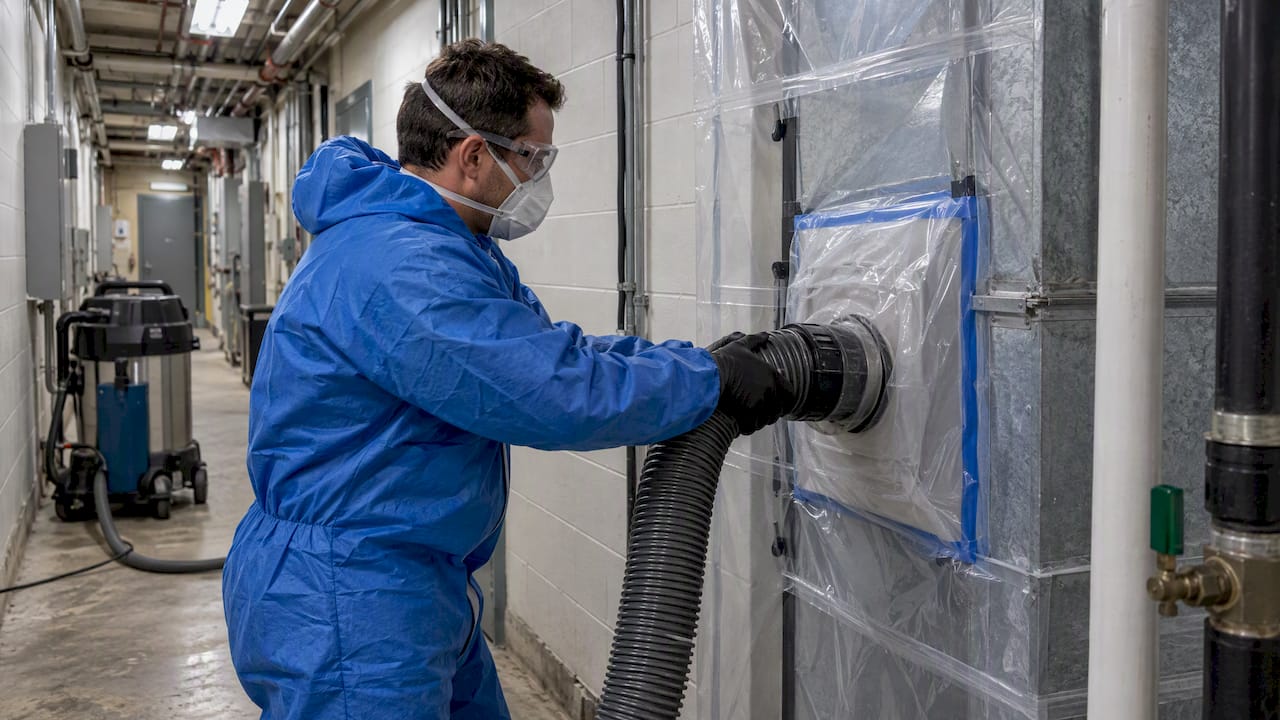
- Containment and occupant protection. Work is often scheduled off-hours, with sealing and negative pressure used to keep debris from migrating into occupied units.
- Mechanical agitation and HEPA vacuum capture. NADCA’s ACR standard defines this combination, agitation to dislodge debris, HEPA vacuum collection at sufficient capture velocity, as the baseline professional method, which prevents cross-contamination between risers.
- Component-specific cleaning. Coils, drain pans, and registers get cleaned separately; wet fibrous glass liner is typically replaced rather than cleaned, since deep mold in that material resists removal.
- Post-clean verification. Before-and-after photos, airflow checks, and NADCA ACR verification where applicable confirm the job met the agreed scope.
Our HVAC duct cleaning process guide walks through these steps in more detail for managers who want the full procedural breakdown.
What drives cost, timeline, and access requirements
Pricing for multi-unit projects depends on scope, not a flat per-building rate. The main cost drivers are the number of units and duct runs served, whether the building uses a central air handler or isolated unit systems, the level of contamination found during inspection, and any required remediation or insulation replacement.
Timelines scale with building size: small properties with a handful of units can often be completed in a day, mid-size buildings usually require phased scheduling across several days, and larger properties need multi-week phasing to avoid disrupting every tenant at once. Phasing by floor or wing keeps common areas usable throughout.
Pricing models vary by contractor and may be structured per unit, per system, or per hour, with additional charges likely when remediation or component replacement is needed. Before the crew arrives, plan for:
- Tenant notices with specific access windows.
- Coordinated building access for stairwells, risers, and mechanical rooms.
- A staging area for equipment and a plan for waste disposal.
When cleaning isn’t enough: mold and heavy contamination
Cleaning solves dust and debris buildup, but mold changes the rules. EPA guidance on mold remediation is direct: do not run an HVAC system if contamination is suspected, since operating it spreads spores through the building. Porous materials, especially wet or moldy fibrous glass duct liner, should be replaced rather than cleaned, because surface cleaning rarely reaches mold embedded in the material.
Remediation calls for containment and correcting the moisture source first, not just addressing the visible growth. Biocides and sealants have a limited, careful role, applied only after physical removal and only per guidance, never as a substitute for cleaning. For documentation and worker protection, expect PPE, HEPA vacuuming, contained waste handling, and negative-pressure isolation on any job involving suspected contamination. For deeper detail on removal versus cleaning, this guidance on mold in duct systems covers the physical removal process plainly.
Choosing a contractor: credentials, contract terms, and red flags
A written scope separates a defensible job from a guessing game. Before signing anything:
- Require proof of insurance and references from comparable multi-unit projects.
- Confirm familiarity with the NADCA ACR standard and relevant IICRC certifications.
- Get a written inspection report, with video or photo documentation, before work begins.
- Require a containment plan for occupied buildings.
- Specify the cleaning method in the contract: mechanical agitation plus HEPA vacuum collection, not vacuum-only service.
- Define post-clean verification: photos, airflow measurements, or ACR verification.
- Clarify disposal practices for removed debris and contaminated materials.
- Set payment milestones tied to inspection, cleaning, and verification stages.
Ask bidders directly: What’s your containment plan for occupied units? How do you document before-and-after airflow? What triggers a change order? Watch for vague scopes, pressure to add biocide treatments without a documented need, no verification step offered, or inadequate insurance. Our air duct cleaning checklist covers additional inspection points worth adding to an RFP.
Pro Tip: Put the cleaning method and verification steps in the contract by name, not just “duct cleaning service,” so there’s no ambiguity about what you’re paying for.
Our experience with local multi-unit and commercial duct work
We have over 20 years of experience serving the Northwest Suburbs of Chicago and use certified technicians with organic cleaning products across our duct, carpet, and tile services.
On multi-unit jobs, property managers can expect:
- A written inspection report before cleaning begins.
- Before-and-after photo documentation.
- A defined scope covering ducts, coils, and registers.
- Scheduling coordinated around tenant access and building hours.
Requesting an on-site estimate gets you a documented scope and timeline before any work starts.
What property managers consistently get wrong about scheduling
The biggest mistake we see is treating duct cleaning as a calendar task, something to check off every few years regardless of conditions. That approach misses the two triggers that actually matter: visible contamination and sustained performance complaints. A building with stable airflow, no mold signs, and no tenant complaints doesn’t need cleaning just because time has passed, while a building showing any of those signals needs it now, not at the next scheduled interval.
The second gap is underestimating multi-unit complexity. Shared plenums and stacked risers mean a contamination source in one unit can affect several others, so scoping a job unit-by-unit without assessing the shared system is a common and costly shortcut. Managers who require NADCA ACR-aligned verification, documented before-and-after conditions, get a defensible record for budgeting and for tenant communication. That documentation matters more than the brand of vacuum used.
Prioritize contractors who inspect before they quote, not after.
— Jim
Ready to schedule multi-unit duct cleaning
Getting a documented, phased cleaning plan starts with an on-site estimate, where we assess your system before quoting scope. We bring written inspection reports and before-and-after documentation to every multi-unit job, which keeps billing transparent and tenant disruption minimal.

Visit our air duct cleaning page to request a quote for your property.
FAQ
Is AC duct cleaning really necessary?
It depends on conditions, not a fixed schedule. Routine cleaning is not automatically necessary, but it becomes necessary when inspection shows visible mold, heavy dust, or debris affecting air quality or system performance.
What are the downsides to air duct cleaning?
Poorly performed cleaning can dislodge debris without fully capturing it, temporarily raising dust levels if HEPA vacuum collection isn’t used correctly. Applying biocides or sealants as a routine step, rather than only when justified, is discouraged by industry guidance and adds cost without proven benefit.
Will my house be dusty after duct cleaning?
A properly performed job using HEPA vacuum collection and correct capture velocity should not leave excess dust behind. Some light settling can occur briefly after cleaning, but persistent dust usually signals the contractor skipped proper containment or vacuum capture.
What is the most effective duct cleaning method?
The NADCA ACR standard defines mechanical agitation combined with HEPA vacuum collection as the professional baseline method. This approach dislodges debris from duct surfaces while capturing it before it can recirculate or settle in occupied spaces.
Sources
- EPA: Mold remediation in schools and commercial buildings
- NADCA: The ACR standard for assessment, cleaning, and restoration of HVAC systems
Primary guidance and standards
Use these references in bid documents and RFPs for multi-unit duct cleaning procurement.