You just had your carpets cleaned, but a few days later they feel sticky underfoot and look dingy again. What happened? Carpet cleaning solution residue is the leftover detergent, surfactants, and chemical builders that stay trapped in carpet fibers after cleaning. It is one of the most common and least understood problems in carpet care. If you have ever wondered why clean carpets get dirty again so fast, residue is almost always the answer. This article breaks down exactly what residue is, why it forms, and what you can do about it.
Table of Contents
- Key takeaways
- What carpet cleaning solution residue actually is
- Effects of residue on your carpet and indoor air
- Cleaning methods compared: residue risk by approach
- How to prevent and remove carpet cleaning residue
- When to call a professional
- My take on why residue problems persist
- Get genuinely clean carpets with Carpetandtileplus
- FAQ
Key takeaways
| Point | Details |
|---|---|
| Residue is leftover chemistry | Surfactants, builders, and detergents left in fibers attract dirt and accelerate re-soiling. |
| Crunchy fibers signal a problem | Stiff or sticky carpet after cleaning is a direct sign of residue from high-pH builder salts. |
| Method matters more than product | Encapsulation and two-step extraction methods leave far less residue than standard hot water extraction. |
| DIY cleaning carries real risk | Without proper rinsing and extraction, homemade or store-bought treatments make residue problems worse. |
| Professionals can solve it | IICRC-certified cleaners using organic, low-residue products and commercial extraction equipment get carpets genuinely clean. |
What carpet cleaning solution residue actually is
Carpet cleaning solution residue is not just soap that did not rinse out. It is a mix of chemical compounds that bond to carpet fibers and stay put long after the cleaning crew leaves.
Most carpet cleaning products contain three main categories of chemistry. Surfactants reduce the surface tension of water so it can penetrate oily soil. Builders (often inorganic phosphate salts) soften water and boost cleaning power. Detergents carry dirt away from fibers. The problem is that none of these work unless they get fully removed from the carpet through extraction. When they are not, they dry in place inside the fiber structure.
High-pH pyrophosphate builders cause particular trouble. These compounds leave stiff, brittle deposits in carpet fibers and break down fiber protectors over time when not fully rinsed. And it is not just heavy-duty commercial products that do this. Even consumer-grade spot cleaners leave residue if the rinsing step is skipped or rushed.
Three specific factors drive residue formation:
- Too much detergent. More cleaning product does not mean a cleaner carpet. Excess detergent is impossible to fully extract, so it stays behind.
- Weak water extraction. Under-powered rental machines often cannot pull enough water from the fibers to take the chemistry with it.
- Skipping the rinse pass. A single cleaning pass with a mixed solution, and no follow-up clean-water extraction, leaves nearly all the chemistry in the pile.
Traditional carpet cleaning leaves about 30% of applied chemicals behind in the carpet after a standard hot water extraction cycle. That is not a rounding error. That is nearly a third of everything applied sitting in your carpet fibers right now.
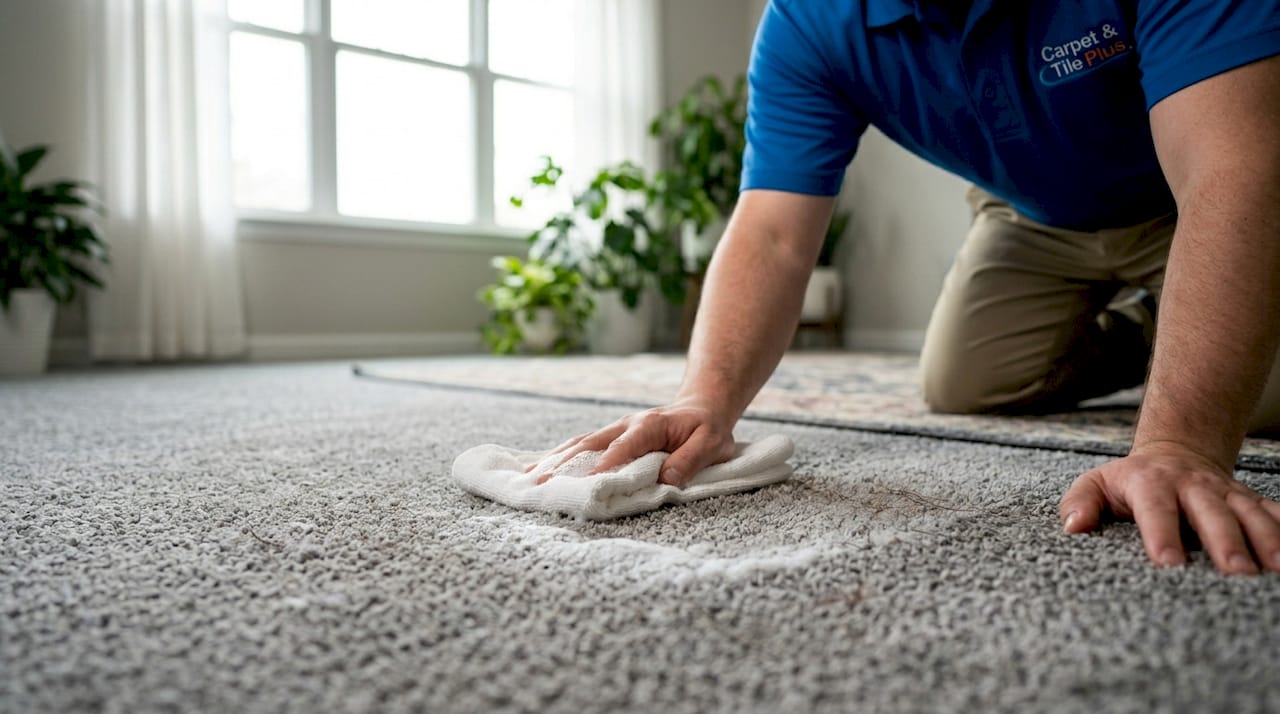
Pro Tip: If you can rub a clean white cloth on a dry carpet and see a filmy or soapy smear, you have residue. That simple check tells you more than a visual inspection ever will.
Effects of residue on your carpet and indoor air
The consequences of carpet cleaning product buildup go beyond appearance, though the appearance effects are significant on their own.
Re-soiling happens faster than you think
Sticky surfactant residue acts like flypaper for dirt particles. Residue attracts dirt, causing carpets to look dirty again within days or weeks of cleaning. If you have ever paid for a professional clean and then watched the carpet look worse than before within two weeks, residue is the most likely explanation.
Fiber stiffness and protector damage
When alkaline builders stay in the fiber after cleaning, they harden as they dry. This is exactly why many homeowners notice stiff, crunchy carpet fibers after cleaning. The carpet pile loses its soft texture and the factory-applied stain protector breaks down far more quickly than it should.
Indoor air quality concerns
Residue also affects the air in your home. Carpet fiber residue attracts fine dust particles and allergens, locking them into the pile where foot traffic kicks them back into the breathing zone. Heat from sunlight or heating systems can cause residue compounds to off-gas mildly, contributing to that stale indoor smell some homes develop after cleaning.
“Clean means removing residue, not just visible dirt. Residue-free cleaning prevents rapid re-soiling and the indoor air quality problems that follow.”
The effects of cleaning solution on carpets compound over time. Multiple cleaning cycles that each leave residue behind mean your carpet is carrying layers of accumulated chemistry. At that point, the carpet is not just dirty faster. It is structurally degraded.
Cleaning methods compared: residue risk by approach
Not all carpet cleaning methods carry the same residue risk. Understanding the difference helps you ask the right questions before hiring anyone.
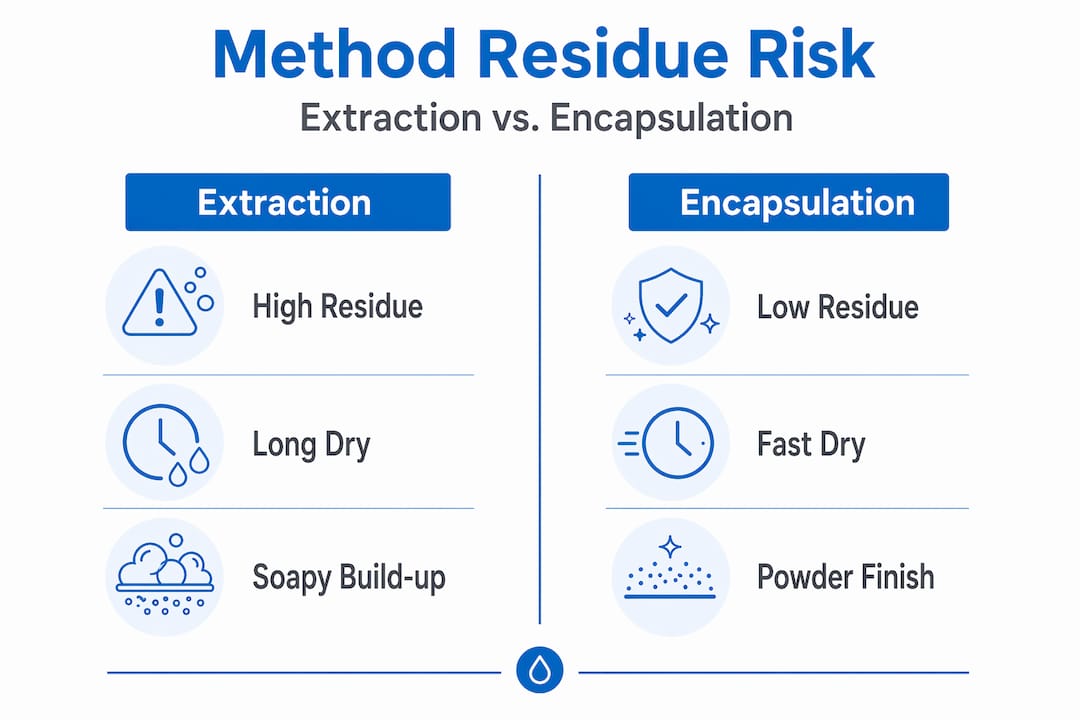
| Method | Residue Risk | Drying Time | Best For |
|---|---|---|---|
| Standard hot water extraction | High (up to 30%) | 4 to 12 hours | Deep soiling, but requires thorough rinsing |
| DIY shampoo machines | Very high | 6 to 24 hours | Light surface cleaning only |
| Encapsulation cleaning | Very low | 30 to 60 minutes | Maintenance cleaning, high-traffic areas |
| Two-step extraction (pre-spray + rinse) | Low | 2 to 4 hours | Best overall residue control |
| Dry compound cleaning | Minimal | None | Low-moisture situations |
Encapsulation cleaning uses crystallizing polymers that bond to soil particles and dry into a powder that gets vacuumed away. The soil molecules are surrounded and locked in the polymer, then lifted out cleanly. This method is ideal for high-traffic areas because it leaves virtually no sticky residue and gets carpets back in use within an hour.
The most effective approach for residential carpet cleaning is the two-step method. A professional pre-spray breaks down soil and oils. Then a clean-water extraction pass flushes the dissolved soil and chemistry out together. Residue-free cleaning requires this consistent combination of pre-spray and aggressive water extraction. Skipping either step means residue stays behind.
Pro Tip: When hiring a carpet cleaner, ask whether they do a dedicated rinse pass with clean water after the cleaning solution. If they cannot give you a clear yes, their method likely leaves residue behind.
For commercial spaces, you can learn more about residue-aware commercial practices that apply these same principles at scale.
How to prevent and remove carpet cleaning residue
Whether you are a homeowner who likes to handle cleaning yourself or someone who has inherited a residue problem from a previous cleaning, these steps work.
- Use less detergent than you think you need. For DIY machines, use half the recommended amount. The directions on cleaning product labels are written to sell more product, not to prevent residue.
- Always do a clean-water rinse pass. After applying any cleaning solution, run the machine again with plain warm water to flush chemistry out of the fibers. This single step eliminates most DIY residue problems.
- Make multiple extraction passes. More slow extraction passes with good suction remove more water and chemistry than one fast pass. Slow and thorough beats fast and light every time.
- Choose organic or low-residue cleaners. Products without heavy phosphate builders leave far less behind. Using organic carpet cleaners reduces the chemical load in your home and makes rinsing more effective.
- Use a diluted white vinegar rinse for existing residue. Mix one cup of white vinegar with two cups of warm water and apply it to stiff or sticky carpet sections, then extract thoroughly. The mild acidity neutralizes alkaline builder residue and softens fibers without damaging them. Acidic rinses instead of alkaline builders in the rinse step result in softer carpets and longer protector life.
- Vacuum before every wet cleaning. Removing dry soil before introducing water prevents it from becoming part of the residue slurry that re-deposits in the fibers.
DIY spot cleaning can leave soap residue causing carpets to look dirty faster and affect air quality, which is why rinsing is non-negotiable. Also think about cleaning frequency. Cleaning too often with a residue-leaving method causes buildup faster than cleaning less often with a good method. You can check guidance on how often to clean carpets to calibrate your schedule.
Pro Tip: Do not scrub carpet stains with a cloth. Scrubbing pushes the stain deeper and spreads it. Blot from the outside in, then rinse and extract. You will remove more with less effort.
When to call a professional
Some residue situations are beyond what a rental machine and a vinegar rinse can fix. Here is when to bring in a professional:
- Your carpet stays sticky or crunchy after multiple DIY cleaning attempts
- Carpets re-soil within two weeks of cleaning, no matter what product you use
- You notice allergy symptoms or musty odors that started after a cleaning
- The carpet pile feels matted or stiff in heavily trafficked areas
- You are preparing a rental property or selling a home and need guaranteed results
When you talk to a professional cleaner, ask these specific questions: Do they use a dedicated rinse pass after the cleaning solution? Do they use low-pH or neutral chemistry? Are their products IICRC-approved? What is their typical dry time? A one-hour dry time, the standard Carpetandtileplus delivers, is a strong indicator that the extraction process is thorough enough to remove both water and residue efficiently.
Commercial-grade truck-mounted extraction equipment operates at suction levels that rental machines cannot match. That power difference is what makes professional extraction genuinely residue-free rather than just visibly clean. Homeowners can find answers to common residue and process questions in the professional cleaning FAQ before booking.
My take on why residue problems persist
I have seen thousands of carpets over two decades in this business, and the residue problem almost always traces back to the same root cause: people measure cleaning by what they can see, not by what is actually happening at the fiber level.
The carpet looks lighter after cleaning. The stain is gone. The homeowner is satisfied. Then two weeks later the carpet looks worse than before the cleaning, and nobody can explain why. Residue is invisible while wet. By the time you feel it, crunchy underfoot or sticky after a spill, it has already started attracting every dust particle and allergen in the room.
The other thing I see constantly is over-saturation. More cleaning solution applied with more scrubbing passes feels like doing a thorough job. In practice, it means more chemistry goes in than can possibly come back out. The extraction step is where clean actually happens, not the application step. Most homeowners spend twice as long applying solution as they do extracting it. That ratio should be reversed.
My honest advice: if you are doing DIY carpet cleaning, cut your detergent in half and double your extraction passes. If you are hiring someone, ask about their rinse pass before you book. Those two things will change your results more than any product upgrade ever will.
— Jim
Get genuinely clean carpets with Carpetandtileplus
If residue has been undermining your carpet cleaning results, Carpetandtileplus can fix that for good. As a family-owned, IICRC-certified cleaning company serving the Northwest Suburbs of Chicago, including Elgin, Bartlett, Streamwood, Arlington Heights, and Palatine, we use organic, low-residue cleaning products and commercial-grade extraction equipment that removes both soil and chemistry from your carpet fibers.

Our standard one-hour dry time is not a marketing claim. It reflects the thoroughness of our extraction process. Dry carpets mean less residue, less risk of mold, and less disruption to your day. We offer residential carpet cleaning services built around genuine residue-free results, and commercial carpet cleaning for businesses that need high-traffic areas cleaned without sticky buildup. With hundreds of five-star reviews and over 20 years of experience, we know what clean actually means.
FAQ
What is carpet cleaning solution residue made of?
Carpet cleaning solution residue is composed of leftover surfactants, detergents, and inorganic builder salts that were not fully extracted from carpet fibers during the cleaning process. These compounds dry in place, creating sticky or stiff deposits that attract dirt and degrade fiber quality over time.
Why do carpets get dirty again so fast after cleaning?
Sticky surfactant and detergent residue left in carpet fibers acts as a dirt magnet, attracting new soil particles within days of cleaning. Rapid re-soiling after cleaning is almost always a residue problem, not a sign that the carpet is worn out.
How can I remove existing carpet cleaning residue at home?
Mix one cup of white vinegar with two cups of warm water, apply it to the affected area, and extract thoroughly with a wet vacuum or carpet machine on the rinse setting. The vinegar neutralizes alkaline builder deposits, and thorough extraction pulls the dissolved residue out of the fibers.
Is carpet cleaning safe for indoor air quality?
Carpet cleaning is safe when residue is fully removed. The concern is when chemistry stays behind in the fibers, where it attracts allergens and can contribute to musty odors or off-gassing. Using organic or low-residue cleaning products and doing a thorough clean-water extraction pass after cleaning keeps indoor air quality protected.
What carpet cleaning method leaves the least residue?
Encapsulation cleaning and two-step hot water extraction with a dedicated clean-water rinse pass leave the least residue. Encapsulation polymers bond to soil and are vacuumed away cleanly within 30 to 60 minutes, making them one of the most residue-free options available.