Most people assume anything labeled “organic” or “natural” on a bottle of carpet cleaner means the same thing. It does not. Understanding what organic carpet cleaning products are goes well beyond reading a marketing claim on the front of a label. For homeowners trying to protect kids and pets, and for commercial property managers maintaining healthy indoor spaces, the difference between a product that actually delivers and one that just sounds good is worth knowing. This guide breaks down the ingredients, certifications, and real-world performance factors that separate genuine organic cleaners from the rest.
Table of Contents
- Key takeaways
- What organic carpet cleaning products are
- How to verify quality beyond the label
- How organic cleaners work on stains and odors
- Home remedies versus certified organic products
- Selecting and applying organic cleaners correctly
- My take after 20 years of cleaning carpets
- Clean the right way with Carpetandtileplus
- FAQ
Key takeaways
| Point | Details |
|---|---|
| “Organic” is not a regulated term | Look for independent certifications like CRI Seal of Approval or EPA Design for the Environment, not just label claims. |
| Ingredients define performance | True organic cleaners use plant-based or mineral-derived ingredients and exclude sulfates, phosphates, bleach, and synthetic fragrances. |
| Enzyme cleaners outperform for pet stains | Enzymatic formulas break down uric acid and bacteria biologically rather than masking odors with fragrance. |
| pH and dilution rates protect fibers | Neutral pH and proper dilution prevent fiber damage, residue buildup, and voided carpet warranties. |
| Homemade fixes have real limits | Vinegar and baking soda work for surface spots but fall short as replacements for professional-grade certified cleaners. |
What organic carpet cleaning products are
The term “organic” in carpet cleaning does not follow the same regulatory standards as, say, certified organic food. In the cleaning product world, it broadly refers to formulas built from plant-based or mineral-derived ingredients rather than petroleum-derived synthetic chemicals. Think citrus-based solvents, coconut-derived surfactants, plant enzymes, and mineral salts. These are the building blocks of what most of the best organic carpet cleaners use.
What separates these products from conventional cleaners is what they leave out. A genuine organic carpet cleaner will not contain:
- Sulfates or phosphates that strip fibers and pollute waterways
- Chlorine bleach or optical brighteners linked to skin and respiratory irritation
- Petrochemicals or synthetic solvents derived from crude oil
- Synthetic fragrances or artificial dyes that can trigger allergic reactions
- Formaldehyde or other preservatives classified as potential carcinogens
Products like plant-based carpet shampoo from Puracy take this further by being 4× concentrated, reducing both water use and plastic packaging waste, while maintaining cruelty-free and biodegradable certification.
These cleaners come in several formats. Liquid shampoos are the most common for home machines. Pre-spray concentrates are popular in commercial settings where you need to pre-treat high-traffic zones before extraction. Enzyme-based cleaners are the specialized format for biological stains like pet urine, food spills, and mold.
One distinction worth making: “organic” is not the same as “non-toxic” or “chemical-free.” Water is a chemical. So is citric acid. What matters is whether the specific chemicals used are harmful to people, animals, or the environment at the concentrations present. A product can be 100% plant-based and still cause irritation if formulated carelessly. This is why ingredient exclusions and independent certifications matter far more than the word “organic” printed on the packaging.
How to verify quality beyond the label
Here is where most buyers get tripped up. A bottle can say “green,” “eco-friendly,” or “natural” without any third party ever reviewing the formula. Real verification comes from two main sources: the Carpet and Rug Institute (CRI) Seal of Approval and the EPA Design for the Environment (DfE) program.
The CRI Seal of Approval means a product has been independently tested for cleaning effectiveness, fiber impact, and residue behavior. The EPA DfE designation confirms that every ingredient in the formula meets safety standards for human health and environmental impact. A product like the CRI-certified pre-spray from Magic Wand combines both, using a neutral pH 7 and EPA-approved surfactants.
Beyond certifications, pay attention to these technical factors:
- pH level: Neutral pH (around 7) protects both synthetic and natural carpet fibers. Highly alkaline or acidic cleaners can degrade fiber structure over time.
- Dilution rate: A 64:1 dilution ratio signals a concentrated professional formula that reduces packaging waste and lowers cost per application.
- Biodegradability: Ingredients that break down naturally after use reduce long-term environmental impact from wastewater discharge.
- Residue profile: Low-residue formulas reduce re-soiling after cleaning, which is one of the most common complaints homeowners have after DIY carpet cleaning.
Using products that carry CRI certification can also protect your carpet warranty. Many major carpet manufacturers void warranties when non-approved cleaners are used, regardless of how “natural” those products claim to be.
Pro Tip: Always cross-reference a product’s CRI listing on the CRI website directly rather than trusting a brand’s claim that it is certified. Certifications expire and brands do not always update their labels promptly.
How organic cleaners work on stains and odors
Not all stains respond to the same chemistry, and this is where choosing the right organic cleaner really counts. The two most useful categories in the organic space are enzyme-based cleaners and oxygen-based (percarbonate) cleaners.
Enzyme cleaners contain biological catalysts, typically protease, lipase, or urease enzymes, that physically break down the molecular structure of organic soils. For pet urine, this means attacking uric acid crystals, proteins, and odor-causing bacteria at the source. Enzymatic pet odor removal is specifically recommended for synthetic carpets where thorough saturation of the affected zone is possible. The key difference from conventional cleaners is biological breakdown versus chemical masking. A conventional cleaner may eliminate the smell temporarily by covering it. An enzyme cleaner eliminates the source.
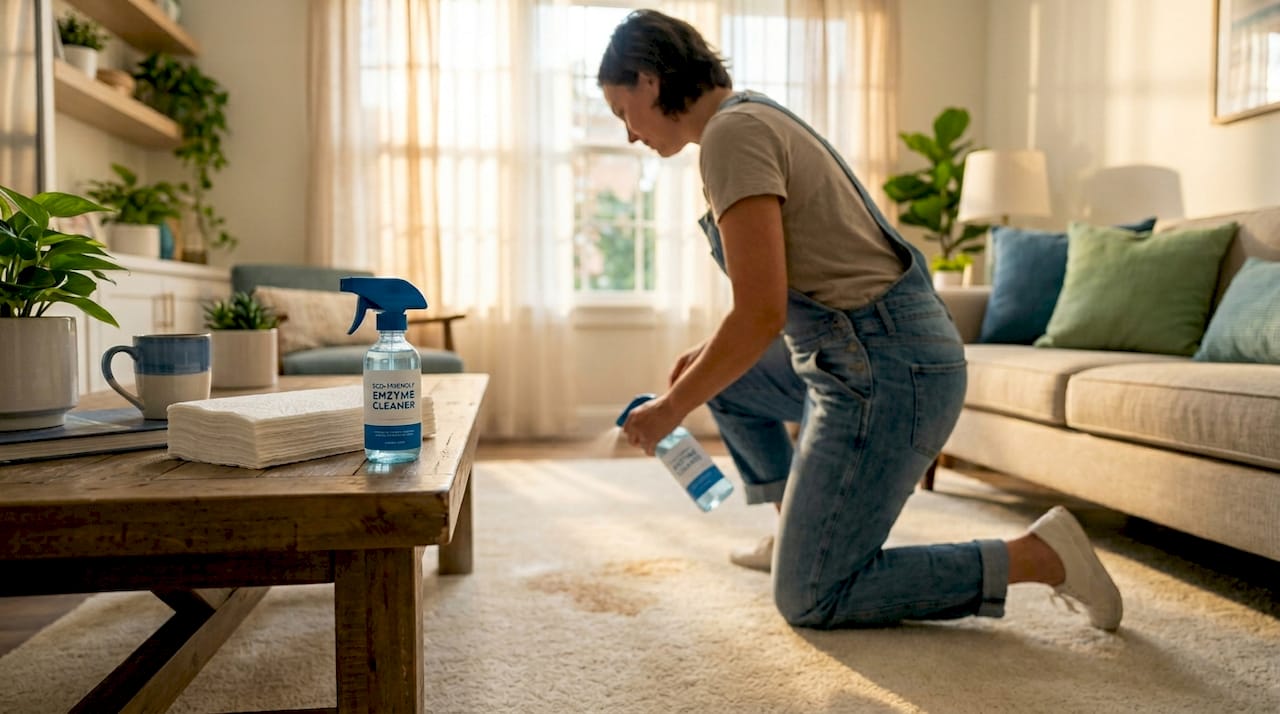
Organic enzyme-based cleaners are genuinely superior for pet odor problems because they work on the biology of the stain, not just the surface appearance.
Oxygen-based cleaners, which typically use sodium percarbonate derived from natural mineral salts, are better suited for food stains, coffee, red wine, and other organic material stains. They release oxygen on contact with water, lifting color and breaking down organic compounds without bleach.
Where organic options fall short: vinegar-based solutions are limited on wool, sisal, or other delicate natural fibers. The acidity can damage fiber structure with repeated use. Baking soda neutralizes surface odors and absorbs moisture effectively, but neither baking soda nor vinegar penetrates deep enough to address sub-surface contamination from pet accidents. For stains that have soaked into the backing or pad, professional extraction is the only reliable fix.
Home remedies versus certified organic products
It is worth separating what works as a quick spot fix from what qualifies as a real cleaning system. The most popular natural carpet cleaning options homeowners reach for include:
- White vinegar diluted in water for surface deodorizing and mild stain treatment
- Baking soda sprinkled and vacuumed for moisture absorption and odor control
- Dish soap mixed with warm water for greasy spots or food residue
- Dry steam cleaning using heat alone to sanitize without any chemical agents
Each of these has a legitimate place in routine maintenance. Dry steam cleaning in particular is worth highlighting: it kills bacteria and dust mites through heat, leaves no chemical residue, and dries faster than wet extraction. For people with severe chemical sensitivities, it is the most conservative approach available.
The gap between home remedies and commercial certified organic cleaners becomes obvious when you compare them side by side.
| Factor | Home remedies | Certified organic commercial cleaners |
|---|---|---|
| Cleaning depth | Surface level only | Deep fiber penetration with extraction |
| Pet stain effectiveness | Partial odor reduction | Full biological breakdown of uric acid |
| Fiber safety | Risk on wool and delicates | pH-controlled for fiber type compatibility |
| Residue risk | Dish soap leaves sticky film | Formulated for low-residue rinsing |
| Certifications | None | CRI, EPA DfE verified |
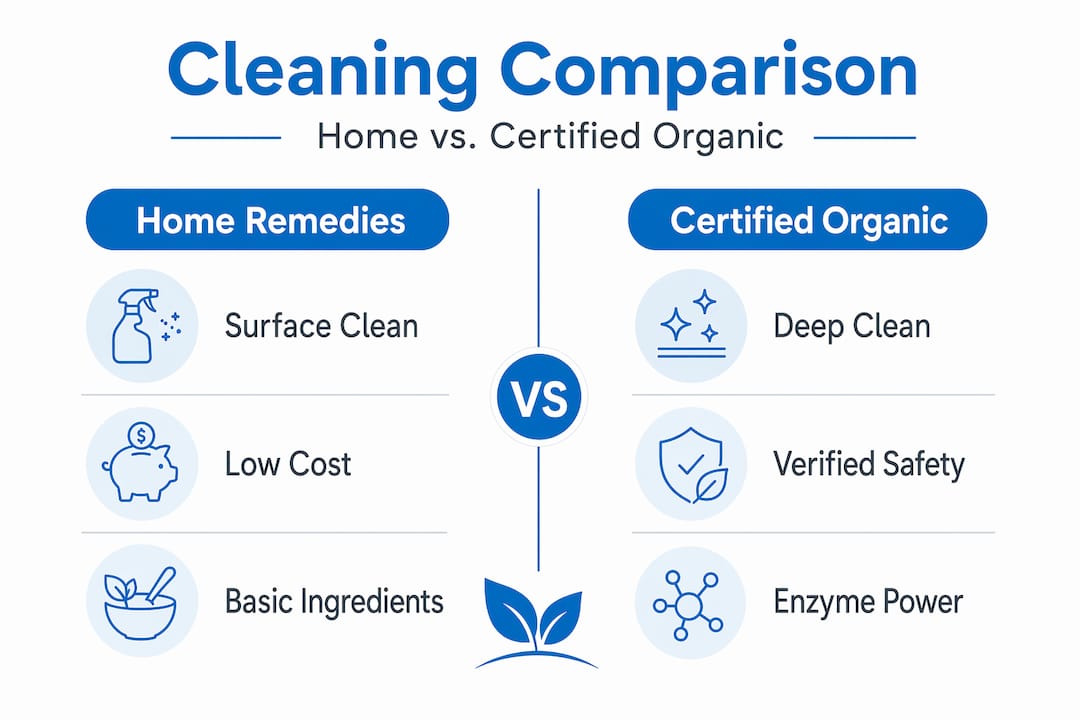
The honest answer is that home remedies handle everyday maintenance well, but for deep cleaning, heavy soiling, or persistent odors, certified organic commercial products and professional services deliver results that vinegar simply cannot match.
Selecting and applying organic cleaners correctly
Knowing what product to buy is only half the equation. How you apply it determines whether you get the results on the label or create a new problem. These steps apply whether you are a homeowner using a rental machine or a property manager overseeing a cleaning crew.
- Test in a hidden area first. Even organic cleaners can affect dye stability or fiber texture on certain carpet types. A small corner test costs nothing.
- Match the product to the stain type. Use enzymatic cleaners for biological stains. Use oxygen-based cleaners for food and beverage stains. Do not apply a single product to every problem.
- Follow dilution instructions exactly. Over-concentrating does not clean better. Neutral pH and precise dilution protect fibers and prevent the sticky residue that accelerates re-soiling.
- Extract thoroughly. Surfactant-heavy products that are not fully rinsed leave a residue that attracts dirt faster than before you cleaned. Multiple extraction passes with clean water are worth the extra time.
- Dry completely before foot traffic. Residual moisture trapped in carpet backing encourages mold growth. Aim for a one-hour dry time or use fans to speed the process.
For commercial settings, frequency matters as much as product choice. High-traffic corridors in office buildings or retail spaces need preventive treatment every 3 to 6 months to stop ground-in soil from bonding permanently to fibers. Residential carpets in homes with children or pets benefit from professional eco-friendly cleaning at least once or twice per year.
Pro Tip: For pet-heavy households, apply an enzyme pre-treatment to accident zones 15 minutes before your main cleaning pass. This gives the biology time to work before extraction pulls everything out.
My take after 20 years of cleaning carpets
I have cleaned carpets in thousands of homes and commercial properties across the Northwest Suburbs of Chicago, and the single most common frustration I hear is: “We cleaned it ourselves and now it looks dirtier than before.” That is not a mystery. Chemical residue drives re-soiling, and it does not matter whether that residue came from a conventional cleaner or an organic one. If it is not fully extracted, it acts like flypaper for dust and soil.
What I have learned from working with both homeowners in Barrington and facility managers in Arlington Heights is that the “organic” label is a starting point, not a finish line. The best organic carpet cleaners I have seen perform well are the ones where the chemistry, dilution, extraction, and dry time are all treated as a system. Pull one piece out and the results suffer.
My honest advice: stop evaluating products by their marketing and start evaluating them by their certifications, their pH, and their dilution rate. Ask the brand whether it carries CRI approval. Ask your cleaning company which specific products they use and why. A company that cannot answer that question clearly is not one I would trust with my floor.
Clean the right way with Carpetandtileplus
Carpetandtileplus uses IICRC-certified technicians and certified organic, enzyme-based cleaning products to service homes and businesses across Elgin, Bartlett, Streamwood, Palatine, and the broader Northwest Suburbs of Chicago. Whether you need residential carpet cleaning for a family home with pets or commercial carpet care for a high-traffic office, every service is designed around low-residue extraction and a one-hour dry time that keeps your space usable the same day. For persistent pet stains and odors, the pet odor removal service applies professional enzyme chemistry that goes where home remedies cannot reach. With over 20 years of experience and hundreds of five-star reviews, Carpetandtileplus brings the kind of results that stand up to scrutiny.
FAQ
What makes a carpet cleaner truly organic?
A genuinely organic carpet cleaner uses plant-based or mineral-derived ingredients and excludes synthetic chemicals like sulfates, phosphates, bleach, and petrochemicals. Independent certifications from the CRI or EPA Design for the Environment confirm these claims beyond the label.
Are organic cleaning products safe for kids and pets?
Certified organic carpet cleaners that carry EPA DfE or CRI Seal of Approval designations are formulated to be safe for households with children and pets. Always allow carpets to dry completely before allowing foot traffic or letting pets back on the surface.
How do enzyme cleaners differ from regular carpet shampoos?
Enzyme cleaners use biological catalysts to break down uric acid, proteins, and bacteria at the molecular level, which is why they outperform regular shampoos on pet stains and odors. Regular shampoos, even organic ones, clean the surface but cannot neutralize the biological source of the odor.
Can I use vinegar and baking soda instead of organic carpet cleaners?
Vinegar and baking soda work well for surface spots and light odor control, but they are not effective for deep stains, pet accidents that have soaked into the carpet backing, or high-traffic cleaning. They also carry risks on wool and delicate natural fibers due to acidity.
How often should carpets be professionally cleaned with organic products?
Most residential carpets benefit from professional organic cleaning once or twice per year, while commercial spaces with heavy foot traffic typically need service every three to six months to prevent ground-in soiling and maintain healthy indoor air quality.