
Steam pressure tile cleaning is the process of using high-temperature pressurized steam to loosen, lift, and sanitize dirt embedded in tile and grout surfaces. Unlike mopping or scrubbing, this method forces superheated vapor into the porous structure of grout, breaking the bond between grime and the surface at a microscopic level. The result is cleaner tile, healthier grout, and a surface that stays cleaner longer. For homeowners and business operators managing tiled floors, kitchens, or bathrooms, understanding what is steam pressure tile cleaning is the first step toward smarter, more effective maintenance.
What is steam pressure tile cleaning and how does it work?
Steam pressure tile cleaning, known in the industry as steam extraction cleaning, works by generating vapor at temperatures between 200°F and 300°F and delivering it at controlled pressure levels of 40–65 PSI for consumer units. That combination of heat and pressure does something mopping cannot: it physically penetrates grout pores and liquefies the grime trapped inside. The loosened soil is then vacuumed or wiped away before it can resettle.
The cleaning mechanism relies on two forces working together. Heat breaks the adhesive bond between dirt particles and the grout surface. Pressure drives the steam deep enough to reach embedded soil that sits below the surface layer.
Here is what happens during a proper steam cleaning session:
- Pre-sweep or vacuum: Loose debris must be removed before steaming. Steaming over dry grit pushes particles deeper into grout pores.
- Steam application: The wand or nozzle delivers vapor directly to the tile and grout lines, softening buildup.
- Agitation: A nylon brush works the loosened grime free without scratching tile glaze.
- Extraction or wiping: Vacuuming or immediate wiping removes the suspended dirt. Skipping this step causes “dry back,” where dirt redeposits as the moisture evaporates.
- Post-clean inspection: Check grout lines for remaining discoloration before the surface dries.
Professional systems operate at a different level entirely. Professional units reach 500–1,200 PSI water pressure combined with 200°F+ steam, while consumer steam mops produce low PSI and leave floors noticeably wetter. That gap in power explains why a professional deep clean restores grout that years of home mopping never touched.
Pro Tip: Run the steam wand along grout lines in slow, overlapping passes. Moving too fast leaves grime behind; moving too slow risks over-wetting the surface.
What are the benefits of steam pressure cleaning for tile?
Steam pressure cleaning outperforms traditional tile cleaning methods on every measure that matters: sanitation, labor, chemical use, and long-term surface condition.
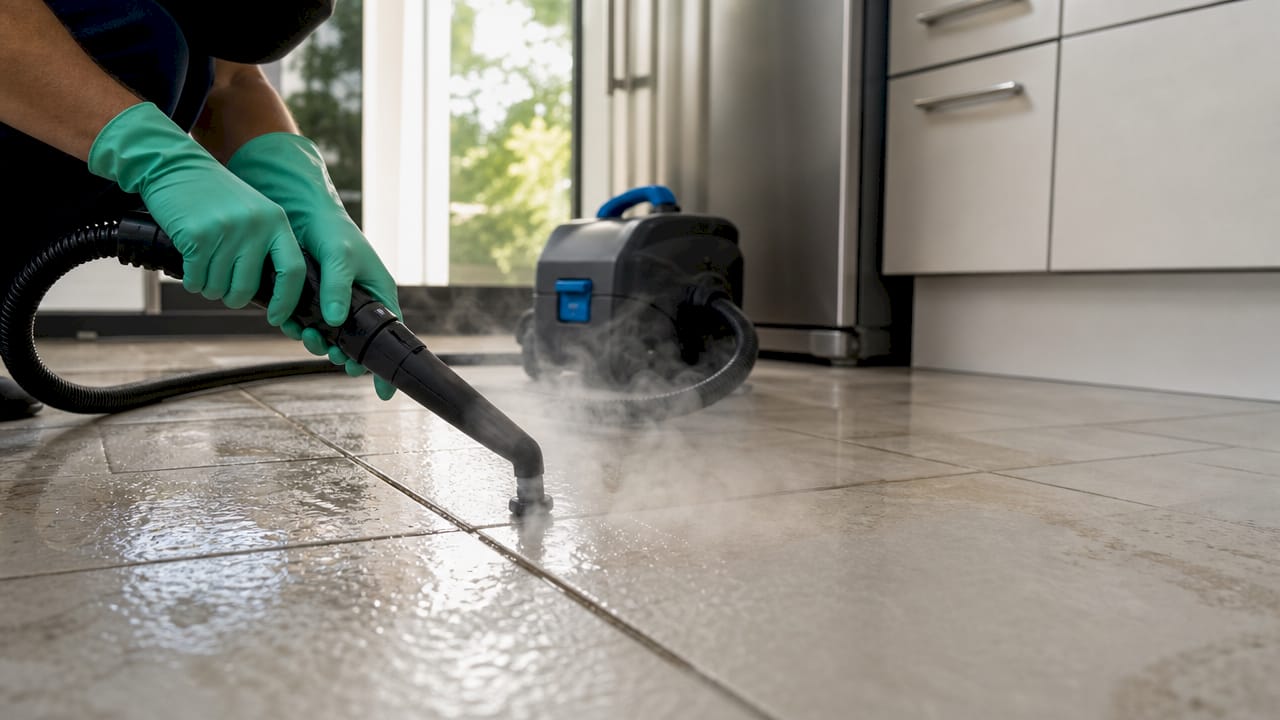
The sanitation advantage is the most dramatic. Steam kills up to 99.9% of bacteria, mold spores, and dust mites on contact. That matters most in kitchens, bathrooms, and commercial food-service areas where pathogens accumulate in grout lines daily.
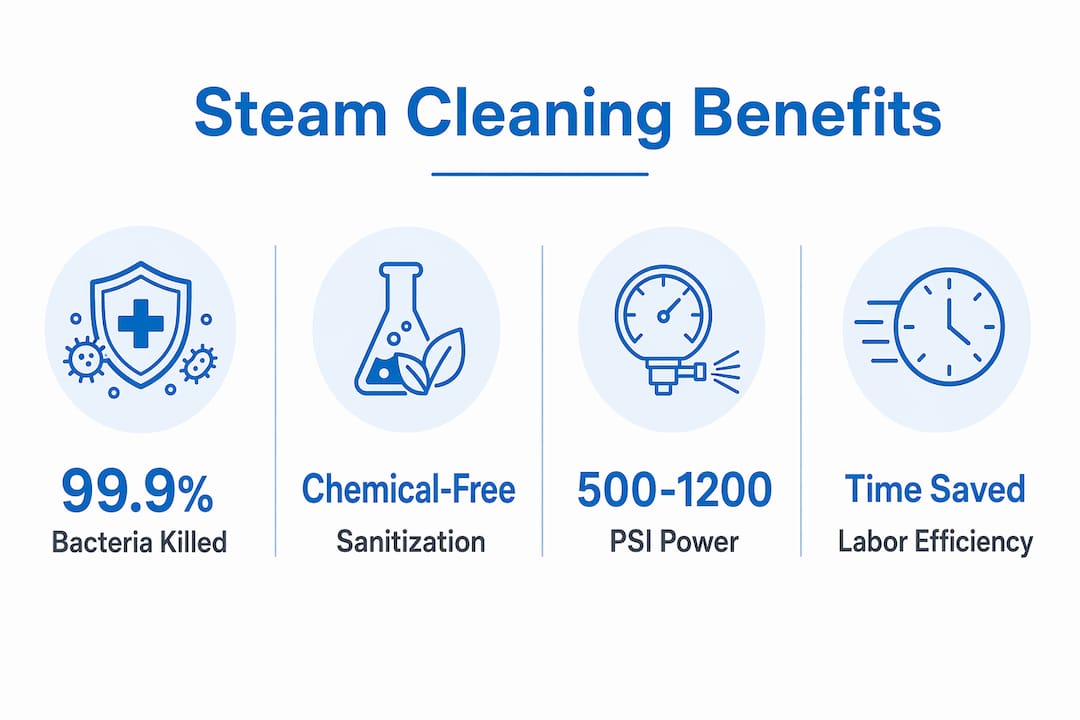
Traditional mopping actually worsens grout over time. Mopping pushes dirty water into porous grout rather than lifting grime out. Steam extraction reverses that cycle by pulling contaminants up and out. Grout acts like a sponge, and every mop pass deposits more suspended soil into those pores.
The benefits extend well beyond sanitation:
- Reduced chemical use: Steam cleans effectively with water alone, making it safer for homes with children, pets, or chemical sensitivities.
- Less physical labor: Steam cleaning cuts labor by roughly half compared to manual scrubbing, which matters for large commercial floors.
- Faster drying: Proper extraction leaves floors nearly dry, reducing slip hazards and downtime in commercial settings.
- Longer intervals between deep cleans: Sealed, steam-cleaned grout resists re-soiling, extending the time before the next professional service is needed.
- Grout color restoration: Professional deep cleaning resolves grout discoloration that homeowners assume is permanent in roughly 60% of cases.
For business operators managing restaurants, retail spaces, or medical facilities, the combination of chemical-free sanitation and reduced labor cost makes steam extraction the most practical tile cleaning method available.
What precautions should you take with steam tile cleaning?
Steam is powerful, and that power creates real risk when applied incorrectly. Knowing which tiles and grout types tolerate steam, and which do not, prevents expensive damage.
Tile and grout compatibility
Not all tile surfaces handle steam equally. Glazed ceramic and porcelain tile tolerate steam well. Natural stone tiles, including marble, travertine, and limestone, are vulnerable. Steam can damage natural stone if pressure or temperature settings are too high, causing surface etching or micro-fractures. Always test a small, hidden area first before treating an entire natural stone floor.
Unsealed grout presents a separate problem. Test grout with a water drop before steaming: if the water absorbs immediately, the grout is unsealed and highly porous. Steaming unsealed grout without prior sealing can drive moisture deep into the substrate, weakening the bond between grout and tile over time.
Common mistakes to avoid
- Steaming over loose debris: Always sweep or vacuum first. Steam does not pick up dry particles; it only moves them.
- Using maximum pressure on delicate tile: Start at medium settings and increase only if needed. Excessive pressure chips glaze and erodes grout joints.
- Skipping extraction: Leaving loosened grime on the surface causes dry back. The dirt redeposits in the same pores you just cleaned.
- Using metal brushes: Metal bristles scratch tile glaze and widen grout joints. Use nylon brushes only.
- Steaming cold tile: Rapid temperature change stresses tile, especially natural stone. Allow cold floors to reach room temperature before applying steam.
When to call a professional
Older tile installations, cracked grout, or any surface with unknown sealant history all warrant a professional assessment before steam cleaning. Professional evaluation of delicate surfaces includes testing small areas, adjusting steam parameters, and recommending the right sealant to prevent damage. Carpetandtileplus provides exactly this kind of pre-treatment assessment for both residential and commercial clients across the Northwest Suburbs of Chicago.
Pro Tip: Seal grout within 48 hours of steam cleaning while the pores are fully open and clean. Sealing after cleaning fills those pores so future dirt sits on top rather than soaking in.
How do you build steam cleaning into a regular maintenance routine?
A consistent maintenance schedule protects your tile investment and keeps grout looking clean between professional services. The right frequency depends on traffic and use.
- Assess your traffic level. Residential bathrooms and laundry rooms need deep steam cleaning once or twice per year. Kitchen floors and entryways, which see daily foot traffic and grease, benefit from quarterly professional cleaning. Commercial kitchens, retail floors, and medical facilities typically require monthly or bimonthly professional service.
- Sweep or dry-mop daily. Removing loose grit before it gets ground into grout lines is the single most effective daily habit. This step costs nothing and extends the life of every deep clean.
- Spot-clean spills immediately. Grout absorbs liquids fast. Blotting spills before they dry prevents staining that requires professional treatment to reverse.
- Schedule professional steam extraction annually at minimum. Professional deep cleaning costs $0.75–$2.50 per square foot and typically maintains results for 12–18 months with proper care. Combining cleaning and sealing in one appointment saves 15–20% compared to scheduling them separately.
- Seal grout after every professional clean. Sealed grout prevents dirt absorption and dramatically extends the interval before the next deep clean is needed.
- Use pH-neutral cleaners for routine mopping. Acidic or alkaline cleaners degrade grout sealant over time, shortening its protective life.
For home use between professional visits, a quality consumer steam cleaner handles routine maintenance on sealed grout. Consumer units work well for light buildup on ceramic and porcelain. For embedded grime, discolored grout, or natural stone, professional multi-step extraction delivers results that consumer equipment cannot match. You can read more about when to hire professionals versus handling maintenance yourself to make that call with confidence.
Maintaining exterior surfaces follows the same logic. Just as proper exterior cleaning methods prevent long-term surface damage on siding, using the right steam settings and technique on tile prevents costly repairs down the line.
| Surface type | Recommended frequency | Professional or DIY |
|---|---|---|
| Residential bathroom tile | 1–2 times per year | Professional |
| Residential kitchen floor | 3–4 times per year | Professional |
| Commercial retail floor | Every 1–2 months | Professional |
| Commercial kitchen tile | Monthly | Professional |
| Sealed grout maintenance | Weekly | DIY steam mop |
Key Takeaways
Steam pressure tile cleaning is the most effective method for sanitizing grout and tile because it combines heat, pressure, and extraction to remove what mopping leaves behind.
| Point | Details |
|---|---|
| Heat and pressure work together | Steam at 200–300°F penetrates grout pores and breaks the bond between dirt and the surface. |
| Extraction prevents dry back | Vacuuming or wiping immediately after steaming stops loosened grime from redepositing. |
| Seal grout after every clean | Sealing fills open pores so future dirt cannot soak in, extending results for months. |
| Professional systems outperform consumer units | Pro equipment reaches 500–1,200 PSI versus low-PSI consumer mops, delivering far deeper extraction. |
| Natural stone needs special care | Test a hidden area first and use lower settings to avoid etching or micro-fractures on stone tile. |
What I’ve learned after years of watching homeowners get this wrong
Most homeowners assume their tile is clean because the surface looks clean. Grout does not work that way. It is porous, and every mop pass deposits a thin layer of suspended soil into those pores. After a few years, that buildup becomes the gray or brown color people assume is just “old grout.” In most cases, it is not. It is dirt.
The second misconception I see constantly is that a consumer steam mop is equivalent to professional steam extraction. It is not even close. A consumer unit produces low-pressure steam that softens surface grime. A professional extraction system pulls that grime out of the pore entirely. The difference shows up in the wastewater. Professional extraction pulls out dark, visibly contaminated water. A consumer mop leaves most of that material behind.
The third mistake is skipping the seal. Homeowners invest in a professional clean, the grout looks great, and then six weeks later it starts darkening again. That happens because unsealed grout immediately begins absorbing dirt from routine foot traffic. Sealing is not optional maintenance. It is the step that makes the clean last.
My honest recommendation: schedule professional steam extraction at least once a year, seal immediately after, and use a consumer steam mop for weekly maintenance in between. That combination keeps tile looking professionally cleaned year-round without constant deep-clean appointments.
— Jim
Professional tile cleaning from Carpetandtileplus

Carpetandtileplus serves homeowners and business operators across Elgin, Bartlett, Streamwood, Arlington Heights, Palatine, Barrington, and Hanover Park with IICRC-certified tile and grout cleaning using organic, eco-friendly products. Every service includes pre-treatment, professional steam extraction, and a one-hour dry time so your space is back in use the same day. Whether you need residential tile cleaning for your home or commercial tile services for your business, Carpetandtileplus delivers results backed by hundreds of five-star reviews and over 20 years of experience. Request a quote today and see what clean grout actually looks like.
FAQ
What is steam pressure tile cleaning?
Steam pressure tile cleaning is a method that uses high-temperature steam at controlled pressure to penetrate grout pores, loosen embedded dirt, and sanitize tile surfaces. The loosened grime is then extracted or wiped away to prevent redepositing.
Is steam pressure cleaning effective on grout?
Steam pressure cleaning is highly effective on grout. Professional systems kill up to 99.9% of bacteria and mold spores and resolve grout discoloration in roughly 60% of cases where homeowners assumed the staining was permanent.
Can steam cleaning damage tile?
Steam cleaning can damage natural stone tiles like marble or travertine if pressure or temperature settings are too high. Glazed ceramic and porcelain tile tolerate steam well. Always test a small hidden area before treating a full natural stone floor.
How often should you steam clean tile floors?
Residential tile floors benefit from professional steam cleaning one to four times per year depending on traffic. Commercial floors in high-use areas like kitchens or retail spaces typically need professional service monthly or every two months.
Do you need to seal grout after steam cleaning?
Sealing grout after steam cleaning is necessary to protect the results. Sealing fills the open pores so future dirt sits on top of the surface rather than soaking in, which extends the time between deep cleans significantly.