
Most homeowners assume a brand-new carpet is the cleanest surface in the room. It looks pristine, smells fresh, and hasn’t had a single muddy boot touch it yet. But that assumption is one of the most common and costly mistakes we see after decades of serving families across Elgin, Bartlett, Streamwood, and the surrounding Northwest suburbs of Chicago. What’s hiding in that fiber can quietly shorten your carpet’s life before it even gets a chance to shine.
Table of Contents
- Why new carpets aren’t as clean as they seem
- How early cleaning boosts your carpet’s longevity and health
- Comparing carpet cleaning methods: What’s safest for new carpets?
- The ideal cleaning schedule for new carpets
- The truth most homeowners miss about caring for new carpet
- Keep your new carpet fresh and healthy
- Frequently asked questions
Key Takeaways
| Point | Details |
|---|---|
| New isn’t perfectly clean | New carpets often hold dust, chemicals, and residues from production and installation. |
| Early cleaning pays off | A professional first clean within months of installation boosts carpet life and health. |
| Eco-friendly is effective | Modern green cleaning methods protect both your carpet and your indoor air quality. |
| Maintenance means savings | Sticking to a cleaning schedule prevents damage and helps your carpets look beautiful longer. |
Why new carpets aren’t as clean as they seem
Walk into a room with freshly installed carpet and everything looks spotless. The color is vivid, the texture is full, and the smell suggests something brand new. But appearances here are genuinely misleading. By the time your carpet arrives at your home, it has already traveled from a manufacturing facility, spent time in a warehouse, been rolled up and transported on a truck, and then unrolled and cut by an installation crew. Each of those steps introduces something unwanted.
Manufacturing residues are the first problem. The chemicals used to bind fibers, add stain resistance, and preserve carpet during shipping don’t fully off-gas before the product arrives at your door. Off-gassing refers to the release of volatile organic compounds (VOCs), which are airborne chemicals that can irritate eyes, lungs, and skin, especially in children and people with respiratory sensitivities.
Beyond VOCs, the physical installation process itself leaves behind fine dust particles, adhesive fumes if glue is used, and tiny carpet fiber fragments. These aren’t just surface particles. They settle deep within the pile where vacuuming can’t fully reach.
Consider what the Carpet and Rug Institute recommends: periodic professional cleaning is advised to maintain carpet performance and appearance, even when the carpet looks fine to the naked eye. That guidance applies from day one, not just after years of visible wear.
There’s also the matter of allergens. New carpet is highly porous, meaning it acts like a sponge for whatever is in the air around it from the moment it’s installed. Dust mites settle fast, and any existing allergens in your home or brought in during installation will embed into the new fiber almost immediately.
Here’s why this matters so much: those particles and chemicals don’t just sit there harmlessly. They begin to work on the fiber structure itself, slowly breaking down the material from within. Cleaning up early removes those threats before they can do real damage.
“Professional cleaning removes residues and contaminants that begin affecting carpet health long before visible wear appears, making early intervention the smartest investment a homeowner can make.”
Understanding the benefits of organic carpet cleaning becomes especially relevant here, because the gentlest solutions for new fibers are also the ones that avoid adding harsh chemicals to those that are already present.
How early cleaning boosts your carpet’s longevity and health
Now that we understand what resides in new carpet, let’s see why the first cleaning matters so much. The goal isn’t just surface tidiness. It’s setting up the carpet for a long, healthy life inside your home.
Here’s what a professional early clean accomplishes:
- Removes manufacturing chemicals and off-gassing residues before they have prolonged contact with the fibers or your family’s airways.
- Clears installation dust and fine particulates that settle below the surface layer where a standard vacuum can’t reach.
- Reduces allergens from the start, which is especially important for homes with young children, elderly residents, or anyone managing asthma or allergies.
- Protects carpet warranty because most major manufacturers require documented professional cleaning on a regular schedule to keep the warranty valid.
- Improves indoor air quality, since carpet fibers hold airborne particles that get released every time someone walks across the floor.
- Establishes a clean baseline, meaning future cleaning sessions are more effective because you’re maintaining a fresh foundation rather than trying to reverse years of buildup.
For rental property managers across Arlington Heights or Palatine, this is especially valuable. A professionally cleaned carpet between tenancies starts fresh for new residents, reduces complaints, and extends the replacement cycle. That’s real money saved.
Pro Tip: Schedule your first professional carpet clean within 3 to 6 months of installation, even if there are no visible stains. This timing catches early buildup before it bonds with fibers and becomes harder to remove.
The connection between carpet cleanliness and indoor air quality is stronger than most people realize. Carpet cleaning frequency studies show that carpets cleaned regularly trap and hold fewer pollutants over time compared to those that go years without treatment. Think of it this way: a regularly cleaned carpet actually works for your air quality. A neglected one works against it.
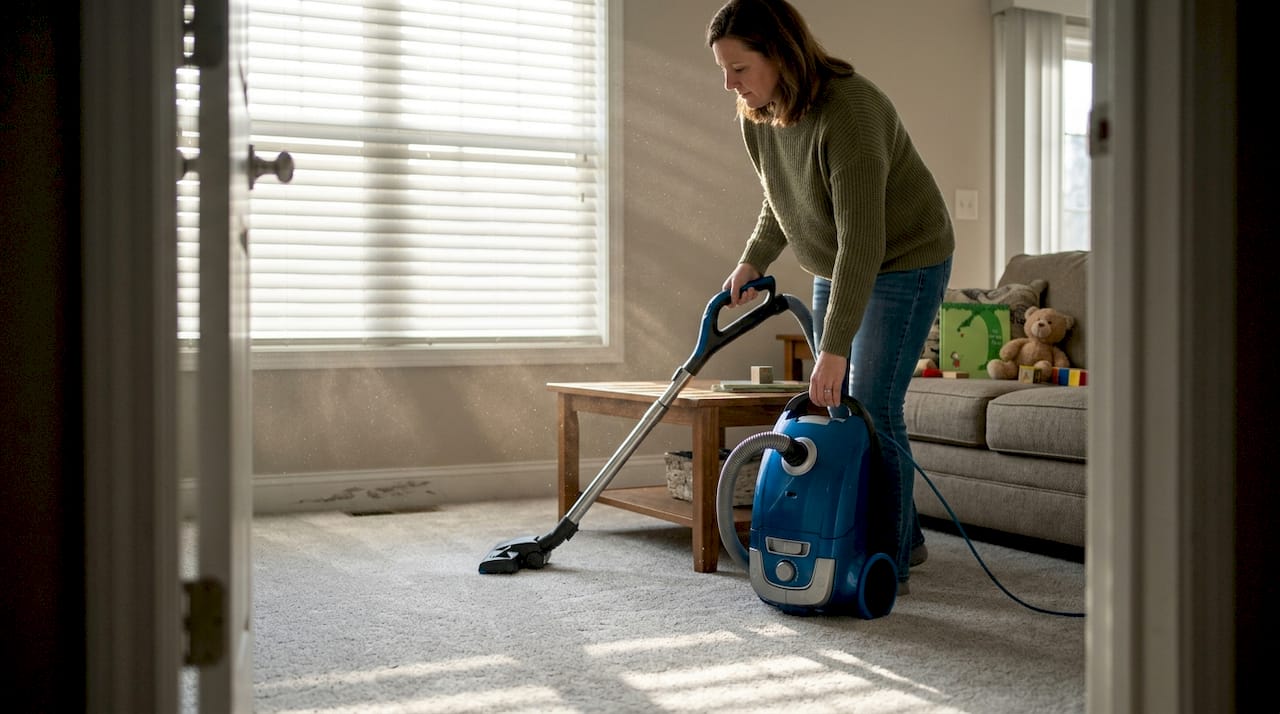
Families with pets or children in communities like Hanover Park or Barrington face additional challenges. Pets track outdoor soil deep into fibers. Kids play low to the ground, putting them in direct contact with whatever is embedded there. Residential carpet cleaning tailored to these household realities makes a genuine difference in daily comfort and health.
Comparing carpet cleaning methods: What’s safest for new carpets?
Understanding that early cleaning is important, let’s compare today’s most popular options for treating new carpet. Not all methods are equal, and some can actually damage fresh fibers if applied too aggressively.
| Method | How it works | Dry time | Best for new carpet? |
|---|---|---|---|
| Hot water extraction (steam cleaning) | Injects hot water and solution, then extracts it along with contaminants | 6 to 24 hours | Yes, when done at lower pressure |
| Low-moisture dry cleaning | Uses minimal water with absorbent compounds | Under 1 hour | Yes, very gentle on new fibers |
| Organic green cleaning | Plant-based solutions, low moisture, non-toxic | Under 1 hour | Strongly recommended |
| Heavy chemical shampooing | High-detergent foam applied and extracted | 4 to 12 hours | Not ideal for new carpet |
| DIY rental steam cleaning | Consumer-grade equipment, inconsistent pressure | 8 to 24+ hours | Not recommended |
The standout option for new carpet is organic, low-moisture cleaning. Here’s why:
- No harsh chemical residue is left behind to interact with manufacturing compounds already in the fiber.
- Shorter dry time means less risk of mold growth within the padding beneath the carpet.
- Non-toxic formulas protect children and pets who spend time on the floor.
- Gentle on new fibers that haven’t yet been conditioned by regular foot traffic.
Heavy shampooing or aggressive steam cleaning can over-saturate new carpet, weaken fiber adhesion, and leave residue that actually attracts more dirt over time. That’s the opposite of what you want for a brand-new installation.
The organic carpet cleaner benefits extend well beyond just being environmentally friendly. They’re genuinely more effective for the delicate needs of new carpet because they work with the fiber rather than against it. And for households in the Northwest suburbs where families prioritize health-conscious choices, the shift away from synthetic chemical cleaners is a natural fit.
Pro Tip: Always ask your cleaning provider what solutions they use and whether they are pH-neutral. Harsh alkaline or acidic solutions can alter fiber color and texture on brand-new carpet, even after a single application.
The Carpet and Rug Institute backs this up by stating that professional cleaning maintenance should be part of an ongoing care plan, and that the method selected matters for both performance and appearance outcomes.
The ideal cleaning schedule for new carpets
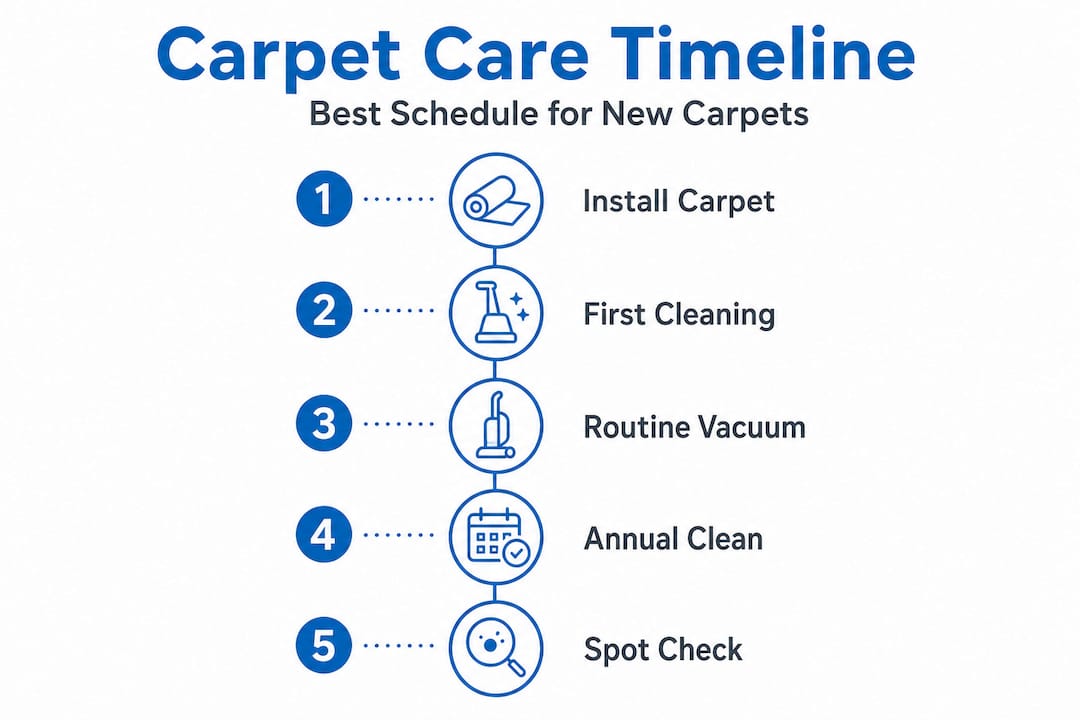
Let’s translate these insights into a practical schedule that you can follow based on your household’s specific situation.
| Home type | First clean timing | Ongoing frequency |
|---|---|---|
| Standard household, no pets | 3 to 6 months after installation | Every 12 to 18 months |
| Household with pets or children | 3 months after installation | Every 6 to 12 months |
| High-traffic rental property | Before new tenant moves in, plus 3 months after | Every 6 months |
| Low-traffic guest room or office | 6 months after installation | Every 18 to 24 months |
| Home with allergy sufferers | Within 1 to 3 months of installation | Every 6 months |
This schedule isn’t arbitrary. The Carpet and Rug Institute confirms that routine professional cleaning preserves the structural integrity of carpet fibers and keeps surface appearance consistent over time.
A few additional factors that should shift your schedule earlier:
- Harsh winters followed by muddy springs are a reality for homeowners in Elgin and Streamwood. Salt, sand, and wet soil track in heavily from November through April.
- Home renovations near the carpeted area. Drywall dust, sawdust, and construction particles are incredibly fine and penetrate deep into carpet very quickly.
- New baby or new pet in the home. Both dramatically increase the organic material that ends up in carpet fibers.
- Smokers in the home because nicotine and tar residues bond to fibers and require more frequent professional attention.
Understanding how often to clean carpets for your specific situation takes the guesswork out of maintenance. And if you have questions about what to expect from a professional visit, a helpful resource is this carpet cleaning FAQ that addresses common concerns from homeowners in our area.
The key mindset shift here is moving from reactive to proactive cleaning. Most people wait until their carpet looks dirty. By that point, the damage is already well underway at the fiber level. Cleaning before visible soiling appears is the move that separates carpets that last 15 years from ones that look worn out in 5.
The truth most homeowners miss about caring for new carpet
Having covered all the essentials, let’s take a closer look at an often-overlooked truth that we’ve seen play out in real homes across the Northwest suburbs over two decades of cleaning.
The assumption that “new” means “clean” isn’t just a minor misconception. It’s a belief that quietly costs homeowners thousands of dollars. When someone spends $3,000 to $7,000 on new carpet installation, the instinct is to protect that investment. Yet the most common thing we see is those same homeowners waiting two or three years before calling a professional cleaner because “it still looks okay.”
What they don’t realize is that carpet deteriorates from the inside out. The fibers aren’t just getting dirty on the surface. Fine abrasive particles, which behave like microscopic sandpaper, are embedded in the pile and grinding against fiber every time a foot steps down. By the time the carpet looks worn, significant structural damage has already occurred.
We also see this pattern in rental properties managed across Barrington and Arlington Heights. Property managers who invest in cleaning at every turnover consistently report that their carpets last through two or three additional lease cycles compared to those who clean only when tenants complain. That’s a straightforward return on a relatively small investment.
The Carpet and Rug Institute is clear that periodic professional maintenance is not optional if you want carpet to perform as intended. This isn’t a sales point. It’s an engineering reality built into how carpet is manufactured and how fibers respond to use.
There’s also a dimension here that goes beyond cost and appearance. Using eco-friendly cleaning products in your home is a statement about the environment you want to create for your family. Organic solutions don’t leave toxic residue for your kids or pets to absorb. They don’t contribute to indoor air pollution. Exploring rug cleaning benefits reveals how this philosophy extends to every soft surface in your home.
The homeowners who get the most from their carpet are the ones who treat it as a long-term asset from day one, not as something to be managed after problems appear.
Keep your new carpet fresh and healthy
Ready to take the next step for your carpets? Here’s how to put these insights into action.
At Carpet and Tile Plus, we’ve spent over 20 years caring for carpets in Elgin, Bartlett, Streamwood, Palatine, and communities across the Northwest suburbs of Chicago. Our IICRC-certified team uses organic, non-toxic solutions that are gentle on new carpet fibers and safe for your whole family, with a one-hour dry time that fits into your real life.

Whether you need residential carpet cleaning services for your family home or commercial carpet cleaning services for a rental property or business space, we bring the same eco-conscious, family-first approach to every job. Our organic carpet cleaning process removes what vacuuming leaves behind, protects your warranty, and keeps your home healthier from the ground up. Call us today and give your new carpet the foundation it deserves.
Frequently asked questions
Why should I clean a brand-new carpet?
Even new carpets carry dust, chemicals, and residues from manufacturing and installation. The Carpet and Rug Institute confirms that professional cleaning should start early to maintain carpet performance and protect your home’s air quality.
How soon after installation should a new carpet be cleaned?
A gentle professional clean within 3 to 6 months of installation is the smart move to tackle hidden residues and protect the long-term quality of your carpet before contaminants bond to the fibers.
Does early cleaning really extend carpet life?
Yes. Professional cleaning removes the fine abrasive particles that wear down fiber structure over time, and the Carpet and Rug Institute supports regular professional maintenance as essential to keeping carpet looking new longer.
Are eco-friendly cleaning methods safe for new carpets?
Eco-friendly methods are non-toxic, gentle on new fibers, and highly effective at removing residues without introducing additional harsh chemicals into a carpet that may already contain manufacturing compounds.