If you work from home, you probably vacuum your office floor when it looks dirty and call it done. That assumption is costing you more than you realize. Understanding why home office carpets need cleaning goes far beyond appearances. Your carpet is quietly accumulating dust mites, mold spores, pet dander, and chemical residues every single day. Because your home office gets constant foot traffic and limited fresh air circulation, those contaminants build up faster than in most rooms. The result is a workspace that looks fine but actively undermines your health and your ability to focus.
Table of Contents
- Key takeaways
- Why home office carpets need cleaning more than you think
- Why vacuuming alone is not enough
- Health and productivity benefits of clean home office carpets
- Practical carpet hygiene tips for your home office
- My perspective on the real cost of ignoring your office carpet
- Get your home office carpet professionally cleaned
- FAQ
Key takeaways
| Point | Details |
|---|---|
| Vacuuming is not enough | Surface cleaning leaves deeply embedded allergens, bacteria, and grit that only professional extraction removes. |
| Air quality suffers silently | Carpets trap and re-release pollutants, making indoor air quality worse than most people expect. |
| Health and productivity are connected | Reducing allergens and odors in your home office leads to fewer symptoms and better mental clarity. |
| Cleaning frequency matters | Home offices benefit from professional cleaning every 6 to 12 months, with regular vacuuming in between. |
| Professional methods protect your carpet | Hot water extraction removes deep contaminants and extends carpet life while preventing mold growth. |
Why home office carpets need cleaning more than you think
Most people treat their home office carpet like an afterthought. You vacuum it once a week, maybe spot clean a coffee spill, and assume you’re covered. The problem is that carpets trap airborne pollutants including dust, pollen, pet dander, and mold spores at a scale most homeowners do not appreciate. A single square yard of carpet can hold several pounds of dirt before it visibly looks soiled.
What makes this especially problematic in a home office is how you use the space. You sit in the same spot for hours, often in close proximity to the floor, and you rarely open windows the way you might in a living room. Indoor air quality is frequently worse than outdoor air, and carpets play a central role in that equation.
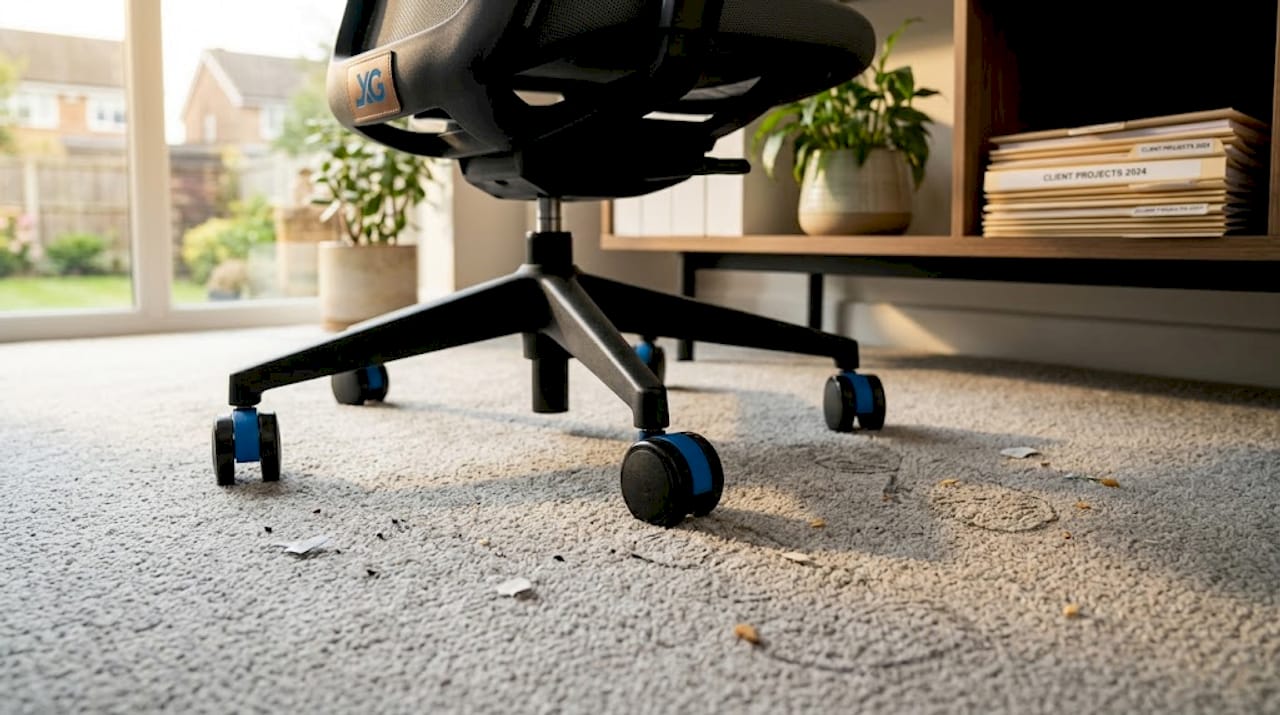
Here is the mechanism that most people miss. Your carpet functions like a passive filter, pulling particles out of the air and holding them in its fibers. That sounds helpful until you walk across the room, roll your chair back, or shift a box. At that moment, contaminants resuspend and get kicked back into the air you are breathing at your desk. The filter becomes a source.
The impact of dirty carpets on home office air quality shows up in several specific ways:
- Dust mite accumulation: Dust mites thrive in carpet fibers, and their waste particles are among the most common triggers for asthma and allergies.
- Mold spore retention: Any moisture from humidity, spills, or tracked-in rain can encourage mold growth deep in the carpet pile where you cannot see it.
- Pet dander buildup: Even homes without pets accumulate dander carried in on clothing or by visitors.
- Chemical residues: Off-gassing from furniture, cleaning products, and building materials settles into carpet fibers over time.
- HVAC contamination cycle: Dirty carpets reduce HVAC efficiency by circulating redistributed dust through your air system, compounding the problem with every pass of the air conditioning or heat.
The importance of carpet cleaning in a home office is not about aesthetics. It is about controlling a contamination cycle that most people never see.
Why vacuuming alone is not enough
This is where a lot of remote workers get misled by their own effort. You vacuum regularly, the carpet looks clean, so you assume the job is done. But visual cleanliness does not guarantee a healthy carpet. Embedded soils and allergens remain invisible and still pose real health risks.
Standard vacuum cleaners pull up surface debris effectively. They do not reach the compacted layers of fine particles, bacteria, and allergens that have worked their way deep into the carpet backing over months of use. In fact, lower-quality vacuums can make things worse by agitating the carpet and increasing the amount of fine particles that become airborne without capturing them.
Here is a better way to think about your cleaning approach:
- Vacuum with a HEPA filter vacuum. HEPA filtration significantly reduces surface dust and captures fine particles that standard vacuums recirculate. It is a meaningful upgrade but still does not reach embedded contaminants.
- Spot clean spills immediately. Liquid that sits in carpet fiber creates a moisture environment where bacteria and mold can develop within 24 to 48 hours.
- Avoid oversaturating during DIY cleaning. Over-wetting causes shrinkage, musty odors, and microbial growth if the carpet does not dry completely and quickly.
- Schedule professional extraction annually. This is what actually addresses the deep layer of contamination that regular vacuuming misses entirely.
Professional carpet cleaners use hot water extraction, which injects heated water and cleaning solution into the carpet pile and immediately extracts it along with loosened contaminants. This method removes bacteria, allergens, and grit that wears down carpet fibers over time, extending the life of your carpet alongside the health benefits. The secret to effective office cleaning is combining consistent daily habits with periodic deep extraction.
Pro Tip: When vacuuming your home office, make at least two passes in perpendicular directions. Carpet fibers trap particles at different angles, and a single-direction pass misses a significant portion of surface debris.
Health and productivity benefits of clean home office carpets
Once you understand the contamination problem, the benefits of solving it become concrete and personal. This is not just about feeling better in a general sense. It is about what changes day to day when the air in your workspace improves.
The home office health benefits of regular carpet cleaning are well established and often underestimated:
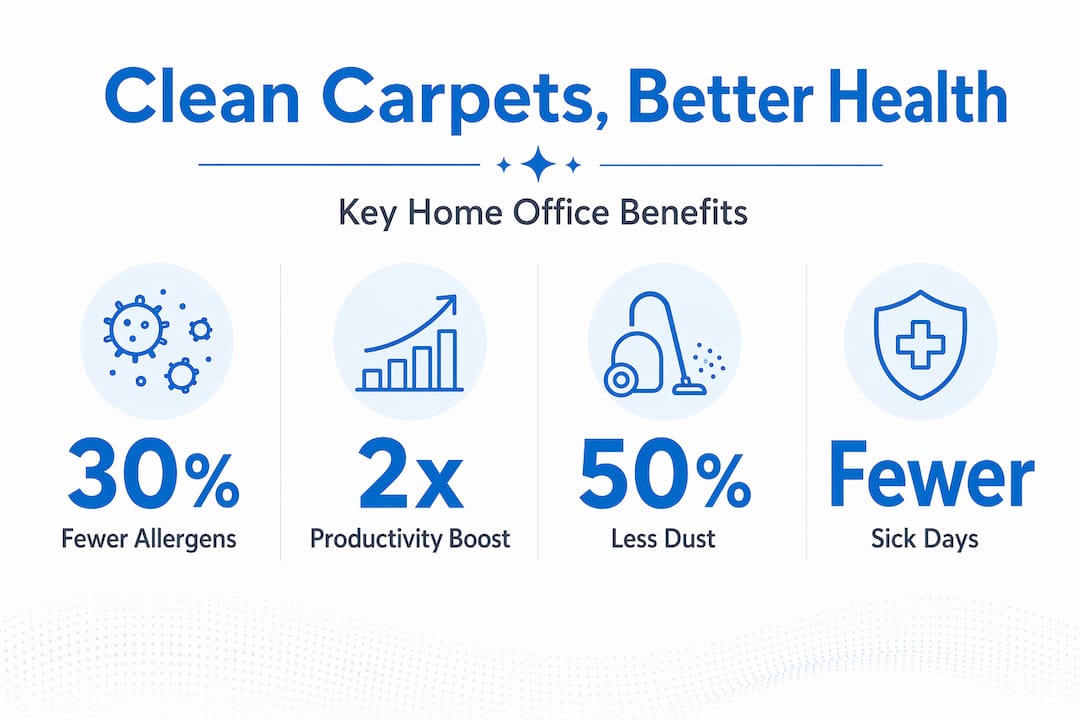
- Fewer allergy and asthma flare-ups. When you reduce dust mites, mold spores, and pollen trapped in your carpet, the respiratory triggers in your immediate workspace drop significantly. People who suffer from seasonal allergies often notice that symptoms persist year-round when their indoor environment is not managed properly.
- Reduced bacterial load. Carpets collect bacteria from shoes, skin cells, and food particles. Professional cleaning reduces that bacterial concentration, which matters especially if you eat lunch at your desk.
- Better odor control. Dirty carpets release odors from mold, bacteria, and embedded organic matter. You may stop noticing a mild smell because you are in the room constantly, but it affects how your brain perceives the space.
- Improved mental clarity. Research on indoor environments consistently links air quality with cognitive performance. A cleaner space with fewer airborne irritants supports sustained attention and reduces the kind of low-grade discomfort that chips away at concentration.
- Less physical distraction. Constant sneezing, eye irritation, or throat clearing pulls your attention away from work in small but cumulative ways. Cleaner carpets reduce those triggers at the source.
For remote workers who spend 40 or more hours a week in the same room, these benefits are not minor. They compound over time. The question of how often to clean home office carpets is directly tied to how much those health improvements last between cleanings.
Practical carpet hygiene tips for your home office
Keeping your home office carpet genuinely clean requires layering a few consistent habits with periodic professional care. Here is a comparison of what different approaches actually deliver:
| Cleaning method | What it removes | What it misses | Frequency |
|---|---|---|---|
| Standard vacuuming | Surface debris, loose dust | Embedded allergens, bacteria, mold | 2-3 times per week |
| HEPA vacuum | Surface debris, fine particles | Deep contaminants, grit, bacteria | 2-3 times per week |
| Spot cleaning | Surface stains | Sub-surface moisture, deep soiling | As needed |
| DIY carpet shampoo | Some surface soiling | Deep allergens, risks over-wetting | Occasionally |
| Professional hot water extraction | Deep allergens, bacteria, grit, odors | Nothing significant | Every 6-12 months |
Beyond the cleaning methods themselves, daily habits reduce the rate at which your carpet gets contaminated in the first place. Place a quality doormat at every entry point to your home office and remove shoes before entering if possible. Shoes track in an astonishing amount of outdoor pollutants, pesticides, and bacteria that have no business living in your carpet fibers. Spot cleaning any spill within a few minutes prevents the moisture from working downward into the backing.
Effective deep cleaning relies on hot water extraction combined with controlled drying. When you hire a professional service, ask about dry time. A reputable company should get your carpet dry within an hour or two, not leave it damp for six hours where mold risk increases.
Home office carpet maintenance for most remote workers means professional cleaning at minimum once a year, and every six months if you have pets, allergies, or heavy daily use of the space. Learning the signs carpets need cleaning before they become visible, such as increased allergy symptoms or a faint musty smell, puts you ahead of the problem rather than reacting to it.
Pro Tip: After any professional cleaning, run a fan in your home office and open a window if weather permits. Good airflow dramatically cuts dry time and prevents the humidity spike that can encourage mold in the hours after cleaning.
My perspective on the real cost of ignoring your office carpet
I have seen hundreds of home offices in the Northwest Suburbs of Chicago, and the pattern is always the same. The carpet looks okay, the homeowner vacuums regularly, and nobody makes the connection between their persistent afternoon headaches or constant sniffling and the floor they have not deep cleaned in three years.
What I have learned from over two decades in this work is that people make cleaning decisions based on appearance, not biology. A carpet that looks clean can still be loaded with the kind of embedded contamination that drives real health symptoms. The shift in thinking that makes the biggest difference is moving from “does it look dirty?” to “when was the last time anything actually extracted the deep layer?”
I have watched clients in Elgin and Barrington get deep cleanings done almost reluctantly, assuming it was a cosmetic upgrade, and then come back six months later talking about how much better they feel at their desks. That is not a coincidence. When you remove the hidden health threats in your carpet from your breathing zone for eight hours a day, the cumulative effect on how you feel and work is significant.
The other thing I tell people is that preventive care is genuinely cheaper than reactive care. Carpets that go too long between professional cleanings accumulate grit that acts like sandpaper on the fibers, wearing them down faster. You end up replacing the carpet years earlier than you should. Regular cleaning is not an expense. It is maintenance that protects an investment.
— Jim
Get your home office carpet professionally cleaned
You now know the problem clearly. The next step is doing something about it before allergy season or the next round of stuffy-room afternoons at your desk.

Carpetandtileplus serves homeowners and remote workers across the Northwest Suburbs of Chicago, including Elgin, Bartlett, Arlington Heights, Palatine, Barrington, and Hanover Park. Their IICRC-certified team uses organic cleaning products and hot water extraction to pull out the deep contaminants that vacuuming never touches, with a one-hour dry time that fits around your workday. Whether you need residential carpet cleaning for your home office, odor removal from years of buildup, or complementary air duct cleaning to tackle the full contamination cycle, Carpetandtileplus has the experience and the reviews to back it up. Schedule your cleaning and get back to a workspace that actually supports your health. Visit carpetandtileplus.com to get started.
FAQ
Why do home office carpets need more frequent cleaning?
Home office carpets accumulate contaminants faster because they receive daily foot traffic in a space with limited ventilation and air circulation. Remote workers spend significantly more time in a single room, increasing exposure to allergens and dust that build up in the carpet fibers.
How often should you clean your home office carpet?
Most home office carpets benefit from professional cleaning every 6 to 12 months, with HEPA vacuuming two to three times per week in between. Pet owners or those with allergies should lean toward the shorter interval for the best results.
Can dirty carpets really affect your productivity?
Yes. Allergens, odors, and airborne irritants released by dirty carpets contribute to symptoms like sneezing, eye irritation, and mental fatigue that pull your focus away from work. Reducing these triggers through regular cleaning supports better concentration over a full workday.
What are the signs that a home office carpet needs cleaning?
Key signs include a noticeable stale or musty odor, increased allergy or asthma symptoms while working, visible matting of carpet fibers, and dull or discolored patches. If more than 12 months have passed since your last professional cleaning, that alone is reason enough to schedule one.
Is vacuuming enough to keep a home office carpet clean?
Vacuuming maintains surface cleanliness but cannot remove deeply embedded allergens, bacteria, or grit. Even HEPA vacuums, while significantly better than standard models, leave behind the contaminants that require hot water extraction to fully address.