
Berber carpet looks great until the day you clean it wrong. Understanding what is the berber carpet cleaning process is one of the most practical things you can do to protect your investment, because the looped fiber construction that makes Berber so durable is exactly what makes standard cleaning techniques a liability. Scrub too hard, run the wrong vacuum attachment over it, or leave moisture in the fibers too long, and you can cause damage that no amount of re-cleaning will fix. This guide walks you through every stage of the process, from daily vacuuming to professional deep cleaning, so you know precisely what to do and what to avoid.
Table of Contents
- Key Takeaways
- What is the Berber carpet cleaning process, really?
- How to vacuum Berber carpet without causing damage
- Cleaning stains from Berber carpet the right way
- Deep cleaning methods for Berber carpets
- Berber carpet maintenance tips that actually extend its life
- My honest take after years of cleaning Berber
- Professional Berber carpet cleaning in the Northwest suburbs
- FAQ
Key Takeaways
| Point | Details |
|---|---|
| Suction-only vacuuming | Always use a vacuum without a beater bar to prevent fraying the looped fibers. |
| Blot, never scrub | Blotting stains with a mild solution protects loops from pulling and discoloration. |
| Deep clean on schedule | Low-traffic homes need professional cleaning every 12 to 18 months; pets and allergies shorten that interval. |
| Dry thoroughly after cleaning | Incomplete drying leads to mold and wickback, so allow 8 to 12 hours with airflow. |
| Trim snags, never pull | Cutting loose loops prevents further unraveling across the entire carpet. |
What is the Berber carpet cleaning process, really?
Berber carpet is not just another carpet style. Its defining feature is a series of tight, continuous loops made from fibers like nylon, olefin, or wool. Those loops create a dense, flat surface that resists foot traffic impressions well, but they also trap dirt and debris in specific ways that cut-pile carpets simply do not.
Here is what makes Berber different from a cleaning standpoint:
- Looped construction holds grit near the surface. The tight weave prevents deep dirt penetration, which sounds like good news. It means prompt spot cleaning works well when done correctly.
- Loops snag under rotating brush rolls. A standard vacuum beater bar grabs individual loops and pulls them. One pass with the wrong tool can create a snag that unravels across several feet of carpet.
- Liquid spreads laterally before sinking. Because the loops are dense, a spill tends to wick sideways before going down, which is why blotting immediately and in the right direction matters.
- Fiber type affects everything. Olefin Berber resists staining but holds oily residues. Nylon is tougher and more cleanable. Wool requires the most delicate handling and no harsh chemicals.
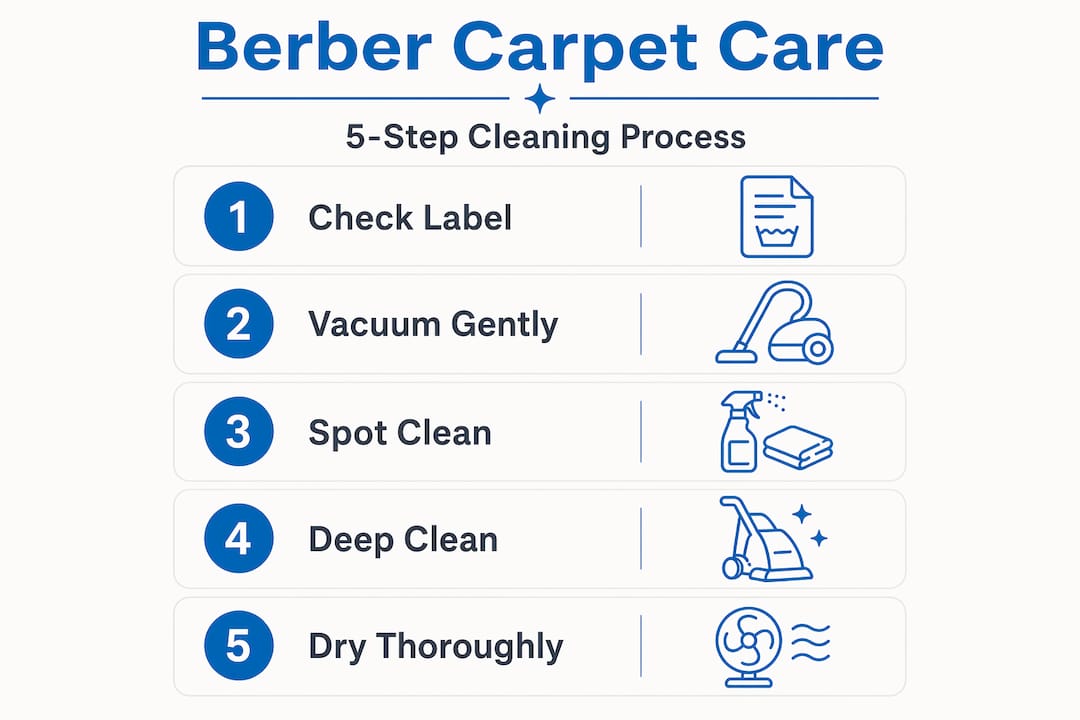
Pro Tip: Before you attempt any cleaning, flip up a corner of the carpet or check the manufacturer label to confirm the fiber type. This single step changes which products and methods are safe to use.
Understanding these traits is not just background knowledge. It directly determines every choice you make in the cleaning process, from which vacuum attachment you reach for to which cleaning agent you dilute.
How to vacuum Berber carpet without causing damage
Vacuuming is the foundation of any Berber carpet maintenance plan, and most damage happens right here because people grab whatever vacuum is handy and run it over the carpet the same way they would any other floor covering.
Follow this sequence for safe, effective vacuuming:
- Switch off the beater bar. Many vacuums have a brush roll on/off switch. Turn it off, or switch to a suction-only setting. Rotating brushes cause snags and permanent loop damage that cannot be reversed.
- Use slow, overlapping passes. Slow strokes allow the suction to pull debris fully from the base of the loops. Rushing leaves embedded grit behind.
- Vacuum in multiple directions. Make one set of passes lengthwise, then go across. Berber’s flat texture does not show vacuum lines the way plush carpet does, so you can work in any direction without worrying about pile direction.
- Use a crevice tool along baseboards and edges. The main head does not reach those zones well. A crevice attachment pulls out the grit that collects right at the wall, where loops compress from foot traffic.
- Vacuum high-traffic areas two to three times per week. Lower-traffic rooms can go once a week. Routine vacuuming with the right tools prolongs carpet life by preventing abrasion from embedded grit.
Pro Tip: If your vacuum does not have a brush roll disable option, use a canister vacuum with a bare-floor attachment. It delivers strong suction without any spinning parts.
The goal of regular vacuuming is not just cleanliness. It is abrasion prevention. Grit left in the fibers acts like sandpaper on the loops every time someone walks across the carpet, shortening its lifespan far more than visible stains do.
Cleaning stains from Berber carpet the right way
Berber’s looped structure actually gives you a head start with spills because the tight weave keeps liquid near the surface long enough for you to act. The mistake most people make is treating it like a plush carpet and scrubbing right away.
Use these methods and materials for safe spot cleaning:
- Act immediately. Blot up as much liquid as possible with a clean white cloth. Work from the outside of the stain inward to prevent spreading.
- Mix the right solution. A 1:1 white vinegar and water mix handles most common stains. For grease or protein-based stains, a drop of mild, pH-neutral dish soap in cool water works well.
- Blot, never scrub. Press the cloth firmly and lift straight up. Scrubbing distorts the loops and grinds the stain deeper while fraying fibers at the same time.
- Rinse with cold water. After the stain lifts, blot the area with plain cold water to remove any cleaning solution residue. Leftover detergent attracts future dirt faster than a clean fiber does.
- Dry within 4 to 6 hours. Spot-cleaned areas need to dry quickly to avoid mold and a phenomenon called wickback, where dissolved stain material travels back up through the fibers from the backing as moisture evaporates.
Stat to know: Berber carpets that are not dried properly after spot cleaning develop wickback, where staining reappears from below the surface days later. The fix is always faster drying, not more cleaning solution.
Pro Tip: Place a stack of dry white paper towels weighted down with a heavy book over the damp spot after cleaning. Leave it for 30 minutes. It pulls remaining moisture upward before it has a chance to wick back.
For stains that have already set or for anything involving bleach-prone dyes in olefin Berber, stop the DIY attempt and call a professional. Olefin fibers in particular are sensitive to heat and aggressive alkaline cleaners, both of which are easy to misapply without the right training.
Deep cleaning methods for Berber carpets
Regular vacuuming and spot cleaning handle the day-to-day. But over time, compacted grit and dispersed soil build up in ways that surface cleaning cannot reach. This is where deep cleaning restores what vacuuming alone cannot.
| Method | How it works | Best suited for |
|---|---|---|
| Hot water extraction | Pressurized hot water injected into fibers, extracted immediately with powerful suction | Full deep cleaning, allergen removal, heavy soiling |
| Dry compound cleaning | Absorbent compound worked into fibers, then vacuumed out | Light refresh; low-moisture needs; wool Berber |
| Encapsulation cleaning | Cleaning agents crystallize around soil particles for vacuuming | Interim maintenance between full extractions |
Hot water extraction, widely but incorrectly called steam cleaning, is the industry gold standard for Berber. True steam cleaning uses vaporized water and is rarely used for carpets. Hot water extraction injects water heated between 150 and 210°F under pressure and pulls it back out immediately along with dissolved soil. Done correctly by a certified technician, it removes 94 to 97% of common household allergens.
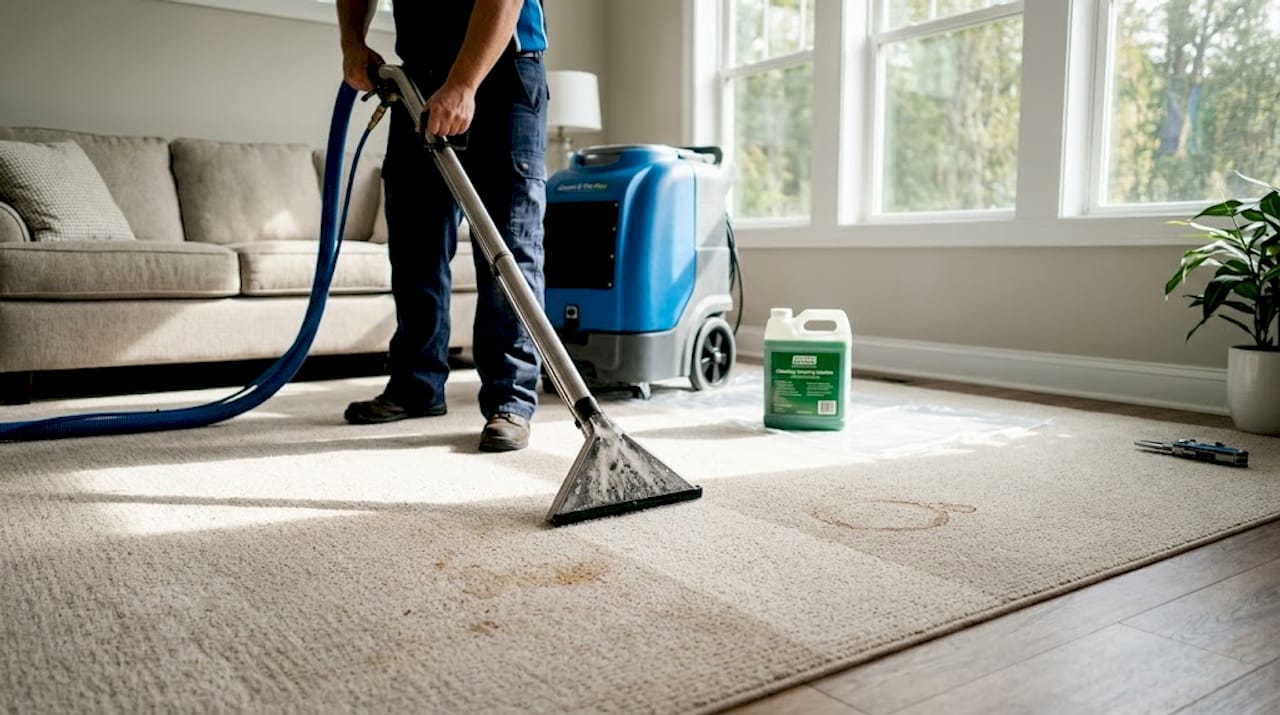
Frequency depends on your household. Low-traffic homes need professional deep cleaning every 12 to 18 months. Homes with pets, children, or allergy sufferers should schedule cleanings every 3 to 9 months depending on severity. Think of each professional cleaning as a structural reset that flushes out compacted grit vacuuming alone cannot dislodge.
Pro Tip: After any professional hot water extraction on Berber, run ceiling fans and open windows to target a dry time of 8 to 12 hours. Avoid walking on the carpet during this window. Premature traffic re-embeds soil before the fibers fully recover.
Over-wetting is the most common professional mistake on Berber. A technician who leaves too much moisture in the backing creates conditions for mold growth and, in worst cases, delamination of the carpet from the pad. Always ask your cleaning company about their dry time guarantee before booking.
Berber carpet maintenance tips that actually extend its life
Consistent habits between cleanings do more for Berber longevity than any single deep-cleaning session. These are the berber carpet maintenance tips that matter most:
- Never pull a snag. If a loop gets caught and pulls loose, cut it flush with scissors at the surface. Pulling unravels neighboring loops and turns a small flaw into a large repair.
- Place walk-off mats at every entry. Soil enters from shoe traffic. A quality mat at the door captures the bulk of it before it reaches the carpet.
- Limit harsh chemical exposure. Avoid bleach-based products and solvent cleaners on synthetic Berber. These strip the soil-resistance treatment and permanently alter the fiber color.
- Rotate furniture periodically. Heavy furniture compresses loops in localized areas. Moving pieces every six to twelve months distributes the wear more evenly.
- Schedule more frequent professional visits if you have pets. Pet dander and pet urine both require prompt, targeted treatment. You can find professional odor removal services that handle pet stains in Berber without damaging the fiber structure.
- Inspect the carpet quarterly. Look for developing snags, discolored patches, or areas where loops appear crushed or distorted. Early detection prevents small problems from spreading.
The simplest metric for tracking whether your maintenance program is working is the appearance of the highest-traffic paths through your home. If those areas look noticeably different from the rest of the carpet after six months, your vacuuming frequency or technique needs adjustment.
My honest take after years of cleaning Berber
I have seen every version of this problem walk through the door. A homeowner rents a store machine, scrubs a red wine stain on their Berber, and turns one spot into a frayed, discolored patch three times the original size. Or they vacuum it twice a week with a full beater bar for years, wondering why the texture looks so different from when it was installed. The carpet was not defective. The approach was.
What I have learned is that Berber rewards a light touch and a consistent schedule more than it rewards aggressive intervention. In my experience, the homeowners who get the longest life from their Berber are the ones who vacuum it gently and often, blot spills before they think, and bring in a professional once a year, not once the carpet looks bad. By the time it looks bad, you have already lost some of that longevity.
The biggest misconception I come across is that professional cleaning is only necessary when visible dirt builds up. The reality is that the soil doing the most damage is the kind you cannot see, the fine grit grinding against fiber bases with every step. Professional hot water extraction is the only method that genuinely cleans carpet at the fiber level. Everything else is surface maintenance.
Know your carpet’s fiber. Respect the loops. And do not wait until something goes wrong to think about cleaning strategy.
— Jim
Professional Berber carpet cleaning in the Northwest suburbs
If you are in Elgin, Bartlett, Arlington Heights, Palatine, or anywhere across the Northwest Suburbs of Chicago, Carpetandtileplus has been caring for Berber carpets in homes and commercial properties for over 20 years.

Carpetandtileplus uses IICRC-certified technicians and organic cleaning products to deliver hot water extraction that goes deep without over-wetting. The one-hour dry time process means you are not rearranging your entire day around a cleaning appointment. Whether you are managing a rental property with heavy-traffic Berber or protecting the carpets in your own home, professional residential carpet cleaning through Carpetandtileplus gives your Berber the kind of thorough, fiber-safe treatment it was designed to receive. Contact the team today to schedule a cleaning that preserves both the look and the lifespan of your carpet.
FAQ
What makes Berber carpet harder to clean than regular carpet?
Berber’s looped fiber construction snags under rotating brush rolls and spreads liquid laterally rather than absorbing it downward. Both traits require gentler tools and faster response times than standard cut-pile carpets.
Is Berber carpet easy to clean at home?
Surface maintenance, including vacuuming and blotting fresh spills, is straightforward with the right tools. Set stains, heavy soiling, and any cleaning that involves significant moisture should be handled by a professional to avoid wickback and fiber damage.
How often should Berber carpet be professionally deep cleaned?
Low-traffic homes should schedule professional deep cleaning every 12 to 18 months. Households with pets, children, or allergy sufferers benefit from cleanings every 3 to 9 months depending on conditions.
Can I use a steam cleaner on Berber carpet?
What is commonly called steam cleaning is actually hot water extraction, and yes, it is the recommended deep-cleaning method for Berber. True steam vapor is rarely used for carpets and is not appropriate for Berber fibers.
What should I do if a loop in my Berber carpet pulls loose?
Cut the snag flush with scissors at the carpet surface. Never pull it, as pulling causes the connected loops to unravel further. If the damage covers a significant area, contact a professional for repair before it spreads.