Most people assume carpet cleaning starts the moment a technician rolls out a hose or pours solution into a machine. That assumption is wrong, and it’s one of the most common reasons carpets get damaged during cleaning. What is carpet inspection before cleaning? It’s the structured assessment that happens before any water or chemical touches your carpet. This step determines which cleaning method is safe, identifies hidden problems, and prevents the kind of damage that turns a routine cleaning into an expensive repair. Skipping it is not a shortcut. It’s a risk.
Table of Contents
- Key takeaways
- What is carpet inspection before cleaning and what it actually achieves
- Common problems found during a carpet inspection
- How professionals conduct a carpet inspection before cleaning
- How inspection findings shape the cleaning method
- Practical tips for homeowners and property managers
- My honest take on why inspection is the part most cleaners skip
- Inspection-first carpet cleaning from Carpetandtileplus
- FAQ
Key takeaways
| Point | Details |
|---|---|
| Inspection precedes all cleaning | A carpet pre-cleaning assessment happens before water or chemicals are applied to prevent damage. |
| Fiber type shapes method choice | Knowing whether carpet is nylon, wool, or polyester directly determines safe cleaning chemistry. |
| Hidden issues get caught early | Moisture, backing failure, and subfloor problems are identified before they become costly surprises. |
| Pretreatment timing depends on findings | Dwell times of 5 to 15 minutes for pretreatment chemicals are set based on what inspection reveals. |
| Inspection protects your investment | Property managers and homeowners who prioritize inspection extend carpet life and reduce repair costs. |
What is carpet inspection before cleaning and what it actually achieves
Carpet inspection before cleaning is a formal information-gathering step. It is not a quick glance at the floor before the cleaning crew sets up equipment. According to IICRC S300 standards, this inspection is defined as a critical process that guides method selection and risk evaluation before cleaning begins. That language matters. “Risk evaluation” tells you everything about what this step is for.
The goals of a thorough carpet pre-cleaning assessment break down into three areas:
- Identifying the carpet’s condition: What stains are present, how severe is the wear, are there odors, and where are the high-traffic zones?
- Evaluating structural integrity: Is the backing stable? Are seams secure? Is the padding saturated or compromised?
- Selecting the right cleaning method: Based on fiber type, construction, and current condition, which method and chemistry will clean effectively without causing harm?
A carpet made from wool behaves completely differently under cleaning chemistry than a synthetic polyester loop pile. Cleaning them the same way is how you ruin one or both. Fiber type identification during inspection, including nylon, wool, and polyester, directly determines which cleaning approach is safe. That is not a detail. That is the foundation of the entire cleaning process.
Inspection also serves as documentation. A well-structured report from a pre-cleaning assessment can support insurance claims if pre-existing damage is discovered. It establishes a clear record of the carpet’s condition before work begins, protecting both the cleaner and the property owner.
Common problems found during a carpet inspection
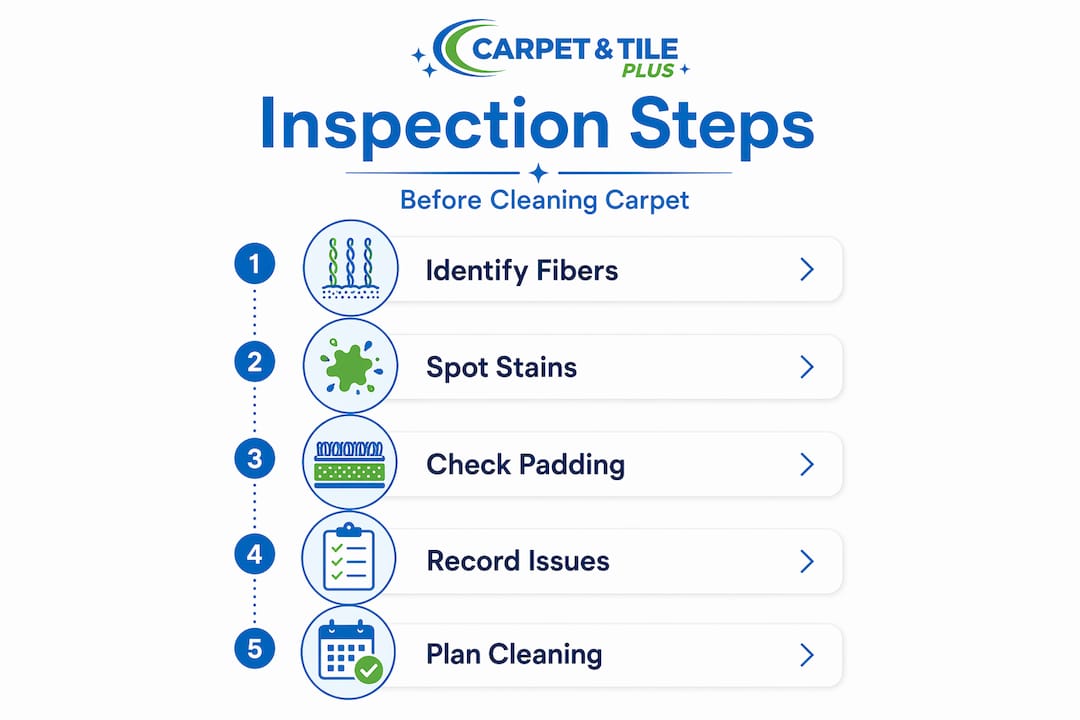
Not every carpet problem is visible from across the room. Some of the most damaging conditions require close examination and testing tools to detect. A certified inspector examines carpet fibers, backing, seams, and padding alongside moisture levels to diagnose failures accurately. Here is what typically surfaces during a thorough inspection:
Surface-level issues:
- Stains from food, pets, or chemicals that require specific treatment chemistry
- Worn or crushed pile areas indicating high-traffic stress or delamination risk
- Spots with uneven texture pointing to previous DIY cleaning attempts
- Odors embedded in the fiber that require enzyme treatments rather than standard cleaning
Structural and hidden problems:
- Backing failure or separation from the primary structure
- Loose or fraying seams that could worsen under wet cleaning pressure
- Padding that has absorbed moisture and become a source of microbial growth
- Subfloor irregularities that affect how the carpet responds to moisture and agitation
What makes hidden problems particularly dangerous is that standard cleaning methods, especially hot water extraction, can accelerate damage if moisture or backing instability is already present. Applying water and heat to a carpet with saturated padding turns a manageable problem into a mold situation.
Pro Tip: Before your cleaning appointment, walk the carpet slowly in good light and note any areas that feel spongy underfoot, smell musty, or show visible rippling. Share those observations with your technician. That information shapes how they approach the inspection.
How professionals conduct a carpet inspection before cleaning
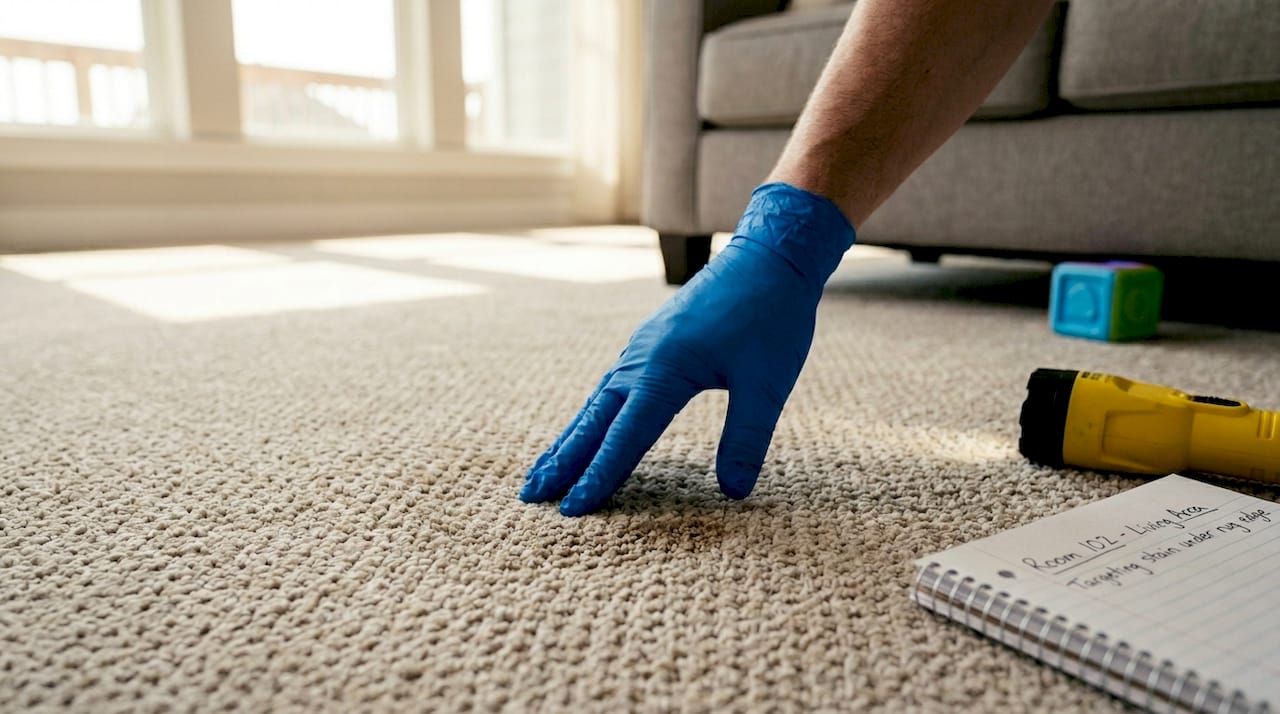
Professional inspectors follow a specific sequence of steps. Understanding how to inspect carpet before cleaning at a professional level involves more than looking at the surface. It includes physical testing, moisture measurement, and methodical documentation.
Here are the core steps technicians follow:
- Visual examination: Scan the entire carpet for wear patterns, stains, color changes, and seam issues. Identify high-risk zones that need special attention.
- Fiber identification: Determine the carpet’s fiber type through visual and tactile assessment, sometimes using a burn test for confirmation. This directly informs which cleaning chemistry is appropriate.
- Moisture testing: Use a moisture meter to assess subfloor and padding conditions before wet cleaning is applied. Wet subfloors require a different approach entirely.
- Colorfastness pretesting: Apply a small amount of the intended cleaning solution to a hidden area and check for dye bleeding or fiber reaction. This prevents color damage on the full surface.
- Backing and seam evaluation: Check for delamination, loose seams, or structural instability that would make wet cleaning risky.
- Risk workflow review: Consolidate all findings into a decision on which method is safe, what pretreatments are needed, and what areas require special handling.
The table below shows how different findings during inspection translate directly into adjusted cleaning approaches:
| Inspection finding | Risk level | Cleaning adjustment |
|---|---|---|
| Wool or delicate fiber identified | High | Low-moisture method, pH-neutral chemistry |
| Moisture detected in padding | High | Dry cleaning or targeted extraction with drying protocol |
| Pet urine odor present | Medium | Enzyme pretreatment with extended dwell time |
| Colorfast issues flagged | Medium | Spot test with alternate chemistry before full cleaning |
| Normal synthetic fiber, no moisture | Low | Standard hot water extraction |
Pro Tip: Ask your cleaning professional directly: “Do you pretest for colorfastness?” If they look confused, that tells you something important about their process.
How inspection findings shape the cleaning method
The carpet pre-cleaning assessment is not just diagnostic. It directly drives every decision that follows. Pretreatment dwell time of 5 to 15 minutes, properly calibrated after inspection, is what allows cleaning chemistry to break down soils before extraction begins. Rush that step or skip the inspection that informs it, and you end up cleaning the surface without addressing what is embedded in the pile.
Consider a real scenario. A property manager in a rental unit calls for carpet cleaning after a tenant moves out. Without inspection, the crew might run standard hot water extraction across the entire unit. But if inspection had revealed that one bedroom has pet urine saturation extending into the padding, standard extraction will not solve the problem. It will spread the contamination. The right response, which inspection makes visible, is enzyme pretreatment applied to that specific zone and left to dwell before any water is applied.
High-end or delicate carpets present another case entirely. Wool carpets, for example, are sensitive to high pH chemicals and excessive moisture. Gentle cleaning methods are only possible when inspection has confirmed the fiber type and current condition. Applying a standard alkaline cleaning solution to a wool rug without that knowledge can cause irreversible shrinkage or dye bleeding.
The IICRC S300 standard is clear that inspection before any wet cleaning avoids chemical and fiber adverse reactions, preventing damage that occurs when cleaning chemistry contacts unstable backing or moist padding. That is not a theoretical warning. It describes a specific failure mode that professional inspection prevents every time.
Practical tips for homeowners and property managers
You don’t need to perform a professional inspection yourself. But knowing what to look for and what to communicate to your cleaning professional makes the process significantly more effective. These carpet evaluation tips apply whether you own a single-family home or manage a multi-unit property:
- Document problem areas before the appointment. Take photos of visible stains, odors, worn patches, or areas with known water exposure. Your technician will want that information.
- Clear furniture in advance. Inspectors need unobstructed access to assess the full carpet surface, including edges and corners where backing issues often begin.
- Mention past DIY treatments. If you have used store-bought spot removers or cleaning machines, say so. Some consumer products leave chemical residues that react badly with professional cleaning solutions.
- Ask what the inspection covers. A reputable company should walk you through what they check and what they find before any cleaning begins.
- Know when to call a specialist. If you have had a flood, extended moisture exposure, or significant pet saturation, a dedicated carpet odor removal service with specialized inspection protocols may be necessary beyond standard cleaning.
For property managers specifically, the inspection benefits for rental properties go beyond cleanliness. Documented pre-cleaning assessments protect you in tenant disputes and give you a reliable record of carpet condition across turnover cycles.
My honest take on why inspection is the part most cleaners skip
I’ve watched a lot of carpet cleaning operations over the years, and I’ll tell you the uncomfortable truth: many companies skip or rush the inspection because it takes time and doesn’t feel like “the work.” The visible work is the machine running. The inspection is the planning. And when planning gets cut, problems follow.
What I’ve seen happen repeatedly is this. A homeowner gets a fast, cheap cleaning done. The carpet looks fine for about two weeks. Then the odors return, or a seam starts lifting, or a previously stable stain comes back darker. None of those outcomes are random. They are all predictable consequences of cleaning without knowing what you’re cleaning.
The importance of carpet inspection becomes obvious the moment something goes wrong. What I try to get people to understand is that it matters most before anything goes wrong. Inspection is what keeps a routine cleaning from becoming a replacement.
When you’re choosing a cleaning service, ask specifically whether they test for colorfastness, check moisture levels, and identify your carpet’s fiber type before they start. If the answer is yes and they can explain what those steps involve, you’re talking to someone who knows what they’re doing. If the answer is a blank stare or “we just clean,” keep looking.
— Jim
Inspection-first carpet cleaning from Carpetandtileplus

At Carpetandtileplus, every cleaning job starts with a thorough carpet pre-cleaning assessment before a single drop of water or solution is applied. Our IICRC-certified technicians check fiber type, moisture levels, backing condition, and colorfastness as standard practice, not as an upsell. That process is what makes our residential carpet cleaning consistently effective and safe across every carpet type and condition.
For property managers handling multiple units in Elgin, Bartlett, Arlington Heights, and the surrounding Northwest Suburbs of Chicago, our commercial carpet cleaning services bring the same inspection-first protocol to high-traffic environments. We use organic cleaning products, and our process is designed around a one-hour dry time to minimize disruption. With over 20 years of experience and hundreds of five-star reviews, we treat every inspection as the starting point it should be. Contact Carpetandtileplus to schedule a professional assessment and cleaning for your home or property today.
FAQ
What is carpet inspection before cleaning?
Carpet inspection before cleaning is a structured assessment performed before any cleaning method is applied. It evaluates fiber type, moisture levels, stain conditions, backing integrity, and structural issues to determine the safest and most effective cleaning approach.
Why does carpet inspection matter before cleaning?
Skipping inspection increases the risk of chemical damage, fiber shrinkage, spreading contamination, or worsening hidden moisture problems. IICRC standards identify inspection as a required step for professional cleaning to prevent irreversible damage.
How do professionals identify carpet fiber type during inspection?
Technicians use visual assessment, tactile testing, and sometimes a burn test to confirm whether a carpet is nylon, wool, polyester, or another material. Fiber type identification directly determines which cleaning chemicals are safe to apply.
What hidden problems can carpet inspection uncover?
Inspection can reveal moisture in padding, backing delamination, subfloor irregularities, microbial growth, and pet urine saturation that extend beyond the visible surface. These hidden issues require specific treatment adjustments that would be missed without inspection.
How should homeowners prepare for a carpet inspection?
Clear furniture from carpeted areas, document visible stains or odors with photos, and inform your technician of any past DIY treatments or known water exposure. That information improves inspection accuracy and helps your cleaner choose the right approach from the start.