
The carpet cleaning solution dilution ratio is the specific proportion of cleaning concentrate to water required to clean carpets effectively without damaging fibers or equipment. Get it wrong in either direction and you pay for it. Too strong and you leave sticky residue that attracts more dirt than you started with. Too weak and you waste time on a pass that barely lifts soil. Standard ratios vary by product and machine type: Hoover carpet cleaners call for 3 oz per gallon of warm water, while highly concentrated formulas like Dirtbusters specify 10ml per liter in combined tanks. This guide covers the exact numbers, the reasoning behind them, and the practical steps that separate a clean carpet from a damaged one.
What is carpet cleaning solution dilution ratio for common machines?
Dilution ratio is the industry term for the concentrate-to-water proportion specified by a product manufacturer for safe and effective use. Every carpet cleaning product carries a recommended ratio, and that number exists because the formula was tested at that concentration. Deviating from it is not a shortcut. It is a gamble with your carpet and your machine.
Standard ratios by machine and product type
For Hoover carpet cleaners, the manufacturer-recommended ratio is 3 oz of concentrate per 1 gallon of warm water. That works out to two full caps from a standard 1.5 oz cap. This is the baseline for most residential Hoover models, and it applies whether you are cleaning a bedroom or a high-traffic hallway.
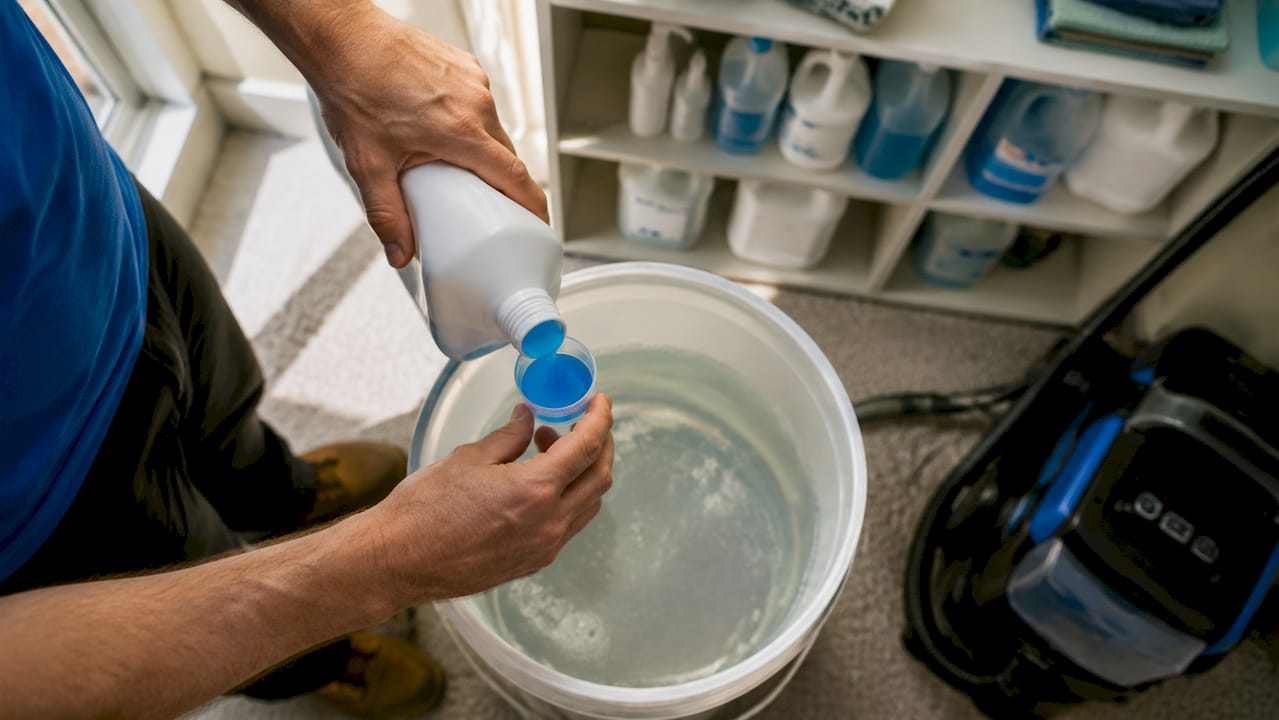
Dirtbusters concentrated carpet shampoo operates on a different scale entirely. In machines with a combined water and solution tank, the ratio is 10ml per 1 liter of water. In machines with a separate solution tank, the correct mix is 50:50 solution to water. The distinction matters because machines with separate tanks dilute the solution again mechanically, so a pre-diluted 50:50 mix prevents over-concentration at the nozzle.
Professional-grade liquid detergents follow a broader range. 30 to 60 mL per 10 liters of water covers normal soil levels for most commercial applications. The lower end of that range suits lightly soiled areas; the upper end is for moderate buildup. Heavy soiling calls for a different approach entirely, which is covered in Section 4.
| Product / Machine | Tank Type | Dilution Ratio |
|---|---|---|
| Hoover carpet cleaner | Combined | 3 oz per 1 gallon |
| Dirtbusters concentrate | Combined | 10ml per 1 liter |
| Dirtbusters concentrate | Separate solution tank | 50:50 solution to water |
| Professional liquid detergent | Any | 30 to 60 mL per 10 liters |
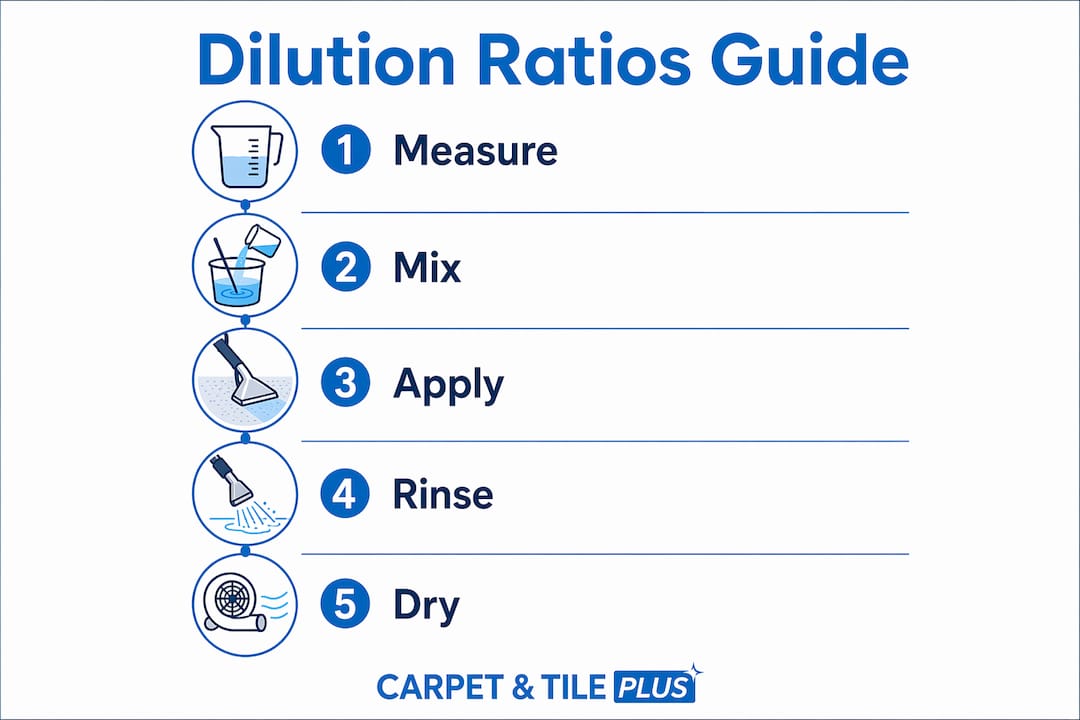
Pro Tip: Always use the calibrated cap on your cleaning solution bottle rather than estimating by eye. A standard 1.5 oz cap makes hitting the Hoover ratio repeatable every single time.
Why does following the manufacturer’s dilution ratio matter?
The short answer: incorrect dilution ratios cause problems that are expensive to fix and sometimes impossible to reverse. The Carpet and Rug Institute and product manufacturers alike are consistent on this point. Using only water to dilute carpet cleaners before application is the baseline rule, and mixing with anything else risks unpredictable chemical reactions with carpet dyes and backing materials.
Here is what actually happens when the ratio is off:
- Residue buildup. Too much concentrate leaves a sticky film on carpet fibers. That film acts like flypaper for dust and foot traffic soil, meaning your carpet looks dirty again within days. Sticky residue from excess solution is one of the most common causes of rapid re-soiling after a cleaning.
- Mold and mildew risk. Over-application of solution saturates the carpet backing and the subfloor beneath it. Wet backing that does not dry within a few hours creates the conditions mold needs to establish itself.
- Fiber and color damage. Excessive detergent concentration can permanently damage natural fiber carpets, particularly wool, causing yellowing or browning that no amount of rinsing will correct.
- Warranty voidance. Many carpet cleaning machine manufacturers specify approved solution concentrations in their warranty terms. Using an off-ratio mix can void coverage on a machine that costs several hundred dollars to replace.
“Spot testing in an inconspicuous area before full application is the single most reliable way to catch a concentration problem before it becomes a permanent stain.” — Carpet and Rug Institute
For high-end carpets with delicate fibers, the stakes are even higher. Wool, silk blends, and hand-knotted rugs react to chemical concentration in ways that synthetic fibers simply do not.
How do different dilution methods affect machine performance?
Not all carpet cleaning machines handle solution the same way, and understanding your machine type changes how you mix. This is where many homeowners go wrong, not because they use the wrong product, but because they apply the right product incorrectly for their machine.
-
Identify your tank configuration. Machines with a single combined tank mix water and solution together before the pump moves it through the system. Machines with separate tanks keep concentrate and water apart until they meet at the spray head, where the machine controls the final ratio mechanically.
-
Mix in the right order. Add water before the cleaning solution every time. Pouring concentrate into an empty tank and then adding water on top creates foam. That foam can trigger sensor errors and, over time, damage the pump. Water first, solution second is the rule with no exceptions.
-
Use the 50:50 rule for separate-tank machines. If your machine has a dedicated solution tank, the concentrate goes in pre-diluted at 50:50 with water. The machine then dilutes it further during operation. Putting full-strength concentrate into a separate solution tank results in a final mix that is far too strong.
-
Know when to prespray instead of increasing concentration. Pre-treating heavily soiled areas with a dedicated prespray product is more effective than doubling the detergent concentration in your tank. Prespray products are formulated to dwell on soil and break it down before extraction. Doubling your tank concentration just increases residue risk without delivering the dwell time that heavy soil actually needs.
Pro Tip: If you are cleaning a room with a mix of light and heavy soiling, keep your tank at the standard ratio and prespray the high-traffic zones separately. You get better results and you protect the lightly soiled areas from over-concentration.
What practical tips produce the best results with correct dilution?
Knowing the ratio is step one. Executing it consistently across a full cleaning job is where results actually come from. These steps apply whether you are a homeowner running a Hoover through a living room or a professional working a commercial space.
- Measure every time. Use the calibrated cap or a measuring cup. Eyeballing concentrate is how ratios drift session to session, and drifting ratios produce inconsistent results.
- Spot test before full application. Apply your diluted solution to a hidden area of carpet, wait five minutes, and blot with a white cloth. If color transfers or the fiber changes texture, stop and reassess the concentration or the product.
- Rinse with plain water after cleaning. Rinsing carpet after detergent application removes soap residue and keeps carpets cleaner for longer. A final pass with clean water in the tank is one of the most underused steps in residential cleaning.
- Do not over-apply solution. More solution does not mean more cleaning power. It means more residue, longer dry times, and a higher risk of backing saturation. Work in slow, overlapping passes at the recommended ratio rather than flooding a section.
- Pre-treat before you extract. For pet stains, grease, or ground-in soil, apply a prespray product and let it dwell for five to ten minutes before running the machine. This approach lifts more soil than any concentration increase will.
- Check your eco-friendly product options. Plant-based and low-VOC formulas often carry the same dilution ratios as conventional products but leave fewer chemical residues behind, which matters especially in homes with children or pets.
Key takeaways
Correct dilution ratios protect your carpet, your machine, and your results. Using the wrong concentration is the most common cause of sticky carpets, rapid re-soiling, and equipment damage.
| Point | Details |
|---|---|
| Standard Hoover ratio | Use 3 oz of concentrate per 1 gallon of warm water for consistent results. |
| Machine tank type changes the mix | Separate-tank machines need a 50:50 pre-diluted solution; combined tanks use the full ratio directly. |
| Wrong ratios cause real damage | Excess concentrate leaves residue, risks mold, and can void machine warranties. |
| Water goes in first | Adding water before concentrate prevents foam that damages pumps and sensors. |
| Prespray beats over-concentration | Use a dedicated prespray for heavy soil instead of increasing your tank solution strength. |
What I have learned from two decades of dilution mistakes (mostly other people’s)
After more than 20 years cleaning carpets across the Northwest Suburbs of Chicago, from Elgin to Arlington Heights, the single most consistent mistake I see homeowners make is treating dilution as a suggestion rather than a specification. They figure that a little extra concentrate means a little extra cleaning power. What it actually means is a carpet that looks clean for three days and then looks worse than before.
The second mistake is the opposite: under-diluting because they are worried about damaging the carpet. A solution that is too weak does not extract soil. It just moves it around. You end up with a wet carpet that smells faintly of detergent and is not actually cleaner.
What I have found works without fail is this: follow the ratio exactly, rinse with plain water on the final pass, and use a prespray for anything that needs extra attention. That combination outperforms any concentration trick every time. It also extends carpet life in a way that is measurable. Carpets we have maintained on correct dilution schedules for years look significantly better than carpets that have been over-cleaned with high-concentration solutions.
Machine maintenance is the piece most people overlook entirely. Residue from off-ratio cleaning builds up inside the machine itself, not just in the carpet. That buildup degrades pump performance and shortens machine life. Rinsing the tank with clean water after every use takes two minutes and makes a real difference over time.
If you are cleaning commercial carpets at scale, the stakes are higher and the margin for error is smaller. A wrong ratio across 5,000 square feet of office carpet is a problem that takes weeks to correct.
— Jim
Let Carpetandtileplus handle the chemistry for you

Getting dilution ratios right every time takes practice, the right equipment, and products that are matched to your specific carpet type. Carpetandtileplus brings all three to every job across Elgin, Bartlett, Streamwood, Palatine, Barrington, and the surrounding Northwest Suburbs of Chicago. Our IICRC-certified team uses organic, eco-friendly cleaning solutions calibrated to the exact concentration your carpet needs, with a one-hour dry time that keeps your day on track. Whether you need residential carpet cleaning for a family home or commercial carpet cleaning for a high-traffic business space, we bring the expertise to protect your investment and deliver results that last.
FAQ
What is the standard carpet cleaning solution dilution ratio?
The standard ratio depends on the product and machine. Hoover carpet cleaners use 3 oz per gallon of warm water, while professional liquid detergents typically range from 30 to 60 mL per 10 liters for normal soil levels.
Can I use more solution to clean heavily soiled carpet?
No. Pre-treating with prespray is more effective than increasing solution concentration. Excess concentrate leaves sticky residue that attracts more dirt and can damage carpet fibers.
Why does my carpet get dirty again so fast after cleaning?
Rapid re-soiling is almost always caused by detergent residue left in the carpet fibers. Rinsing with plain water after your cleaning pass removes that residue and keeps carpets cleaner for longer.
Does dilution ratio differ between machine types?
Yes. Machines with separate solution tanks require a 50:50 pre-diluted mix because the machine dilutes further during operation. Combined-tank machines use the full manufacturer ratio directly in the tank.
Is it safe to mix carpet cleaning solution with other cleaners?
No. Manufacturer guidelines specify that carpet cleaners should be diluted only with water. Mixing with other chemicals risks unpredictable reactions with carpet dyes and backing materials.