
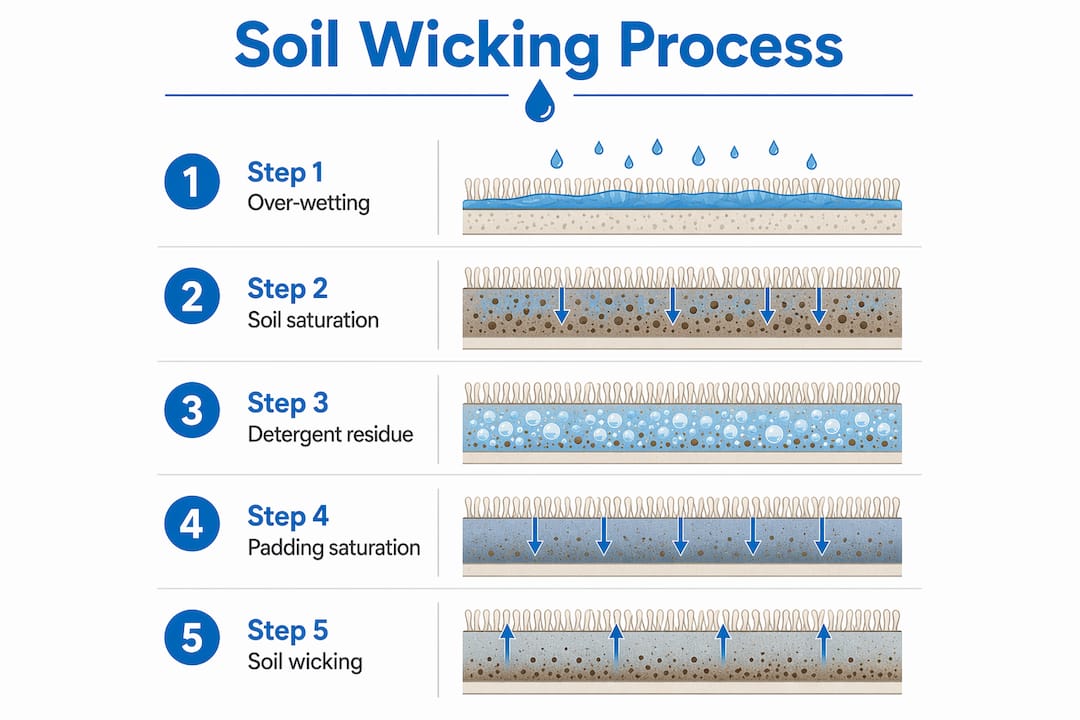
Soil wicking is the reason your carpet looks clean right after cleaning, then shows the same stain two days later. The industry term for this is “wicking” or “wick back,” and it describes a specific physical process: moisture trapped deep in the carpet backing and padding travels upward through the fibers as the carpet dries, carrying dissolved dirt, sugars, and residues back to the surface. Capillary action drives this movement, pulling liquid up the yarn bundles the same way a candle draws wax up its wick.
Here is what makes soil wicking so frustrating:
- The surface fibers look clean immediately after cleaning because the top layer was treated
- Contaminants sitting in the backing and padding were never fully removed
- As the carpet dries from the top down, moisture from below rises and deposits those contaminants at the fiber tips
- Stains can reappear after cleaning, sometimes appearing darker than expected
- Wicking is not the same as resoiling. Resoiling happens when new dirt sticks to sticky residue left on fibers. Wicking is an internal moisture issue, pulling old contamination upward from below
Understanding this distinction matters because the fix for each problem is completely different.
How soil wicking ruins carpet cleaning: the root causes
Soil wicking is a failure of extraction, not a failure of cleaning chemistry. Bill Yeadon, senior instructor at Jon-Don, put it plainly:
The most common cause is over-wetting. When too much water saturates the carpet during cleaning, it pushes soil deeper into the backing and padding, well beyond what any surface treatment can reach. From there, the only direction that moisture travels during drying is up.
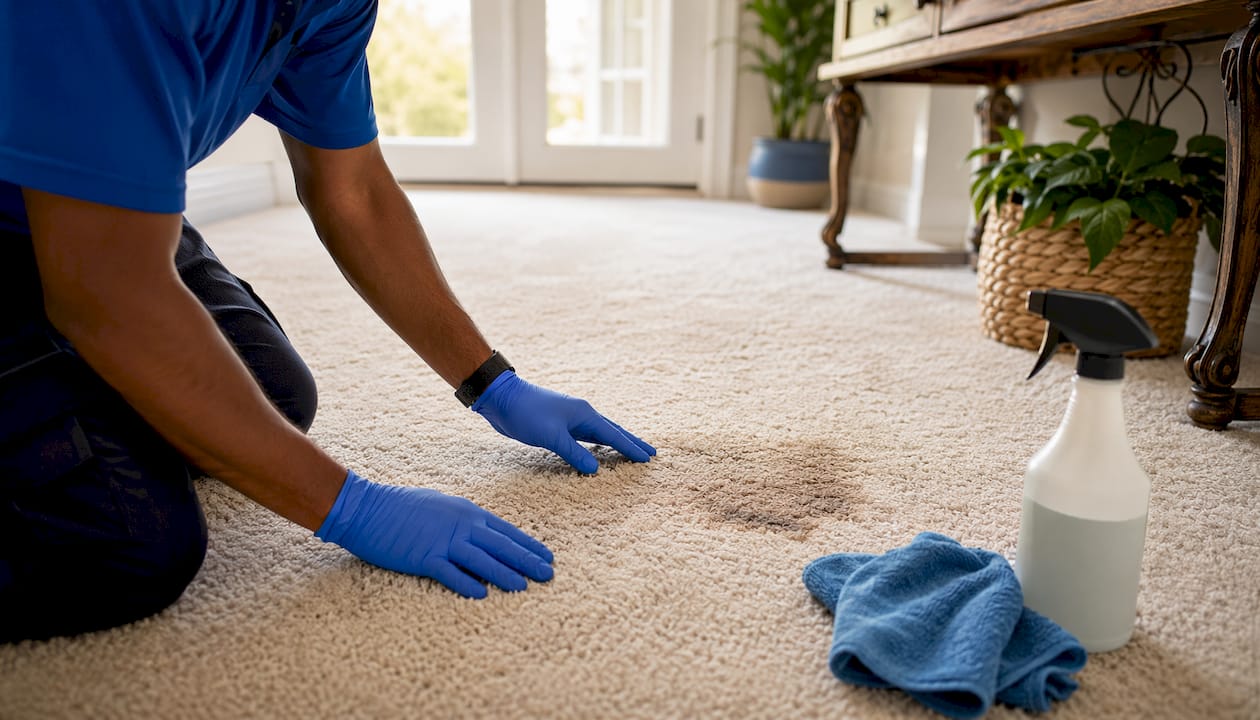
Around 80% of soil in carpets is dry before cleaning begins. Hot water extraction turns that dry soil into mud, which embeds further into the carpet pad. Skipping a thorough vacuuming pass before wet extraction is one of the most common operator errors, and it dramatically increases wicking risk.
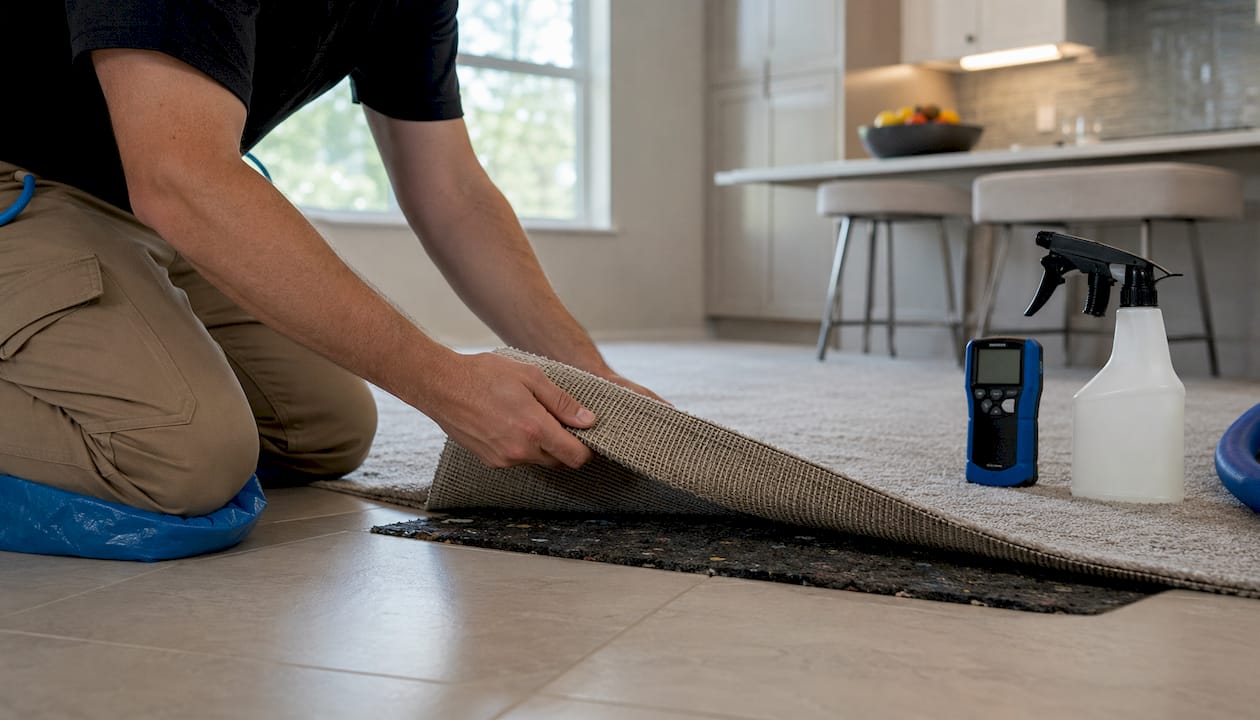
Leftover detergent compounds the problem. Soap residue left in the fibers attracts new dirt and slows drying, creating a gray tint across the carpet surface. Kevin Thompson, sales manager for Brookmeade Hardware and Supply, described it this way: if you looked at the fiber tips under a microscope after chemical overuse, they would appear brown. More detergent does not mean better cleaning. It means more residue to wick.
Carpet padding saturation is the hardest cause to address. When a spill soaks through the face fibers, the primary backing, and into the pad underneath, surface cleaning alone cannot resolve the contamination. Chronic stain recurrence in the same spot almost always signals pad-level saturation requiring specialized treatment or replacement.
How to prevent soil wicking before it starts
Prevention comes down to controlling moisture at every stage of the cleaning process. These practices make the biggest difference:
- Vacuum thoroughly before any wet cleaning. Dry soil vacuumed out before extraction cannot turn to mud and embed deeper.
- Use less water than you think you need. Carpets act like sponges. Enough solution to loosen the stain is the target, not a saturated fiber bed.
- Make multiple extraction passes. Slow, overlapping suction strokes in alternating directions pull moisture from deeper layers. Extra vacuum-only passes after the main extraction reduce what is left below the face yarn.
- Dry the carpet fast. Longer drying times increase wicking risk because moisture has more time to travel upward. Fans, open windows, and dehumidifiers all help. Target full dryness within a few hours, not overnight.
- Blot spills, never scrub. Rubbing pushes residue deeper into the pile and spreads the stain laterally. Blotting from the outside of the stain inward removes liquid without driving it further down.
- Consider low-moisture encapsulation for interim cleaning. Encapsulation chemistry crystallizes around soil on the surface without saturating the backing, so moisture never reaches the depth where wicking originates.
Pro Tip: Rinse the carpet back to a neutral pH after cleaning. Leftover soap residue attracts new dirt and keeps fibers sticky long after the cleaning session ends. A balanced rinse removes alkaline surfactant residue and reduces the chance of both wicking and rapid resoiling. Moisture meters help confirm that hidden saturation in the padding is gone before you consider the job done.
Reviewing common cleaning mistakes before starting a cleaning project can save a lot of frustration. For commercial properties, following commercial carpet cleaning best practices that include pH balancing and thorough extraction protocols keeps high-traffic areas from developing chronic wicking problems.
How to reverse soil wicking once it has already appeared
Wicking that has already surfaced is fixable. Scrubbing is not the answer. Extraction is.
- Re-wet the affected area lightly. Use a mist spray, not a soaking spray. The goal is to rehydrate the contaminants sitting just below the surface without pushing moisture further into the padding.
- Extract thoroughly. Make 10–15 slow suction passes in different directions. Treat it like vacuuming a spill, not scrubbing a stain.
- Apply the weighted towel method. Place a stack of 3–5 clean white towels over the area and put a heavy weight on top. Leave it overnight. As the stain continues to wick upward, it travels past the carpet surface and into the towels instead of depositing back on the fibers. Replace the towels with clean ones if the stain remains and repeat.
- Accelerate drying. Once the spot is clear, use an air mover or fan directed across the surface to speed evaporation. Groom the pile so yarn stands upright and air reaches deeper fiber segments.
- Check for pad saturation. If the stain returns after repeated towel extraction cycles, the contamination is in the padding, not just the backing.
“If it came back, the tech didn’t clean it.” That’s a myth. Wick back is usually about depth and drying, not missed effort. The fix is a targeted flush and better moisture management.
One critical warning: do not let the carpet stay wet for more than 24 hours. Prolonged moisture creates conditions for mold and microbial growth in the backing and padding. If the area is still damp after a full day, professional extraction equipment is needed.
For deep stains from pet accidents or old spills, the contamination is almost certainly in the padding. You can find more detail on removing deep carpet stains and when professional intervention is the right call.
What Carpetandtileplus sees in the field
After more than 20 years of residential and commercial carpet cleaning across the Northwest Suburbs of Chicago, the team at Carpetandtileplus encounters soil wicking regularly. The pattern is consistent: a homeowner or property manager had the carpet cleaned, it looked great for a day, and then the same spots came back. Nine times out of ten, the cause is insufficient extraction combined with a drying time that stretched past several hours.
Carpetandtileplus’s IICRC-certified technicians use organic cleaning products that rinse cleanly without leaving sticky residue behind, which directly reduces the conditions that cause wicking. The one-hour dry time guarantee is not just a convenience feature. It is a direct response to the physics of wicking: the faster the carpet dries, the less time moisture has to carry contaminants back to the surface.
A common misconception the team addresses regularly is that a stain reappearing means the carpet was not cleaned. In reality, it usually means the original spill penetrated deeper than the cleaning reached. Surface appearance right after cleaning tells you almost nothing about what is happening in the backing. A moisture meter reading of the padding is a far more reliable indicator of whether the job is actually done.
For commercial property managers dealing with high-traffic areas, the stakes are higher. Recurring spots in lobby carpet or office corridors signal a maintenance program that is not reaching the backing. Carpetandtileplus’s commercial carpet cleaning service addresses this with truck-mounted extraction and controlled drying protocols designed specifically to prevent wick back in demanding environments.
Key Takeaways
Soil wicking ruins carpet cleaning by pulling embedded dirt and residues from the backing upward through the fibers during drying, making stains reappear even after a thorough surface clean.
| Point | Details |
|---|---|
| Wicking is a physics problem | Capillary action pulls dissolved soil upward as carpet dries; longer drying times increase the risk. |
| 80% of carpet soil starts dry | Skipping pre-vacuuming turns dry soil into mud during wet extraction, driving wicking deeper. |
| Extraction quality is the fix | Wicking is a failure of extraction technique, not cleaning chemistry; extra vacuum passes reduce what is left below the face yarn. |
| Weighted towel method reverses wicking | A stack of 3–5 white towels under a heavy weight overnight pulls contaminants out of the fibers. |
| Pad saturation needs professional attention | Chronic stain recurrence in the same spot signals padding contamination that surface cleaning cannot reach. |