
Book professional move-in carpet cleaning before furniture delivery, full stop. That single decision saves you a week of headaches and gives you something a rental machine never will: a clean baseline you can prove.
Two reasons drive this. First, trapped allergens, dust mites, bacteria, and lingering pet or smoke odors from a previous occupant don’t disappear with a vacuum. Professional cleaning pulls them out, which matters if anyone in your household has allergies or asthma. Second, a dated invoice paired with photos becomes your evidence if a landlord disputes your security deposit later.
When you call for a quote, ask specifically about these two things:
- Light furniture moving — many providers will shift small items like sofas and end tables at no extra charge, but confirm scope before booking.
- Fast-dry methods — ask what “one-hour dry” actually means for your specific carpet and room size, not just the marketing claim.
Key Takeaways
Move-in carpet cleaning works best when it’s booked before furniture arrives, uses hot water extraction with enzymatic pre-treatment, and comes with documented before-and-after photos.
| Point | Details |
|---|---|
| Book before furniture arrives | Empty rooms give technicians full access and cut drying time significantly. |
| Ask about light furniture moving | Confirm scope for sofas and small items before booking, since policies vary by provider. |
| Keep the invoice and photos | Dated documentation protects renters from deposit disputes at move-out. |
| Match the treatment to the problem | Pet urine and set-in stains need enzymatic treatment, not just surface cleaning. |
| Choose Carpet & Tile Plus locally | Family-owned, IICRC-certified, organic products, and a one-hour dry target across the Northwest Suburbs of Chicago. |
Table of Contents
- What Does Move-In Carpet Cleaning Include?
- Why Professional Cleaning Beats a DIY Job Before You Move In
- When Should You Schedule Move-In Carpet Cleaning?
- How Much Does Move-In Carpet Cleaning Cost?
- Preparing Your New Home for the Cleaning Appointment
- What Fast-Dry Claims and Light Furniture Moving Actually Mean
- DIY or Professional: A Quick Decision Checklist
- Why Trust Carpet & Tile Plus for Move-In Cleaning
- Why Most Move-In Cleaning Advice Skips the Timing Problem
- How to Book Carpet & Tile Plus for Your Move-In Clean
- Sources
What Does Move-In Carpet Cleaning Include?
A real move-in service starts with a walkthrough, not a hose. Technicians inspect carpet condition room by room, flag existing stains or wear, and note anything that needs special treatment before the machine ever turns on. This matters more at move-in than any other time, because it’s your one shot to document the carpet’s true starting condition.
Pre-treatment comes next. Standard soil gets a chemical pre-spray to loosen embedded dirt, while pet urine or protein-based stains need enzymatic treatment that breaks down the source rather than just lifting the surface residue. Skipping this step is the main reason DIY jobs leave stains that reappear weeks later.
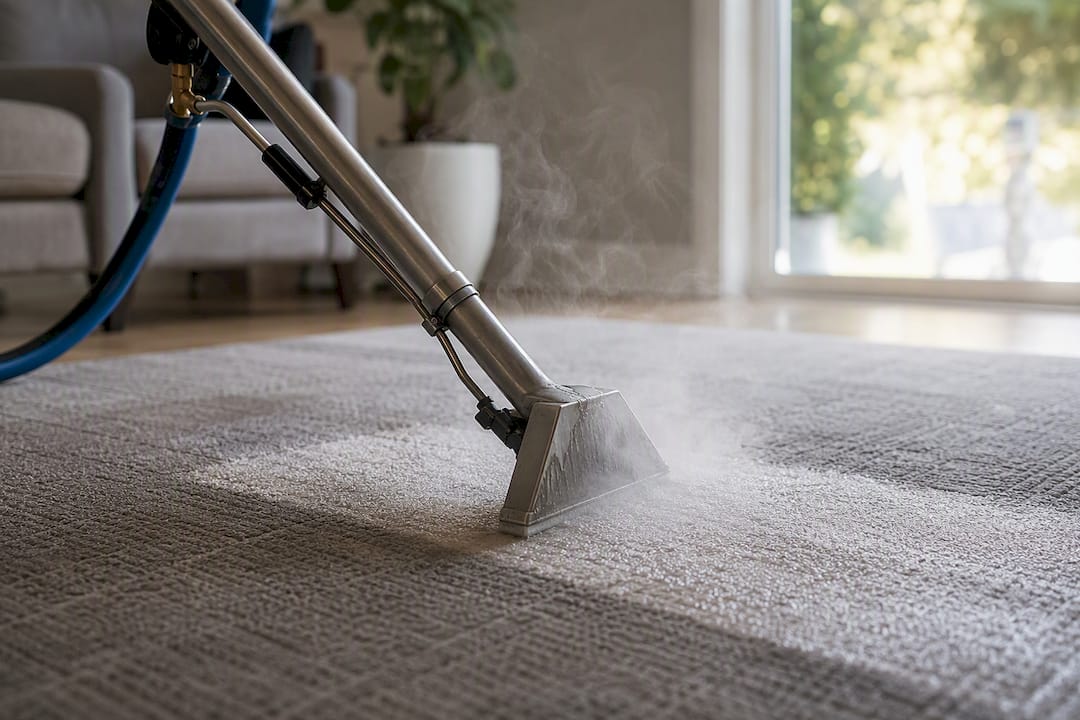
The core clean itself is hot water extraction, delivered through a truck-mounted system in most cases. Truck-mounts run hotter water and stronger vacuum suction than the portable units companies bring into high-rises or units without easy driveway access, which translates directly into faster drying and less leftover moisture.
Light furniture moving typically covers sofas, chairs, coffee tables, and similar pieces under a certain weight. Heavy items like china cabinets, pianos, and fully loaded bookshelves usually stay outside a technician’s scope for liability reasons.
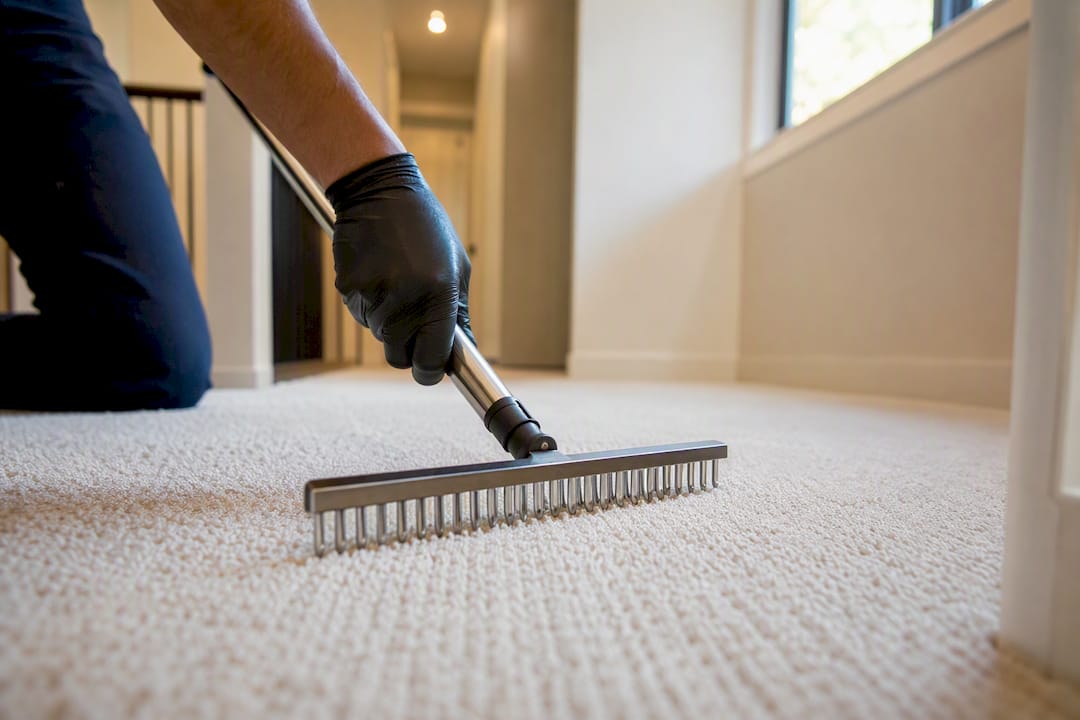
The visit wraps with grooming, when technicians rake the carpet pile so it dries evenly and looks uniform, plus a deodorizing pass if odor was part of the original problem.
Pro Tip: Ask upfront whether enzymatic pet treatment is included or billed separately. It’s the single most common surprise on move-in invoices, and skipping it on a unit with a prior pet leaves the odor problem unsolved.
Why Professional Cleaning Beats a DIY Job Before You Move In
The health case is the strongest one. Carpet fibers trap allergens, dust mites, and bacteria at a depth no vacuum reaches, and professional extraction removes them instead of just pushing dust around. If anyone moving in deals with allergies or respiratory issues, this isn’t optional.
Odor removal works the same way. A rental machine or an air freshener masks a smell; enzymatic treatment breaks down the organic matter causing it. That distinction shows up fast when a previous tenant had pets.
Renting a consumer steam cleaner runs about $87 on average once you add supplies, and rental units often leave carpets wet for far longer than a truck-mounted system, without matching the heat or suction that actually lifts embedded soil.
Beyond health and smell, there’s fiber protection. Aggressive rental machines or the wrong chemistry can void a carpet manufacturer’s warranty, while licensed technicians know which products and pressure settings stay within warranty terms. And that invoice you get afterward isn’t just a receipt. It’s a dated, professional record of carpet condition that protects you if a landlord tries to blame you for wear that existed before you moved a single box in.
When Should You Schedule Move-In Carpet Cleaning?
Timing decides whether this whole process is smooth or stressful. Here’s the sequence that works:
- Confirm the previous occupant is fully out. Cleaners need empty rooms and full access to every corner, closet, and baseboard.
- Book before furniture delivery, not after. Technicians work faster and more thoroughly in an empty space, and scheduling this way also cuts drying time significantly.
- Build in a buffer day. Even fast-dry methods benefit from a few extra hours before movers start walking heavy boxes across damp carpet.
- Coordinate with your final walkthrough. If your lease or closing includes an inspection, time the cleaning so it happens right before, not weeks in advance.
- Call ahead during peak moving season. Late spring and early summer book up fast, so a same-week appointment gets harder to land the closer you get to your move date.
If your timeline is tight, say so when you call. Most established companies keep a short list of expedited slots for exactly this situation, especially for local moves within their existing service area.
How Much Does Move-In Carpet Cleaning Cost?
Pricing usually follows one of three structures: per room, per square foot, or a flat package rate for a typical apartment or home size. Per-room pricing is easiest to compare across quotes, but square footage gives a more accurate number for oddly shaped or open-concept spaces.
Expect your final price to move based on:
- Stairs, which are charged separately since they take longer per square foot than open flooring.
- Pet-odor remediation, since enzymatic treatment for urine or heavy pet traffic is priced beyond the standard clean.
- Set-in or old stains, which may need repeat treatment passes.
- Travel fees, more common for addresses outside a company’s core service radius.
A studio or one-bedroom with light soil sits at the low end of most quotes. A three-bedroom home with a prior pet and visible staining lands at the high end, sometimes double the base price once odor treatment and stain work are added.
When comparing quotes, ask each company the same three questions: does the price include pre-treatment and deodorizing, is light furniture moving included, and what’s the estimated dry time for your specific square footage. Quotes that skip these details are rarely apples to apples.
Preparing Your New Home for the Cleaning Appointment
A little prep work speeds up the visit and protects you if something’s ever disputed later.
- Clear small items and boxes out of each room before the crew arrives.
- Confirm power and water access if you haven’t set up utilities at the new address yet.
- Take your own photos of the carpet before cleaning starts, especially any stains or damage you’ve already noticed.
- Ask what techs will move versus what you should move yourself. Light furniture is usually covered, but boxes, electronics, and fragile items are your responsibility.
- Sort out parking and building access in advance, particularly for apartments or condos with loading dock rules, since delays here can push back your appointment or trigger extra fees.
Once the job’s done, walk through with the technician before they leave and photograph the finished result room by room.
Pro Tip: Save both sets of photos, before and after, with the invoice attached to the same folder. If a landlord ever questions carpet condition at move-out, having move-in documentation ready settles the argument in about ten seconds.
What Fast-Dry Claims and Light Furniture Moving Actually Mean
“One-hour dry” isn’t marketing fluff, but it also isn’t a guarantee that applies to every room in every home. It depends on how the technique interacts with your space: humidity levels, carpet padding thickness, and room ventilation all shift the real number up or down.
- Low-moisture methods and high-powered extraction both aim for faster drying than older shampoo-based systems, which could leave carpet damp for a full day.
- Truck-mounted extraction pulls out more water at the source, which is the main reason professional jobs dry faster than rental equipment, even before you factor in fans or ventilation.
- Light furniture moving almost always covers small pieces. Confirm in writing whether your specific items, like a sectional or a large dresser, fall inside or outside that scope.
To verify a provider’s claims, ask what “one-hour dry” means for your square footage specifically, not a generic room.
DIY or Professional: A Quick Decision Checklist
Renting a machine makes sense in a narrow set of cases: carpet that’s new or lightly used, no pet history, and a small area like a single bedroom. Outside that, professional cleaning is the safer call, especially with pet urine, allergy concerns, or a lease that requires documented cleaning at move-out.
Run through these five questions before deciding:
- Has a pet lived in this space before?
- Does anyone moving in have allergies or asthma?
- Does your lease or closing require a professional cleaning invoice?
- Are there visible stains that a rental machine has already failed to remove?
- Do you have time to wait out a longer dry period from consumer equipment?
Two or more “yes” answers point straight to a professional. For reference on how the two approaches actually compare in practice, the gap in extraction power and drying time is the deciding factor for most households.
Why Trust Carpet & Tile Plus for Move-In Cleaning
Carpet & Tile Plus has spent over 20 years cleaning homes across the Northwest Suburbs of Chicago, including Elgin, Bartlett, Streamwood, Arlington Heights, Palatine, Barrington, and Hanover Park. As a family-owned business, the crew treats a move-in appointment the way they’d want their own new home treated: thorough, fast, and honest about what’s realistic.
A few specifics worth knowing before you call:
- IICRC-certified technicians handle every job, which means training in the same extraction and treatment standards referenced throughout this guide.
- Organic, eco-friendly cleaning products are standard, not an upcharge, which matters if you have kids, pets, or allergy concerns moving in with you.
- One-hour dry time is the advertised target on most jobs, minimizing how long your move-in gets disrupted.
- Hundreds of 5-star reviews back up two decades of local, hands-on experience in exactly the kind of apartment and single-family home moves this guide covers.
Why Most Move-In Cleaning Advice Skips the Timing Problem
Most guides on this topic focus entirely on picking a good cleaner and barely mention that timing is where people actually lose ground. Booking a great company two days after the movers arrive defeats the purpose. Full access to an empty room is what makes hot water extraction perform the way it’s supposed to.
The other blind spot is documentation. Renters especially treat move-in cleaning as a nice-to-have instead of what it actually is: a legal safety net. An invoice and a folder of photos cost you nothing extra beyond the time it takes to snap a few pictures, yet they’re the difference between winning a deposit dispute and losing one on a landlord’s word.
If you take one thing from this guide, let it be sequencing. Confirm the unit’s empty, book the cleaning, wait out the dry time, then bring in the furniture. Skip a step and you’re paying for a service that can’t do its job properly.
— Jim
How to Book Carpet & Tile Plus for Your Move-In Clean
Carpet & Tile Plus handles move-in carpet cleaning across the Northwest Suburbs with the same one-hour dry target and light furniture moving covered in this guide, backed by IICRC-certified technicians and organic cleaning products.

Before you call, have a few details ready: approximate square footage, number of rooms, whether pets lived in the unit before you, and your ideal dry-time window given your move-in schedule. That’s enough for an accurate quote on the first call, no in-person estimate required for most standard jobs.
Start with the residential carpet cleaning page to check availability and get pricing for your specific home. If a previous occupant’s pet left odor behind, the dedicated odor removal service handles that separately with enzymatic treatment built in. Hundreds of 5-star reviews and two decades of local jobs back every appointment, so booking early in your move timeline is the one step that makes everything after it easier.
Sources
For more on comparing professional and DIY methods, see Blue Dog’s breakdown of extraction differences and Moving.com’s move-in cleaning guide for health-focused advice.
- Moving
- Carpet Cleaning Before Moving In | JP Carpet & Floor Care
- Professional vs DIY Carpet Cleaning: Which Wins When? | Blue Dog