Carpet fiber types are the single biggest factor determining how you clean, how often you clean, and which products are safe to use. The industry divides carpet fibers into two broad categories: natural fibers (wool, sisal, jute) and synthetic fibers (nylon, polyester, olefin, acrylic). Each category carries distinct cleaning requirements, and using the wrong method on the wrong fiber causes permanent damage. Carpetandtileplus has spent over 20 years cleaning carpets across the Northwest Suburbs of Chicago, and fiber identification is always the first step before any cleaning begins.
1. What are the main types of carpet fibers and cleaning needs?
Five fibers cover the vast majority of residential and commercial carpets. Knowing which one you have determines every cleaning decision that follows.
| Fiber | Origin | Durability | Stain Resistance | Best Use |
|---|---|---|---|---|
| Nylon | Synthetic | Excellent | Moderate (treatable) | High-traffic commercial and residential |
| Polyester | Synthetic | Moderate | Good (water-based) | Bedrooms, low-traffic areas |
| Olefin | Synthetic | Moderate | Good (water-based) | Basements, outdoor, commercial |
| Wool | Natural | High | Moderate | Luxury residential, low-traffic |
| Acrylic | Synthetic | Low to moderate | Moderate | Budget residential |
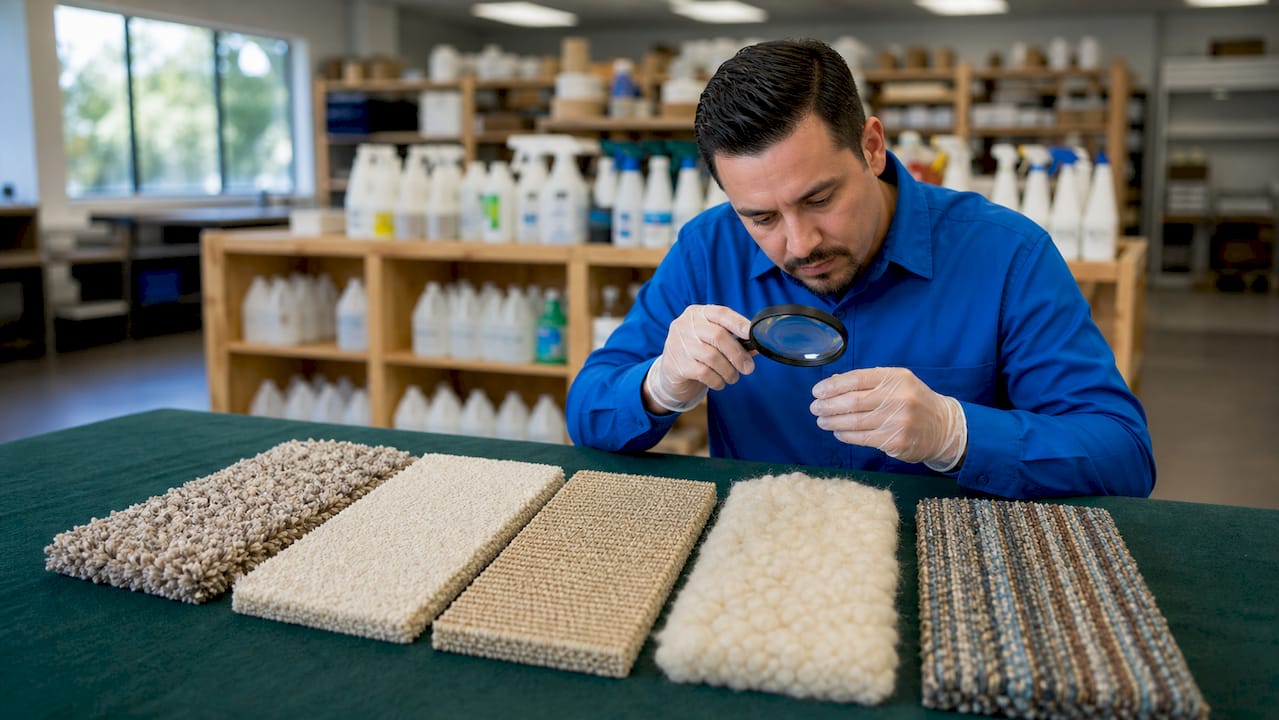
Nylon is the most widely installed fiber in commercial settings because of its resilience and ability to recover from heavy foot traffic. Polyester offers a soft feel and good color retention but compresses under repeated pressure. Olefin resists moisture well, which makes it popular in basements and outdoor-adjacent spaces. Wool is the premium natural option, prized for its look and longevity, but it demands careful handling. Acrylic mimics wool’s appearance at a lower price point but wears faster.
2. How carpet fiber type affects cleaning methods and schedules
Fiber chemistry directly controls which cleaning agents, temperatures, and methods are safe. Getting this wrong does not just reduce effectiveness. It causes irreversible damage.
Proper cleaning chemistry ranges from pH 6–9 for spot cleaners up to pH 8–10 for pre-conditioners, and the right range depends entirely on the fiber being treated. Alkaline products above pH 9 damage wool and some acrylics. Synthetic fibers tolerate a wider pH range, but heat sensitivity still varies by fiber type.
The IICRC S100 standard specifies cleaning frequencies for commercial carpets by traffic level: daily vacuuming in high-traffic areas, interim cleaning every 2–4 weeks, and hot water extraction quarterly. These benchmarks apply to synthetic fibers in standard commercial use. Natural fiber installations often require adjusted schedules with gentler methods.
| Fiber | Safe pH Range | Temperature Sensitivity | Recommended Deep Clean Method |
|---|---|---|---|
| Nylon | 6–10 | Low | Hot water extraction |
| Polyester | 6–9 | Moderate | Hot water extraction |
| Olefin | 6–9 | High | Low-temperature extraction |
| Wool | 5–8 | High | Cool water, gentle extraction |
| Acrylic | 6–9 | Moderate | Low-temperature extraction |
Pro Tip: Always test any cleaning solution on a hidden section of carpet before treating the full area. A 10-minute dwell test reveals color bleed and fiber reaction before damage becomes visible.
3. What makes hot water extraction the professional standard?
Hot water extraction is the professional standard for deep cleaning, removing soil from the full pile depth and resetting the carpet for ongoing maintenance. The process involves pre-vacuuming, pre-spray application, agitation, and extraction at 150–200°F, followed by pile grooming and protector application. That temperature range is critical: too low and soil does not release, too high and sensitive fibers shrink or distort.
One common misconception is worth correcting. “Steam cleaning” is a misnomer. Professional cleaning uses hot water, not actual steam, and the distinction matters for temperature and drying time control. Carpetandtileplus delivers a one-hour dry time after extraction, which minimizes disruption for both homeowners and business owners.
4. What are the unique cleaning needs of wool carpets?
Wool is a protein fiber, and that protein structure makes it sensitive to both high heat and alkaline cleaning agents. Wool requires cool water, neutral pH cleaners, and gentle extraction to avoid damage. Ignoring this causes three specific problems: browning from cellulosic browning reactions, color bleed from unstable dyes, and shrinkage from heat and aggressive agitation.
Safe wool cleaning follows a clear set of rules:
- Use water below 100°F during extraction.
- Select cleaning products with a pH between 5 and 8.
- Avoid alkaline pre-sprays or high-alkalinity spotters.
- Use low-pressure extraction to prevent pile distortion.
- Dry the carpet quickly with air movers to prevent browning.
The WoolSafe certification program identifies cleaning products tested and approved for use on wool carpets. Using a WoolSafe-approved product removes the guesswork from chemistry selection. For a detailed look at the full process, the wool carpet cleaning guide from Carpetandtileplus covers each step for both homes and businesses.
Pro Tip: If you see yellowing appear after cleaning a wool carpet, it is almost always browning caused by excess moisture or alkaline chemistry. Dry the area immediately with an air mover and apply a mild acid rinse to neutralize the pH.
5. Cleaning synthetic fibers: nylon, polyester, and olefin
Synthetic fibers dominate residential and commercial installations, but they are not all the same. Each has a specific weakness that shapes how you clean it.
Nylon’s resilience allows aggressive cleaning approaches and fast recovery from traffic wear. It tolerates higher pH pre-sprays and higher extraction temperatures than any other common fiber. Nylon also responds well to soil-release chemistry, which is why it holds up in commercial corridors and office spaces.
Polyester is softer than nylon but crushes under repeated foot traffic. Once the pile flattens in traffic lanes, cleaning restores appearance only partially. Spot cleaning polyester works well for water-based stains, but oily stains are harder to release because polyester is oleophilic by nature.
Olefin fibers repel water-based stains but attract oily soil, requiring strong surfactants and thorough extraction to remove grease and traffic soil. This is the defining challenge with olefin. It looks clean after a light clean but holds oily residue deep in the pile. Thorough extraction with a strong surfactant is the only reliable solution.
The burn test is the most reliable field method to identify carpet fiber types. Nylon and polyester melt into hard beads. Wool chars and smells like burnt hair. Olefin melts fast and leaves a waxy odor. Knowing your fiber before you clean is not optional. It is the difference between a clean carpet and a damaged one.
Common mistakes to avoid with synthetic fibers:
- Over-wetting polyester, which leads to long dry times and mold risk.
- Using high-alkalinity spotters on acrylic, which causes color loss.
- Under-extracting olefin, which leaves oily residue that attracts more soil.
- Skipping vacuuming before wet cleaning, which turns dry soil into muddy paste.
The burn test remains the gold standard for field fiber identification. It takes less than 30 seconds and prevents costly cleaning errors.
6. How to clean blended fibers and high-traffic areas
Blended carpet fibers combine two or more fiber types to balance cost, durability, and feel. Wool-nylon blends are common in upscale commercial spaces. Nylon-olefin blends appear in budget commercial installations. The challenge is that each fiber in the blend has different tolerances.
Blended fibers require cautious cleaning to protect the most sensitive fiber in the mix. A wool-nylon blend must be cleaned as if it were pure wool, even though the nylon could tolerate more aggressive treatment. Mixed burn test results signal a blend and should trigger a conservative approach.
For high-traffic environments, a tiered cleaning schedule works best:
- Daily vacuuming in all traffic lanes using a CRI Seal of Approval certified vacuum to protect fiber integrity.
- Interim cleaning every 2–4 weeks using encapsulation, which crystallizes soil at the pile surface for easy removal with low moisture.
- Hot water extraction quarterly to remove deep soil that interim methods cannot reach.
- Spot treatment immediately after spills to prevent staining from setting into the fiber.
- Pile grooming after each wet clean to restore fiber direction and speed drying.
Encapsulation cleaning works well as an interim method between extraction cycles because it uses low moisture and dries fast. It cannot replace periodic deep extraction, but it extends the life of the carpet between full cleans. For business owners managing office spaces, the commercial carpet cleaning checklist from Carpetandtileplus provides a ready-to-use schedule by traffic zone.
For high-traffic areas specifically, the 2026 expert guide on cleaning high-traffic carpet covers scheduling and technique in detail.
Key Takeaways
The fiber type in your carpet determines every cleaning decision, from pH level and water temperature to method and frequency.
| Point | Details |
|---|---|
| Fiber type controls cleaning method | Identify your fiber before selecting any cleaning product or method. |
| Wool needs the most protection | Use cool water, neutral pH, and gentle extraction to prevent browning and shrinkage. |
| Nylon tolerates the most | Nylon handles aggressive cleaning and high temperatures better than any other common fiber. |
| Olefin attracts oily soil | Strong surfactants and thorough extraction are required to remove grease from olefin fibers. |
| Blends need conservative care | Treat blended carpets as the most sensitive fiber in the mix to avoid damage. |
What 20 years of cleaning carpets taught me about fiber identification
Most carpet cleaning mistakes I have seen come from one source: skipping fiber identification. A homeowner assumes their carpet is nylon because it looks durable, uses an alkaline pre-spray, and ends up with a yellowed wool rug. A business owner chooses the cheapest cleaning service, which uses the same chemistry on every carpet in the building, and the olefin tiles in the lobby start attracting more soil than before the clean.
The burn test is not glamorous, but it is the most reliable tool in the field. I have used it hundreds of times, and it has saved clients from expensive mistakes. If you are not sure what fiber you have, do not guess. A 30-second test tells you everything you need to know before you commit to a cleaning method.
Fiber selection also matters before installation. If you are choosing carpet for a commercial space with heavy foot traffic, nylon is the clear choice. If you want a luxury feel in a low-traffic bedroom, wool delivers. Polyester works in spaces where softness matters more than longevity. Matching the fiber to the environment from the start reduces cleaning costs and extends carpet life significantly.
The other thing I tell every client: cleaning frequency matters as much as cleaning method. A nylon carpet cleaned too infrequently builds up soil that abrades the fiber over time. A wool carpet cleaned too aggressively loses its structure. The right schedule, matched to the right method for your fiber, is what keeps carpets looking good for years.
— Jim
Carpetandtileplus cleans every fiber type the right way
Carpetandtileplus brings over 20 years of fiber-specific carpet cleaning to homes and businesses across Elgin, Bartlett, Streamwood, Arlington Heights, Palatine, Barrington, and Hanover Park.
Every job starts with fiber identification, followed by the correct chemistry, temperature, and method for that specific carpet. IICRC-certified technicians use organic cleaning products and hot water extraction to deliver results with a one-hour dry time. Whether you need residential carpet cleaning for a wool area rug or commercial carpet care for a high-traffic office, Carpetandtileplus matches the service to the fiber. Contact Carpetandtileplus today for a free assessment and a cleaning plan built around your carpet’s specific needs.
FAQ
What are the main carpet fiber types?
The five main carpet fiber types are nylon, polyester, olefin, wool, and acrylic. Nylon and wool are the most durable; polyester and olefin offer good stain resistance at lower cost.
How does fiber type affect carpet cleaning?
Fiber type determines safe pH levels, water temperature, and cleaning method. Wool requires cool water and neutral pH, while nylon tolerates hot water extraction and higher-alkalinity chemistry.
How often should carpets be professionally cleaned?
The IICRC S100 standard recommends quarterly hot water extraction for high-traffic commercial carpets, with interim cleaning every 2–4 weeks. Residential carpets generally need professional cleaning once or twice per year depending on traffic and fiber type.
Can you use the same cleaner on all carpet fibers?
No. A cleaner safe for nylon can permanently damage wool. Always match cleaning chemistry to the fiber type, and use a WoolSafe-approved product on wool or wool-blend carpets.
What is the best way to identify carpet fiber type at home?
The burn test is the most reliable field method. Hold a small fiber sample over a flame: nylon and polyester melt into hard beads, wool chars and smells like burnt hair, and olefin melts quickly with a waxy odor.