
Chlorine-free tile cleaning is defined as the use of plant-based surfactants, enzyme catalysts, and oxygen-based compounds to remove soils and stains from tile surfaces without producing toxic fumes or volatile organic compounds. This approach, increasingly recognized by IICRC-certified professionals, reduces up to 70% of airborne VOCs compared to chlorine bleach methods during floor cleaning. That reduction matters directly for indoor air quality in your home or business. pH-balanced formulations protect tile glaze and grout integrity over time, while enzyme action breaks down organic stains at the molecular level. Understanding how chlorine-free tile cleaning works gives you a clear path to cleaner surfaces and a healthier indoor environment.
How chlorine-free tile cleaning works: the core mechanisms
Chlorine-free cleaning relies on three distinct agents working together. Each one targets a different type of soil, and together they cover the full range of what ends up on your tile.
Plant-based surfactants are the workhorses of the process. Derived from coconut, corn, or palm sources, they lower the surface tension of water so it can penetrate and lift soil away from tile and grout. Unlike chlorine bleach, they leave no toxic residue and do not off-gas fumes into your living space.
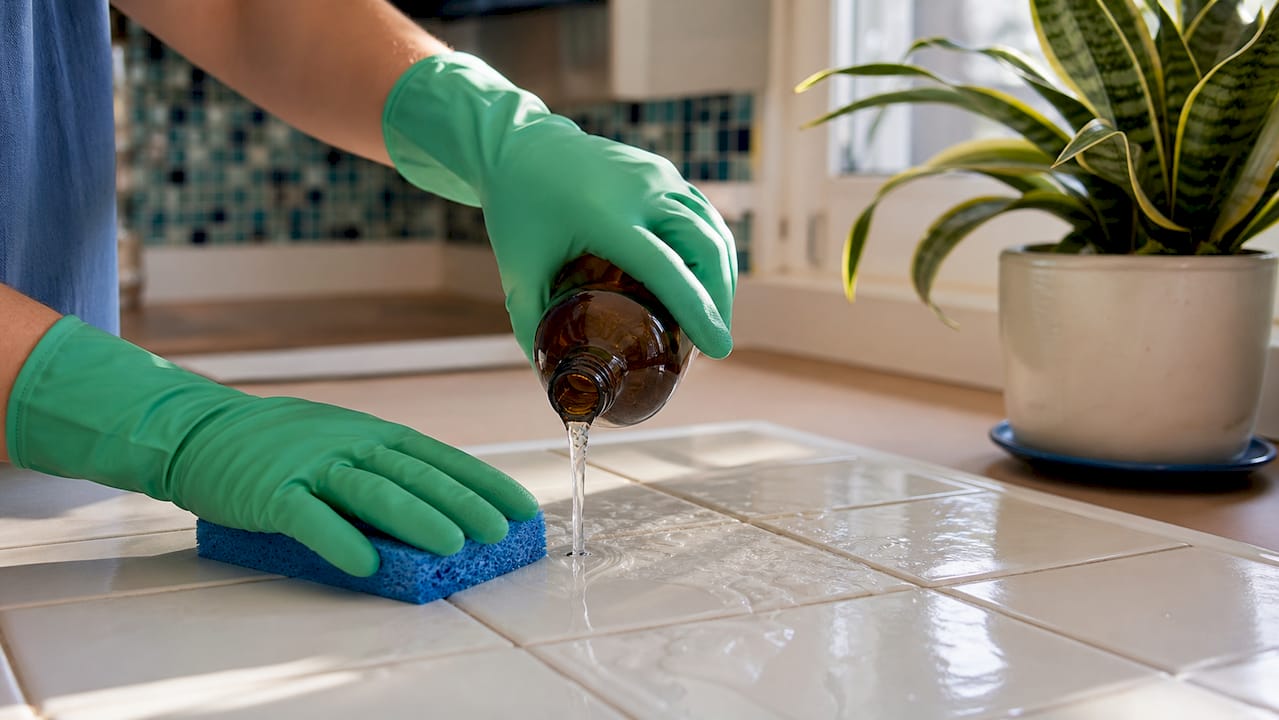
Enzyme cleaners act as biological catalysts, breaking organic molecules into water-soluble fragments that rinse away cleanly. Different enzyme types target different soils: proteases break down proteins like food spills, lipases dissolve fats and grease, and amylases handle starch-based residues. This specificity is what makes enzyme cleaners far more precise than broad-spectrum chemical cleaners.
Oxygen-based compounds, such as hydrogen peroxide derivatives, release singlet oxygen that penetrates grout pores and oxidizes biofilms and staining agents. This process happens without the chlorine byproducts that cause fading, respiratory irritation, and surface degradation.
- Plant-based surfactants suspend soil in water for easy removal
- Enzymes break down proteins, fats, and starches at the molecular level
- Oxygen-based compounds oxidize embedded grime in grout pores
- Physical agitation (scrubbing, brushing) dislodges loosened soil
- Thorough rinsing and extraction carry all debris away from the surface
Physical cleaning using surfactants, water, and agitation removes 90–99% of microbes and soils from a surface. That figure underscores why mechanical action is not optional. The chemistry loosens the soil, but the scrubbing and rinsing are what actually remove it.
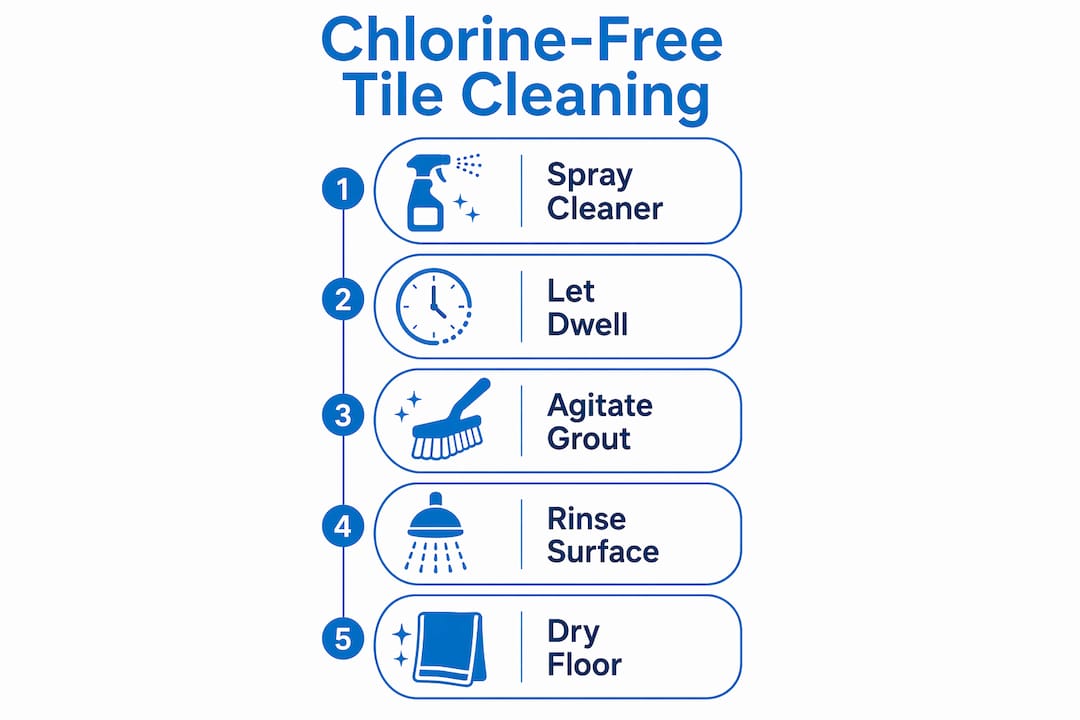
Pro Tip: Apply your chlorine-free cleaner, let it dwell for the recommended time, then use a stiff-bristle grout brush before rinsing. Skipping the brush cuts your cleaning effectiveness significantly.
How does pH balance protect tile and grout during cleaning?
pH level is the single most important chemical variable in tile cleaning. Get it wrong, and you damage the very surfaces you are trying to clean.
Near-neutral pH cleaners (6.8–7.2) are the safest choice for daily tile maintenance. They clean effectively without etching glaze or weakening grout. For deeper cleaning sessions, a mildly alkaline cleaner around pH 8.2 provides more soil-cutting power while remaining safe for most tile types.
Acidic cleaners below pH 4.5 etch porcelain glaze and degrade grout binders over time. Chlorine bleach, while alkaline, causes color fading in grout and releases chloramine gas when it contacts ammonia-based residues. Oxygen-based cleaners avoid both problems entirely.
Different tile types respond differently to chemistry. Porcelain is durable but sensitive to acidic etching. Natural stone such as marble or travertine reacts badly to anything below pH 7. Ceramic tile tolerates a wider range but still benefits from pH-balanced products to preserve its glaze over years of use.
| Tile type | Safe pH range | Risk from chlorine bleach |
|---|---|---|
| Porcelain | 6.8–8.5 | Glaze dulling, grout fading |
| Natural stone | 7.0–8.0 | Etching, surface pitting |
| Ceramic | 6.5–9.0 | Grout color loss, fume exposure |
| Grout (all types) | 7.0–8.5 | Structural degradation over time |
A hydrogen peroxide and sodium bicarbonate paste is one of the most effective oxygen-based options for grout. It releases active oxygen safely, penetrating 2–3 mm into grout pores to oxidize biofilms without chlorine byproducts. Many homeowners default to mixing baking soda and vinegar, but that reaction neutralizes both acids, producing an ineffective salt paste with no real cleaning power.
How do enzyme cleaners work on tile stains?
Enzymes function like a precise scalpel. They target specific organic molecules and break them apart without affecting the surrounding tile surface. That precision is what separates enzyme cleaners from bleach-based products, which attack everything indiscriminately.
The practical challenge with enzyme cleaners is patience. Fresh stains need 15–30 minutes of moist dwell time for initial enzymatic breakdown. Set-in stains, such as old pet urine or dried food residue, can require anywhere from 2 to 24 hours of continuous enzyme contact to fully break down. Rushing the process produces incomplete results.
Here is a step-by-step approach for getting the most from enzyme cleaners on tile:
- Remove loose debris with a dry microfiber cloth or vacuum before applying the enzyme cleaner
- Apply the enzyme cleaner generously, making sure the stained area is fully saturated
- Cover the treated area with a damp cloth or plastic wrap to prevent the cleaner from drying out
- Allow the cleaner to dwell for the appropriate time: 15–30 minutes for fresh stains, up to 24 hours for set-in stains
- Agitate with a brush, then rinse thoroughly with cold or lukewarm water
- Repeat for stubborn stains rather than increasing concentration
Two errors consistently undermine enzyme cleaning. First, mixing enzyme cleaners with bleach deactivates the enzymes immediately. Second, water above 120°F permanently deactivates enzymes, so always rinse with cold or lukewarm water. Both mistakes turn an effective product into an expensive waste.
Pro Tip: For grout stained by pet accidents, apply your enzyme cleaner the night before and cover it with plastic wrap. By morning, the enzymes will have broken down the organic compounds fully, and a simple rinse will finish the job.
What cleaning routines work best for chlorine-free tile maintenance?
A consistent routine produces better results than occasional deep-cleaning sessions. The goal is to remove soil before it bonds to the tile surface or works its way into grout pores.
Dry microfiber mopping removes 98% of particulate soil before wet cleaning begins. That step prevents abrasive particles from scratching tile glaze during the wet phase. Microfiber cloths attract dirt through electrostatic charge and can be reused many times, which also reduces waste.
For wet cleaning, use a pH-balanced plant-based cleaner diluted according to the product label. Most residential formulas call for 1–2 ounces per gallon of water. Apply with a low-moisture mop to avoid saturating grout joints, which can weaken grout over time if done repeatedly with excess water.
- Dry mop or vacuum daily to remove abrasive particulate soil
- Wet clean with a pH-balanced cleaner two to three times per week in high-traffic areas
- Use a stiff grout brush monthly to address grout-line buildup before it sets
- Rinse thoroughly after every wet cleaning session to prevent residue buildup
- Seal grout after professional deep cleaning to reduce porosity and slow re-soiling
For business settings, high-traffic tile areas need more frequent attention. Restaurant kitchens, retail floors, and medical facilities accumulate grease, foot traffic soil, and biological residues faster than residential spaces. Eco-friendly tile cleaning services use low-toxicity, pH-appropriate products combined with heat and mechanical agitation, followed by rinse and extraction, to handle that level of soil load effectively.
Rinsing is the step most homeowners skip or rush. Mixing anionic surfactants with cationic disinfectants creates insoluble sticky residues that attract new dirt rapidly. A thorough rinse between cleaning and any disinfecting stage prevents that buildup entirely.
| Cleaning task | Frequency | Tool or product |
|---|---|---|
| Dry soil removal | Daily | Electrostatic microfiber mop |
| Wet cleaning | 2–3 times per week | pH-balanced plant-based cleaner |
| Grout scrubbing | Monthly | Stiff-bristle grout brush |
| Deep cleaning | Every 6–12 months | Enzyme or oxygen-based cleaner |
| Grout sealing | After each deep clean | Penetrating grout sealer |
For a broader look at tile and grout cleaning techniques that align with 2026 eco-friendly standards, expert floor care professionals recommend combining enzyme pre-treatment with steam or hot-water extraction for the deepest results.
Key Takeaways
Chlorine-free tile cleaning works because plant-based surfactants, enzyme catalysts, and oxygen-based compounds remove soil effectively while protecting tile surfaces and indoor air quality.
| Point | Details |
|---|---|
| Three-agent system | Plant-based surfactants, enzymes, and oxygen compounds each target different soil types. |
| pH balance is critical | Use pH 6.8–7.2 for daily cleaning and around 8.2 for deeper sessions to protect tile and grout. |
| Enzyme dwell time matters | Fresh stains need 15–30 minutes; set-in stains require up to 24 hours of moist contact. |
| Dry before you wet clean | Microfiber dry mopping removes 98% of particulate soil and prevents glaze scratching. |
| Rinse thoroughly every time | Skipping the rinse leaves sticky residues that attract new soil faster than the original dirt. |
Why I think most people are cleaning their tile wrong
After years of working with homeowners and business owners across the Northwest Suburbs of Chicago, the pattern I see most often is this: people reach for the strongest-smelling product they can find, scrub hard, and assume the fumes mean it is working. That instinct is understandable. It is also wrong.
Chlorine bleach does not clean. It disinfects. Those are two different actions. Physical removal of soil using surfactants and agitation is what actually cleans a surface. Applying bleach to a dirty tile just disinfects the dirt sitting on top of it. The soil stays put.
What I have seen work consistently is patience with enzyme cleaners and respect for pH. Homeowners who switch to plant-based, pH-balanced products and give enzyme cleaners the dwell time they need almost always report that their grout looks better after a few months than it did after years of bleach scrubbing. The surfaces are not being stripped and re-stained in a cycle. They are being cleaned at the molecular level and then protected.
The other thing I tell every customer: seal your grout after a professional deep clean. A penetrating sealer reduces grout porosity dramatically, which means soil cannot bond as deeply. Your routine cleaning becomes faster and more effective. The benefits of organic cleaning products extend well beyond tile. Cleaner indoor air, safer surfaces for kids and pets, and longer-lasting floors are the real return on the investment.
The shift from brute-force chemical cleaning to chemistry that respects surfaces is not a trend. It is the direction the entire professional cleaning industry is moving, and for good reason.
— Jim
Carpetandtileplus brings professional chlorine-free cleaning to your home or business
Carpetandtileplus uses IICRC-certified, organic cleaning products on every tile and grout job. The process combines pH-balanced plant-based solutions, enzyme pre-treatment, and thorough hot-water extraction to remove embedded grime without harsh chemical fumes.

Whether you need residential tile and grout cleaning for your kitchen and bathrooms or commercial tile cleaning services for a high-traffic business space, Carpetandtileplus serves Elgin, Bartlett, Streamwood, Arlington Heights, Palatine, Barrington, and Hanover Park. With over 20 years of experience and a one-hour dry time, the team delivers results that protect your surfaces and your indoor air quality without disrupting your day.
FAQ
What makes chlorine-free cleaners effective on tough stains?
Enzyme cleaners break organic stains into water-soluble fragments at the molecular level, while oxygen-based compounds oxidize embedded grime in grout pores. Together, they address stains that surface-level scrubbing alone cannot reach.
Is chlorine-free tile cleaning safe for all tile types?
Yes, when pH-balanced formulas are used correctly. Porcelain and ceramic tolerate a wider pH range, while natural stone requires cleaners at or above pH 7.0 to avoid etching.
How long does an enzyme cleaner need to sit on tile?
Fresh stains require 15–30 minutes of moist dwell time. Set-in stains can need up to 24 hours. Keeping the area covered with a damp cloth or plastic wrap prevents the cleaner from drying out and stopping enzyme activity.
Can I use chlorine-free methods in a commercial kitchen?
Yes. Eco-friendly tile cleaning using pH-appropriate products, mechanical agitation, and hot-water extraction handles the grease and biological residues common in commercial kitchens without toxic fumes that affect staff or food safety.
Does chlorine-free cleaning actually improve indoor air quality?
Chlorine-free methods can reduce airborne VOCs by up to 70% compared to bleach-based cleaning. That reduction directly benefits anyone in the space, especially children, pets, and people with respiratory sensitivities.