
Remove efflorescence by dry brushing the joints first, then following up with plain water and a stiff grout brush. If the white haze keeps coming back after rinsing and drying, move to a manufacturer-approved efflorescence cleaner or a low-strength sulfamic acid solution, but only after a test patch. Cleaning the salts off the surface does nothing to stop the source, so check for hidden moisture before you seal anything.
TL;DR:
- Mechanical removal with dry brushing or a stiff grout brush is effective for mild efflorescence, avoiding chemical cleaners initially.
- Repeated use of acid cleaners can damage grout and mask underlying moisture issues, which are the true cause of efflorescence recurrence.
- Always test cleaning solutions on a hidden patch before full application, especially with acids or vinegar, to prevent surface etching or discoloration.
- Persistent efflorescence indicates underlying moisture problems, such as leaks or high humidity, requiring inspection and fixing before sealing.
- Professional cleaning and inspection are recommended if efflorescence keeps returning despite surface treatments, as the root cause lies beneath the tile.
Table of Contents
- Quick Action Checklist: What To Try First and In What Order
- Step-by-Step Removal Methods, From Gentle to Aggressive
- Safety, Tile Compatibility, and Prep Checks Before You Work
- Why Efflorescence Can Return and How To Actually Prevent It
- Contractor-Backed Tips: When Efflorescence Calls for a Pro
- What This Guide Gets Right That Most Don’t
- How Carpet and Tile Plus Handles Stubborn or Recurring Efflorescence
- Where This Guidance Comes From
- Sources
Quick Action Checklist: What To Try First and In What Order
Grout efflorescence removal works best when you resist the urge to reach for the strongest cleaner in the cabinet on day one. Start gentle, escalate only when needed, and give the grout time to indicate what treatment is necessary.
- Dry-scrub first. Use a stiff nylon brush or a white nylon pad to knock loose the powdery salt deposits, then vacuum the residue instead of sweeping it around.
- Wet-and-scrub cycles. Work clean water into the joints with a grout brush, scrub, rinse, and let it dry completely before deciding if you need another round.
- Test a small patch. Try a diluted vinegar solution on an inconspicuous area, or follow the label directions exactly if you’re using a sulfamic-acid cleaner.
- Rinse, dry, and wait. Flush the area with clean water, dry it fully, then observe the spot for several days before sealing or trying anything stronger.
Most mild cases resolve in the first two steps. If you’re still seeing haze after a full dry cycle, you’re dealing with either heavier mineral deposits or an ongoing moisture problem, and that changes your next move.
Step-by-Step Removal Methods, From Gentle to Aggressive
Mechanical removal comes first, always
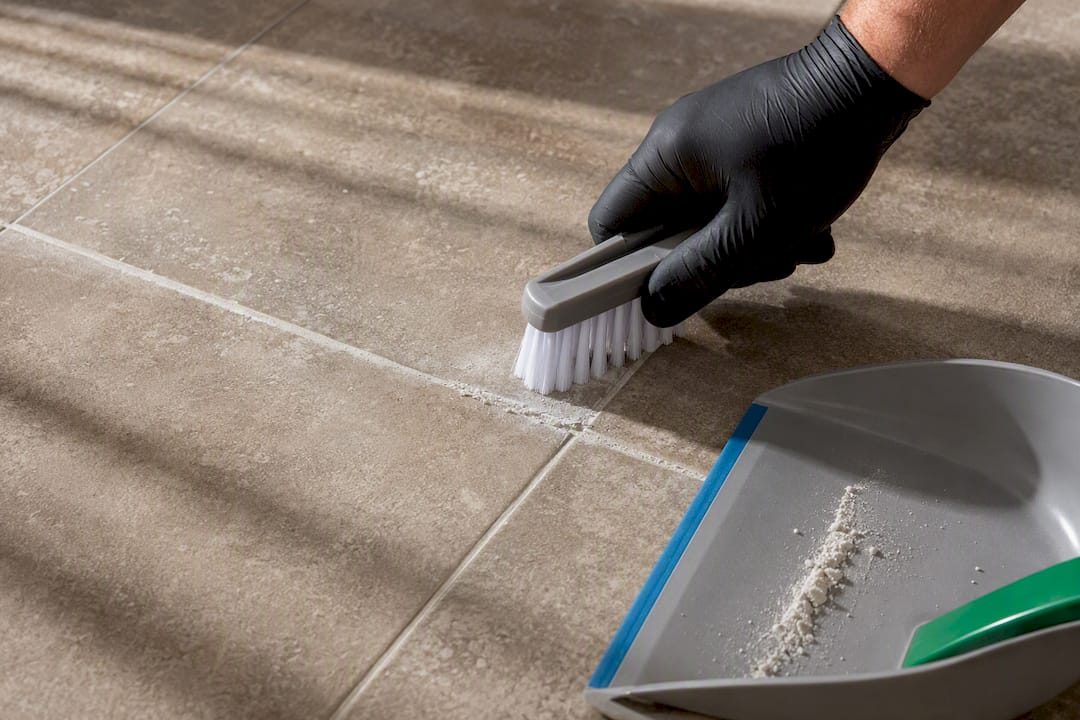
A stiff nylon brush handles fresh, light efflorescence in most cases. Work in short strokes along the joint lines rather than scrubbing in circles, which tends to grind salt crystals into the grout surface instead of lifting them out. For larger floors, a rotary scrubber with a white or beige pad speeds things up, but keep the machine moving. Dwelling in one spot with an aggressive pad can dull glazed tile or burnish natural stone. If the deposits vacuum up as loose powder, you’re done. No chemicals needed.
Water-and-scrub gets you further than most people expect
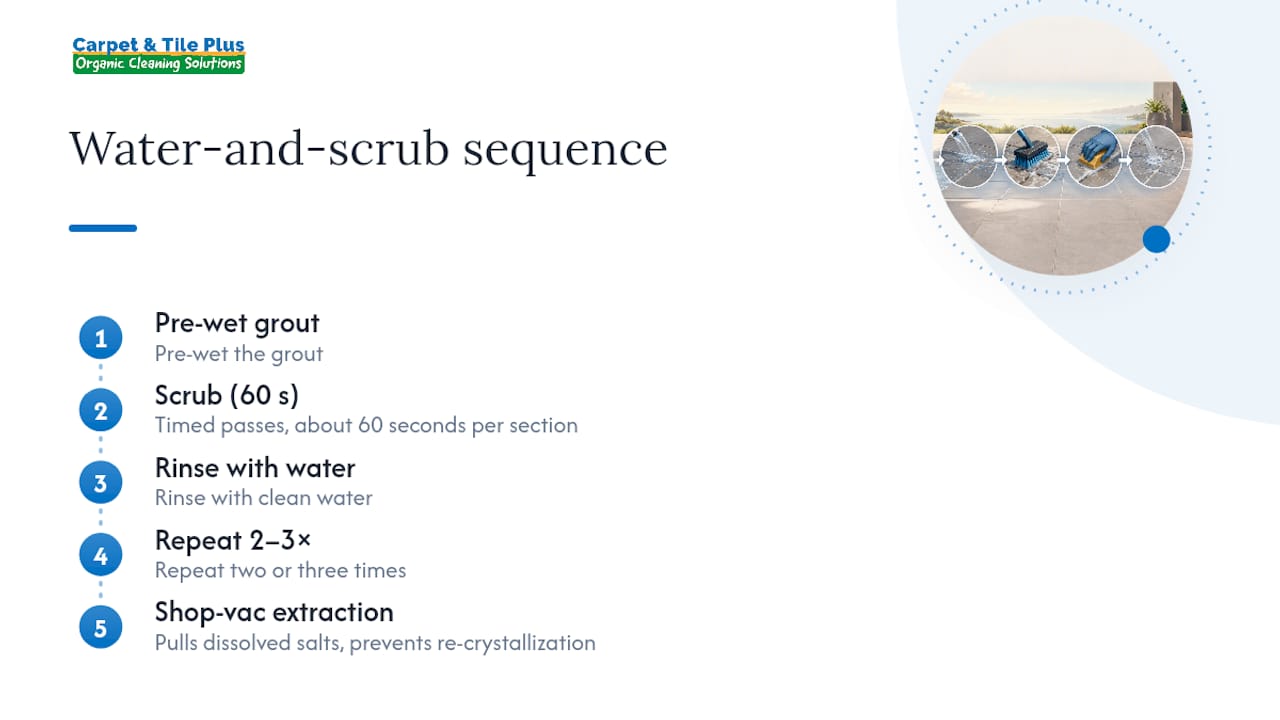
Pre-wet the grout, scrub with a stiff brush in timed passes of about 60 seconds per section, then rinse with clean water. Repeat two or three times. A shop vac is worth the extra step here because it pulls dissolved salts out of the joint instead of leaving them to re-crystallize on the surface as the water evaporates. This is the method Fine Homebuilding’s professional workflow leans on before anyone touches an acid.
Household acids, used sparingly
A 1:1 vinegar-to-water solution can knock out moderate efflorescence, but treat it as a supplement, not a first-line fix. Vinegar is acetic acid, and repeated use erodes cementitious grout over time, which is why Allspex Tiling’s technical notes caution against making it a routine tool. Always test a hidden patch first and give it a few minutes to show any reaction before committing to the whole floor.
Commercial and sulfamic acid cleaners for stubborn cases
When mechanical and vinegar methods fall short, a sulfamic-acid based cleaner is the next tool professionals reach for. Wet the joints before applying the product, dilute exactly to label instructions, and keep dwell times short. Custom Building Products’ technical bulletin on efflorescence recommends letting new grout cure at least seven days before any acid contact, since uncured grout is far more vulnerable to etching.
- Wet joints thoroughly before applying any acid product.
- Work in small, manageable patches you can rinse before the product dries.
- Rinse at least twice with clean water and dry completely.
- Never mix acid products with other cleaners, especially bleach-based ones.
Pro Tip: Overusing acid cleaners is the single most common way homeowners damage good grout. If you find yourself reaching for the sulfamic bottle every few weeks, the problem isn’t the grout, it’s moisture underneath it, and no amount of acid fixes that.
Watch for softening grout, visible color loss, or tile that looks etched or duller than before. Any of those signs means stop immediately and bring in a professional before you make the surface worse.
Safety, Tile Compatibility, and Prep Checks Before You Work
Not every surface can handle acid, even a mild one. Marble, limestone, and travertine are calcium-based stones, and acid reacts with calcium carbonate on contact, etching the surface permanently. If your tile is natural stone rather than ceramic or porcelain, skip the acid entirely and stick with mechanical removal or a stone-safe efflorescence product labeled explicitly for calcareous surfaces.
Before treating a full room, run a test patch in a closet or under an appliance. Apply your chosen method, wait as instructed, rinse, and dry, then check for dulling, color shift, or a rough, sandy texture. Any of those results means you’ve picked the wrong product for that tile.
- Wear rubber gloves and eye protection any time you’re handling acid-based cleaners.
- Work with windows open or a fan running; fumes from sulfamic products build up fast in bathrooms.
- Keep a bucket of clean water nearby to dilute or rinse an accidental splash immediately.
- Contain runoff with towels so acid runoff doesn’t pool on baseboards or adjacent flooring.
If the grout already has a topical sealer or acrylic coating, don’t assume you’re seeing efflorescence at all. TCNA’s technical notes on efflorescence point out that clouding sealers can mimic the same white haze, and treating sealer failure with acid just makes the mess worse.
Why Efflorescence Can Return and How To Actually Prevent It
Efflorescence needs three things to happen: soluble salts in the grout or substrate, moisture to dissolve them, and a pathway to carry that moisture to the surface. Remove any one of those and the problem stops. Cleaning alone only ever addresses the visible salt, which is why it keeps coming back in bathrooms, mudrooms, and below-grade installations where moisture never really goes away.
Check your own home before assuming the grout is at fault. Look for slow leaks under sinks or behind shower valves, confirm exterior grading slopes away from the foundation on ground-floor tile, and run a bathroom fan or dehumidifier if humidity sits high after showers.
- Inspect for plumbing leaks near tiled walls and floors before doing anything else.
- Check that exterior grading and downspouts direct water away from slab edges.
- Improve ventilation in bathrooms and basements where condensation is constant.
- Ask a contractor about calcium-aluminate or epoxy grout for chronically wet areas, since these resist the salt migration that plagues standard cement-based grout, according to Mapei’s technical guidance on efflorescence.
Sealing can help maintain a clean result but should be done only once the grout is fully clean and dry. Sealing over residual salts traps them and can make the discoloration permanent. If you’ve fixed the moisture source and cleaned thoroughly, you’re ready to look into how grout cleaning prepares your surface for sealing. If moisture keeps returning no matter what you try, the fix is likely below the tile, and that calls for a contractor who can evaluate the substrate or waterproofing membrane.
Contractor-Backed Tips: When Efflorescence Calls for a Pro
Professionals reach for low-acid, manufacturer-approved cleaners specifically because repeated strong-acid use wears down grout faster than most homeowners realize. It’s a tradeoff between speed and longevity, and pros err toward longevity because they’re the ones fixing the comeback jobs.
Fast dry time matters more than people expect. A one-hour dry approach limits how long dissolved salts sit in wet grout re-crystallizing on the surface, which is part of why professional jobs often look cleaner longer than a DIY attempt using the same products.
Pro Tip: If efflorescence returns within a few weeks of cleaning despite dry conditions and no visible leaks, that’s usually a sign of salt-laden substrate or a slab moisture issue, and it’s beyond what surface cleaning can fix.
Persistent moisture readings, a chalky substrate under removed tile, or grout that keeps discoloring in the same spot are all signals to stop DIY treatment and get a professional inspection.
What This Guide Gets Right That Most Don’t
Most grout advice online treats efflorescence as a cleaning problem with a cleaning solution. It isn’t. It’s a moisture problem that happens to show up as a cleaning problem, and that distinction changes what “success” should look like for a homeowner tackling this themselves.
The conventional wisdom oversells acid. Plenty of guides jump straight to sulfamic products because they work fast, but fast isn’t the same as right. Grout is a consumable surface, not armor, and every acid pass shaves a little life off it. The pros who’ve seen the comeback jobs know that mechanical removal and patience solve most cases without ever opening a bottle of acid.
If I had to prioritize one thing for a reader standing in their bathroom right now, it’s this: stop treating the white haze and start looking for where the water is coming from. A dry brush and some patience will fix the surface. Only fixing the moisture source fixes the problem.
— Jim
How Carpet and Tile Plus Handles Stubborn or Recurring Efflorescence
If you’ve dry-scrubbed, rinsed, and tested a mild cleaner and the haze keeps coming back, that’s usually the point where a professional inspection saves you more grout than it costs. Carpetandtileplus’s tile and grout cleaning service is built around exactly this situation: recurring salt deposits that point to a moisture issue most homeowners can’t diagnose from the surface.

Technicians use organic cleaning products rather than repeated heavy-acid treatments, which matters most in bathrooms and kitchens where you want the grout to last. A fast dry time is prioritized on most jobs, so a stubborn efflorescence case doesn’t turn into a weekend project with your bathroom taped off. When booking, ask about the inspection process, the cleaning method used on your specific tile, and whether sealing is included once the grout is confirmed clean and dry. Property managers dealing with recurring efflorescence across multiple units should look at our commercial tile and grout cleaning service, while homeowners can start with our residential tile and grout cleaning page to check availability and get a quote for the Northwest Suburbs of Chicago.
Where This Guidance Comes From
The removal and prevention steps above draw directly from manufacturer technical bulletins and industry standards, not generic cleaning blogs. Custom Building Products’ TB21 bulletin and Mapei’s technical documentation cover causes, cures, and grout selection for problem-prone areas. Laticrete’s FAQ on efflorescence addresses recurrence and sealing timing, while the Tile Council of North America provides the baseline cleaning guidance every contractor is trained against.
Sources
- TB21 Efflorescence (Custom Building Products)
- Causes and cures of grout efflorescence (Mapei)
- Removing efflorescence (Fine Homebuilding)