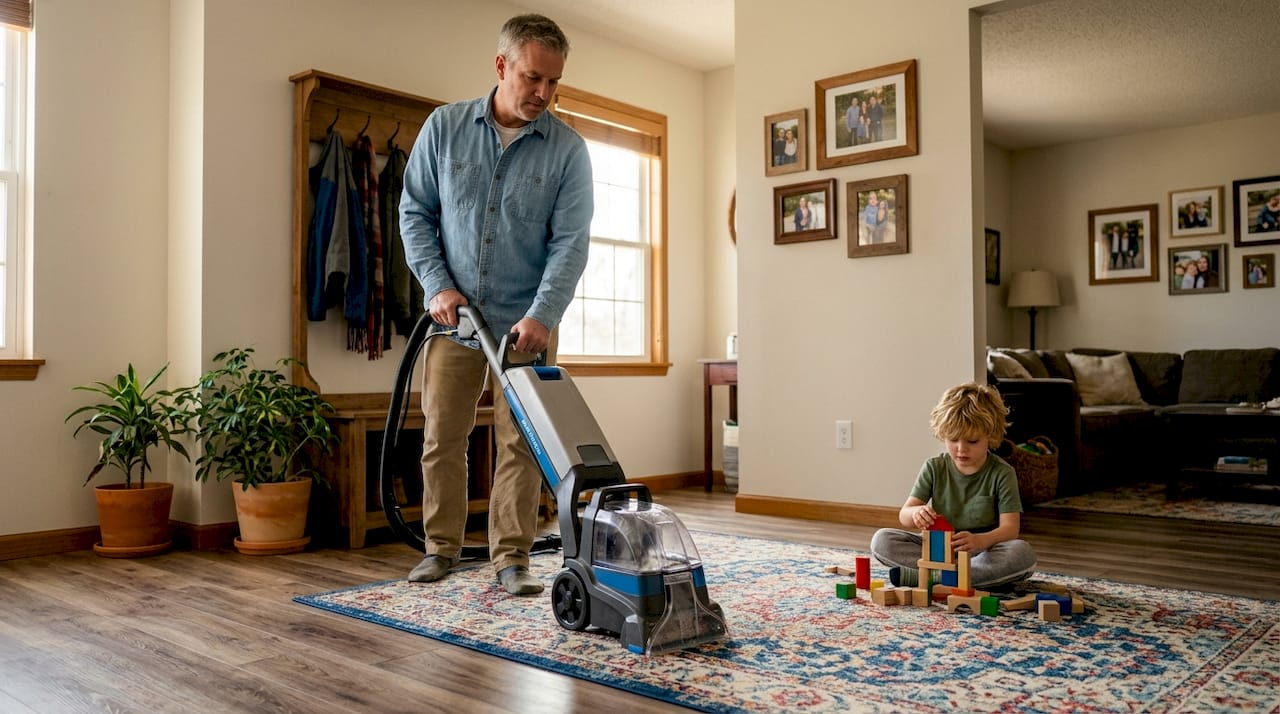
Professional carpet cleaning removes over 95% of deep-embedded soil and contaminants, while DIY rental machines clear only 50–75% of surface dirt. The benefits of professional vs DIY carpet cleaning extend well beyond cleanliness: they touch your family’s health, your carpet’s lifespan, and your actual cost per clean. This article breaks down eight key factors, from equipment power and allergen removal to warranty risks and drying time, so you can decide which method fits your home or business in 2026.
1. How do professional and DIY carpet cleaning methods compare in effectiveness?
Professional truck-mounted systems operate at over 200°F and generate suction powerful enough to pull contaminants from deep within carpet fibers. Rental machines, by contrast, heat water to only 130–150°F, which falls short of the IICRC standard for true hot-water extraction. The result is rinsing rather than real cleaning.
That temperature gap matters more than most homeowners realize. At 200°F, heat breaks down grease, kills bacteria, and loosens bonded soil. At 130°F, you are mostly pushing dirt around with warm water.
| Factor | Professional cleaning | DIY rental |
|---|---|---|
| Water temperature | 200°F+ | 130–150°F |
| Soil removal rate | 95%+ | 50–75% |
| Suction power | Truck-mounted, high-pressure | Portable, limited |
| Chemical control | pH-balanced, soil-specific | Generic, residue risk |
| Drying time | 4–6 hours | 18–24+ hours |
Professionals also use pH-balanced, soil-specific detergents that rinse out completely. Rental machine solutions often leave a sticky residue that attracts new dirt within days of cleaning.
Pro Tip: Ask any professional cleaner whether they use a pre-spray treatment. A proper pre-spray applied 10–15 minutes before extraction is what separates a surface rinse from a genuine deep clean.
2. What are the time and cost differences between professional and DIY cleaning?
A DIY carpet cleaning session costs $60–$100 when you factor in machine rental and cleaning solutions. Professional cleaning runs $129–$349 per service, but professionals recommend it only every 12–18 months. That longer interval changes the math significantly.
The hidden cost of DIY is your time. A full DIY cleaning session for an average home takes 5–6 hours, including pickup, cleaning, and return of the rental machine. A professional crew handles the same job in a fraction of that time, and your carpets dry in 4–6 hours rather than 18–24 hours.
- Direct cost: DIY saves money upfront but requires more frequent cleaning due to lower soil removal rates.
- Time cost: A 5–6 hour DIY session has real opportunity cost, especially for business owners.
- Frequency: Professional cleaning every 12–18 months often costs less annually than multiple DIY sessions.
- Carpet wear: Repeated DIY cleaning with inferior equipment accelerates fiber breakdown, shortening carpet life.
- Long-term value: Professional cleaning extends carpet lifespan, delaying costly replacement.
Pro Tip: Track how often you rent a machine per year. If you clean more than twice annually, professional service likely costs the same or less when you include your time and the wear on your carpet.
3. How does professional cleaning benefit indoor air quality and health?
The U.S. EPA reports that indoor air is 2–5 times more polluted than outdoor air. Carpets trap dust mites, pet dander, mold spores, and bacteria, making them a significant contributor to that pollution. Professional cleaning addresses this at a level DIY methods cannot match.
Professional hot-water extraction removes up to 98% of allergens, compared to 50–70% for DIY methods. That gap is the difference between meaningful relief and marginal improvement for allergy and asthma sufferers.
“Carpets act as a filter for indoor air, trapping pollutants that get released back into the air with foot traffic. Professional extraction removes those trapped contaminants at the source, rather than redistributing them.”
The health benefits extend to everyone in the home, not just allergy sufferers. Dust mites, pet dander, and mold spores affect respiratory health broadly. For homes in the Northwest Suburbs of Chicago, where windows stay closed for months during winter, carpet cleaning and air quality are directly linked.
- Dust mite removal: Professional heat kills dust mites; rental machines lack the temperature to do so.
- Pet dander: Deep extraction pulls dander from the carpet base, not just the surface.
- Mold spores: Faster drying times with professional equipment prevent new mold growth post-cleaning.
- Bacteria: High-temperature extraction sanitizes fibers in a way that low-heat rentals cannot.
4. What risks and warranty issues come with DIY carpet cleaning?
Many carpet manufacturers require professional hot-water extraction every 12–24 months to keep the warranty valid. DIY cleaning with rental equipment may void that coverage entirely. If your carpet fails prematurely, you could face full replacement costs with no recourse.
Over-wetting is the most common DIY mistake. Rental machines have weak suction, which leaves moisture trapped in the carpet padding for 24–48 hours. That moisture creates mold, mildew, and odors that are far more expensive to fix than the original cleaning cost.
- Check your warranty terms before renting a machine. Many manufacturers specify “IICRC-certified professional cleaning” as a condition of coverage.
- Avoid over-wetting by making multiple dry passes with the rental machine after each wet pass.
- Test cleaning solutions in a hidden area first. Some DIY chemicals bleach or discolor certain carpet fibers.
- Never clean wall-to-wall carpet with a rental machine in humid conditions. Slow drying in high humidity creates mold within 24 hours.
- Document professional cleanings with receipts. Carpet manufacturers often require proof of professional service to honor warranty claims.
The signs your carpet needs professional cleaning often appear before a warranty issue does. Persistent odors, matted fibers, and visible soil lines after DIY cleaning all indicate that rental equipment is not reaching the problem.
5. When is DIY carpet cleaning suitable, and when do you need a professional?
DIY carpet cleaning works well in specific, limited situations. Spot treatment of a fresh spill, light maintenance cleaning in a single small room, or interim cleaning between professional visits are all reasonable uses of a rental machine. The key word is “interim.” DIY is a supplement, not a replacement.
When DIY makes sense:
- Spot cleaning a fresh stain before it sets
- Light surface cleaning in a low-traffic room
- Tight budget with no pets, allergies, or heavy soil
- Personal preference for hands-on home maintenance
When professional cleaning is the right call:
- Multiple rooms or a whole-home clean
- Pet stains, odors, or urine contamination requiring odor removal treatment
- Allergy or asthma sufferers in the household
- Commercial properties with high foot traffic
- Carpets approaching warranty renewal requirements
- Visible soil that persists after DIY attempts
For business owners in particular, professional commercial cleaning delivers a satisfaction level and consistency that rental equipment cannot. A commercial space with dirty carpets signals neglect to clients and employees. Carpetandtileplus serves commercial properties across the Northwest Suburbs of Chicago, including Elgin, Bartlett, and Arlington Heights, with IICRC-certified technicians and organic cleaning products.
Pro Tip: Combine both approaches. Use DIY spot treatment for fresh spills and schedule professional cleaning once or twice a year. That combination keeps carpets clean between visits without over-relying on rental equipment.
6. How does drying time affect your decision?
Drying time is a practical factor that most homeowners underestimate until they are sleeping in a hotel because their carpets are still wet at midnight. Professional cleaning dries carpets in 4–6 hours. DIY rental cleaning takes 18–24 hours or longer, depending on humidity and ventilation.
That drying gap creates real risk. Moisture sitting in carpet padding for 24 hours is enough time for mold colonies to establish. In a home with pets or children, wet carpets for an entire day also means restricted access to living spaces. Carpetandtileplus delivers a one-hour dry time in many cases, which is a direct result of truck-mounted suction power that portable rental units cannot replicate.
For business owners, the math is even clearer. Closing a commercial space for 24 hours to let carpets dry costs far more than the price difference between renting and hiring professionals.
7. What about cleaning solutions: professional vs. DIY products?
The cleaning solution matters as much as the equipment. Professionals select pH-balanced detergents matched to the specific soil type and carpet fiber. That specificity prevents over-alkaline solutions from breaking down carpet backing or leaving residue that attracts dirt.
DIY rental solutions are generic by design. They are formulated to work on most carpets without causing obvious damage, not to deliver the best result for your specific carpet. The residue left by many rental solutions acts like a magnet for new soil, which is why DIY-cleaned carpets often look dirty again within two to three weeks.
Carpetandtileplus uses organic cleaning products that are safe for children, pets, and allergy-sensitive households. If you are evaluating eco-friendly carpet cleaning options, the chemistry used by your cleaner is as important as the equipment they bring.
8. How to prepare your home for the best cleaning results
Preparation affects results regardless of which method you choose. Moving furniture, vacuuming thoroughly before any wet cleaning, and identifying problem areas in advance all improve outcomes. For professional cleaning, preparing your home takes about 20–30 minutes and dramatically improves what the technician can accomplish.
For DIY cleaning, preparation is even more critical because you have less margin for error. Vacuuming removes loose soil that would otherwise turn to mud under wet cleaning. Pre-treating stains with an appropriate spotter before running the rental machine gives the solution time to break down the stain. Skipping these steps is the most common reason DIY results disappoint.
Key takeaways
Professional carpet cleaning outperforms DIY methods in soil removal, allergen elimination, drying time, and long-term carpet protection, making it the better investment for most homeowners and business owners.
| Point | Details |
|---|---|
| Soil removal gap | Professional systems remove 95%+ of soil; rental machines remove only 50–75%. |
| Health impact | Professional extraction removes up to 98% of allergens, versus 50–70% for DIY. |
| Drying time risk | DIY carpets stay wet for 18–24 hours, creating real mold risk; professional drying takes 4–6 hours. |
| Warranty protection | Many carpet warranties require professional cleaning every 12–24 months to stay valid. |
| True cost comparison | DIY costs $60–$100 per session but requires more frequent cleaning; professional service at $129–$349 delivers deeper results that last 12–18 months. |
What I have learned after years of watching homeowners choose between the two
The most common mistake I see is treating professional cleaning as a luxury rather than maintenance. Homeowners rent a machine, spend a Saturday cleaning, and feel good about saving $200. Then six months later, the carpets look worse than before they started, because the rental machine left residue that attracted new soil faster than the original dirt did.
The second mistake is waiting too long. By the time most people call a professional, the carpet has years of embedded soil, pet dander, and bacteria that require multiple passes to address. A carpet cleaned professionally every 12–18 months is dramatically easier and cheaper to maintain than one that gets a professional clean every four years.
DIY cleaning has a real place in a smart carpet care routine. Spot treatment, interim maintenance, and small-area cleaning are all legitimate uses. But the idea that a rental machine delivers results close to professional equipment is simply not accurate. The temperature difference alone, 130°F versus 200°F, tells the whole story.
My honest advice: use DIY for spills and spot treatment, and schedule professional cleaning at least once a year. Your carpet will last longer, your air will be cleaner, and you will spend less money over a 10-year period than if you rely on rental machines alone.
— Jim
Carpetandtileplus professional carpet cleaning services
Carpetandtileplus has served homeowners and businesses across the Northwest Suburbs of Chicago for over 20 years, with IICRC-certified technicians and organic cleaning products that are safe for children and pets.
Whether you need residential carpet cleaning for your home in Elgin, Bartlett, or Palatine, or commercial carpet cleaning for your business in Arlington Heights or Hanover Park, Carpetandtileplus delivers truck-mounted extraction, a one-hour dry time, and hundreds of verified five-star reviews. Request a quote today and see the difference professional cleaning makes.
FAQ
How often should carpets be professionally cleaned?
Most carpet manufacturers and the IICRC recommend professional cleaning every 12–18 months. Homes with pets, children, or allergy sufferers benefit from cleaning every 6–12 months.
Can DIY carpet cleaning damage my carpet?
Yes. Over-wetting with rental machines traps moisture in carpet padding for 24–48 hours, which causes mold, mildew, and structural damage to both the carpet and the subfloor beneath it.
Does professional carpet cleaning remove pet odors?
Professional hot-water extraction reaches the carpet backing and padding where odor-causing bacteria live. DIY rental machines rarely generate enough heat or suction to fully remove pet odor at its source.
Is professional carpet cleaning worth the cost?
Professional cleaning at $129–$349 per service removes 95%+ of soil and lasts 12–18 months. DIY sessions at $60–$100 remove only 50–75% of soil and require more frequent repeating, making professional cleaning the better value over time.
Will DIY cleaning void my carpet warranty?
Many carpet warranties explicitly require IICRC-certified professional cleaning every 12–24 months. Using a rental machine instead of a certified professional may void your warranty and leave you responsible for full replacement costs.