
To remove skunk smell from carpet, get the source out of the house, ventilate, break down the oily spray with a peroxide-based mix or a carpet-safe neutralizer, rinse, and dry with plenty of fresh air. Light contamination from paws or shoes often clears in one round. Spray that soaked into the backing or padding usually does not, and that is when a professional deodorizing job makes sense. Below you will find the exact steps, the limits of home remedies, and how to tell which situation you are in.
What are the key steps to remove skunk smell from carpet?
- Move the pet or contaminated items outside first, open windows and doors, and run fans before you touch the carpet.
- A mix of 1 quart of fresh 3% hydrogen peroxide, 1/4 cup baking soda and 1 to 2 teaspoons of dish soap can break down the odor. Mix it in an open container, use it right away, and test for color loss first.
- Never mix chlorine bleach with other cleaning products, and never assume a recipe is safe for your carpet fiber.
- If the smell returns on humid days or comes from the padding, surface cleaning will not be enough. Call a certified carpet cleaner.
Table of Contents
- Why skunk smell clings to carpet so stubbornly
- What to do in the first hour
- Step-by-step: removing skunk smell from carpet at home
- What not to use, and why
- Surface smell or deep contamination?
- If the smell is still there after two rounds
- When to hire a professional
- Perspective: what we see in Northwest suburban homes
- Carpet cleaning and deodorizing in the Northwest Suburbs
- Preventing a repeat
- FAQ
- Sources
Why skunk smell clings to carpet so stubbornly
Skunk spray is oily, and the odor comes from sulfur compounds. The Lower Midwest Carpet Cleaners Association guide names them as thiols and thioacetate derivatives, and notes that complete removal may take several methods and steps.
That explains why a quick shampoo often fails. Carpet fibers hold the oil, and the padding underneath acts like a sponge. Water alone does not dissolve oil. Worse, one forum thread among the top results reports that plain water seemed to make the smell stronger. The smell can also come back: University of Nebraska–Lincoln Extension notes that skunk odor can reactivate in high humidity. If your home smells fine in January and skunky again in a muggy August, that is the cause, not your imagination.
The goal is not to cover the smell. It is to chemically change the odorous molecules into less-odorous compounds, which is how the LMCCA describes neutralization, and to remove the oily residue that carries them.
What to do in the first hour
What you do before cleaning matters as much as the cleaning.
- Stop more spray from getting in. If a pet was sprayed, keep it outside. Texas A&M Veterinary Medicine advises this so additional spray does not soak into carpet or furniture, and suggests disposable gloves and old clothing while you handle the animal.
- Bathe the pet before you clean the floor. The IICRC says that if a pet caused the odor, it should be bathed before floors and furnishings are cleaned. Otherwise you will re-contaminate the carpet you just treated.
- Remove the odor source and ventilate. UNL Extension lists this as the first move: take out what is causing the odor and bring in fresh air. Open windows and doors and set up fans so air moves through the room. Jon-Don’s professional guidance gives the same advice for treating indoor skunk odor.
- Check where else the spray went. Look at furniture, baseboards, drywall, curtains, bedding and the rug edges. The IICRC notes that skunk odor can be present on all of these and on HVAC systems.
If the spray happened outside and your family only tracked it in, you are most likely dealing with surface contamination. If a pet was sprayed indoors, or spray came in through a door, assume it went deeper.
Step-by-step: removing skunk smell from carpet at home
This sequence follows the university and professional guidance, adapted for a typical wall-to-wall or area rug.
Step 1: Blot and test
Blot visible oil with paper towels. Do not rub, which pushes it into the fibers. Then test your cleaner on an inconspicuous spot, such as inside a closet. UNL Extension recommends testing cleaning products this way first.
Step 2: Mix the peroxide solution
The formula both UNL Extension and Cornell University’s veterinary college describe is:
| Ingredient | Amount |
|---|---|
| Fresh 3% hydrogen peroxide | 1 quart |
| Baking soda | 1/4 cup |
| Liquid dish soap | 1 to 2 teaspoons |
Three rules come with it. Mix it in an open container, because the reaction releases gas. Use it immediately. And throw out what is left: Cornell warns that a stored mixture can build pressure and burst a closed container. Do not pour it into a spray bottle and cap it.
Step 3: Apply enough to reach where the spray went
This is where most home attempts fail. Treatment has to reach every layer the spray reached. OdorXit’s carpet guidance warns against merely misting carpet when spray has penetrated deeply, since the treatment must reach the backing or padding if the spray did. A light sprinkle on a heavily soaked spot treats the top and leaves the source.
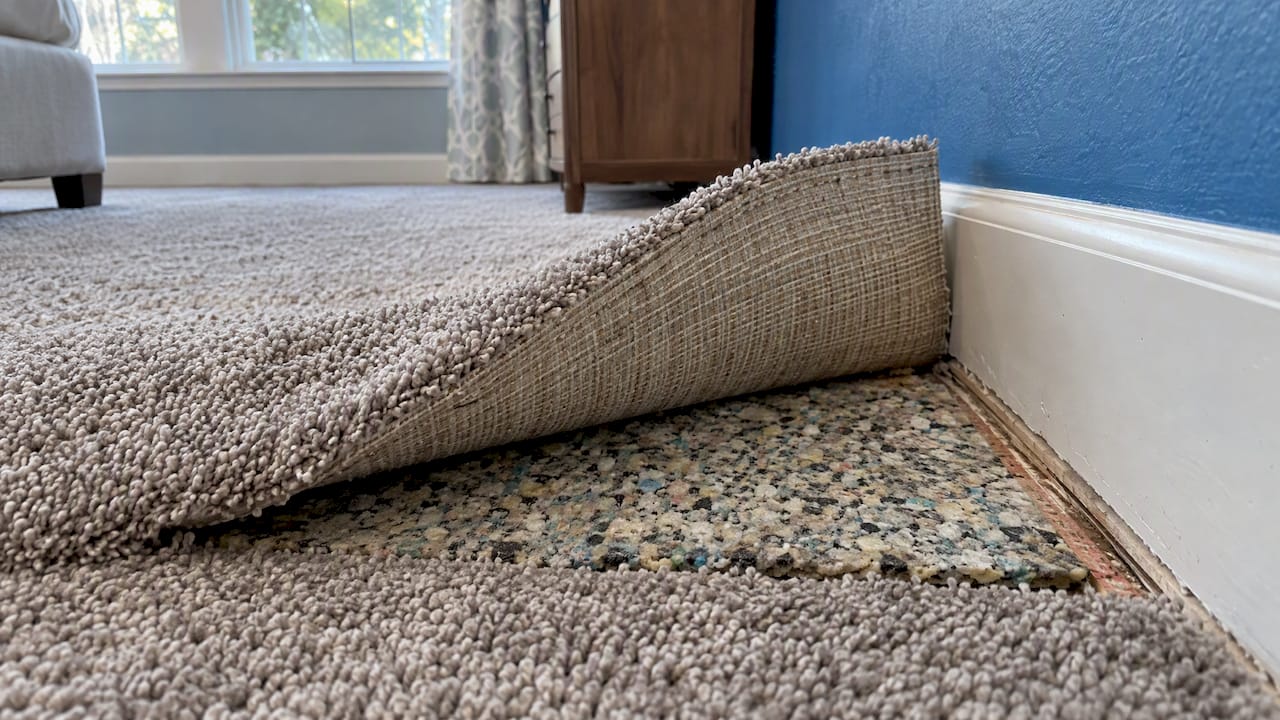
On the other hand, soaking carpet with a home mix has risks of its own. Heavy wetting can leave the padding damp and, in humid weather, bring the smell back. Which brings us to the real decision point: if you suspect the padding is contaminated, a home recipe cannot responsibly reach it.
Step 4: Clean as usual and repeat if needed
The LMCCA procedure is to apply the diluted neutralizer, clean the carpet as you normally would, repeat the application if needed, and rinse. Their guide specifies a professional neutralizer used according to its label dilution. Soap and water also help: UNL Extension says they can dissolve skunk oils on fabrics and other surfaces, and Jon-Don notes that ordinary washing with carpet or fabric detergent may handle skunk odor on soft surfaces.
Step 5: Rinse, extract and dry with airflow
Rinse with clean water and pull out as much moisture as you can with a wet vacuum if you own one. Keep windows open and fans running. The LMCCA recommends ventilating well before, during and after deodorization. Skip heat tricks: UNL Extension advises hanging laundry outdoors and keeping it out of the dryer for skunk-contaminated clothes, because heat can set the smell.
What not to use, and why
Why should you avoid using chlorine bleach on skunk-sprayed carpet?
It is tempting, since some technical sources list bleach as an oxidizer. On carpet it is a bad idea. The IICRC warns that chlorine bleach can cause complete or moderate color loss to most textiles. The one exception it names is olefin fiber, which it describes as bleach-proof. Unless you know your carpet is olefin, do not risk a bleached patch.
There is a safety issue too. UNL Extension says household chlorine bleach and other cleaning fluids must be used in separate steps, never together. Mixing cleaning products in a closed room is exactly how people get hurt.
Are oxygen-bleach spotters safe for skunk-sprayed carpet?
They are gentler, but the IICRC cautions that they can also damage textiles if not fully rinsed and neutralized. If you use one, rinse thoroughly.
Hydrogen peroxide on delicate or dyed carpet
The peroxide mix can discolor fabric. UNL Extension says to keep it off clothing, and the same logic applies to dyed wool, silk blends and some nylon carpets. Cornell also says peroxide can bleach fabric. That is why the spot test in Step 1 is not optional. Wait for the spot to dry completely before judging, since color change can show up as it dries.
Why are heavy perfumes and air fresheners ineffective for skunk smell?
They layer a second smell on top of the first. They do nothing about the sulfur compounds.
Why should you avoid pouring excessive water on skunk-sprayed carpet?
As the fiber and padding stay damp, humid air can make the odor reappear. Use controlled amounts and dry quickly.
The LMCCA guide makes a broader point: carpet treatment must be selected for the material, because not every chemical recommendation is safe for every fabric. See our explanation of how pH levels affect carpet cleaning and fiber life for why a harsh product can ruin a carpet that was only smelly.
Surface smell or deep contamination?
Use this quick guide.
| What happened | Likely depth | Best next move |
|---|---|---|
| Someone tracked in a bit of residue on shoes or paws | Surface | Home treatment, then ventilate |
| Pet was sprayed on a small area of rug | Surface to mid-layer | Bathe the pet, then treat with enough solution to reach the fiber base |
| Pet was sprayed indoors or a door area got a direct hit | Possibly padding | Professional cleaning and deodorizing |
| Smell returns on humid days after cleaning | Residue left in padding or backing | Professional treatment |
| Smell is in drapes, upholstery, baseboards and vents too | Whole room or house | Odor control specialist |
OdorXit’s guidance draws the same line: surface contamination from shoes or paws may be treated with properly diluted product followed by air drying, while deeper contamination requires enough solution to reach every affected layer.
If the smell is still there after two rounds
Stop repeating the same recipe. Repeated home treatment can leave carpet damp, faded or stiff without removing the source. Instead, consider three possibilities.
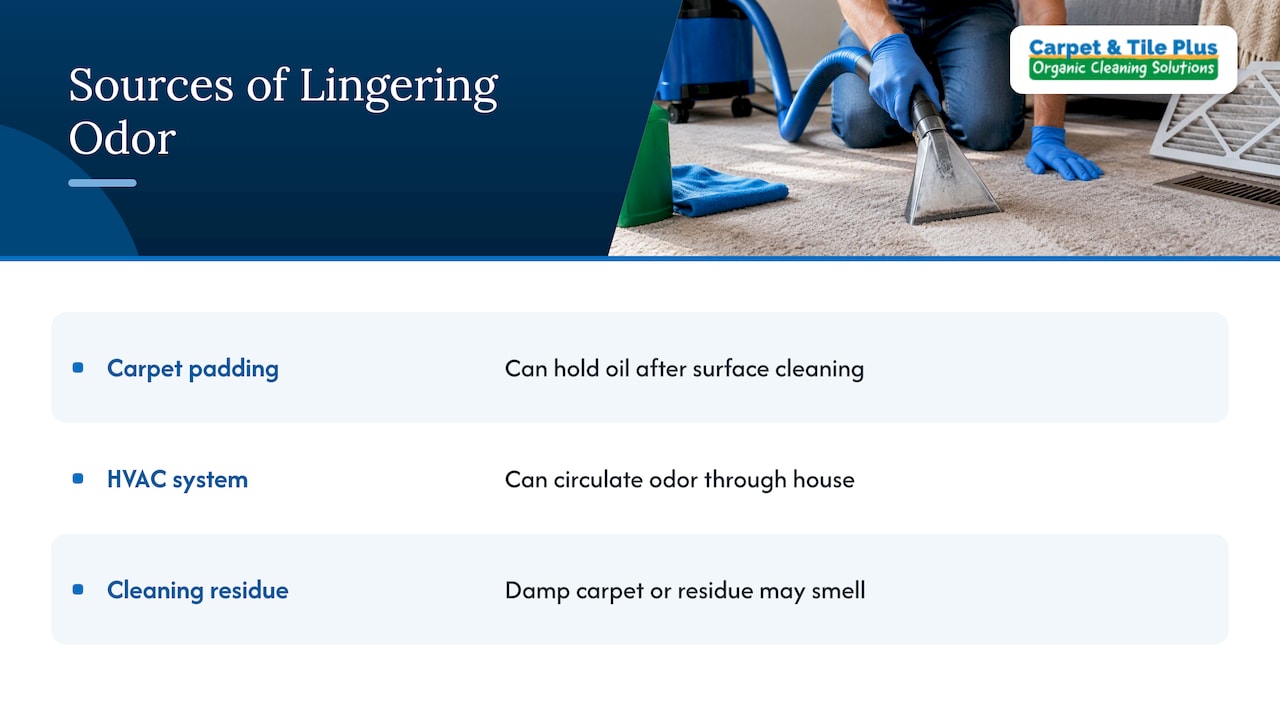
The padding holds the oil. Padding is the usual culprit when a smell survives surface cleaning. Our guide on whether to save or replace carpet padding walks through how we map affected areas and decide. It is written for pet urine, but the same logic applies to any liquid that soaks through.
The smell is in the air system. The IICRC lists HVAC systems among the places skunk odor can end up. If the spray happened near an intake or a basement door, a house-wide smell can circulate. For airborne odor, filtration with HEPA and carbon is a common approach, and this page on HEPA and carbon odor control explains how it works for smoke, a similar lingering-odor problem. Ducts that carry the smell are a separate job, covered by air duct cleaning.
The cleaning itself left a smell. Sometimes what you notice is damp carpet or leftover residue rather than skunk. Our article on why carpets smell after cleaning covers those causes and fixes.
When to hire a professional
The IICRC says skunk odor may affect other absorbent surfaces and, in extreme cases, hard surfaces. It adds that if a regular carpet cleaner does not provide the extensive services needed, you can use the IICRC locator to find an Odor Control Specialist. The LMCCA also notes that some heavily affected items may need ozone treatment in a controlled chamber rather than on location.
That is an honest picture of the range. Many skunk incidents are carpet problems that a trained cleaner can resolve. A few are whole-structure odor jobs that need a specialist. A good carpet cleaner will tell you which one you have.
Call a pro when:
- spray soaked into a rug or carpet near a door, vent or pet bed
- you have done two rounds and the smell remains or returns with humidity
- the carpet is wool, silk, or a fiber you cannot identify
- anyone in the house has asthma or sensitivities and strong chemical mixing is a concern
- you manage a business and the odor affects tenants or customers
Perspective: what we see in Northwest suburban homes
Skunk calls in our area spike when the weather shifts and animals get active near garages, window wells and doggy doors. What we hear most often is that someone already scrubbed the carpet, the smell faded for a few days, and then it came back after rain. That pattern points to something left below the surface, so we start by finding where the contamination actually went instead of cleaning the whole room evenly.
Our approach is built on three things. Our cleaners are IICRC-certified, which means they are trained to match the method to the fiber instead of reaching for one harsh product. We use organic cleaning products, which matters when children and pets are on that floor an hour later. And we rely on low-moisture methods that give a one-hour dry time, which helps because lingering dampness is what lets odors come back. For pet-related odor, see how our carpet odor removal approach works, and the carpet deodorizing process explained step by step.
We will also be straight with you. If a job is bigger than carpet, such as odor throughout a house or in hard surfaces, we will say so and point you to an IICRC odor control specialist instead of selling you a cleaning that will not fix it.
— Joe
Carpet cleaning and deodorizing in the Northwest Suburbs
If your carpet took a hit and you would rather not gamble on a home recipe, we clean residential and commercial carpet across Arlington Heights, Palatine, Elgin, Bartlett, Streamwood, Barrington, Hoffman Estates, Elk Grove Village, Mount Prospect, Rolling Meadows and Lake Zurich. Our site lists residential carpet cleaning at $120-$300 and commercial at $200-$500 per job. Pet stain and odor removal, air duct cleaning and tile and grout cleaning are quoted individually. Every job comes with our 100% satisfaction guarantee.

Tell us what happened and where, and we will tell you whether it is a carpet job. You can start at Carpet and Tile Plus and request a visit.
Preventing a repeat
You cannot control skunks, but you can reduce the odds and the damage.
- Keep pet doors closed from dusk to morning, and bring pets in before dark.
- Remove food sources outside: pet food, open trash, fallen fruit.
- Seal gaps under decks, sheds and porches where animals den.
- Keep a pair of disposable gloves, old towels and fresh hydrogen peroxide on hand. Peroxide loses strength, so UNL Extension’s “fresh” matters.
- Place a washable mat at the door so paws and shoes do not carry residue across the carpet.
After any odor incident, a professional clean once things are resolved helps ensure the carpet is free of residue. Our guide on pet-friendly carpet cleaning explains how we find and treat the problem areas.
FAQ
Does baking soda alone remove skunk smell from carpet?
Baking soda can take the edge off a light odor, but it does not break down the sulfur compounds in skunk oil. It works best as part of the peroxide, baking soda and dish soap mix described by UNL Extension and Cornell. For anything beyond a small surface spot, expect to need a stronger or deeper treatment.
Can I store leftover peroxide and baking soda mix?
No. Cornell’s veterinary guidance says the reaction can build pressure and burst a closed container, so unused solution should be discarded. Mix only what you will use immediately, in an open container.
Will the smell come back after I clean the carpet?
It can. UNL Extension notes that skunk odor can reactivate in high humidity. If the smell returns on muggy days, residue likely remains in the backing or padding, and that calls for a deeper treatment than surface cleaning.
Is it safe to use bleach on skunk-sprayed carpet?
Generally no. The IICRC warns that chlorine bleach can cause complete or moderate color loss to most textiles, with olefin as the exception. UNL Extension also says bleach and other cleaning fluids must never be combined.
When should I call a carpet cleaner instead of doing it myself?
Call when spray soaked into carpet near a door or pet area, when two home rounds have failed, or when the carpet is delicate. The IICRC suggests using its locator for an Odor Control Specialist if a regular cleaner cannot provide the services needed. If you are in our service area, we will assess it and tell you plainly what is needed.
Sources
- Removing Skunk Odor, University of Nebraska–Lincoln Extension
- My Dog was Sprayed by a Skunk, Now What? Texas A&M Veterinary Medicine
- What to do when your dog gets skunked, Cornell University College of Veterinary Medicine
- Skunk Odor Removal, LMCCA guide
- IICRC Consumer Floor and Furnishings Care Information
- HEPA and carbon odor control