
Yes, if your grout is cement-based and lives in a shower, floor, or backsplash. Cementitious grout is porous, and a penetrating sealer keeps it from soaking up stains and grime. Epoxy grout and glazed porcelain tile skip this step entirely because they’re already nonabsorbent. The fastest way to know which camp your bathroom falls into is a 60-second water test, covered next.
TL;DR:
- Sealing porous cementitious grout in high-moisture areas helps prevent stains from spills, soap scum, and mildew, especially in showers and high-traffic zones.
- Epoxy grout and glazed porcelain tiles do not need sealing because they are already nonabsorbent, reducing unnecessary maintenance.
- Performing a water-bead test on dry grout reveals whether sealing is necessary, with absorption indicating the need for sealing and bead formation showing it is already protected.
- Resealing should occur approximately once a year for showers and countertops, with floors resealed every one to three years, depending on wear and the water-test result.
- Sealer only protects existing grout and does not repair cracks, remove stains, or waterproof underlying structures, so damaged grout or mold should be addressed prior to sealing.
Table of Contents
- Should I Seal Grout? Here’s How to Check First
- Which Grout and Tile Types Actually Need Sealing
- Penetrating Sealer or Topical Sealer: Which One Fits Your Space
- How to Seal Grout Step by Step
- How Often to Reseal Grout
- What Sealing Won’t Fix
- When to DIY and When to Call a Pro
- Get Your Grout Cleaned and Sealed by Carpet & Tile Plus
- Sources
- FAQ
Should I Seal Grout? Here’s How to Check First
Skip the guesswork. Drip a small amount of water onto a clean, dry section of grout and watch what happens for about a minute.
If the water beads up and sits on the surface, the grout is already protected or naturally nonabsorbent. No action needed. If it soaks in and darkens the grout within 30 to 60 seconds, that joint is thirsty. It’s absorbing whatever spills onto it, which means it’s also absorbing wine, coffee, soap scum, and mildew. This water-bead test is the single most reliable field check available, and it costs nothing.
Run the test in more than one spot. Grout near a shower drain wears differently than grout on a dry countertop backsplash, and traffic lanes on a kitchen floor take more abuse than the grout under a rug. Test three or four locations before deciding.
- Shower floor and wall grout lines
- Kitchen backsplash near the sink
- Bathroom counter grout
- High-traffic floor grout (entryways, kitchen aisles)
Pro Tip: Test grout when it’s fully dry, ideally 24 hours after the last cleaning or shower use. Testing damp grout gives you a false “already sealed” reading.
Which Grout and Tile Types Actually Need Sealing
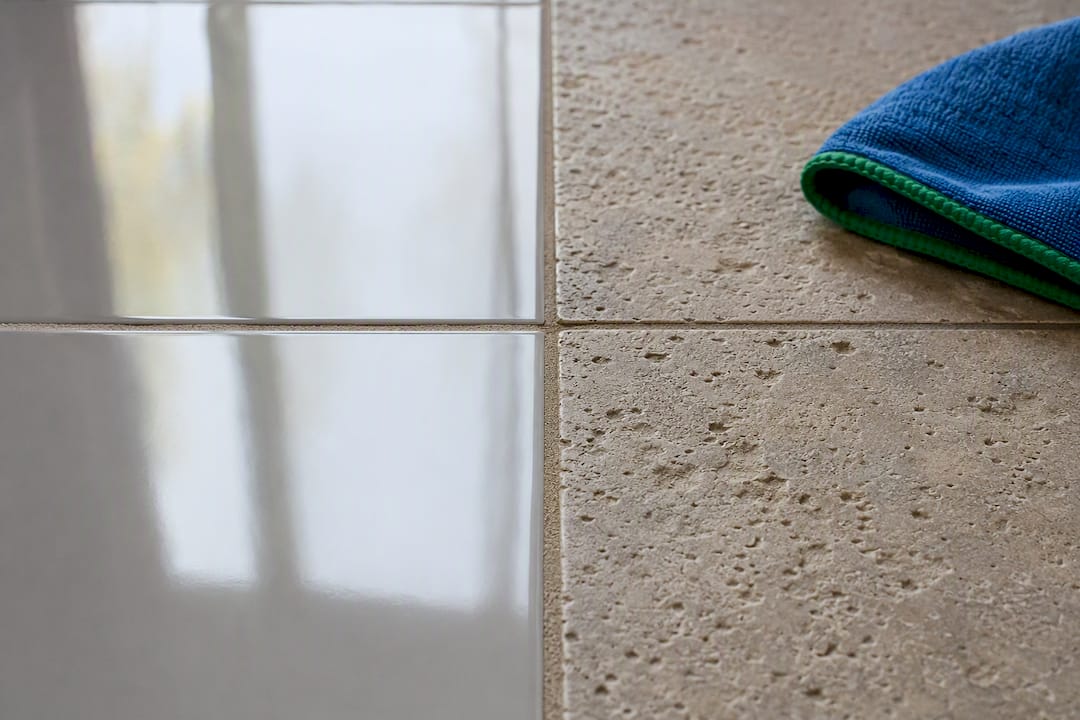
Not every tile job calls for sealer, and slapping it on the wrong surface wastes a Saturday and a bottle of product.
Cementitious grout, the standard sanded or unsanded mix used in most homes, is porous by nature. It’s the material that benefits most from sealing, especially in bathrooms and kitchens. Epoxy grout is a different story. It’s already resin-based and nonabsorbent, so sealing it does nothing but leave a smeary film you’ll end up stripping off later.
Tile matters just as much as grout:
- Porcelain and glazed ceramic tile: Nonabsorbent. Never needs sealing.
- Cementitious grout joints: Porous. Usually benefits from sealing in wet or high-traffic zones.
- Epoxy grout: Nonabsorbent. Skip sealing entirely.
- Natural stone (marble, travertine, slate): Porous. Typically needs sealing, and sometimes more than once.
Penetrating Sealer or Topical Sealer: Which One Fits Your Space
Sealer isn’t one product. It’s a category with two very different approaches, and picking the wrong one causes more problems than it solves.
Penetrating sealers soak into the grout and fill the pores from the inside without changing how the surface looks. Because they let moisture vapor escape instead of trapping it under a film, they’re the safer default for showers and other wet areas where a peeling topical coat would be a headache to fix. Membrane, or topical, sealers sit on top of the grout and can add a slight sheen, which some homeowners like on a kitchen backsplash or dry countertop. In a shower, though, that surface film tends to wear unevenly and can peel.
- Choose a penetrating sealer for showers, tub surrounds, and floors.
- Consider a topical sealer only for dry, low-traffic decorative areas like a backsplash.
- Check whether the product is water-based or solvent-based, since that affects odor, dry time, and how it plays with sealed stone.
Pro Tip: Test any new sealer on a hidden grout line first. Some solvent-based products darken grout slightly, and you don’t want a surprise on the wall behind your shower door.
How to Seal Grout Step by Step
Sealing itself takes less time than most people expect. Getting the timing right is where DIYers usually slip up.
- Clean thoroughly. Deep-clean the grout and remove any mold or mildew before sealer goes anywhere near it. Sealer locks in whatever is underneath it, dirt included.
- Repair first. Cracked, crumbling, or hollow-sounding grout needs patching or regrouting before you seal. Sealer isn’t a repair product.
- Wait for cure or dry time. New grout typically needs 48 to 72 hours to cure before sealing, and freshly cleaned grout usually needs 24 to 48 hours to fully dry. Always check the specific product label.
- Apply the sealer. Use a small brush or foam applicator and work it into the grout lines, avoiding the tile face where possible.
- Wipe excess. Follow the manufacturer’s wait time, then wipe off anything sitting on the tile surface before it hazes over.
- Retest with water. Drip water on the sealed grout. A clean bead means you’re done. Absorption means it needs a second coat.
- Let it cure. Give the final coat 24 to 48 hours before exposing it to water, per most manufacturer directions.
According to manufacturer technical guidance, sealing isn’t required by any tile industry standard. It’s a recommendation, not a code requirement, but most manufacturers still suggest it for wet and high-traffic cementitious grout because of how much it cuts down on staining.
How Often to Reseal Grout
Sealer wears out. It’s not a one-time fix, and calendar reminders only get you so far.
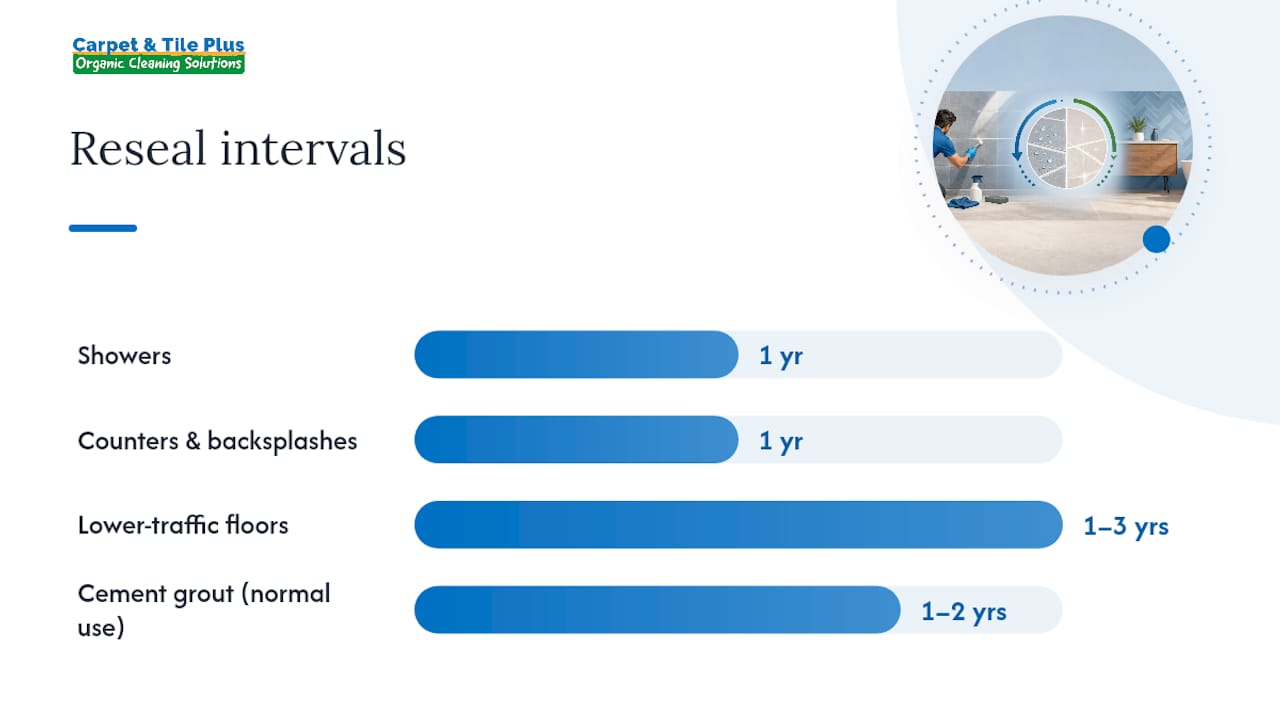
General cadences look like this: shower grout about once a year, countertops and backsplashes around once a year as well, and lower-traffic floors every one to three years. Cement grout specifically tends to need resealing every one to two years under normal household use. But treat these as starting points, not rules. The water-bead test overrides any schedule. If it beads at the 18-month mark, you’re still covered.
- Reseal showers roughly every 12 months.
- Reseal counters and backsplashes about once a year.
- Reseal floors every 1 to 3 years, checked with the water-drop test.
- Plan to reseal after any professional deep cleaning, since the process can strip residual sealer along with the grime.
- Stick to pH-neutral cleaners on natural stone and grout. Harsh acids etch stone and break down sealer faster than normal wear does.
What Sealing Won’t Fix
Sealer is protective, not restorative. It locks in the current condition of your grout, good or bad.
If the grout is cracked, crumbling, or already stained through, sealing over it just seals in the problem. Regrout or repair damaged joints first. The same goes for mold: clean and treat it before sealer goes on, because sealing over active mold traps it in place rather than removing it. And no sealer, however good, waterproofs a tile assembly or stops natural stone from etching when acidic cleaners or citrus juice hit it. It slows staining. It doesn’t replace a proper waterproofing membrane behind a shower wall.
- Repair cracked or missing grout before sealing, not after.
- Treat mold and mildew fully; sealing over it doesn’t kill it.
- Remember sealer protects the surface, not the structure underneath.
Pro Tip: If grout looks stained no matter how much you scrub, ask about color sealing. It’s a restorative option that redeposits pigment into the grout line and seals it at the same time, rather than just sealing over a dingy color.
When to DIY and When to Call a Pro
Routine resealing after a clean water-drop test is a reasonable weekend project for most homeowners. It’s low-risk, and the steps above cover it.
Where it gets harder is persistent staining that won’t lift, grout that’s visibly failing, or a bathroom you want looking new fast without spending a weekend on your knees. That’s where IICRC-certified technicians earn their keep, especially since professional deep cleaning often removes old sealer and calls for a fresh coat right after. A pro visit with organic cleaning products and a same-day dry time solves the prep work DIY sealing depends on.
— Jim
Get Your Grout Cleaned and Sealed by Carpet & Tile Plus
If scrubbing grout lines on your hands and knees isn’t how you want to spend a Saturday, that’s exactly the gap Carpet & Tile Plus fills. We handle the deep clean, the mold treatment, and the repair prep that has to happen before any sealer goes down, so you’re not guessing whether your grout is actually ready.

Technicians use organic cleaning products and can finish many jobs with a one-hour dry time, which matters when trying to reseal grout the same day it gets cleaned. Since professional cleaning can strip old sealer, we recommend scheduling sealing right after your appointment rather than waiting weeks. Homeowners in the Northwest Suburbs of Chicago, including Elgin, Bartlett, and Arlington Heights, benefit from this exact combination. Check out our tile and grout sealing process after a professional clean, or book a residential tile and grout cleaning visit to get your grout tested, cleaned, and ready for its next coat of sealer.
Sources
- Sealing Grout & Stone: When and How Often — BoiseBath
- How to Seal Grout in Kitchens and Bathrooms — Better Homes & Gardens
- Does Grout Need to be Sealed — MAPEI Tech Talk
- How to Seal Grout: Basics and Application Guide — The Spruce
- How Often Should You Seal Grout? A Homeowner’s Guide — Groutastic
FAQ
What happens if you don’t seal grout?
Unsealed cementitious grout absorbs spills, soap scum, and grime faster, leading to staining and a grayish, dingy look over time, though it won’t structurally fail on its own.
Why do builders not seal grout?
Builders typically finish grouting and move on because sealing is a maintenance step, not a required part of installation. The tile industry doesn’t mandate sealing, even though manufacturers often recommend it afterward.
Is it ever too late to seal grout?
No, but sealing won’t reverse existing damage. If grout is already cracked or deeply stained, repair or regrout it first, then seal, or ask about color sealing to restore pigment and protect it at once.
How often should grout be sealed?
Most showers need resealing about once a year, counters and backsplashes roughly the same, and floors every one to three years. Run the water-drop test to confirm before assuming a schedule applies to your bathroom.