
Professional carpet cleaning is defined as deep extraction cleaning that removes embedded soil, allergens, and contaminants that routine vacuuming cannot reach. Most homeowners and property managers miss the early signs carpet needs professional cleaning because the damage builds gradually, below the surface, long before it looks bad. The Carpet and Rug Institute and IICRC both set clear standards for cleaning frequency and methods. Knowing the specific indicators, from darkened traffic lanes to worsening allergy symptoms, lets you act before the damage becomes permanent.
1. signs carpet needs professional cleaning: darkened traffic lanes
Darkened or gray pathways between rooms are one of the clearest carpet cleaning indicators you can spot. These lanes form when foot traffic presses soil deep into the fiber base, compressing it beyond what a vacuum can pull out. Traffic lane greying signals that abrasive particles are already grinding against the fibers with every step. That grinding is what causes permanent fiber wear, not just discoloration.
By the time those lanes are clearly visible, embedded abrasive soil has already started damaging the fiber structure. Hot water extraction is the method that flushes this soil out of the carpet backing before the damage becomes irreversible.
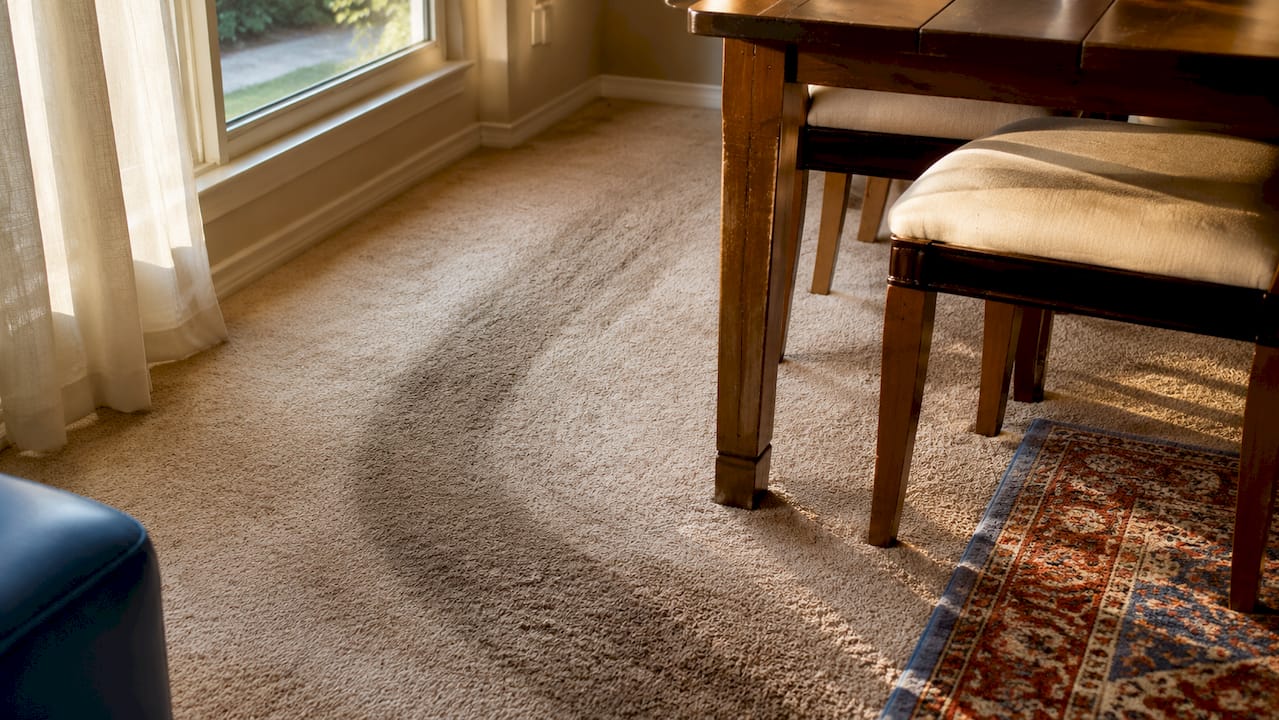
Pro Tip: Walk your hallways and high-traffic areas in good natural light. If the carpet color looks two shades darker than a low-traffic area nearby, schedule a professional cleaning within the next 30 days.
2. permanent stains and recurring spots
Some stains survive every DIY treatment you throw at them. Red wine, coffee, pet accidents, and grease can bond with carpet fibers at a chemical level, making store-bought sprays ineffective. If a stain returns within days of cleaning, that is a specific carpet wear sign called the wicking effect.
Wicking occurs when contaminants trapped deep in the carpet padding absorb moisture and travel back up to the surface as the carpet dries. The stain looks gone right after you clean it, then reappears within 24–72 hours. Only deep extraction removes the source material from the padding level, stopping the cycle entirely.
- Stains that return after DIY cleaning indicate padding contamination
- Stains that spread when wet suggest fiber saturation
- Stains with odor attached almost always involve organic material in the backing
3. matted or flattened carpet fibers
Carpet fibers are designed to stand upright. When they flatten and stay flat, the fiber structure has been compromised by a combination of compression and embedded soil. Matted carpet in living rooms, bedrooms, or rental unit hallways is a direct carpet wear sign that surface cleaning will not fix.
Embedded dry soil acts like sandpaper on carpet fibers, cutting into them with every footstep. Professional hot water extraction removes those abrasive particles and allows fibers to recover their original texture. Waiting too long makes the matting permanent, which means replacement rather than restoration.
Pro Tip: Press a coin flat-side down onto a matted area. If the fibers don’t spring back within a few seconds, the carpet needs professional attention soon.
4. persistent odors that vacuuming does not remove
Smells in carpet are one of the most reliable signals that something is wrong beneath the surface. Pet urine, mold, mildew, and food residue all produce odors that survive regular vacuuming because the source material is locked in the carpet backing or padding. Odors survive vacuuming because deep embedded particles are not disturbed by surface suction.
A musty smell that intensifies on humid days is a specific warning sign. Humidity activates mold and mildew spores that have settled into the carpet layers. Pet odors that return after deodorizing sprays indicate that urine salts are still present in the padding. Carpetandtileplus uses organic cleaning products combined with hot water extraction to neutralize odor sources at the fiber and backing level, not just mask them at the surface. For persistent pet-related smells, their odor removal service addresses the problem at its source.
5. sticky, crunchy, or rough spots on the surface
If you walk barefoot and feel sticky or crunchy patches, that texture is a carpet cleaning indicator that most people overlook. Sticky or stiff carpet spots typically result from over-application of cleaning products or insufficient rinsing after a DIY cleaning attempt. That residue attracts new dirt at a faster rate than untreated carpet.
This is a counterintuitive problem. Cleaning your carpet with the wrong product or technique can actually make it get dirty faster. The residue left behind acts like a magnet for airborne particles and foot-tracked soil. Professional cleaning with proper rinsing removes both the original soil and the cleaning product residue, restoring the carpet to a neutral state.
6. worsening allergy or respiratory symptoms indoors
Carpet acts as a filter for your indoor air, trapping dust mites, pollen, pet dander, and mold spores. That filtering function is useful until the carpet reaches capacity. At that point, carpet allergens get released back into the breathing zone with every footstep or air movement.
The specific signs to watch for include:
- Sneezing or watery eyes that improve when you leave the house
- Increased asthma frequency in household members
- Skin irritation or rashes in children who play on the floor
- Worsening symptoms during or after vacuuming
Vacuuming alone is not sufficient for allergen removal. Professional cleaning removes embedded allergens that vacuuming cannot reach, directly improving indoor air quality. Carpetandtileplus’s IICRC-certified process addresses this at the fiber level, which is why many customers in Elgin, Bartlett, and Arlington Heights report noticeable symptom relief after a cleaning. For a deeper look at how this works, the connection between carpet and air quality is well documented.
7. visible dirt that returns quickly after vacuuming
If you vacuum on Monday and the carpet looks dirty again by Wednesday, the carpet is not just dirty on the surface. Rapid soil reappearance means the carpet backing is saturated with fine particles that migrate upward. Regular vacuuming manages surface debris but cannot address embedded particles and allergens deeper in the pile.
This pattern is especially common in homes with pets, young children, or high foot traffic from multiple residents. Property managers see this frequently in rental units where cleaning history is unknown. The only way to reset the carpet to a clean baseline is professional deep extraction.
8. it has been more than 18 months since the last cleaning
Time elapsed is itself a carpet cleaning indicator, even when the carpet looks acceptable. Industry standards recommend professional carpet cleaning every 12–18 months for average residences. That interval shortens significantly based on household factors.
| Household Type | Recommended Cleaning Frequency |
|---|---|
| Low-traffic, adults only | Every 12–18 months |
| Homes with pets or toddlers | Every 6–9 months |
| Allergy or asthma sufferers | Every 3–6 months |
| Humid regions or high pollen areas | Every 3–6 months |
| Commercial or rental properties | Every 6–12 months |
Homes in humid regions or areas with heavy pollen exposure often need to shift to quarterly or semi-annual schedules. The Northwest Suburbs of Chicago, including Barrington and Hanover Park, experience significant seasonal pollen and humidity swings that accelerate contamination buildup. For a full breakdown of how often your specific situation calls for cleaning, Carpetandtileplus has a detailed guide on carpet cleaning frequency.
9. increased dust on furniture and surfaces near the carpet
This sign is easy to miss because most people do not connect dusty furniture to carpet condition. When carpet fibers are overloaded with fine particles, normal air movement and foot traffic release those particles back into the room. They settle on nearby surfaces, including shelves, tables, and upholstery.
If you notice that furniture near carpeted areas needs dusting more often than furniture in hard-floor rooms, the carpet is likely the source. Regional climate impacts cleaning schedules, and homes in areas with high environmental dust loads see this pattern more frequently. A professional cleaning resets the carpet’s filtering capacity, which reduces the particle load being redistributed into the room. Homes with pets benefit especially from understanding why clean environments matter for overall household health.
Key takeaways
Recognizing the signs carpet needs professional cleaning early prevents permanent fiber damage, protects indoor air quality, and extends the life of your carpet significantly.
| Point | Details |
|---|---|
| Visual signs come late | By the time traffic lanes and matting appear, fiber damage has already begun. |
| Odors signal deep contamination | Persistent smells survive vacuuming because the source is in the backing or padding. |
| Allergy symptoms are a direct indicator | Worsening indoor symptoms point to carpet allergen overload that only deep extraction resolves. |
| Cleaning frequency varies by household | Homes with pets, children, or allergy sufferers need cleaning every 3–9 months, not 18. |
| Recurring stains mean padding contamination | The wicking effect confirms that DIY cleaning has not reached the actual source of the problem. |
What 20 years of carpet cleaning taught me about waiting too long
The most common mistake I see homeowners make is treating carpet cleaning as a reaction to visible dirt. They wait until the carpet looks bad, then call us. By that point, we can restore a lot, but we cannot undo fiber damage that has been building for two or three years.
The homeowners who get the most life out of their carpets follow what I think of as a three-pillar approach: entry mats at every door, consistent vacuuming two to three times per week, and scheduled professional cleaning based on their actual household situation, not a generic calendar. That combination keeps the contamination load manageable between professional visits.
The subtler signs are the ones I wish more people paid attention to. A carpet that feels slightly rough underfoot, a room that smells fine but makes you sneeze, furniture that collects dust faster than it used to. These are the early warnings. They show up months before the carpet looks dirty. Acting on them is the difference between a cleaning that restores your carpet and a cleaning that just slows down the inevitable replacement.
My honest advice: walk your carpets barefoot once a month. Run your hand across a high-traffic area. If something feels off before it looks off, trust that instinct. Your carpet is telling you something.
— Jim
Ready for a carpet that looks and feels clean again?
If you recognized two or more of these signs in your home, your carpet is overdue for professional attention. Carpetandtileplus serves homeowners and property managers across the Northwest Suburbs of Chicago, including Elgin, Streamwood, Palatine, and Barrington, with IICRC-certified cleaning that uses organic products and delivers a one-hour dry time.

Whether you need odor removal, allergen extraction, or a full deep clean for a rental property, Carpetandtileplus has the experience and the process to get it done right. Explore residential carpet cleaning options or check out commercial carpet cleaning services for property managers. Hundreds of five-star reviews from your neighbors back up every job we do.
FAQ
How do i know if my carpet needs professional cleaning?
The clearest signs are darkened traffic lanes, persistent odors after vacuuming, recurring stains, matted fibers, and worsening allergy symptoms indoors. If any two of these are present, professional deep extraction is the appropriate next step.
How often should carpets be professionally cleaned?
The industry standard is every 12–18 months for average homes. Homes with pets, toddlers, or allergy sufferers need cleaning every 3–9 months, and humid or high-pollen environments may require quarterly service.
Why do stains keep coming back after i clean them myself?
Returning stains are caused by the wicking effect, where contaminants trapped in the carpet padding absorb moisture and migrate back to the surface as the carpet dries. Only professional deep extraction removes the source material from the padding level.
Can vacuuming replace professional carpet cleaning?
Vacuuming removes surface debris but cannot reach embedded soil, allergens, or organic contaminants in the carpet backing and padding. Professional hot water extraction is the only method that flushes those deeper layers clean.
Does carpet condition affect indoor air quality?
Yes. Carpet fibers trap dust mites, pollen, pet dander, and mold spores. Once the carpet reaches capacity, those particles are released back into the air with every footstep. Professional cleaning restores the carpet’s filtering capacity and directly improves the air you breathe indoors.