Carpet cleaning misconceptions are false beliefs about cleaning methods, products, and results that lead homeowners and renters to damage their carpets or waste money. Getting these common carpet cleaning misconceptions debunked is not just useful trivia. It directly affects how long your carpet lasts, how clean your indoor air is, and whether your cleaning routine actually works. Sources like INCLEAN, Chem-Dry, and Cardinal Carpet Care have studied these myths closely, and the findings are clear: popular beliefs about carpet care are often wrong in ways that cost you real money.
1. common carpet cleaning misconceptions debunked: more detergent means a cleaner carpet
More detergent does not mean a cleaner carpet. INCLEAN confirms that overusing detergent leaves sticky residue in carpet fibers that attracts dirt faster than a clean carpet would. The result is a floor that looks dirty again within days of cleaning.
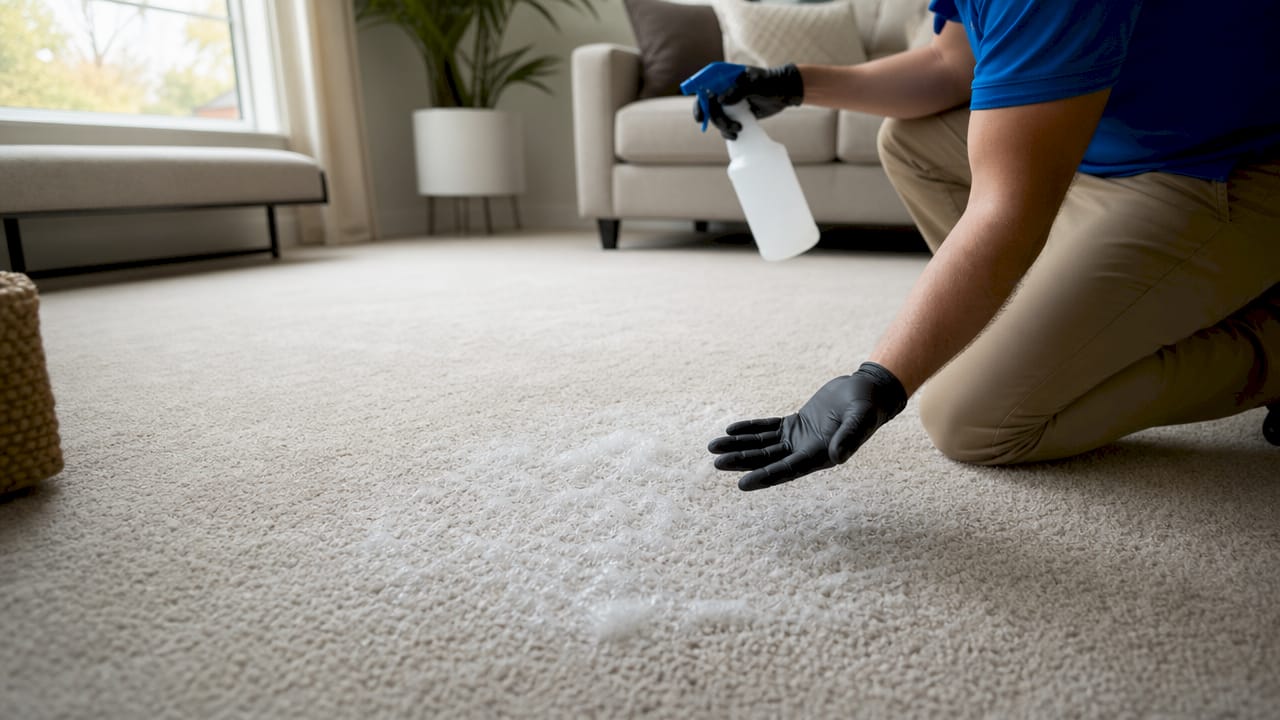
Detergents are formulated to work at specific dilution ratios. When you exceed those ratios, the rinse cycle cannot remove all the soap. That leftover soap acts like a magnet for dust, pet hair, and foot traffic grime.
The consequences compound quickly:
- Residue traps soil particles deep in the fiber
- Odors develop as trapped organic matter breaks down
- The carpet feels stiff or crunchy underfoot
- Re-soiling accelerates, making the carpet look worse than before cleaning
Pro Tip: Always follow the manufacturer’s dilution instructions on any carpet cleaning product. If the label says one ounce per gallon, using two ounces will not double the cleaning power. It will double the residue.
This is one of the most common carpet cleaning errors homeowners make with rental machines. The fix is simple: use less product, not more.
2. hot water extraction damages your carpet
Hot water extraction is the most recommended deep-cleaning method for residential carpets when performed correctly. The myth that steam cleaning ruins carpet fibers comes from watching poorly executed DIY jobs, not from the method itself.
INCLEAN clarifies that proper hot water extraction does not damage carpets. The damage people associate with this method comes from two specific failures: over-wetting and inadequate extraction. Both are operator errors, not flaws in the technique.
Professional cleaning avoids these failures because:
- Certified technicians control water temperature and pressure precisely
- Commercial extraction equipment removes far more moisture than rental units
- Proper technique limits saturation to the fiber, not the backing or padding
- Drying aids like air movers are used to speed moisture removal
Rental machines often leave excess moisture and soap residue that DIY users cannot control well. That excess moisture is what causes backing separation, shrinkage, and mold growth. The method is not the problem. The equipment and skill level are.
Pro Tip: If you use a rental machine, make at least two dry passes (extraction only, no water) after your cleaning pass. This removes significantly more moisture and cuts drying time.
3. vacuuming alone keeps carpets clean and allergen-free
Vacuuming removes surface debris only. Jeffries Cleaning and Chem-Dry both confirm that embedded allergens, dust mites, and deep soil remain in the carpet after even thorough vacuuming. This is one of the most persistent carpet care misconceptions because vacuuming does produce visible results.
The problem is what you cannot see. Carpet fibers act like a filter, trapping particles deep below the surface layer. A vacuum’s suction reaches the top portion of the pile. It does not dislodge material that has worked its way down to the backing.
Here is what vacuuming cannot address:
- Dust mite colonies living in the lower fiber layers
- Pet dander bonded to fiber surfaces through static charge
- Bacteria introduced by foot traffic and spills
- Fine particulate matter from outdoor air that settles into the pile over time
Professional or deep cleaning reaches these layers. The air quality improvement from a professional clean is measurable, especially for households with allergy sufferers or pets.
Pro Tip: Vacuum at least twice a week in high-traffic areas, but schedule a professional deep clean every 6–12 months. Vacuuming maintains the surface. Professional cleaning resets the entire fiber system.
Regular vacuuming is still worth doing. It prevents surface soil from working deeper into the pile between professional visits. Think of it as maintenance, not a substitute for deep cleaning.
4. a fresh smell means the carpet is truly clean
A pleasant fragrance does not indicate a clean carpet. INCLEAN states directly that fragrance is a masking agent, not a cleanliness indicator. True cleaning removes dirt and odors at the source. Fragrance only covers what remains.
This myth leads homeowners to spray deodorizers or use heavily scented cleaning products and then assume the job is done. The carpet smells good, so it must be clean. That logic fails because:
- Deodorizers deposit fragrance compounds on top of existing soil
- Bacteria and organic matter causing odors remain active beneath the surface
- The fragrance fades within days, and the original odor returns stronger
- Repeated deodorizer use can build up its own residue layer
Real odor removal requires professional odor treatment that targets the source. Pet urine, for example, penetrates through the fiber, through the backing, and into the padding. No surface fragrance reaches that depth.
The truth about carpet cleaning is that a genuinely clean carpet has very little smell at all. Neutral is the goal, not floral or citrus.
5. carpet drying time does not matter much
Drying time is a direct quality indicator for any carpet cleaning job. Carpet Cleaning Digital’s 2026 guide specifies that residential hot water extraction should dry within 6–12 hours under normal conditions. Drying that exceeds 24 hours signals a process failure, not just an inconvenience.
The stakes are real. Cardinal Carpet Care warns that mold can begin growing within 24–48 hours when moisture is retained in carpet fibers and padding. That means a slow-drying carpet is not just uncomfortable to walk on. It is actively developing a microbial problem.
| Drying Scenario | Timeframe | What It Means |
|---|---|---|
| Normal professional clean | 6–12 hours | Proper extraction and airflow achieved |
| Slow but acceptable | 12–24 hours | High humidity or thick carpet; monitor closely |
| Process failure | Over 24 hours | Over-wetting or poor extraction; mold risk present |
| Carpetandtileplus standard | Approximately 1 hour | IICRC-certified technique with commercial equipment |
Pro Tip: Open windows and run ceiling fans immediately after cleaning. If you have a dehumidifier, run it in the cleaned room. These steps alone can cut drying time by several hours.
Understanding quick dry methods is not optional knowledge. It is the difference between a successful clean and a mold remediation problem weeks later.
Key takeaways
Proper carpet cleaning requires correct detergent ratios, professional-grade extraction, and drying within 6–12 hours to prevent residue buildup, allergen retention, and mold growth.
| Point | Details |
|---|---|
| Detergent overuse backfires | Excess soap leaves sticky residue that attracts dirt faster and causes rapid re-soiling. |
| Hot water extraction is safe | Damage comes from operator error and over-wetting, not from the method itself. |
| Vacuuming is not deep cleaning | Embedded allergens, dust mites, and bacteria require professional extraction to remove. |
| Fragrance masks, not cleans | A fresh smell indicates deodorizer use, not the removal of dirt and odor sources. |
| Drying time reveals quality | Jobs drying past 24 hours signal over-wetting and carry a real mold risk. |
What 20 years of cleaning carpets taught me
The biggest mistake I see homeowners make is not using the wrong product. It is trusting the wrong signal. They smell something clean, or they see the carpet look brighter after vacuuming, and they assume the job is done. Those signals are not reliable.
After two decades in this industry, I can tell you that the carpets in the worst shape are almost never the ones that were ignored. They are the ones that were cleaned incorrectly, repeatedly. Too much detergent, a rental machine that left the carpet soaking wet, a deodorizer sprayed over a pet urine problem that was never actually treated. Each of those decisions compounds the next one.
The chemistry of carpet cleaning is not complicated, but it does require respect for the process. Proper carpet cleaning involves a complete system: dry soil removal first, correct preconditioning, agitation, controlled rinsing, and fast drying. Skip any step and the results suffer. Most DIY failures skip two or three of those steps at once.
My honest recommendation is this: vacuum consistently, address spills immediately with the right product, and bring in a certified professional at least once a year. You will spend less money over the life of the carpet than you would replacing it early because of preventable damage.
— Jim
Get a professional clean that actually works
If any of these myths sound familiar, you are not alone. Most homeowners in Elgin, Bartlett, Streamwood, and across the Northwest Suburbs of Chicago have been working with incomplete information.

Carpetandtileplus offers residential carpet cleaning with IICRC-certified technicians who use organic cleaning products and commercial extraction equipment. The result is a carpet that dries in approximately one hour, not 24. No sticky residue. No fragrance masking. No guesswork on drying time. With hundreds of five-star reviews and over 20 years of experience, Carpetandtileplus delivers results that hold up. Book your cleaning today and see the difference that proper technique makes.
FAQ
Does more carpet cleaner mean better results?
No. Excess detergent leaves sticky residue that attracts dirt faster and causes rapid re-soiling. Always follow the product’s recommended dilution ratio.
Is carpet cleaning necessary if i vacuum regularly?
Yes. Vacuuming removes only surface debris. Deep cleaning addresses embedded allergens, dust mites, and bacteria that a vacuum cannot reach.
How long should carpet take to dry after cleaning?
A professional clean should dry within 6–12 hours. Drying that exceeds 24 hours indicates over-wetting and creates a mold risk.
Can i trust a fresh smell to mean my carpet is clean?
No. Fragrance masks odors rather than eliminating them. A truly clean carpet smells neutral because the dirt and bacteria causing odors have been removed, not covered.
Is hot water extraction safe for all carpet types?
Yes, when performed correctly by a trained technician. Proper hot water extraction does not damage carpet fibers. Damage results from over-wetting and poor extraction technique, not from the method itself.