
A dusty, slightly chemical, or “warm attic” smell right after professional duct cleaning is common and usually gone within a day or two. It happens because the cleaning process stirs up years of settled dust and can expose odors that were previously trapped, not because something went wrong. Before you do anything else, do a quick sniff test: is the smell acrid, fishy, or like gas? If so, shut the system off now and call your technician, an electrician, or your gas utility.
If it’s just a musty or dusty scent, here’s what to do in the next 30 to 60 minutes:
- Open a few windows and let the house air out.
- Run the HVAC fan (fan only, no heat or AC) to push residual dust through the system.
- Swap in a fresh filter if you haven’t already.
Key Takeaways
A dusty or mild chemical smell after duct cleaning is normal and typically clears within 48 hours with proper ventilation, while acrid, gas, or rotten odors demand immediate professional attention.
| Point | Details |
|---|---|
| Sniff test first | Check for acrid, fishy, or gas-like smells before doing anything else; shut the system off if present. |
| Run the fan 24 hours | Fan-only mode with a fresh filter flushes loosened dust and speeds odor clearance. |
| Know the timeline | Dusty smells clear in hours to two days; musty odors past several days signal mold or moisture. |
| Duct cleaning has limits | It won’t fix mold, leaks, or infestations on its own; those need separate remediation. |
| Choose IICRC-certified pros | Carpet & Tile Plus inspects coils and drain pans and uses organic products to reduce post-service odor risk. |
Table of Contents
- Why Vents Might Smell After Cleaning
- How Long Should the Smell Last?
- Your First 24 to 48 Hours After Service
- When to Shut the System Off and Call a Pro
- How Professionals Diagnose and Fix Lingering Odors
- Can Duct Cleaning Damage Your Ducts?
- How Carpet & Tile Plus Handles Odor-Prone Duct Jobs
- Ready to Book a Duct Cleaning That Won’t Leave You Guessing?
- Sources
Why Vents Might Smell After Cleaning
Most post-cleaning odors trace back to one of five sources, and figuring out which one you’re dealing with usually just takes a little detective work.
- Dust burn-off. The first heating or cooling cycle after cleaning often bakes off fine residue on coils and heat exchangers, producing a dry, faintly burnt smell that fades fast.
- Cleaning residue. If your technician used a sanitizer, fog, or deodorizer, you might notice a chemical scent for a day or so afterward.
- Moisture or mold. Wet coils, a clogged drain pan, or old condensation can smell musty, especially once disturbed by cleaning.
- Pest remains. Rodent droppings or a carcass tucked in a duct run often go unnoticed until airflow picks up and spreads the smell.
- Electrical trouble. An overheating blower motor produces a sharper, worsening odor. This one is a safety issue, not a cleaning side effect.
To narrow it down, notice whether the smell is strongest at one vent or throughout the house, and whether it only shows up when the blower runs. Locating the actual source often means checking the whole air path, not just the ducts themselves, since smells can travel from the coil, drain pan, or return inlets.
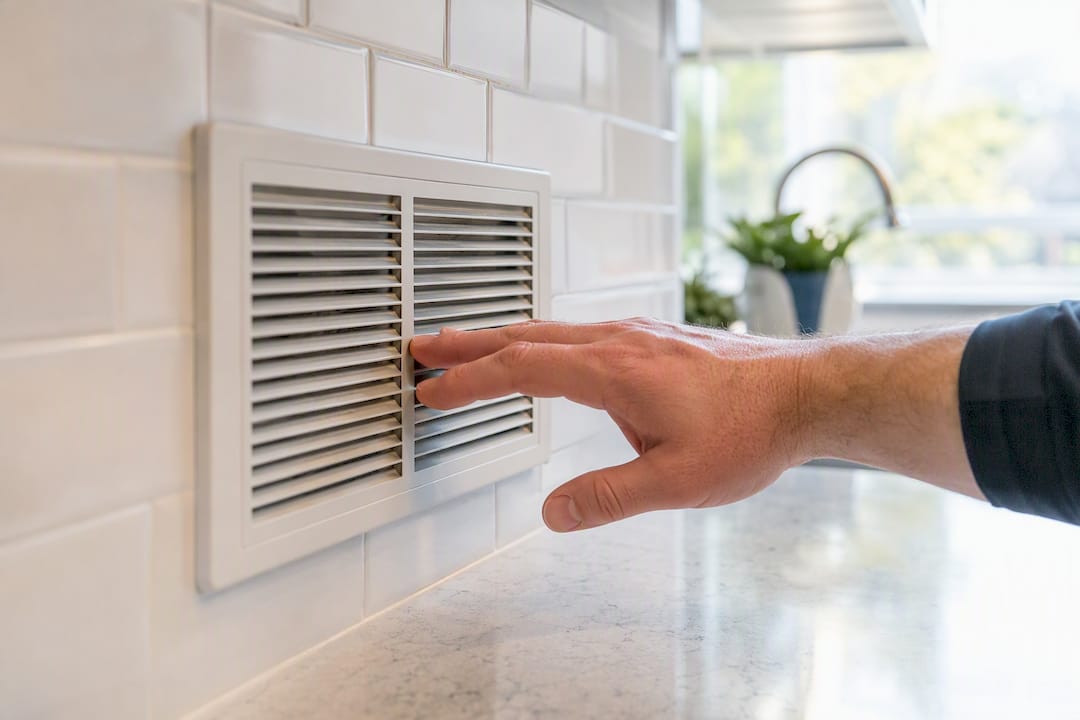
Pro Tip: Cut power to the furnace switch, hold your hand near a supply vent, and sniff. If the smell is only noticeable there and not at the return, you’ve likely isolated it to that duct run.
How Long Should the Smell Last?
Most benign smells clear up within a few hours to a couple of days once you’ve ventilated the house and run the fan. That’s the normal window for dust and light disinfectant odors to work their way out.
- Several days and not improving: likely moisture, mold, or a pest issue that cleaning alone won’t resolve.
- Immediate, worsening smells: acrid, plastic, or gas-like odors that intensify while the system runs demand action right away, not patience.
One useful check: turn the system off and see if the smell fades, then turn the blower back on. If it returns with airflow, the source is somewhere in the duct or air handler path, not just lingering in the room.
Your First 24 to 48 Hours After Service
Think of this window as active recovery, not passive waiting. A few deliberate steps speed things along considerably.
- Do the safety check first. Sniff for anything acrid, like burning plastic, or gas-like. If present, shut the system down immediately.
- Run the fan for 24 hours. Set your thermostat to “fan on” (not heat or cool) and let air circulate. Combined with a fresh filter change right after service, this flushes loosened particles out of the system faster than waiting it out.
- Ventilate the house. Open windows where weather allows, and point a box fan toward the outdoors to help pull air through.
- Vacuum registers and nearby surfaces. A HEPA-capable vacuum picks up settled dust that a regular vacuum just recirculates.
- Wash soft surfaces if needed. Bedding, curtains, and upholstery near vents can hold onto a dusty or chemical smell longer than the air does.
- Skip the air fresheners. Scented sprays and candles right now just add another layer of particles to a system that’s still settling.
- Ask about any product used. If your technician applied a sanitizer or fog, confirm how long before it’s safe to run the system normally.
Pro Tip: If a strong dusty smell seems to be coming from your carpets rather than the vents, check the source before blaming the ducts — the two often get confused.
When to Shut the System Off and Call a Pro
Some smells aren’t a “wait it out” situation. Know these five red flags cold.
- Acrid, electrical, or fishy smells that get stronger with the blower running often point to an overheating motor or failing electrical component. Shut the system off and call a technician or electrician before running it again.
- A rotten or putrid smell usually means a dead animal somewhere in the duct run. That’s a job for pest control and an HVAC technician together.
- Musty odor that won’t quit after several days of ventilation suggests mold or standing moisture. Ask about coil and drain pan inspection.
- Any hint of natural gas or rotten eggs near the furnace is not a duct issue. Leave the house and call your gas utility right away.
- Headaches, dizziness, or breathing trouble tied to the smell warrant medical attention alongside an HVAC inspection.
How Professionals Diagnose and Fix Lingering Odors
A technician chasing down a stubborn smell usually works through the system methodically rather than guessing.
- Visual inspection of coils, drain pans, and return inlets, sometimes with a camera for hard-to-reach sections.
- Localized sniff tests at each vent to map where the smell is strongest.
- Targeted cleaning: negative-pressure HEPA vacuuming, coil and drip pan cleaning, and enzymatic treatments for organic odors.
- Removal of any carcasses or debris found, followed by spot sanitation.
There’s a limit to what any single visit can fix. Duct cleaning removes dust and debris, but it won’t resolve moisture problems, active leaks, or an ongoing infestation on its own. Sealants and biocides come into play only in specific, documented cases and are applied following EPA and NADCA guidance, never as a routine add-on.
Can Duct Cleaning Damage Your Ducts?
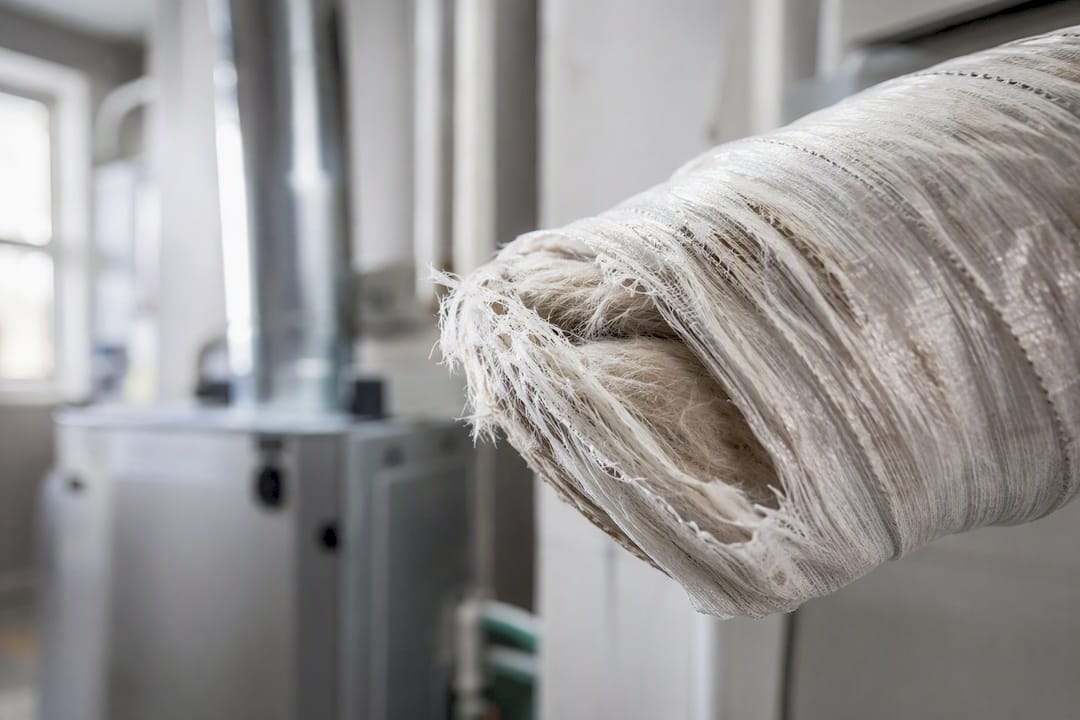
Aggressive cleaning methods can be rough on flexible or fiberglass-lined ducts, causing tears or loosening the interior lining. Poor vacuum containment is the other risk: instead of pulling debris out, weak suction can push it further into the system or release it back into your home.
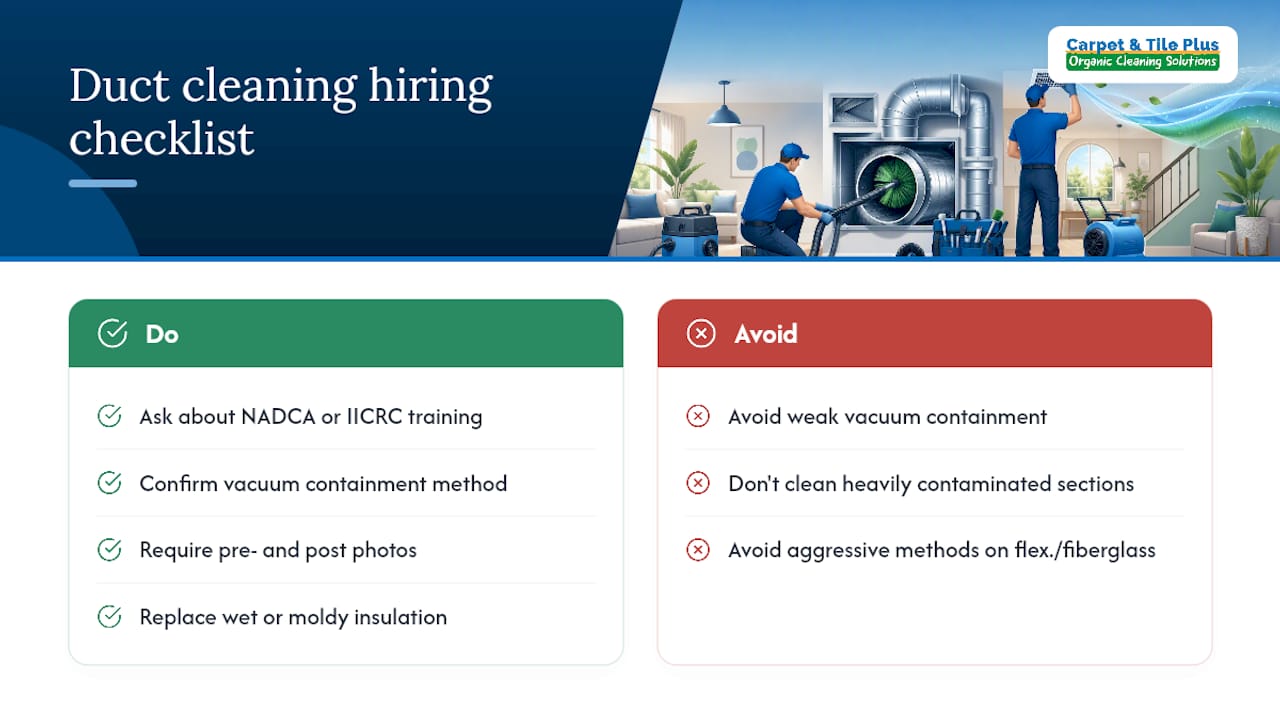
Before hiring anyone, ask whether their technicians carry NADCA or IICRC training, what containment method they use, and whether they’ll document the job with pre and post photos. If ducts show heavy contamination or wet, moldy insulation, replacing that section is often the safer call over cleaning it.
How Carpet & Tile Plus Handles Odor-Prone Duct Jobs
Every technician on our team is IICRC-certified, and we use organic cleaning products throughout the job, including duct work. That matters here because a harsh chemical treatment is often what leaves homeowners with a lingering smell in the first place.
- Full coil and duct inspection before cleaning begins, so we catch moisture or pest issues instead of just vacuuming past them.
- HEPA vacuuming with proper containment to keep dust from escaping into your living space.
- Clear post-service instructions: run the fan for 24 hours, swap in a new filter, and call us directly if anything still smells off after that window.
If you want the full rundown of what happens during a visit, our HVAC duct cleaning process guide walks through each step.
Pro Tip: Ask any provider, us included, for before-and-after photos of your coils and drain pan. It’s a fast way to confirm the job addressed what was actually causing the smell.
A Note From the Team
We hear the same question after almost every job: “Is this smell normal?” Usually, yes. Dust settles for years and a good cleaning stirs it loose, which you notice for a day or two and then forget about. What we tell every customer is the same thing we’d tell our own family: if it ever smells sharp, electrical, or like gas, shut the system down and call us immediately. Our techs are IICRC-certified and we’ve handled duct work across the Northwest Suburbs long enough to know the difference between a normal clearing smell and a real problem.
Ready to Book a Duct Cleaning That Won’t Leave You Guessing?
Carpet & Tile Plus handles the diagnostic work most duct-cleaning companies skip. Before we ever run a vacuum, our IICRC-certified techs check coils, drain pans, and return inlets so we catch moisture or pest problems instead of cleaning around them. We use organic products throughout, which means less chance of a lingering chemical smell keeping you out of your own living room for a day.

If odors show up after we leave, you get a direct line back to us, not a call center. And if you ever notice an acrid or gas-like smell during or after service, call us immediately so we can send someone out. Ready to get your ducts checked properly the first time? Schedule your air duct cleaning and ask about our odor diagnostic walkthrough when you book.
Sources
- Find the Source of HVAC Duct Odors – smelly duct work diagnosis & cure | InspectApedia
- Does Air Duct Cleaning Help Get Rid of Bad Smells? | ANGI
- What to Do After Your Air Duct Cleaning: A Post-Service Guide for Homeowners | Mile High Ducts
- Smell from vents — HVAC smell FAQ | Anchor Pest Services