
Professional carpet stain removal is the process of using specialized equipment, chemical agents, and extraction methods to eliminate or significantly reduce stains from carpet fibers and padding. The types of carpet stains professional cleaners remove span six major categories: water-soluble, protein-based, oil and grease, tannin, dye-based, and complex combined stains. Each category requires a different treatment protocol because incorrect chemical or temperature use can permanently set a stain into the fiber. The IICRC S100 standard guides professional cleaners on proper identification and treatment sequencing. Knowing which category your stain falls into is the single most important factor in determining whether it can be fully removed.
1. What types of carpet stains do professionals remove?
Professional cleaners tackle stains across six chemical categories. Professional-grade equipment and specialty solutions reach deep into carpet fibers and padding in ways that consumer tools simply cannot. That depth of penetration is what separates a professional result from a DIY attempt that leaves residue behind.
The six categories are:
- Water-soluble stains: coffee, tea, juice, soda, mud, most food spills
- Protein-based stains: blood, vomit, egg, dairy, pet urine
- Oil and grease stains: cooking oils, motor oil, cosmetics, lip balm, shoe polish
- Tannin stains: red wine, beer, fruit juice, mustard
- Dye-based stains: ink, hair dye, fabric dye
- Complex combined stains: pet accidents that combine protein, uric acid crystals, and colorants
Not every stain is reversible. Bleach discoloration, mustard dye, and hair dye cause permanent fiber damage that no cleaning process can undo. Understanding this distinction helps you set realistic expectations before calling a professional.
2. Water-soluble stains and how professionals remove them
Water-soluble stains are the most common type found in residential carpets. Their molecules dissolve in water, which makes them treatable with detergent and hot water extraction. Coffee, tea, juice, and most food spills fall into this group.
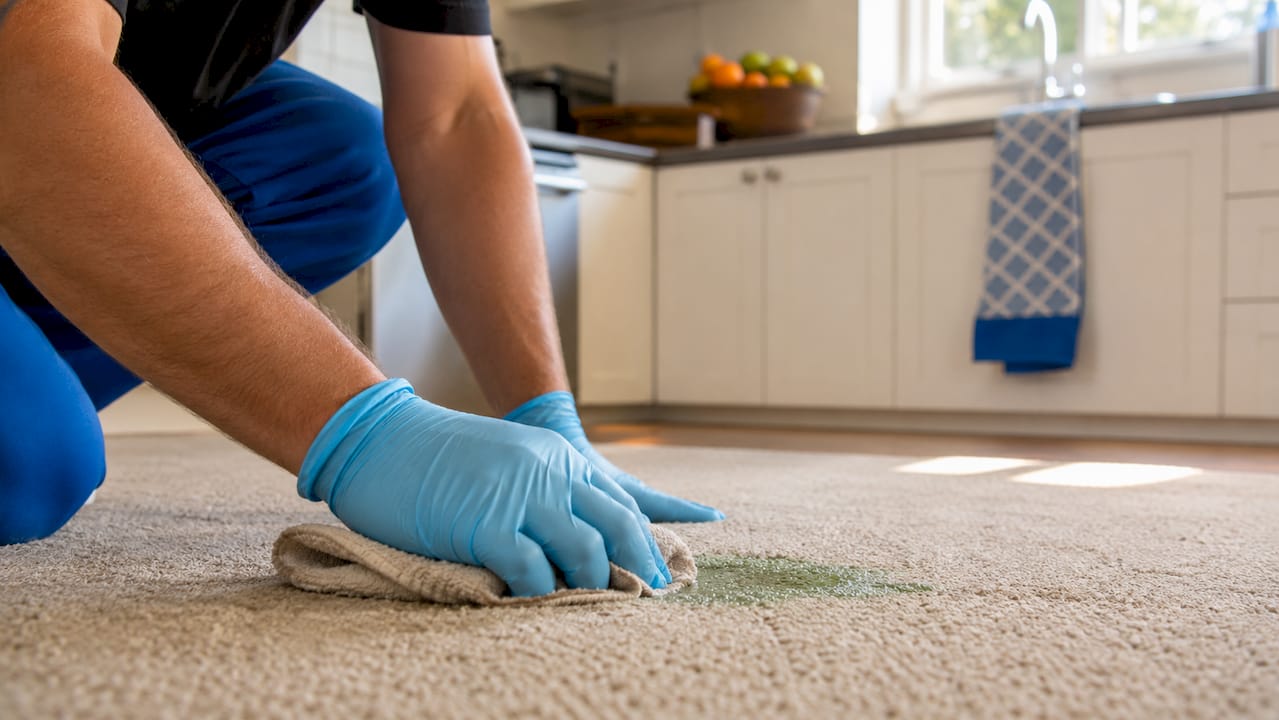
Professional technicians follow a clear sequence. They pre-treat the stain with an enzyme or oxygenated cleaning agent, apply controlled amounts of water, and then extract the solution with truck-mounted or portable extraction equipment. Cold water rinsing prevents the stain from spreading outward.
The biggest risk with water-soluble stains is over-wetting. When too much moisture soaks into the carpet backing, residue travels back up through the fibers as the carpet dries. This is called wicking, and DIY methods often fail to eliminate hidden residues that cause stains to reappear days later. Professional extraction removes the moisture and the dissolved stain together in a single pass.
Pro Tip: After any water-based treatment, place a clean white towel over the damp area and weigh it down overnight. This draws residual moisture up and out before it can wick back into the surface fibers.
3. Protein-based stains: challenges and professional removal
Protein-based stains are the most mishandled category in home cleaning. Blood, vomit, egg, dairy, and pet urine all contain proteins that react badly to heat. Applying hot water on blood “cooks” the protein into the fiber, making the stain far harder to remove. This is the single most common DIY mistake professionals have to work around.
The correct approach starts with cold water and gentle blotting. Professionals then apply enzyme-based cleaners that break down organic matter at the molecular level. Enzymes digest the protein chains rather than just masking them, which eliminates both the stain and any associated odor.
Pet urine is the most complex protein stain. Urine penetrates deep into carpet padding and the subfloor, meaning surface cleaning only removes the visible mark. Odor and deep residue remain until a professional uses sub-surface extraction combined with enzymatic treatment. For severe cases, Carpetandtileplus offers odor removal services that address contamination below the carpet surface.
Pro Tip: Never use an alkaline cleaner on protein stains. Alkaline solutions react with proteins and bond them more tightly to carpet fibers, turning a treatable stain into a permanent one.
Key protein-based stain risks:
- Hot water sets the stain permanently
- Alkaline cleaners bond protein to fibers
- Surface-only treatment leaves odor-causing residue in the padding
- Delayed treatment allows proteins to dry and harden into fibers
4. Oil and grease stains: professional solvent approaches
Oil and grease stains resist water entirely. They are hydrophobic, meaning water molecules cannot attach to them and carry them away. Cooking oils, motor oil, cosmetics, lip balm, and shoe polish all behave this way.
Professionals treat these stains in a specific order:
- Apply an absorbent powder such as baking soda or a commercial dry compound to pull surface oil out of the fibers.
- Allow the absorbent to dwell for several minutes, then vacuum it away.
- Apply a dry solvent or degreaser directly to the remaining stain.
- Blot the area firmly with a clean white cloth, working from the outside edge inward.
- Rinse with a pH-neutral extraction solution to remove solvent residue.
The most common error homeowners make is reaching for water first. Water spreads oil outward and drives it deeper into the fiber. Professional cleaning success depends on precise chemical selection, not the volume of product applied. Multiple treatment passes are often needed for older or larger grease stains.
Pro Tip: For fresh grease spills, resist the urge to rub. Blot straight down with a dry cloth to absorb as much oil as possible before any chemical is applied. Rubbing spreads the stain and pushes it deeper into the pile.
5. Tannin and dye-based stains: treatment limits
Tannin stains come from plant-based compounds found in red wine, beer, fruit juice, and tea. They are acidic and react differently depending on the pH of the cleaner applied. Using an alkaline cleaner on a tannin stain can set it permanently, while the correct acidic or neutral agent lifts it cleanly.
Dye-based stains are a separate challenge. Ink, hair dye, and fabric dye can chemically bond to carpet fibers rather than just sitting on the surface. Professionals use oxidizing agents like hydrogen peroxide in carefully controlled concentrations to break these bonds. The process requires spot testing first because the wrong concentration can bleach the carpet’s own color.
| Stain Type | Chemistry | Professional Treatment | Permanent Risk |
|---|---|---|---|
| Red wine | Tannin, acidic | Acidic pre-spray, extraction | Low if treated quickly |
| Ink | Synthetic dye | Reducing or oxidizing agent | Moderate |
| Mustard | Turmeric dye | Oxidizing agent | High |
| Hair dye | Synthetic dye | Controlled hydrogen peroxide | High |
| Beer | Tannin, sugars | Enzyme pre-treatment, extraction | Low |
Stain treatment must align with carpet fiber type as well. Wool requires pH-neutral cleaners and no hot water, while nylon tolerates more aggressive methods. A professional who skips fiber identification risks damaging the carpet even while removing the stain.
Some dye-based stains cause permanent fiber discoloration. No cleaning process reverses bleach damage or deep mustard dye penetration. Recognizing this limit early saves homeowners from paying for repeated treatments that cannot succeed.
6. Handling combined and complex stains
Combined stains involve two or more chemical types in the same spot. A typical pet accident contains protein from urine, uric acid crystals, and sometimes colorants from food. Each component requires a different chemical to break it down.
Professionals handle these stains in sequential phases:
- Enzymatic phase: Apply enzyme cleaner to digest proteins and organic matter. Allow full dwell time.
- Solvent phase: Address any oily or waxy components with a dry solvent.
- Oxidizing phase: Use a controlled oxidizer to address residual color or odor compounds.
Sequential chemical phases are essential to avoid chemical antagonism, where two agents react with each other instead of the stain. Mixing phases out of order can neutralize both chemicals and leave the stain untouched. It can also generate heat or fumes that damage fibers.
DIY attempts at combined stains almost always fail because many homeowners lack knowledge of proper initial stain treatment, and the wrong first step can make every subsequent step less effective. When a combined stain has soaked into the padding, professional sub-surface extraction equipment is the only way to fully remove it. If the padding is saturated and the subfloor is affected, replacement rather than cleaning becomes the right recommendation. Homeowners who notice recurring odors after cleaning should check whether hidden moisture sources beneath the floor are contributing to the problem.
Key takeaways
Professional carpet cleaners remove stains most effectively when they correctly identify the stain’s chemical category and apply the matching treatment sequence before any DIY attempt sets the stain deeper.
| Point | Details |
|---|---|
| Six stain categories exist | Water-soluble, protein, oil, tannin, dye, and complex stains each need a different treatment. |
| Heat sets protein stains | Never use hot water on blood, urine, or vomit — cold water and enzymes are the correct first step. |
| Some stains are permanent | Bleach, mustard dye, and hair dye cause fiber damage that no cleaning process can reverse. |
| Wicking causes recurrence | Only professional extraction removes deep residue and prevents stains from reappearing after drying. |
| Fiber type changes the protocol | Wool needs pH-neutral cleaners; nylon tolerates stronger agents — skipping this check risks carpet damage. |
What I’ve learned after years of carpet stain calls
The call I get most often goes something like this: a homeowner scrubbed a red wine stain with a carpet foam spray, then hit it with a steam cleaner because the foam didn’t work. By the time I arrive, the stain is set, the fibers are matted, and the wool pile has shrunk in the corner. Two separate mistakes compounded each other.
The uncomfortable truth about carpet stain removal is that the first five minutes after a spill determine about 80% of the outcome. Blotting cold, never rubbing, and calling a professional before reaching for a store product gives you the best possible starting point. Most homeowners do the opposite.
I also want to be direct about permanent stains. No professional can remove bleach discoloration or deep mustard dye. Any technician who promises otherwise is selling you something. What a good professional can do is assess the damage honestly, treat what is treatable, and tell you when a patch or replacement is the smarter path forward.
Knowing your carpet fiber matters more than most homeowners realize. A treatment that works perfectly on nylon can shrink or discolor wool. Before any chemical touches your carpet, a professional should identify the fiber. If you are not sure what your carpet is made of, check the manufacturer label under the edge of a doorway threshold. That five-second check can prevent a costly mistake.
The value of professional carpet stain removal services is not just the equipment. It is the sequencing knowledge, the fiber awareness, and the ability to stop before causing more damage than the original stain. If you want to prepare your home before a technician arrives, clearing the area and identifying all stain locations in advance makes a real difference in the results you get.
— Jim
Carpetandtileplus handles every stain category with the right tools
Carpetandtileplus serves homeowners and renters across the Northwest Suburbs of Chicago, including Elgin, Bartlett, Streamwood, Arlington Heights, and Barrington. The IICRC-certified technicians at Carpetandtileplus identify each stain’s chemical category before selecting a treatment, which is the same protocol outlined in the IICRC S100 standard.

Whether you are dealing with a pet urine stain that has soaked into the padding or a red wine spill that has been sitting for weeks, residential carpet cleaning from Carpetandtileplus uses organic cleaning products and professional extraction equipment to reach deep into fibers. The one-hour dry time means your home is back to normal the same day. Book a consultation to get an honest assessment of what can be removed and what your carpet actually needs.
FAQ
Can professional cleaners remove old set-in stains?
Professional cleaners can effectively remove or significantly minimize most set-in stains using specialty solutions and extraction equipment that reach deep into fibers. Results depend on the stain type, fiber material, and whether prior DIY treatments have set the stain.
Which carpet stains cannot be removed by professionals?
Bleach discoloration, mustard dye, and hair dye cause permanent fiber damage that no cleaning process can reverse. These stains change the fiber’s color chemistry rather than just depositing a substance on the surface.
Why do carpet stains come back after cleaning?
Wicking causes stains to reappear when moisture and dissolved residue rise back through the fibers during drying. Only professional extraction removes deep residue fully and prevents recurrence.
How should I prepare before a professional carpet cleaning appointment?
Removing obstacles, vacuuming, and identifying stain locations before the technician arrives allows them to focus entirely on deep cleaning and stain treatment. Clearing the space also helps the technician reach every affected area with extraction equipment.
Does carpet fiber type affect stain removal?
Fiber type directly determines which chemicals and temperatures are safe to use. Wool requires pH-neutral cleaners and cold water, while nylon tolerates more aggressive treatments. A professional who skips fiber identification risks damaging the carpet during the cleaning process.